The short answer
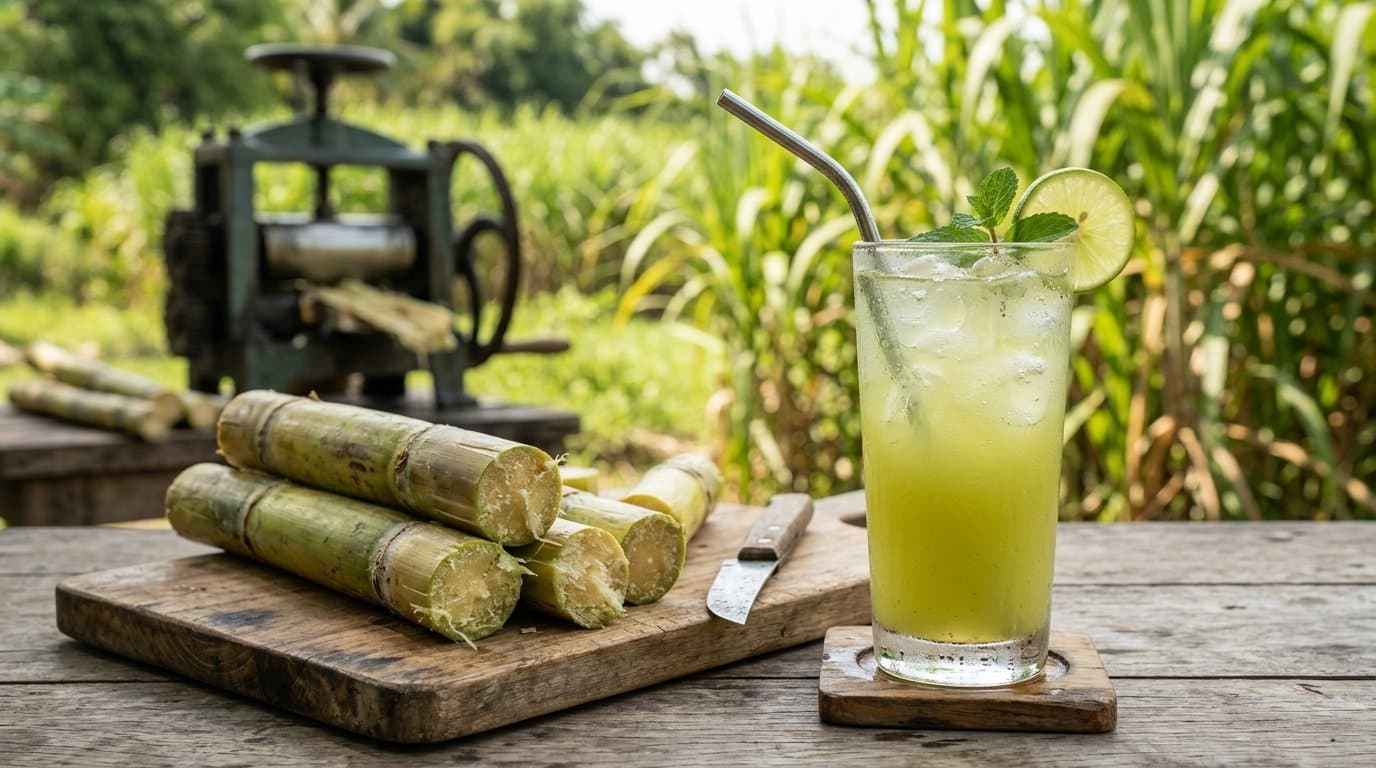
Sugarcane juice is the sweet, refreshing juice pressed fresh from sugar cane, the tall grassy stalk that sugar itself is made from. Pale green and naturally very sweet, it is extracted by crushing peeled cane through a press, and it is enjoyed cool, often with a squeeze of lime or a little ginger, as a popular street drink across the Caribbean, Africa and the wider tropics. Fresh cane is also simply peeled and chewed for its sweet juice. A natural, unrefined sweet treat, sugarcane juice is a taste of the tropics. In the UK fresh sugar cane is sold by African and Caribbean food shops.
What to remember
- Sugarcane juice is the sweet juice pressed fresh from sugar cane stalks.
- It is pale green, naturally very sweet, and often served cool with lime or ginger.
- It is a popular fresh street drink across the Caribbean, Africa and the tropics.
- Fresh cane is also peeled and chewed for its sweet juice.
- Fresh sugar cane is sold by African and Caribbean food shops in the UK.
Few treats carry childhood quite like a length of fresh sugar cane, a sweet, nostalgic taste of home for African and Caribbean people in Britain. It is the length of cane chewed as a child, the cool glass of fresh-pressed juice with lime, the market stall and the roadside press, the natural sweet treat of hot days, the taste that says home. Enjoying sugar cane far from home brings back childhood treats and market days and the cane fields of home, the warmth of the tropics in every sweet, fresh mouthful.
There is real history in it too, in a crop that shaped whole regions, enjoyed at its simplest and freshest straight from the stalk. It reflects a whole culture of natural, unrefined, joyful treats, and to press or chew fresh cane is to keep that alive. Sharing it with family who grew up on it, or showing a friend how to chew a length of sweet cane, is a small act of welcome. That sweet, fresh taste of home is the gift of sugarcane juice.
What is sugarcane juice?
Sugarcane juice is the natural, sweet juice that comes from crushing sugar cane, the tall, fibrous, grassy stalk from which the world's sugar is made. Fresh, unrefined and pale green, it is extracted by pressing peeled lengths of cane, often through a special hand or motor press, and the juice that runs out is naturally very sweet, with a fresh, grassy, faintly earthy note quite unlike refined sugar. Served cool, usually over ice and often brightened with a squeeze of lime or a touch of ginger, it is wonderfully refreshing.
Sugar cane grows across the tropics, and both the fresh juice and the cane itself are enjoyed in the Caribbean, Africa and beyond. Whole lengths of peeled cane are also simply chewed, the sweet juice sucked out and the fibre spat away, a favourite treat. Sugarcane juice belongs to the world of tropical African and Caribbean food and drink we cover in our guides to Caribbean food and West African food.
How is sugarcane made and enjoyed?
Making sugarcane juice is all about pressing the cane. The tough outer skin of the cane is trimmed away, and the lengths are fed through a press, traditionally a hand-cranked or motorised roller mill that squeezes out the juice, which is collected and served fresh, as it is best drunk soon after pressing. It is usually served over ice, and a squeeze of lime, a little ginger, or both are classic additions that balance the sweetness and make it even more refreshing. At markets and roadside stalls, the pressing is often done to order.
Beyond the fresh juice, sugar cane is enjoyed simply by peeling a length, cutting it into pieces, and chewing them to draw out the sweet juice, spitting out the fibrous pulp, a nostalgic treat for many. Sugarcane juice is naturally very sweet, so it is enjoyed as a sweet treat and refreshment rather than an everyday thirst-quencher, and how it fits a person's diet is up to them. This article is general food information rather than medical or dietary advice. Fresh, sweet and cooling, sugarcane juice is a treasured tropical drink.
Sugarcane in african and caribbean life
Sugar cane has a deep place in African and Caribbean history and life, both as the crop behind sugar and as a beloved fresh treat. Across the Caribbean, where cane has shaped the land and history, and across tropical Africa, fresh cane and cane juice are familiar, nostalgic pleasures, sold at markets and roadside stalls and enjoyed by children and adults alike. The sight of a cane press working, or of children chewing lengths of sweet cane, is part of the everyday texture of life in cane-growing regions.
For people from these regions, fresh sugar cane and its juice are a sweet, nostalgic taste of home and childhood, and for anyone else they are a natural, refreshing treat to discover. This article is general food and cultural information. Sweet, fresh and cooling, sugarcane juice is a treasured taste of the tropics.
Where to buy sugarane in the UK
Buying sugar cane in Britain is done through African and Caribbean food shops, which often sell fresh sugar cane, in whole lengths or trimmed pieces, especially where there are Caribbean and African communities, ready to chew or to press for juice. Some shops and markets may sell fresh-pressed juice or frozen sugar cane, and canned or bottled sugarcane juice is sometimes available too, though fresh-pressed is the real thing. Fresh cane is the main item to look for.
If you want fresh sugar cane or its juice, an African or Caribbean food shop is the natural place to find it, along with the lime and ginger to serve with the juice. You can find African food stores near you or look up Caribbean food stores near you to find fresh sugar cane in your area. Sweet, fresh and refreshing, sugarcane juice brings a natural taste of the tropics to your glass.
Frequently asked questions
What is sugarcane juice?
Sugarcane juice is the sweet, refreshing juice pressed fresh from sugar cane, the tall grassy stalk that sugar is made from. Pale green and naturally very sweet, it is extracted by crushing peeled cane through a press, and it is enjoyed cool, often with a squeeze of lime or a little ginger, as a popular street drink across the Caribbean, Africa and the tropics. Fresh cane is also peeled and chewed for its juice.
How is sugarcane juice made?
Sugarcane juice is made by trimming the tough skin from lengths of sugar cane and feeding them through a press, traditionally a hand-cranked or motorised roller mill that squeezes out the juice. The fresh juice is collected and served straight away, usually over ice and often with lime or ginger, as it is best drunk soon after pressing. At markets it is frequently pressed to order.
Is sugarcane juice good for you?
Sugarcane juice is a natural, unrefined drink, but it is also naturally very high in sugar, so it is best thought of as a sweet treat and refreshment rather than an everyday drink, and how it fits a person's diet is a personal matter. It does carry some of the natural minerals of the cane. This is general food information rather than medical or dietary advice, so anyone watching their sugar should bear that in mind.
Can you eat sugar cane raw?
Yes, fresh sugar cane is very commonly enjoyed raw by peeling off the tough skin, cutting the cane into pieces, and chewing them to draw out the sweet juice, then spitting out the fibrous pulp, which is not swallowed. It is a popular, nostalgic treat. The cane must be peeled first, as the outer skin is hard and inedible, and only the sweet inner juice is eaten.
Where can I buy sugar cane in the UK?
Fresh sugar cane, in lengths or trimmed pieces, is sold by African and Caribbean food shops, especially where there are Caribbean and African communities, and some shops sell fresh-pressed or bottled juice or frozen cane too. African Stores lists African and Caribbean food shops across the UK, so you can find one near you that stocks fresh sugar cane and the lime and ginger to serve with the juice.