The short answer
Roti is a soft, thin flatbread, and in the Caribbean, especially Trinidad and Tobago and Guyana, the word also means the popular meal of that flatbread wrapped around a curry filling. The bread came to the Caribbean with indentured labourers from India and evolved into distinct local types, including dhalpuri, layered with seasoned ground split peas, and paratha, known as buss up shut because it is beaten soft and looks like a torn-up shirt. A roti as a meal is a large dhalpuri or similar flatbread wrapped around curried chickpeas, potato and a protein such as chicken, goat, beef or vegetables. It is a beloved everyday food and street food. In the UK the flour and curry ingredients are sold by Caribbean, African and South Asian food shops.
What to remember
- Roti is a soft, thin flatbread, and in the Caribbean the word also means the curry-filled wrap made with it.
- It came to the Caribbean with indentured labourers from India and evolved into distinct local types.
- Main Caribbean types include dhalpuri, layered with seasoned split peas, and buss up shut, a soft, torn paratha.
- As a meal, a roti is the flatbread wrapped around curried chickpeas, potato and a protein or vegetables.
- In the UK the flour and curry ingredients are sold by Caribbean, African and South Asian food shops.
For Trinidadians, Guyanese and Caribbean people in Britain, roti is deep comfort and a taste of home. It is the warm, soft dhalpuri wrapped around a good curry from a favourite roti shop, the torn, flaky buss up shut shared around a table of curries, the Sunday meal and the everyday lunch, the food that instantly recalls home. It carries the memory of family kitchens, of the skill of rolling and cooking the bread just right, and of the particular fillings a family loves, and making or buying it far from home brings that whole sense of belonging back.
There is heritage and pride in it too. Roti is a symbol of the Caribbean's Indian heritage and of the islands' genius for blending cultures into food that everyone shares, from the labourers who brought the flatbreads to the roti shops of today. Making a roti, getting the bread soft and the curry rich, and sharing it with family or introducing a friend to their first curry-filled wrap, is an act of welcome and belonging. That soft, comforting, curry-filled taste of home is the quiet gift of roti.
What is Roti?
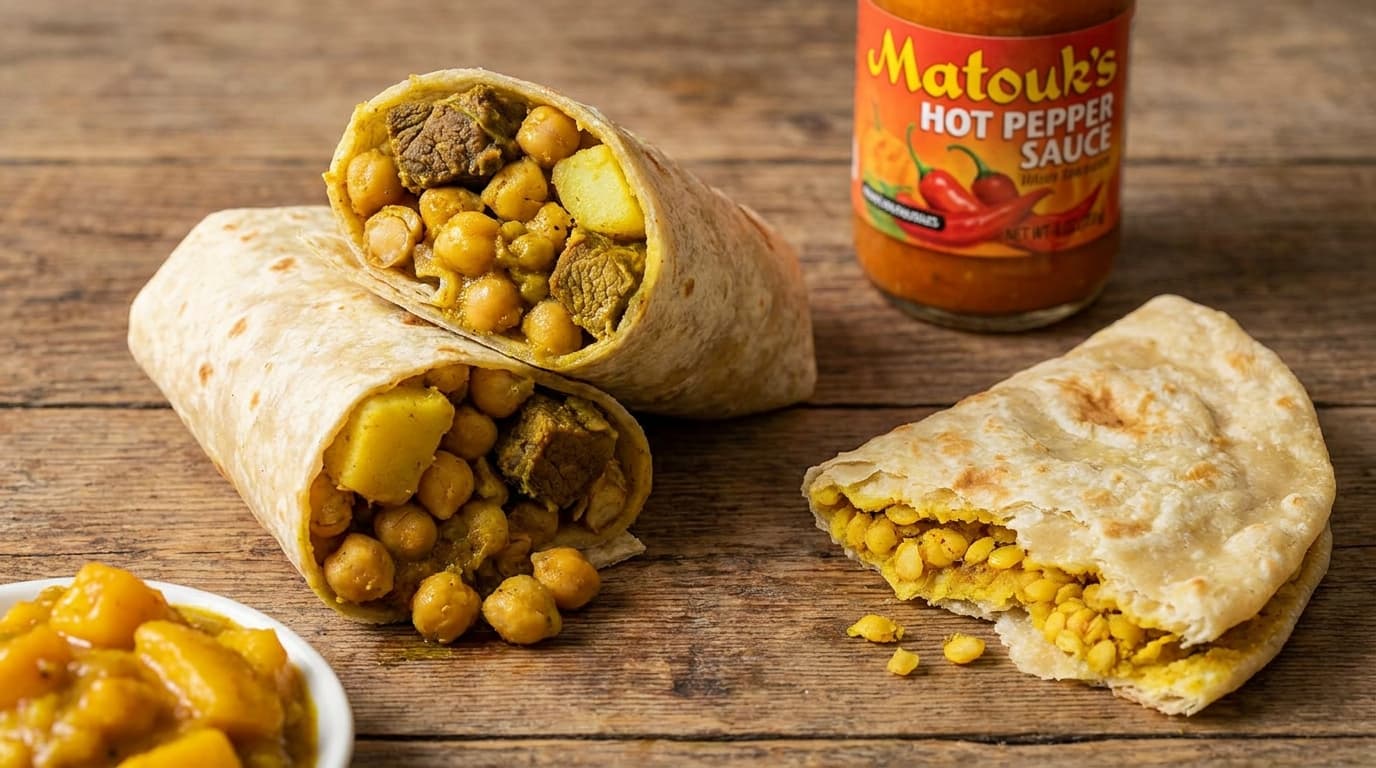
Roti is a word with two related meanings, and in the Caribbean both matter. At its most basic, roti is a soft, thin, unleavened flatbread, cooked on a hot flat pan called a tawa. But in Trinidad and Tobago, Guyana and the wider Caribbean, roti also refers to a whole meal built on that bread: a large soft flatbread wrapped around a generous curry filling, folded into a parcel and eaten by hand, a bit like a Caribbean version of a wrap or burrito. When someone in Trinidad says they are getting a roti, they usually mean this filled, curried meal.
Roti is a genuine staple of Caribbean eating, especially in the twin-island republic of Trinidad and Tobago and in Guyana, where the large populations of Indian descent shaped the cuisine profoundly. It is everyday food, street food, and comfort food all at once, sold from roti shops and made at home, and it is deeply loved. It belongs to the wider world of Caribbean cooking we cover in our guide to [Caribbean food](/blog/caribbean-food), and it reflects the same Indian heritage as dishes like [doubles](/blog/doubles) and [curry goat](/blog/curry-goat).
Types of Caribbean Roti
Caribbean roti is not one bread but several, and knowing the main types helps enormously. Dhalpuri is perhaps the most famous, a soft roti with a thin layer of seasoned, ground yellow split peas (dhal) rolled inside the dough, giving it a subtle flavour and a slightly speckled look; it is the classic bread for wrapping a curry into a roti meal. Paratha roti, better known by its nickname buss up shut, is cooked with oil and then beaten and shredded while hot so it falls into soft, flaky, torn pieces, and the name comes from the way it looks like a burst-up, or torn, shirt.
There is also sada roti, a plain, soft, everyday roti eaten with dishes such as curried vegetables and often at breakfast, and dosti roti and others in different islands and communities. Each type has its own texture and use: dhalpuri for wrapping, buss up shut for tearing and dipping into curry, sada for everyday meals. Knowing which is which lets you order and enjoy the right one, and it shows how the single idea of the Indian flatbread branched into a whole family in the Caribbean.
Roti as a meal
When roti is a meal rather than just a bread, it is a thing of real generosity. A large dhalpuri, or sometimes another soft roti, is laid out and filled with a curry, then folded up into a parcel to eat by hand. The curry filling almost always includes curried chickpeas, called channa, and curried potato (aloo), which are the base, and then a choice of protein: curried chicken, goat, beef, duck, shrimp, or a vegetable option such as pumpkin, spinach (bhaji) or other curried vegetables. The whole thing is seasoned with Caribbean curry, which leans on turmeric for its golden colour, along with garlic, pepper and herbs.
The result is a satisfying, portable, complete meal, the Caribbean answer to a wrap, and it is enormously popular for lunch and beyond. Buss up shut, by contrast, is usually served open, with the torn, flaky bread on the side of several curries to tear and scoop, more like a shared plate. Either way, roti is about the marriage of soft bread and flavourful curry, and everyone has their favourite roti shop and their favourite filling. You can read about the scotch bonnet heat that often features in our guide to the scotch bonnet.
The Heritage of Roti
Roti tells the story of the Caribbean's Indian heritage. In the nineteenth and early twentieth centuries, large numbers of indentured labourers came from India to work in the Caribbean, particularly to Trinidad and Guyana, and they brought their food, including the roti flatbreads and the curries to go with them. Over generations, these evolved in the Caribbean into the distinct local types and the roti-as-a-meal tradition, blending Indian techniques with Caribbean ingredients and tastes, such as the local curry blends and scotch bonnet.
That heritage makes roti a symbol of the blended identity of islands like Trinidad, where Indian, African, and other influences came together. Today roti is eaten by everyone across these societies and has become one of their most recognisable and beloved foods, carried around the world by the Caribbean diaspora. Eating roti is a small taste of that history, of migration, adaptation and the creation of something new and delicious from the meeting of cultures.
Where to buy Roti ingredients in the UK
Making roti at home in Britain is achievable, and the ingredients are found in Caribbean, African and South Asian food shops. For the bread you need flour, and for dhalpuri, yellow split peas to season and grind, plus the oil and seasonings. For the fillings you need chickpeas, potatoes, the meat or vegetables of your choice, and Caribbean curry powder along with garlic, pepper and herbs. These shops stock all of it, including the Caribbean-style curry blends that give thegolden colour and flavour, and ready-made roti is often sold frozen too for convenience.
If you are new to roti, the shopkeeper can point you to the split peas, the curry powder and a good frozen roti to start with. You can find Caribbean food stores in the UK or look up African food stores near you to find a shop near you. If you would rather buy it ready-made, roti shops and Caribbean restaurants and takeaways across Britain serve roti with a range of fillings, and it is one of the easiest Caribbean meals to find.
Frequently asked questions
What is roti?
Roti is a soft, thin flatbread, and in the Caribbean, especially Trinidad and Tobago and Guyana, the word also means the meal of that flatbread wrapped around a curry filling. It came to the Caribbean with indentured labourers from India and evolved into distinct local types and the popular roti-as-a-meal tradition.
What are the main types of Caribbean roti?
Dhalpuri, a soft roti layered with seasoned ground yellow split peas, used for wrapping curries; paratha, known as buss up shut, cooked with oil and beaten soft and flaky so it looks like a torn shirt; and sada, a plain everyday roti. Each has its own texture and use, from wrapping to tearing and scooping.
What is in a roti as a meal?
A large soft roti, usually dhalpuri, wrapped around a curry filling of curried chickpeas (channa) and potato (aloo) as the base, plus a protein such as chicken, goat, beef, duck or shrimp, or vegetables like pumpkin or spinach. It is seasoned with Caribbean curry and folded into a parcel to eat by hand.
Where does roti come from?
It came to the Caribbean with indentured labourers from India in the nineteenth and early twentieth centuries, particularly to Trinidad and Guyana, and evolved over generations into distinct local breads and the roti-as-a-meal tradition, blending Indian techniques with Caribbean ingredients such as local curry blends and scotch bonnet.
Where can I buy the ingredients in the UK?
Caribbean, African and South Asian food shops sell the flour, yellow split peas, chickpeas, potatoes, meat or vegetables and Caribbean curry powder for making roti, as well as ready-made frozen roti. The shopkeeper can point you to the split peas and curry powder, and roti shops and Caribbean takeaways serve it ready-made.