The short answer
Somali food is the cuisine of Somalia and the wider Somali community across the Horn of Africa. It centres on spiced rice such as bariis iskukaris, soft flatbreads like canjeero and sabaayad, grilled and stewed goat and beef, and dishes flavoured with a spice blend called xawaash. Centuries of trade with Arab and Italian traders shaped the food, which is why pasta known as baasto sits comfortably alongside rice. In the UK you can find Somali restaurants and shops in cities with large Somali communities, including London, Bristol, Cardiff, Leicester and Birmingham.
What to remember
- Bariis iskukaris, fragrant spiced rice, is the heart of a Somali meal, often served with goat or beef.
- The food carries the marks of long trade history: Arab spices, and Italian pasta that became baasto
- Xawaash, a warm blend of cumin, coriander, cinnamon and more, is the flavour running through many dishes.
- Hospitality matters deeply. Sharing generous plates of food is a way of showing welcome and respect.
- If you want to taste it for yourself, Somali restaurants and shops are well established across several UK cities.
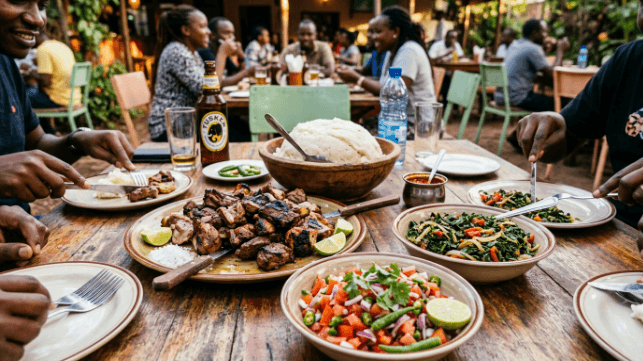
To understand Somali food, you have to understand what a shared plate means. In Somali culture, food is inseparable from hospitality. A guest is never let go hungry, and the greatest honour a household can offer is a heaped platter of bariis iskukaris and tender goat, set in the middle of the table for everyone to eat from together. Refusing food can feel like refusing friendship, and offering it generously is how families say you matter to us. The word for this warmth runs deeper than good manners. It is a point of pride carried across generations and across oceans.
That spirit travelled with the Somali community as it settled around the world, including in the cities of the UK. The overnight fermenting of canjeero batter, the slow stirring of xalwo until it gleams, the careful brewing of cardamom shaah for a visitor: these are acts of care as much as cooking. The flavours themselves tell the story of a trading coast, where Arab spice merchants and Italian pasta both left their mark and were made wholly Somali. When a family here cooks bariis for Eid or folds sambusa for iftar, they are keeping a thread of home alive, and passing on both the taste and the welcome that comes with it.
What somali food-is
Somali food comes from a land shaped by sea, desert and centuries of movement. Somalia sits on the Horn of Africa, along one of the oldest trading coasts in the world, and its kitchens have absorbed influences from every direction while staying firmly its own. Meat, rice and flatbread form the backbone of most meals, tied together by a spice blend that gives the food its unmistakable warmth. It is generous, aromatic food, made to be shared from big plates rather than portioned out.
The through-line in Somali cooking is xawaash, a spice mix built from cumin, coriander seed, black pepper, cinnamon, cardamom, cloves and turmeric. It goes into rice, stews and marinades, and once you know its scent you can pick out a Somali kitchen from the doorway.
Bariis iskukaris the spiced rice
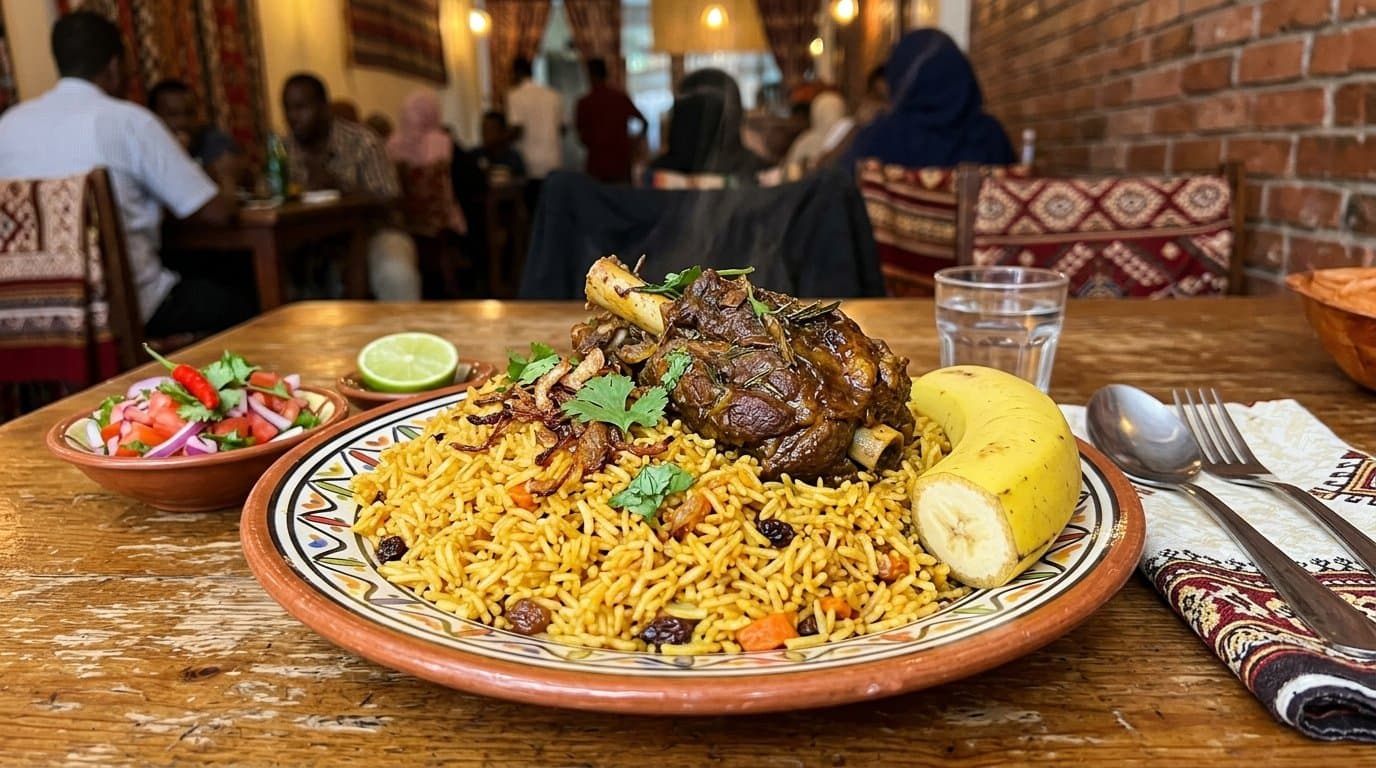
If one dish sits at the centre of the table, it is bariis iskukaris. This is Somali spiced rice, long-grain basmati cooked with xawaash, onions, garlic and often a little tomato, sometimes tinted gold with turmeric or saffron and studded with raisins. It is fragrant, buttery and layered, closer in spirit to a biryani than to plain boiled rice, and it is the dish most families build a celebration around. A wedding, an Eid gathering or a Friday lunch will almost always feature a great platter of it.
Bariis iskukaris is usually served with meat, most often goat or beef, and this is where one of the most surprising touches appears.
Banana served with rice
Newcomers to Somali food are often puzzled to see a ripe banana served alongside a plate of rice and meat. It is not a garnish or an afterthought. Many Somalis eat the banana in small pieces along with each mouthful of savoury rice, so the sweetness and softness play against the spice and the richness of the meat. It is a genuine part of the meal and a small habit that says a lot about how Somali food balances flavour. Try it once, and the pairing makes complete sense.
Flatbreads canjeero and sabaayad
Bread is everywhere in Somali cooking, and two kinds stand out. Canjeero, also called laxoox, is a thin, soft, slightly sour fermented flatbread covered in tiny holes, a close cousin of the Ethiopian injera though usually smaller and lighter. It is a breakfast staple, torn and dipped into stew, drizzled with sesame oil and sugar, or eaten with a little ghee. The gentle tang comes from a batter left to ferment overnight.
Sabaayad is the other favourite, a flaky, layered pan-fried flatbread similar to a paratha. It is richer and chewier than canjeero, brilliant for scooping up suqaar or soaking up sauce, and just as happy alongside a sweet cup of tea.
Suqaar hilib ari and meat dishes
Meat is central, and Somali cooks handle it with real care. Suqaar is a much-loved dish of small cubes of beef, lamb, goat or chicken sauteed with onion, garlic, peppers and xawaash until deeply savoury. It is quick, warming and endlessly adaptable, served with rice, sabaayad or canjeero.
Hilib ari, goat meat, holds a special place. Goat is prized for its flavour and is the meat of choice for hospitality and celebration, whether slow-cooked until tender, stewed with spices or roasted. Serving goat to a guest is a mark of respect, and a shared platter of hilib ari and bariis is Somali welcome in its clearest form.
Sambusa the perfect snack
Sambusa is the Somali version of the samosa, a crisp triangular pastry filled with spiced minced meat, onions and sometimes chilli, or with tuna, another echo of the coast. It is the snack that appears constantly during Ramadan, folded in the hundreds to break the fast at iftar, and it turns up at every gathering in between. Golden, crunchy and hard to stop at one, sambusa is the food most likely to convert a first-time visitor.
Italian influence and baasto
One of the most distinctive things about Somali food is its Italian streak. Italy governed part of Somalia in the first half of the twentieth century, and one lasting legacy is pasta, known in Somali as baasto. It is not a novelty. Spaghetti served with a spiced meat sauce, or folded together with banana in the Somali way, is genuinely everyday food, especially in the south around Mogadishu. The sauce carries xawaash and a Somali hand rather than an Italian one, so baasto tastes like nowhere else. It sits alongside the Arab influence you taste in the spicing and the sweets, the two great trading histories of the coast meeting on one plate.
Xalwo and shaah the sweet finish
No Somali celebration is complete without xalwo, the Somali halwa. This is a dense, glossy, intensely sweet confection made from sugar, cornstarch, ghee and sometimes cardamom, nutmeg or peanuts, cooked slowly and stirred until it turns jewel-like and chewy. It is a fixture at weddings and at Eid, often served in generous slabs to guests.
Alongside it comes shaah, Somali spiced tea. This is black tea brewed with cardamom, cinnamon, cloves and often ginger, sweetened well and sometimes softened with milk. Sharing shaah is a daily ritual of welcome and conversation, offered to any guest who steps through the door. The habit of ending a meal, or simply marking a visit, with sweet spiced tea captures the warmth at the centre of Somali hospitality.
Where to find Somali food in the UK
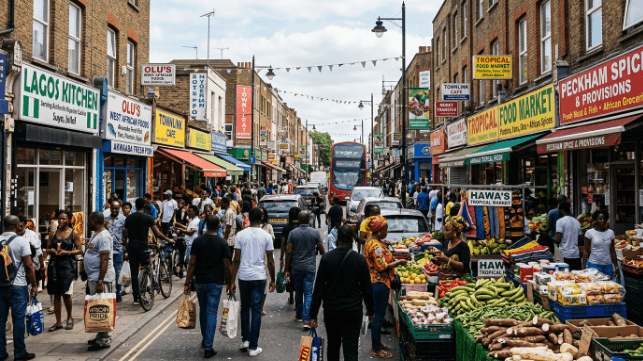
The UK is home to large and long-settled Somali communities, and that means Somali food is far easier to find here than many people expect. London has substantial Somali populations in boroughs such as Tower Hamlets, Ealing and Brent, and Bristol, Cardiff, Leicester and Birmingham all have well-established Somali communities with restaurants, cafes and grocers to match. In these cities you will find restaurants serving fresh sabaayad and suqaar in the morning, platters of bariis and goat at lunch, and shops stocking xawaash, basmati, canjeero flour and Somali tea.
If you are looking to eat out, you can find African restaurants near you on this platform, or book someone to cook for a gathering through caterers near you. To cook Somali food at home, the ingredients are stocked by African and Middle Eastern grocers, and you can browse African food stores in your location to find one close by. We help people find African and Caribbean shops, restaurants and services near them, so wherever you are, the aim is to point you to a real business you can walk into.
Frequently asked questions
What is the national dish of Somalia?
Many Somalis would point to bariis iskukaris, the fragrant spiced rice usually served with goat or beef. It is the dish at the heart of celebrations, and often the first thing offered to a guest.
Why is a banana served with Somali rice?
The ripe banana is a genuine part of the meal, not a decoration. People eat it in small pieces along with the spiced rice and meat, so the sweetness balances the spice and richness. Once you try it, the pairing makes sense.
Is Somali food spicy?
It is aromatic more than fiery. The warmth comes from xawaash, a blend of cumin, coriander, cinnamon, cardamom and cloves, which gives depth and fragrance rather than heat. Chilli is used, but you control how much.
Why is there pasta in Somali food?
Italy governed part of Somalia in the early twentieth century, and pasta stayed. Somalis call it baasto and cook it their own way, with a spiced meat sauce and sometimes banana, especially in the south.
Where can I find Somali food in the UK?
Look in cities with large Somali communities, including London, Bristol, Cardiff, Leicester and Birmingham. You can find African restaurants near you and African food stores through our platform (AfricanStores.co.uk) to eat out or cook at home.