The short answer
Caribbean food is the shared cooking tradition of the islands and coastal nations of the Caribbean Sea, built on a West and Central African base with Indian, Chinese, European and Indigenous influences layered on top. It is known for smoky jerk, well seasoned stews, rice and peas, curries, saltfish and plenty of scotch bonnet heat. Each island cooks differently, so Jamaican, Trinidadian, Bajan and Guyanese kitchens all sit under the same broad tradition. In the UK you can buy the ingredients from Caribbean and African grocers and eat the dishes at local restaurants and caterers.
What to remember
- Caribbean food is a blend, not one style, with African cooking at its heart and Indian, Chinese, European and Indigenous flavours woven through.
- Learn a handful of flavours, scotch bonnet, pimento (allspice), thyme, coconut milk and curry, and you can read almost any island menu.
- Each island has its own personality, from Jamaican jerk to Trinidadian doubles to Guyanese pepperpot.
- Most dishes rely on slow braising and good seasoning, so a UK kitchen handles them easily once you have the right ingredients.
- Shopping at a local Caribbean or African store is the surest way to find real ingredients, and the person behind the counter is often the best recipe source you will meet.
For Caribbean families in the UK, this food carries far more than flavour. Every pot tells the story of a journey across oceans, of African cooks who kept their knowledge alive through the hardest of histories, of Indian and Chinese labourers who added their spice, and of islanders who turned scarcity into some of the most joyful cooking on earth.
A Sunday of rice and peas, the smell of jerk drifting from a drum, a plate of curry goat at a christening or a wedding, these are the moments that hold a community together.
When you season a pot of oxtail the way your grandmother did, or line up outside a Caribbean shop on a Saturday morning for saltfish and hard dough bread, you are keeping something precious going. That is why finding the right ingredients and the right kitchens near you matters so much. It is not just dinner. It is home, carried forward.
What are Caribbean food?
Caribbean food is the shared culinary tradition of the islands and coastal nations of the Caribbean Sea, and it is best understood as a blend rather than a single style. Its foundations come from West and Central Africa, brought by enslaved people who carried techniques, ingredients and a way of cooking that still sits at the heart of the food today.
Layered on top of that African base are waves of other influences. Indentured labourers from India brought curry, roti and a love of split peas and warm spice. Chinese communities added stir frying, soy and dishes that evolved into island favourites. European colonisers (Spanish, British, French, Dutch and Portuguese) left their mark on baking, salted fish and one pot cooking. The Indigenous Taino and Kalinago peoples contributed cassava, corn, chillies and the very idea of cooking meat slowly over wood and spice, which is where jerk comes from.
The result is a cuisine that feels familiar and surprising at the same time. A plate of Caribbean food might carry an African seasoning philosophy, an Indian curry blend, a European baking method and an Indigenous chilli, all on the same fork.
The islands and their kitchens
There is no single Caribbean kitchen, and half the fun is noticing how each island cooks differently.
Jamaica is famous for jerk, ackee and saltfish, and slow braised meats. If you want to go deeper here, read our full guide to Jamaican food.
Trinidad and Tobago leans heavily on its Indian heritage, so curry, roti, doubles and pepper sauce are everywhere, alongside Chinese influenced dishes.
Barbados is proud of its flying fish and cou cou, its fish cakes and its love of a well seasoned macaroni pie.
Guyana, though on the South American mainland, is culturally Caribbean and shares much of Trinidad's Indian influence, with pepperpot and cook up rice as national treasures.
Beyond these you will find Grenada's nutmeg, the Spanish influenced rice dishes of Cuba and the Dominican Republic, and Haiti's French rooted cooking, each with its own personality.
The shared flavours and ingredients
Even with all that variety, Caribbean food is held together by a recognisable set of flavours. Learn these and you can read almost any island menu with confidence.
Heat comes from the scotch bonnet, a fruity, fiery chilli that is used across the region, often whole so it perfumes a pot without overwhelming it. Warmth and depth come from allspice, known in Jamaica as pimento, whose single berry tastes like clove, cinnamon and nutmeg combined.
Fresh aromatics do the everyday work. Thyme, ginger, garlic, spring onion and Caribbean thyme go into the seasoning that cooks rub into meat and fish before it ever meets the heat. Curry powder, brought by the Indian community, gives Trinidad and Guyana their golden, fragrant stews.
Then there are the starches and staples. Coconut milk enriches rice, soups and curries. Plantain, fried until sweet and golden, is a side dish on countless plates. Cassava, rice and peas, and hard dough bread fill you up, while saltfish, ackee and callaloo bring the savoury island character that makes the food taste like home.
Iconic Caribbean dishes to know
Here are the dishes that appear again and again, each worth ordering or cooking at least once.
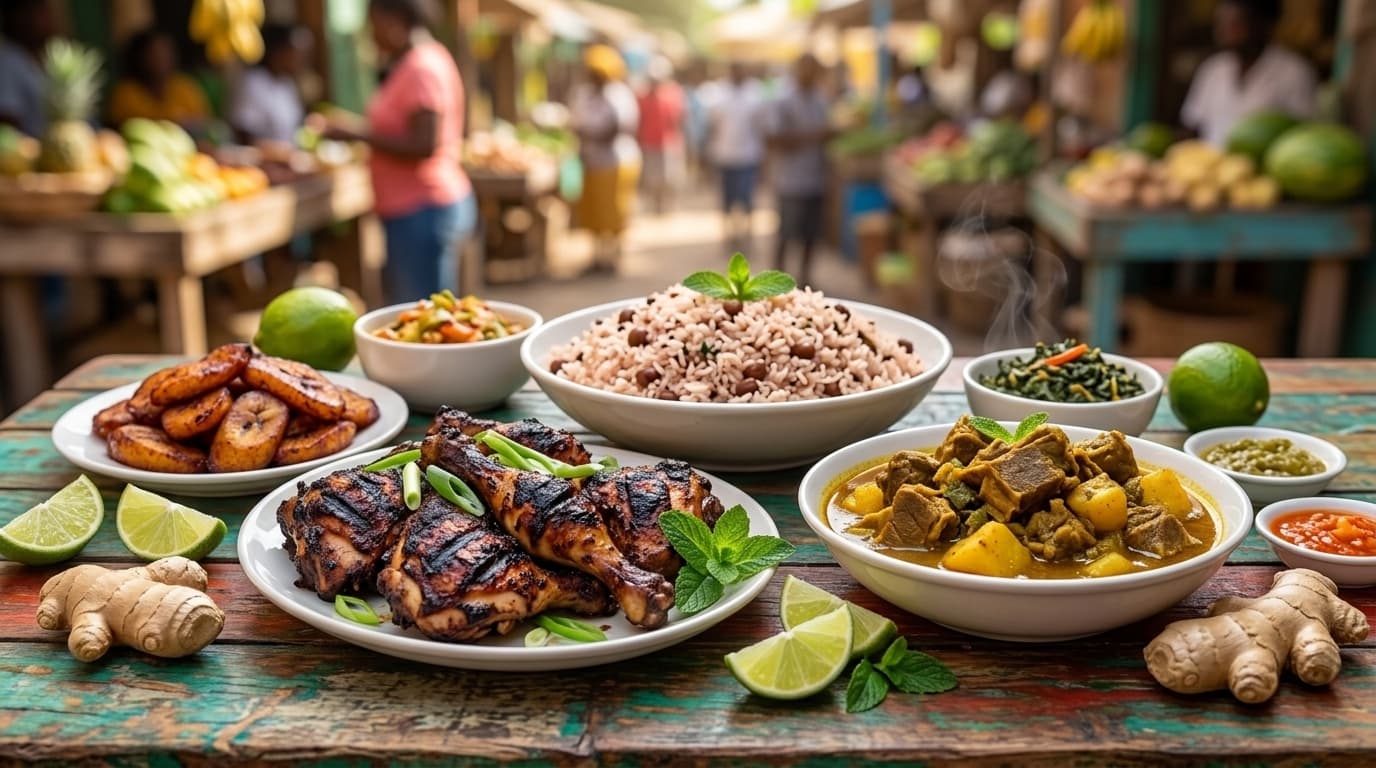
Jerk chicken is marinated in scotch bonnet, pimento, thyme and spring onion, then cooked slowly over wood until smoky and charred. Try making it with our jerk chicken recipe.
Rice and peas is the classic Sunday side, rice simmered with kidney beans or pigeon peas, coconut milk and thyme. Our rice and peas recipe shows you how.
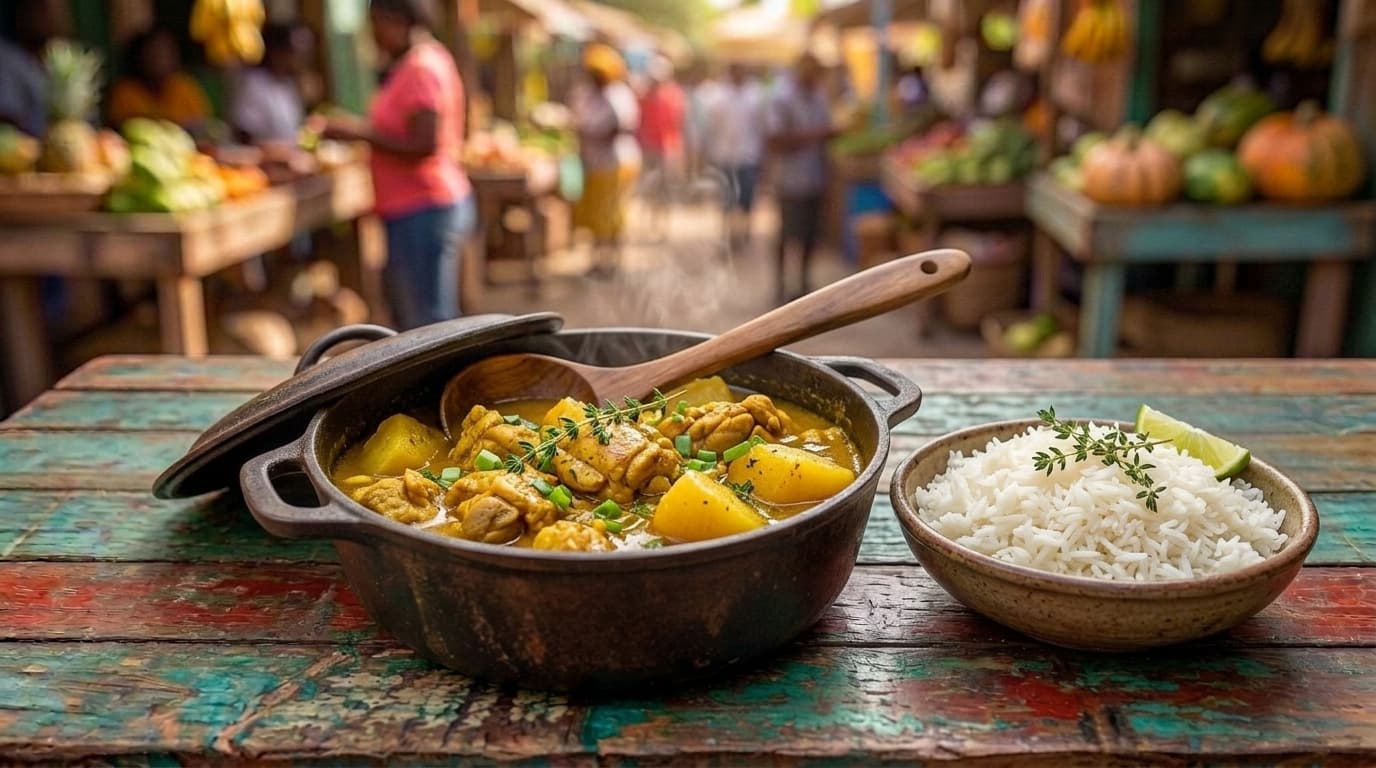
Curry goat is tender, slow cooked goat in a rich, spiced curry gravy, a celebration dish across the islands. Follow our curry goat recipe at home.
Oxtail is braised for hours with butter beans until the meat falls apart into a glossy, deeply savoury stew. Our oxtail recipe walks you through it.
Ackee and saltfish is Jamaica's national dish, silky ackee fruit sauteed with flaked salt cod, onion, tomato and pepper for breakfast or any time.
Trini doubles are a beloved street snack of two soft bara flatbreads wrapped around curried chickpeas, while roti wraps that same warm spice in a soft, flaky bread.
Pelau is a one pot Trinidadian rice dish where meat is browned in caramelised sugar before rice, peas and coconut milk join the pot.
Jamaican patties are golden, flaky pastry parcels filled with spiced beef, chicken or vegetables, perfect on the go.
Festival is a slightly sweet fried dumpling that partners jerk and fried fish beautifully.
Callaloo is a leafy green stewed down with onion, garlic and pepper into something comforting and nourishing. Learn more about callaloo.
How different are the islands, really?
Quite different, and it shows in the details. A curry in Trinidad tastes distinctly Indian, while a Jamaican pot leans on pimento and scotch bonnet. Barbados and the smaller islands often put seafood front and centre, while Guyana's pepperpot uses cassareep, a dark cassava sauce you will rarely meet in Jamaica. The shared building blocks are the same, but each island seasons its history in its own way, which is exactly why exploring Caribbean food never gets boring.
Cooking Caribbean food at home in the UK
The good news is that Caribbean cooking suits a UK kitchen perfectly. Most dishes are built on slow braising, one pot simmering and a good rub of seasoning, so you need patience more than special equipment. Start by making your own green seasoning with thyme, spring onion, garlic, ginger and a little scotch bonnet, and keep it in the fridge to lift everything you cook.
The only real challenge is sourcing the exact ingredients, and this is where shopping locally makes all the difference. Fresh scotch bonnet, ripe plantain, tinned ackee, saltfish, hard dough bread, jerk seasoning, pimento and the right curry blends are all stocked by Caribbean and African grocers up and down the country. Buying from a local store also means you can ask the person behind the counter how they cook it, which is the oldest and best recipe source there is.
Find Caribbean food near you in the UK
Africanstores.co.uk helps you find African and Caribbean businesses across the UK, and we are here to connect you with the real thing near you. We do not sell or deliver anything ourselves. Instead, we show you which local stores stock the ingredients you need, and which local kitchens serve the dishes you love.
Whether you are after a scotch bonnet for tonight's curry or a whole shop of island staples, browse Caribbean and African food stores in London, food stores in Birmingham or food stores in Manchester, and search your own city on the platform. Hungry rather than cooking? Find Caribbean and African restaurants near you, or planning something bigger, book from our list of caterers near you. Wherever you are in the UK, the taste of the Caribbean is closer than you think.
Frequently asked questions
What is the most popular Caribbean food?
Jerk chicken is probably the most internationally recognised Caribbean dish, loved for its smoky, spicy flavour. Within the islands, everyday favourites like rice and peas, curry goat, oxtail and roti are just as beloved.
What is traditional Caribbean food?
Traditional Caribbean food centres on slow cooked, well seasoned dishes such as jerk, stewed and curried meats, rice and peas, saltfish, ackee, callaloo and plantain, reflecting African, Indian, European, Chinese and Indigenous influences.
Is Caribbean food spicy?
It can be, thanks to the scotch bonnet pepper, but it is more about depth of flavour than raw heat. Many dishes use the whole chilli for aroma rather than fire, and the spice level is easy to adjust when you cook at home.
What is the difference between Caribbean and Jamaican food?
Jamaican food is one part of the wider Caribbean tradition. Caribbean food covers many islands and nations, each with its own dishes, so Jamaican cooking (jerk, ackee, patties) sits alongside Trinidadian, Bajan, Guyanese and other styles under the same broad umbrella.
Where can I buy Caribbean ingredients in the UK?
Caribbean and African grocery stores across the UK stock everything from scotch bonnet and plantain to ackee, saltfish and jerk seasoning. You can find your nearest one by searching your city on Africanstores.co.uk.