The short answer
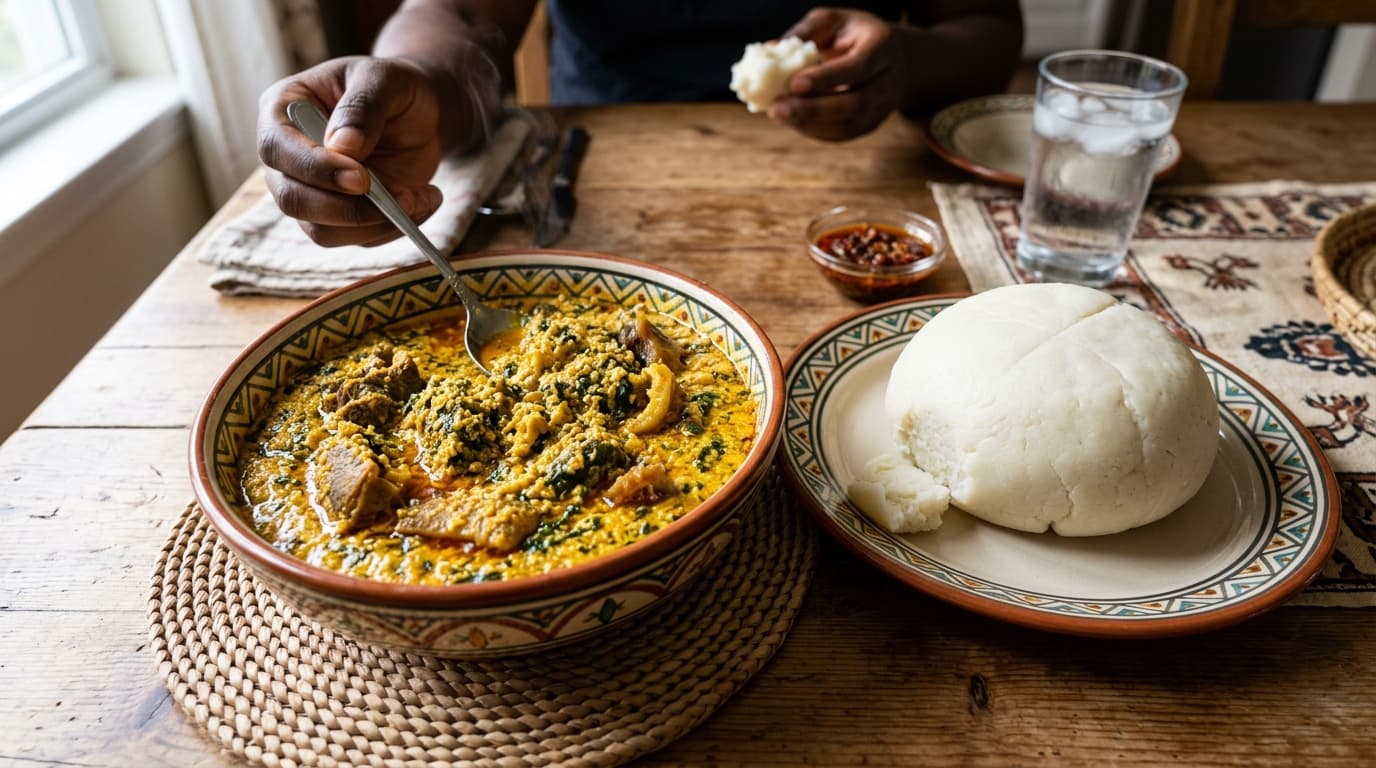
Egusi soup is a rich, hearty West African soup thickened with ground egusi, the protein-rich seeds of a type of melon. It is one of the most loved dishes in Nigeria and is eaten widely across West Africa. The ground seeds are cooked with palm oil, peppers, onions, leafy greens such as spinach or bitterleaf, and usually a mix of meat, fish and seafood, until they form a thick, textured soup flecked with soft clumps of egusi. It is not a starter-style soup but a full main course, eaten with a swallow such as pounded yam, eba or fufu, torn off and dipped by hand. In the UK egusi seeds are sold ground or whole by African and Caribbean food shops. You can find the shops near you on African Stores.
What to remember
- Egusi soup is a rich West African soup thickened with ground egusi, the seeds of a melon grown for its seeds rather than its flesh.
- Despite the name, it is a filling main course, not a light starter, and it is eaten with a swallow like pounded yam or eba.
- It is built on egusi seeds, palm oil, peppers, onions, leafy greens and a generous mix of meat, fish and seafood.
- The ground seeds cook into soft clumps that give the soup its signature thick, slightly grainy texture.
- In the UK egusi is sold ground or whole by African and Caribbean food shops, ready to cook at home.
A pot of egusi soup thickening on the stove is a deep comfort for Nigerians and West Africans in Britain. It is the smell of palm oil and greens filling the house, the sight of a thick, generous pot on the stove, the familiar rhythm of tearing a piece of pounded yam and dipping it in. It belongs to Sunday meals and family gatherings, to the food a mother or grandmother makes, to the table where everyone eats together with their hands. Cooking egusi far from home fills a kitchen with all of that at once.
It is also a dish that carries generosity in its very nature. Egusi is made in a big pot, loaded with meat and fish, meant to be shared, and setting it down for family or introducing it to a friend is an act of welcome. For anyone tasting egusi for the first time, that rich, nutty, savoury spoonful is an easy way into why West Africa treasures it so much. That warmth is the quiet gift of egusi soup, and it makes any table feel like home.
What is egusi soup?
Egusi soup takes its name from its key ingredient, egusi, which are the seeds of a melon grown across West Africa specifically for its seeds rather than its watery flesh. The seeds are shelled, dried and ground into a pale, oily meal, and it is this meal that gives the soup both its thickness and its rich, nutty, savoury flavour. When people say egusi, they usually mean the soup, but strictly the word is the seed.
Calling it a soup can mislead anyone expecting something thin and brothy. Egusi is thick, substantial and deeply flavoured, closer to a stew, and it is a proper meal in its own right. The ground seeds cook into soft, curd-like clumps suspended in a red, palm-oil-rich base, studded with greens and pieces of meat and fish. It is filling, generous food, the kind that anchors a family meal.
Egusi is one of the cornerstones of West African cooking, and you can see the wider table it belongs to in our guides to Nigerian food and West African food.
What seed makes up egusi?
The heart of egusi soup is the egusi seed itself. These come from a melon in the gourd family that is grown not for eating fresh but for the flat, cream-coloured seeds inside, which are rich in protein and oil. Once shelled and dried, the seeds are ground, either at home or bought ready-milled, into a soft meal that looks a little like coarse ground almonds.
That protein and oil content is what makes egusi so nourishing and so satisfying, and it is why the ground seed thickens the soup so well. As the egusi meal cooks in the pot, it swells and sets into the soft clumps that are the hallmark of a good egusi soup. Some cooks like those clumps large and distinct, others prefer the soup smoother and more blended, and both are correct. The seed is doing the same job either way, thickening and enriching the whole dish.
What goes with egusi?
A pot of egusi soup is built in layers. It usually starts with palm oil, which gives the soup its characteristic colour and depth, along with blended peppers, tomatoes and onions and plenty of seasoning. The ground egusi is stirred in and cooked until it thickens and forms its clumps. Then come the greens, often spinach, or traditionally bitterleaf or the West African greens known as ugu, which add colour and freshness.
The protein is where egusi becomes a feast. Cooks add a generous mix of meats and seafood, which can include beef, assorted cuts, smoked or dried fish, stockfish, and sometimes prawns or periwinkles, all simmered so their flavours run through the soup. Because so much fish and seafood often goes in, anyone with a shellfish or fish allergy should always ask exactly what a particular pot contains. Recipes vary from home to home and region to region, and that variation is part of the pleasure. No two families make egusi in quite the same way.
How is egusi soup eaten?
Egusi soup is not eaten with a spoon from a bowl on its own, it is eaten with swallow. A swallow is a soft, smooth, starchy mound, such as pounded yam, eba made from garri, or fufu, and the idea is simple: you tear off a small piece of the swallow, use it to scoop up the soup, and eat the two together. The swallow is mild and filling, the soup is rich and savoury, and the combination is the whole point. You can read more about these starchy partners in our guide to fufu and pounded yam.
Eating egusi this way, with the hands, is part of what makes it feel like home food. It is unhurried and sociable, a dish for gathering around, and it appears at both everyday meals and celebrations. Served with a good swallow and a well-stocked pot, egusi is the kind of meal people travel across a city for.
Where to buy egusi in the UK
Making egusi soup at home in Britain is very doable, because the key ingredient is easy to find. African and Caribbean food shops sell egusi seeds both ground and whole, so you can buy the meal ready to cook or grind it yourself. On the same shelves you will find palm oil, dried and smoked fish, stockfish, seasoning and the greens or frozen leaves you need, along with garri and yam flour for the swallow to go with it.
If you are new to cooking egusi, the shopkeeper can help you pick the right ground egusi and point you to the other ingredients, and a good pot is well within reach for a home cook following a trusted recipe. You can find African food stores near you to find one wherever you are in the UK. If you would rather have it cooked for you, many Nigerian and West African restaurants and caterers serve egusi, and you can find African caterers near you for an event.
Frequently asked questions
What is egusi made from?
Egusi is made from the ground seeds of a melon grown across West Africa for its seeds rather than its flesh. The flat, cream-coloured seeds are shelled, dried and milled into a protein-rich meal that thickens and enriches the soup and gives it its nutty, savoury flavour.
Is egusi soup actually a soup?
It is called a soup, but it is thick and hearty, closer to a stew, and it is a full main course rather than a light starter. The ground egusi cooks into soft clumps in a rich, palm-oil base with greens, meat and fish, making a filling meal eaten with swallow.
What do you eat egusi soup with?
What do you eat egusi soup with? Egusi is eaten with a swallow, a soft, starchy mound such as pounded yam, eba made from garri, or fufu. You tear off a piece of the swallow, use it to scoop up the soup, and eat the two together with your hands.
What goes into egusi soup?
A typical pot has ground egusi seeds, palm oil, blended peppers, tomatoes and onions, seasoning, leafy greens such as spinach, bitterleaf or ugu, and a generous mix of meat, smoked or dried fish, stockfish and sometimes prawns. Because so much fish and seafood often goes in, anyone with an allergy should ask what a particular pot contains.
Where can I buy egusi in the UK?
African and Caribbean food shops sell egusi seeds ground or whole, along with palm oil, dried and smoked fish, seasoning and the greens and swallow ingredients you need. The shopkeeper can help you pick the right ground egusi, and many Nigerian restaurants and caterers also serve egusi if you would rather not cook. African Stores lists African and Caribbean food shops across the UK, so you can find one near you.