The short answer
Nigerian food is a West African cuisine built on rich, slow-cooked stews, Its best known dishes include jollof rice, egusi soup, pounded yam, suya, and moi moi. Nigeria has hundreds of ethnic groups, so cooking varies widely by region, with Yoruba, Igbo, and Hausa traditions each having their own signature dishes.
What to remember
- You can cook all of it at home in the UK once you know where to buy the ingredients locally.
- The food changes as you travel, so Yoruba, Igbo, and Hausa kitchens each bring something different to the table
- Jollof rice is the celebration dish and the pride of many a Nigerian kitchen, while egusi soup is the comforting family favourite.
- A swallow is a soft, dough-like staple such as pounded yam or eba that you tear, dip, and swallow with soup.
- Nigerian cooking rests on a few pantry heroes: rice, yam, plantain, egusi, garri, palm oil, scotch bonnet, dried fish and ground crayfish.
For many Nigerians, food is memory made edible. The smell of onions and peppers frying in palm oil is the smell of home, of a mother in the kitchen and a house filling up with relatives.
Jollof rice is not simply a rice dish, it is what appears at every wedding, naming ceremony, and Christmas, cooked in a pot big enough to feed a street. The gentle argument over whose jollof is best, Nigerian or Ghanaian, is a family sport played with love.
A swallow eaten with the right soup carries the same weight. Pounding yam by hand, tearing off a soft piece of eba, and dipping it into egusi is a ritual older than any of us, passed from grandmother to grandchild without a written recipe in sight.
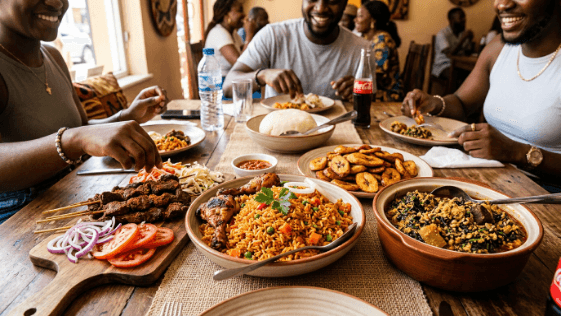
That is the heart of Nigerian food. It is generous, it is communal, and it says you are welcome here, sit down and eat. Wherever you are in the UK, cooking these dishes is a way of keeping that welcome alive.
Nigerian food is bold, colourful and deeply comforting, built on smoky stews, hearty swallows, and a generous hand with pepper. Whether you grew up on jollof rice and egusi soup or you are just discovering this cuisine for the first time, this guide walks you through what makes Nigerian food so special. We will cover the staple ingredients, the iconic dishes, the regional variety across the country, and how to cook it at home in the UK.
What defines Nigerian food
Nigeria is home to more than 200 million people and hundreds of ethnic groups, so its food is anything but one thing. Still, a few threads run through almost every kitchen. There is a love of rich, slow-cooked stews built on a base of tomatoes, onions, and peppers. There is the idea of the "swallow,"
Nigerian food is also social. Big pots are made to be shared, party jollof is a point of pride, and a good plate of food is an act of love. Once you understand the building blocks, the whole cuisine starts to make sense.
The staple Ingredients
Get to know these pantry heroes, and you can cook most Nigerian dishes at home.
- Rice: The backbone of jollof, fried rice, and countless everyday meals. Long-grain and parboiled rice are the usual choice.
- Yam: A starchy tuber that is boiled, fried, roasted, or pounded. It is filling, mild, and endlessly versatile.
- Plantain: Sweet when ripe, starchy when green. Fried ripe plantain, known as dodo, is a beloved side. Learn more in our guide to [what is plantain](/glossary/plantain).
- Egusi: Ground melon seeds that thicken and enrich soups with a nutty flavour. Read our explainer on [what is egusi](/glossary/egusi) or find [egusi](/product/egusi) on the platform.
- Garri: Made from fermented, grated cassava. It is eaten as eba (a swallow) or soaked in cold water as a refreshing snack. Browse [garri](/product/garri) to see who stocks it.
- Beans: Brown or black-eyed beans form the base of porridges, moi moi and akara.
- Palm oil: Rich, red, and unmistakable, it gives many stews their colour and flavour. See [palm oil](/product/palm-oil) locally.
- Scotch bonnet: The pepper that brings the signature heat and fruity aroma. Find [scotch bonnet](/product/scotch-bonnet) near you.
- Dried fish and stockfish: Smoky, chewy, and full of umami, these add depth to soups and stews.
- Ground crayfish: A fine powder of dried shellfish that seasons soups with a savoury, slightly sweet note.
- Spices and seasonings: Think stock cubes, curry powder, thyme, uziza, ehuru (calabash nutmeg) and locust beans (iru) for that trademark savoury backbone.
The Iconic Dishes
Here are the dishes that define Nigerian cooking, with a taste of what to expect from each.
Jollof rice is the star of any celebration, a one-pot rice cooked in a rich tomato and pepper base until every grain is stained red and full of flavour. It is the subject of friendly rivalry across West Africa. Try making your own with our [jollof rice recipe](/recipe/jollof-rice).
Egusi soup is a thick, hearty soup made from ground melon seeds, leafy greens, meat and fish, usually served with a swallow. It is comforting, nutty and deeply satisfying.
Pounded yam and eba are two classic swallows. Pounded yam is smooth and stretchy, traditionally made by pounding boiled yam, while eba is made from garri. Both are perfect for scooping up soup. You can shortcut pounded yam with [pounded yam flour](/product/pounded-yam-flour). To understand swallows in general, see our guide on [what is fufu](/glossary/fufu).
Suya is spicy grilled meat, thinly sliced and coated in a nutty, peppery spice mix called yaji. It is a hugely popular street food, best eaten hot off the grill with sliced onions.
Moi moi is a steamed savoury pudding made from blended beans, peppers, and onions, often with egg or fish inside. Soft, protein-rich, and a favourite at parties.
Pepper soup is a light, fiery broth flavoured with warming spices, made with fish, goat meat, or chicken. It is soothing when you are under the weather and popular at gatherings.
Efo riro is a rich vegetable stew of leafy greens, peppers, palm oil and assorted meats or fish. Flavourful, wholesome and a Yoruba favourite.
Puff puff is a sweet, deep-fried dough ball, soft on the inside and golden on the outside. A beloved snack and party treat.
Ofada rice is a local, unpolished Nigerian rice with an earthy aroma, usually served with a spicy, oily pepper sauce called ayamase. Distinctive and full of character.
Regional and Ethnic Variety
Nigerian food changes as you travel, shaped by the country's many ethnic groups. Three of the largest give you a sense of the range.
Yoruba cuisine, from the south west, is known for dishes like efo riro, ewedu, amala (a swallow made from yam flour) and pounded yam. Flavours are rich and often built around leafy greens and peppers.
Igbo cuisine, from the south east, features soups such as ofe nsala (white soup), oha soup, and abacha (African salad made from cassava). There is a strong love of yam, cocoyam, and bold, spicy soups.
Hausa cuisine, from the north, leans on grains like millet and sorghum, along with dishes such as tuwo, miyan kuka (baobab leaf soup) and, famously, suya. It is where much of Nigeria's grilled meat tradition comes from.
This is just a glimpse. Every region and family has its own treasured recipes.
How to cook Nigerian food at home in UK
The good news is that Nigerian cooking is very achievable at home, and you do not need to fly ingredients in. The trick is sourcing the ingredients: egusi, garri, palm oil, fresh or dry pepper, dried fish, stockfish, ground crayfish, and the right rice.
Start with something forgiving like jollof rice or fried plantain, then build up to a soup like egusi once you are comfortable. Blend your own pepper base from tomatoes, red bell peppers, onions and scotch bonnet, and keep stock cubes and ground crayfish on hand for seasoning. A blender and a good, heavy pot will take you a long way.
For ingredients, your best bet is a local African or Caribbean grocery. These shops carry everything from fresh yam and plantain to frozen fish, palm oil and hard-to-find spices, often at better value than the supermarket.
Africanstores helps you find African and Caribbean shops near you, whether that is [African food stores in London](/african-food-stores-in-london), [African food stores in Manchester](/african-food-stores-in-manchester) or [African food stores in Birmingham](/african-food-stores-in-birmingham). Our product pages, like [egusi](/product/egusi) and [palm oil](/product/palm-oil), show you exactly which local stores stock each item.
Frequently asked questions
What is the most popular Nigerian food?
Jollof rice is arguably the most popular and most loved Nigerian dish, both at home and abroad. Egusi soup with a swallow is another strong contender, especially at family meals and celebrations.
What do Nigerians eat every day?
Everyday meals vary, but common dishes include rice dishes, beans, yam, plantain, and a soup or stew served with a swallow like eba or pounded yam. Bread, akara, and pap are popular for breakfast.
Is Nigerian food spicy?
It often is, thanks to scotch bonnet peppers, but the heat varies from dish to dish and cook to cook. Many recipes can be made milder by using less pepper, so it is easy to adjust to your taste.
What is the national dish of Nigeria?
Nigeria does not have a single official national dish, but jollof rice is widely seen as the unofficial national favourite. Pounded yam with egusi soup is another dish that captures the heart of Nigerian cuisine.
Do I need special equipment to cook Nigerian food?
Not really. A good blender for pepper and bean mixes, a large heavy pot for stews and rice, and a frying pan will cover most dishes. Traditional tools like a mortar and pestle are helpful for pounded yam but not essential.