The short answer
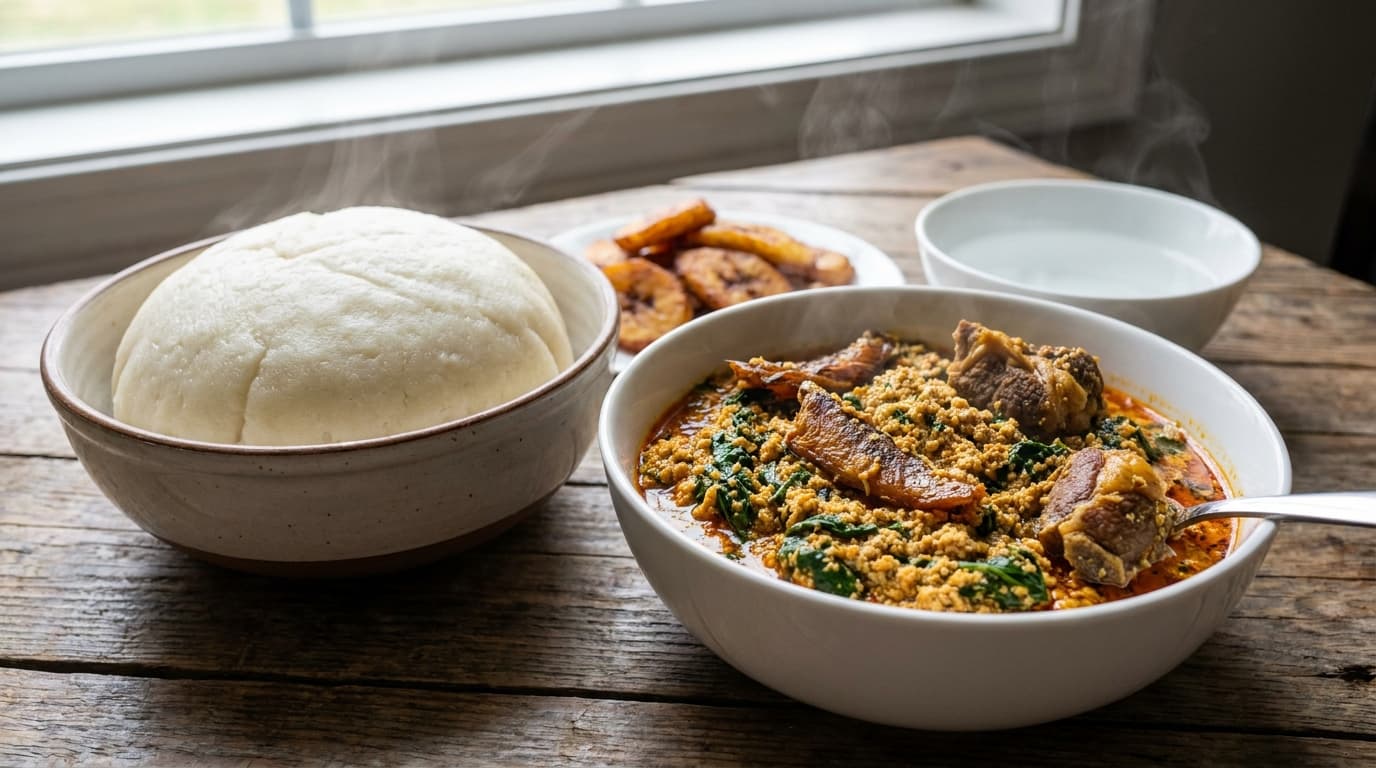
Fufu is a soft, smooth, stretchy staple food eaten across West and Central Africa. It is made by pounding or mixing starchy foods such as cassava, yam, plantain or cocoyam into a thick, dough-like ball. It is served with soups and stews, pinched into small pieces, dipped in the soup and swallowed rather than chewed. Modern instant fufu flour lets you make it in minutes instead of pounding by hand.
What to remember
- Fufu is a soft, smooth, stretchy staple food eaten across West and Central Africa. It is made by pounding or mixing starchy foods such as cassava, yam, plantain or cocoyam into a thick, dough-like ball. It is served with soups and stews, pinched into small pieces, dipped in the soup and swallowed rather than chewed. Modern instant fufu flour lets you make it in minutes instead of pounding by hand.
- It is made from starchy foods pounded or mixed into a soft, stretchy dough. Cassava, yam, plantain and cocoyam are all common bases.
- You eat it with your hands: pinch a small ball, dip it in soup, and swallow it rather than chewing.
- It shines with soups like egusi, groundnut, light soup and okra, so the soup does as much work as the fufu.
- Instant fufu flour has made it a weeknight food, and you can pick it up at African and Caribbean food shops across the UK.
There is a reason fufu turns up wherever people from West and Central Africa gather. It is not just food, it is a thread that runs through households, celebrations and everyday evenings alike. Across Nigeria, Ghana, Cameroon, Congo and their neighbours, the same basic act, softening starch into a warm, stretchy ball and eating it with soup, connects people who might otherwise cook very differently.
The old way of making it says a lot about what fufu means. The pounding, done in a tall wooden mortar with a heavy pestle, was rarely a solitary job. One person would pound while another folded the dough, and the steady, rhythmic thud of the pestle was a familiar sound in many compounds and kitchens. It was tiring, yes, but it was also communal, the kind of task that filled a home with sound and drew people together while the soup simmered nearby.
Eating it carries that same warmth. Fufu is a hands-on food in the most literal sense: no cutlery, just your hand, a soft piece pinched free, dipped and swallowed. Sharing from a common bowl, or gathering around a table where everyone is eating the same staple, makes the meal feel collective rather than individual. It slows everyone down and keeps them talking.
That is why instant fufu flour, for all the debate about whether it matches the pounded original, has been such a quiet gift. It means someone far from home, in a flat in London or Manchester, can still make the food they grew up with, serve it with the right soup, and feel that thread pull them back to the table they remember.
What is Fufu?
Fufu is one of those foods that instantly says home to millions of people. At its simplest, it is a soft, smooth, stretchy staple made by turning starchy foods into a thick dough. You take something like cassava, yam, plantain or cocoyam, cook it, and then pound or mix it until it becomes a pliable, slightly elastic ball. That ball sits at the centre of the meal, and everything else, the soup, the stew, the sauce, gathers around it.
What makes fufu different from, say, mashed potato is the texture and the way you eat it. Good fufu is stretchy and smooth, with a gentle pull to it. It is not seasoned or flavoured on its own. Its whole job is to carry soup, to soak up flavour and to fill you up. Think of it as the plate and the spoon at the same time, made from starch.
Fufu is eaten right across West and Central Africa, which is part of why it matters so much. It is a daily food in Nigeria and Ghana, and it appears in different forms through Cameroon, Congo, Sierra Leone, Liberia, Togo and many countries in between. Because it is so widespread, it carries a lot of names and a lot of small regional differences, but the core idea stays the same: a soft, swallowable staple that partners with soup.
Different Type of Fufu
There is no single fufu. It is really a family of foods, and which one you grew up with often depends on where your family is from.
Cassava fufu, sometimes called akpu or fufu in parts of Nigeria, is one of the most common. It is made from fermented cassava, which gives it a slightly tangy smell and taste that people either love instantly or grow to love over time. It is soft, smooth and very stretchy.
Pounded yam, known as iyan in Yoruba, is often spoken about in the same breath as fufu, and many people count it as part of the family. It is made from boiled yam pounded until smooth. It is prized for being stretchy, filling and a little more neutral in taste, which is why it pairs so well with rich, heavy soups. You can read more about it in our guide to Nigerian food.
Plantain fufu uses green plantain, sometimes blended with cassava or cocoyam, and has a slightly firmer bite and a subtle sweetness. Cocoyam fufu, popular in parts of Ghana and Cameroon, gives a smooth, soft result and often goes into the pounded fufu that Ghanaians serve with light soup. In Ghana, classic fufu is frequently pounded from a mix of cassava and plantain or cassava and cocoyam, which you will see mentioned in our guide to Ghanaian food.
Then there are the quick fufu flours. These are dried, pre-processed versions of the same starches, cassava, plantain, cocoyam, semolina and more, sold as a powder you simply stir into hot water. They are not a lesser version so much as a practical one, and for a lot of families living far from home they are what keeps fufu on the table during a busy week.
How to eat fufu
If you have never eaten fufu before, the method is part of the pleasure. You eat it with your hands, and specifically with your right hand in many cultures. You pinch off a small ball from the larger mound, roll it gently, and often press a little dip into it with your thumb so it can scoop up soup.
Then you dip that piece into the soup, coating it well, and here is the part that surprises newcomers: you swallow it rather than chewing it. Fufu is meant to slide down, carrying the flavour of the soup with it. Chewing it into a paste is not the goal. It takes a meal or two to get comfortable with, and then it becomes second nature.
Eating fufu is also usually a shared, unhurried affair. A big mound might sit in a communal bowl, or each person gets their own, but either way the rhythm is relaxed: pinch, dip, swallow, talk, repeat. It is food that slows you down and keeps you at the table.
Soups that you can eat with Fufu
Fufu is only ever half the meal. The soup is the other half, and honestly it is where a lot of the magic lives.
Egusi soup, thick with ground melon seeds and leafy greens, is a classic partner and one of the most loved across Nigeria. Groundnut soup, rich and nutty from peanuts, is a favourite in Ghana and beyond and clings beautifully to a piece of fufu. Ghanaian light soup, a lighter, brothy tomato-based soup often made with fish, goat or chicken, is the traditional match for pounded fufu and cocoyam fufu. Okra soup, with its signature draw and slippery texture, is another firm favourite and pairs especially well with swallow foods like fufu.
Beyond these, you will find fufu served with bitterleaf soup, ogbono, palm nut soup and countless regional stews. The pattern is always the same: a soft, neutral staple lifting a deeply flavoured, often protein-rich soup. If you want to see how these dishes sit within the wider cuisine, our guide to West African food is a good place to start.
How Fufu is made
Traditionally, making fufu was real work. Cassava or yam would be boiled and then pounded in a large wooden mortar with a heavy pestle, often by two people working in rhythm, one pounding, one turning the dough between blows. It could take a long time and a lot of muscle, and in many homes it was a shared task that pulled people into the kitchen together.
That labour is exactly why instant fufu flour changed so much. Instead of hours of pounding, you can now bring water to the boil, stir in the flour, and cook and mix it for a few minutes until it comes together into a smooth, stretchy ball. The result is not identical to freshly pounded fufu, and plenty of people will tell you the pounded version has an edge, but instant flour has made the food far more accessible, especially for anyone cooking away from home with limited time.
It is worth knowing that different flours behave differently. Cassava flour, plantain flour, cocoyam flour and blended fufu flours all give slightly different textures and tastes, so it is worth trying a couple to find the one that feels right to you.
How to Find Fufu Flour in the UK
FouThe good news for anyone in Britain is that fufu flour is widely stocked. African and Caribbean food shops across the country carry a range of brands and types, from cassava and plantain fufu flour to pounded yam flour and cocoyam blends. Larger stores often stock several at once so you can compare.
If you are not sure where to look, start with the African and Caribbean food shops near you rather than a mainstream supermarket, where the range is usually far more limited. In the capital, our roundup of African food stores in London is a useful starting point, and you can use africanstores.co.uk to find shops, restaurants and services near you wherever you are in the UK. Once you know which shop stocks your preferred brand, restocking becomes the easy part.
Frequently asked questions
Is fufu the same as pounded yam?
Not quite, though they are close cousins. Fufu is a broad family of soft, stretchy staples made from starchy foods, while pounded yam is specifically made from boiled yam that is pounded smooth. Many people count pounded yam as part of the fufu family, and you eat both the same way, with soup, but the base ingredient and taste are different.
How do you eat fufu?
You eat it with your hand. Pinch off a small ball, roll it gently, press a little dip into it, then scoop up soup and swallow the piece rather than chewing it. It feels unusual the first time, but after a meal or two it becomes natural.
What soup goes with fufu?
Lots of them. Popular choices include egusi, groundnut soup, Ghanaian light soup and okra soup, along with bitterleaf, ogbono and palm nut soups. The idea is always a soft, neutral staple carrying a rich, flavourful soup.
Is instant fufu flour as good as pounded fufu?
It depends who you ask. Freshly pounded fufu has a texture many people prefer, but instant flour is far quicker and gives a very good result in minutes. For busy weeks, or for anyone cooking far from home, instant fufu flour is what keeps the dish on the table.
Where can I buy fufu flour in the UK?
African and Caribbean food shops across the UK stock fufu flour in several types, including cassava, plantain, cocoyam and pounded yam blends. Start with a specialist shop near you rather than a mainstream supermarket, and you can use africanstores.co.uk to find one wherever you are.