What Is Marula Oil? The African Beauty Oil Explained
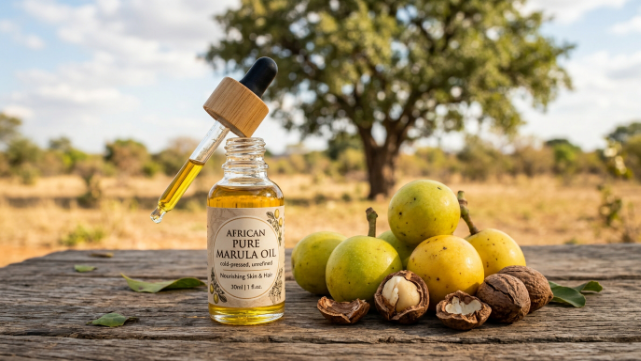
Quick answer
Marula oil is a light, fast-absorbing beauty oil pressed from the nut, or kernel, of the fruit of the marula tree, which grows across southern and parts of eastern Africa. Golden and lightweight, it is prized as a moisturising, nourishing oil for skin and hair, sinking in quickly without feeling heavy or greasy, which makes it popular for the face, body and hair. It is rich in nourishing fatty acids and has long been used by communities where the marula tree grows, and it has become a sought-after natural oil in skincare and haircare more widely. In the UK, marula oil is sold by African and natural beauty shops and online. African Stores lists beauty supply shops near you.
- Other names
- marula kernel oil, sclerocarya oil
- Origin
- Southern Africa
- Type
- Beauty
Marula oil is a natural, treasured part of caring for the skin and hair for many with roots in southern and eastern Africa and across the wider African and Caribbean beauty world in Britain.
It is the light golden oil smoothed onto the face, the finishing shine on the hair, the natural product tied to a tree that is loved and celebrated back home, the oil that connects a simple beauty routine to the African land. Using marula oil can feel like a small link to home and to a long tradition of natural beauty care.
There is heritage in it too and a story of the land and its people. Marula oil comes from a tree deeply valued in the communities where it grows, pressed from its nut by skilled, often traditional labour, and its use for skin and hair reaches back generations, so a bottle of good marula oil carries that heritage with it.
Choosing and using it, especially in a way that supports the communities who produce it, is part of a wider culture of natural, rooted beauty care. That light, nourishing, rooted touch is the quiet gift of marula oil.
What is Marula Oil?
Marula oil is one of Africa's treasured natural beauty oils, a light, golden oil pressed from the kernel inside the nut of the marula fruit. The marula tree grows across southern Africa and into parts of eastern Africa, and it is deeply woven into the life and culture of the regions where it grows, its fruit eaten and used to make drinks, and its nut pressed for oil.
When the hard nut is cracked and the kernel inside is pressed, it yields a nourishing oil that has been used for generations to care for the skin and hair and which has more recently become popular in natural beauty circles worldwide.
What makes marula oil stand out among beauty oils is its light, fast-absorbing texture. Unlike heavier butters and oils, marula oil sinks into the skin quickly and does not leave a greasy film, which makes it pleasant and easy to use on the face as well as the body and hair.
It is rich in nourishing fatty acids and antioxidants that help moisturise and soften, and its lightness means it suits many skin and hair types. It belongs to the family of natural African oils and butters used in beauty care, alongside the likes of shea butter and cocoa butter, though its light, oil texture gives it a different feel and role.
Where Does Marula Oil Come From?
Understanding where marula oil comes from explains its qualities and its cultural roots. The marula tree is native to southern and parts of eastern Africa, and it is highly valued in the communities where it grows, celebrated in local tradition and known for its fruit, which is also used to make a well-known cream liqueur.
The oil comes from the kernel inside the marula nut: the fruit is gathered, the nut is cracked, often by hand, which is skilled, labour-intensive work, and the kernel is pressed to release the oil. In many regions, this work is done by women, and marula oil production supports local livelihoods.
This connection to the land and to traditional knowledge is part of marula oil's story, and buying good marula oil often supports the African communities that produce it. As with other natural oils, marula oil comes in cold-pressed, unrefined forms that keep more of their natural character and nutrients and in refined forms, with many people preferring pure, cold-pressed oil for skincare.
Because it is a single-ingredient natural oil, it is simple to use and free from additives when bought pure. Its long use by the communities where the marula tree grows is a testament to its value as a skin and hair oil.
How Marula Oil is Used on Skin and Hair
Marula oil is versatile, and its light texture makes it especially easy to use. On the skin, it is used as a moisturiser and facial oil: a few drops are smoothed onto the face or added to a moisturiser, where it absorbs quickly to soften and nourish without a heavy or greasy feel, which is why it suits the face and even oilier or combination skin that heavier oils might not.
It is also used on the body, on dry areas, and on the lips, and it is a popular ingredient in serums, moisturisers and other skincare for its nourishing, lightweight qualities.
On the hair, marula oil is used to add moisture, softness and shine and to smooth frizz and flyaways; it is applied to the lengths and ends or used as a finishing oil, and it suits many hair types, including dry, curly and Afro-textured hair that benefits from nourishing oils, as we cover in our guide to caring for 4c hair.
A little goes a long way, since it is light and spreads easily. Many people simply keep a bottle of pure marula oil as a natural, single-ingredient oil for both skin and hair. As with any new product, it is sensible to patch test first, and this article is general beauty information rather than medical advice.
Where can I Buy Marula Oil in UK?
Buying marula oil in Britain is straightforward, as it is a popular natural oil. African and natural beauty shops that serve the community stock marula oil, often as pure, cold-pressed oil, alongside other natural oils and butters, and the staff can help you choose a good-quality one and explain how it differs from heavier oils and butters. It is also widely available from natural beauty and online retailers, sold pure or as an ingredient in serums and moisturisers.
If you are new to marula oil, an Afro hair and beauty shop near you is a great place to find good-quality, pure marula oil and to ask advice on using it on skin or hair and to compare it with butters like shea and cocoa. You can find African food stores near you or look up Caribbean food stores near you, as many stock natural oils. Buying pure, cold-pressed marula oil, ideally from a source that supports the African communities who produce it, gives you the most natural and ethical product, and a small bottle lasts a long time.
Key takeaways
- It is sold by African and natural beauty shops and online in the UK.
- It is used on the face, body and hair and is rich in nourishing fatty acids.
- Marula oil is a light oil pressed from the kernel of the fruit of the African marula tree.
- It grows across southern and parts of eastern Africa and has long been used there.
- It is light and fast-absorbing, moisturising skin and hair without feeling heavy or greasy.
Frequently asked questions
What is marula oil?
Marula oil is a light, fast-absorbing beauty oil pressed from the kernel inside the nut of the marula fruit from the marula tree that grows across southern and parts of eastern Africa. Golden and lightweight, it is prized as a moisturising oil for skin and hair that sinks in quickly without feeling heavy or greasy. It is rich in nourishing fatty acids.
Where does marula oil come from?
Marula oil comes from the marula tree, native to southern and parts of eastern Africa, and is highly valued in the communities where it grows. The fruit is gathered, the nut cracked, often by hand, and the kernel inside pressed to release the oil. This work is often done by women, and marula oil production supports local livelihoods.
How do you use marula oil on skin and hair?
On skin, a few drops are smoothed onto the face or added to a moisturiser, absorbing quickly to soften without a greasy feel, which suits the face and even oilier skin. It is also used on the body and lips. On hair, it adds moisture, softness and shine and smooths frizz, applied to the lengths and ends or as a finishing oil. A little goes a long way.
Is marula oil good for the face?
Yes, marula oil is popular as a facial oil precisely because it is light and fast-absorbing, so it moisturises and nourishes the face without leaving a heavy or greasy film, which suits many skin types, including combination and oilier skin. As with any new product, it is sensible to patch test first, and this is general beauty information rather than medical advice.
Where can I buy marula oil in the UK?
African and natural beauty shops sell marula oil, often as pure, cold-pressed oil alongside other natural oils and butters, and it is widely available from natural beauty and online retailers too. An Afro hair and beauty shop is a good place to find good-quality, pure marula oil and ask advice. Buying cold-pressed oil, ideally supporting the communities who produce it, gives the most natural product. African Stores lists African and Caribbean food shops across the UK, so you can find one near you.
Join African Stores free
Save shops, follow the ones you love and get your free member card.
Your free member card: show it at participating shops for member offers.
Get the app