The short answer
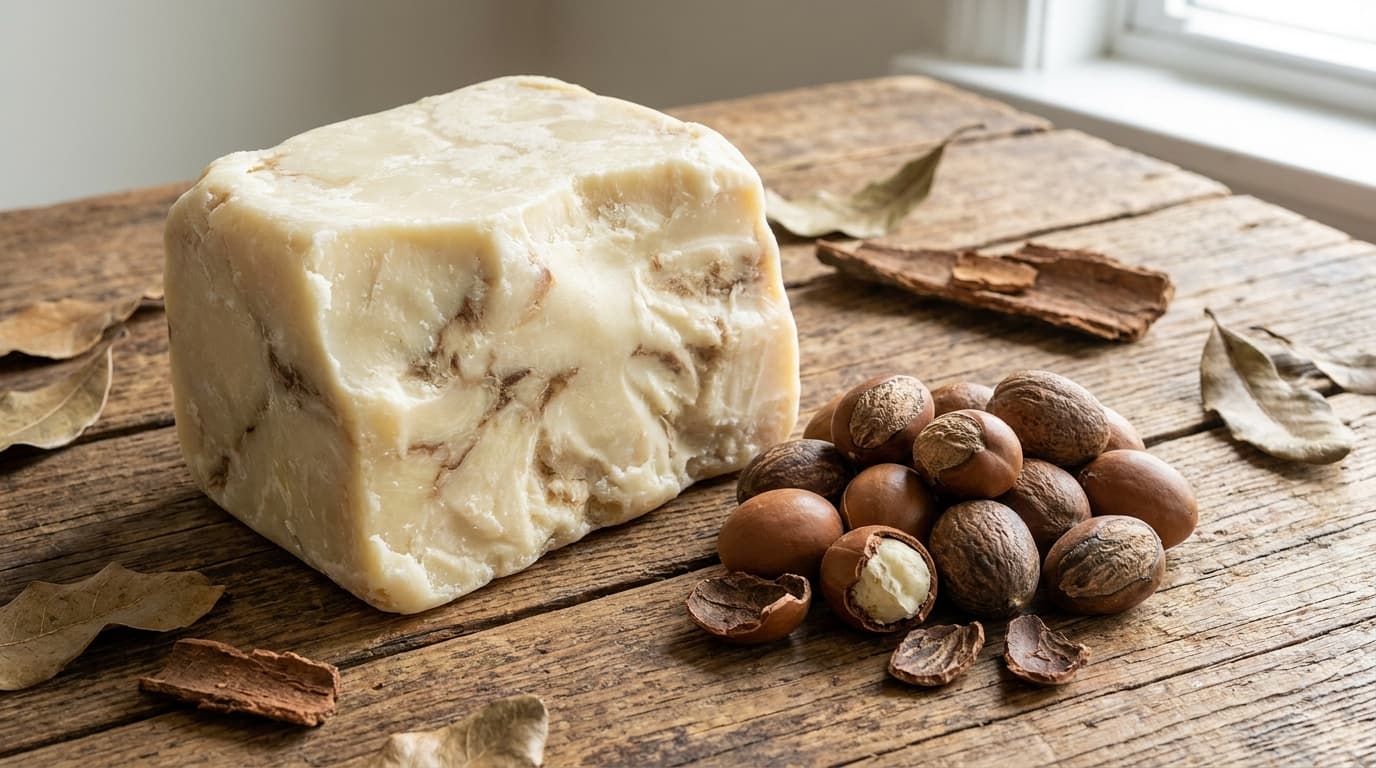
Shea butter is a natural fat pressed from the nuts of the shea tree, which grows across the West African savannah. It is widely used in skincare and haircare to moisturise and soften skin and hair and to soothe dryness. Raw or unrefined shea butter is minimally processed and keeps its natural colour and nutty scent, while refined shea butter is filtered and deodorised to a smoother, white product. You can buy genuine raw shea butter at African beauty supply shops across the UK.
What to remember
- Shea butter comes from the nut of the shea tree and has been hand-processed by West African women's cooperatives for generations.
- Raw or unrefined shea butter keeps more of its natural character; refined shea butter is smoother and more neutral in colour and smell.
- It is a well-loved moisturiser that softens skin and hair, seals in moisture, and helps soothe dry, tight skin.
- A little goes a long way: warm a small amount between your palms so it melts before you apply it.
- If your skin is sensitive, do a patch test first, and speak to a professional about any specific skin concerns.
Long before shea butter reached shelves around the world, it was simply part of daily life across the West African savannah. In many communities it has been used to care for skin and hair, to protect against sun and wind, and as a cooking fat, all from the same tree standing out in the grasslands.
The making of it carries real weight. The gathering and processing of shea nuts has traditionally been women's work, and across the region women's cooperatives turn that work into income, skills and a measure of independence. When you hold a block of raw shea butter, you are holding the end of a long line of hands and a tradition that has been kept alive for generations. That is the story that travelled with West African and Caribbean families to the UK, and it is why so many people still seek out the real thing at the beauty supply shops in their own neighbourhoods.
What is shea butter?
Shea butter is a creamy, ivory-to-pale-yellow fat pressed from the nuts of the shea tree. At room temperature it is solid and smooth, and it melts on contact with warm skin, which is part of what makes it such a satisfying moisturiser. People reach for it because it does a simple job well: it softens skin and hair, helps hold in moisture, and eases the feeling of dryness and tightness.
You will find it on its own in tubs and blocks, and as an ingredient in countless creams, lotions, lip balms, soaps and hair products. In its purest form it is a single natural ingredient with nothing added.
Where does shea butter come from?
The shea tree grows wild across a broad belt of the West African savannah, through countries such as Ghana, Burkina Faso, Nigeria, Mali and beyond. The trees are not planted in neat rows; they grow across the grasslands and can take many years to mature and bear fruit, which is one reason the butter is so valued.
The nuts are traditionally gathered, cracked, roasted, ground and kneaded by hand, work that has long been carried out by women. Across the region, women's cooperatives produce shea butter as a source of income and independence, using methods passed down through generations. That heritage is a big part of why shea butter matters far beyond the beauty aisle.
Raw Shea Butter versus Refined Shea Butter
The main choice you will face when buying is between raw or unrefined shea butter and refined shea butter.
Raw or unrefined shea butter is minimally processed. It keeps its natural colour, which ranges from ivory to a deeper yellow, and it has a distinctive nutty, earthy scent. Because it is closer to its natural state, it holds on to more of the qualities people associate with shea in the first place. The texture can be a little grainy and it may feel firmer or softer depending on the temperature.
Refined shea butter is filtered and processed further. This gives a whiter, smoother product with little to no smell, which some people prefer for use on the face or under fragranced products. The trade-off is that refining strips away some of the natural character and colour.
Neither is simply better than the other. If you want the most natural product and do not mind the scent, raw shea butter is the traditional choice. If you prefer something odourless and very smooth, refined shea butter may suit you better.
Shea Butter uses for skin and hair
On skin, shea butter is a rich moisturiser. It is a favourite for dry areas such as elbows, knees, heels and hands, and many people use it all over after a bath or shower to soften the skin and lock in moisture while the skin is still slightly damp. Because it is thick, a small amount is usually enough.
On hair, shea butter is popular in Afro and textured hair routines. It helps soften and smooth the hair, seal in moisture, and tame frizz. Many people use a little on the ends, which are the oldest and driest part of the hair, and gently on the edges. It can feel heavy if you use too much, so start small and build up. For styling advice tailored to your hair, it is worth speaking to a professional at one of the African hair salons near you.
A quick, honest note: shea butter is a cosmetic moisturiser, not a medicine. It is loved for softening and soothing dry skin and hair, but it is not a treatment for any skin condition. If you are dealing with a specific concern, speak to a pharmacist, GP or dermatologist rather than relying on shea butter to fix it.
How to use and store Shea Butter
Raw shea butter is solid, so the trick is to warm it. Scoop out a small amount, rub it between your palms until it melts into an oil, then smooth it over your skin or through your hair. Applying it to slightly damp skin helps it seal in moisture. On hair, work it through with your fingers, focusing on the lengths and ends.
Store shea butter in a cool, dry place away from direct sunlight and heat, with the lid on. It can soften or even melt in a warm room and firm up again as it cools, which is normal and does not spoil it. If it melts and resets it may become grainy; you can gently rewarm and stir it to smooth it out. Kept sensibly, a tub lasts a long time.
If your skin is sensitive or you are trying shea butter for the first time, do a patch test: apply a little to a small area such as the inside of your forearm and wait a day to check you do not react before using it more widely.
What to look for when Buying Shea Butter
When you are buying, a few things help you find the genuine shea butter.
- For raw shea butter, expect a natural ivory-to-yellow colour and a nutty, earthy smell rather than a perfumed one.
- Check the label: pure shea butter should list shea (often as Butyrospermum parkii) with few or no other ingredients.
- Be a little wary of anything that is bright white yet sold as raw, or heavily perfumed yet sold as pure.
This is where buying in person pays off. At African beauty supply shops, you can see the colour, smell the scent and ask the staff where the butter is from, which is much harder to judge from a photo online. To find one near you, browse beauty supply shops near you and visit one in your area.
Frequently asked questions
Is raw shea butter better than refined?
Neither is simply better. Raw or unrefined shea butter keeps its natural colour, scent and character, so it suits people who want the most natural product. Refined shea butter is whiter, smoother and almost odourless, which some prefer for the face or under fragranced products. Choose based on what you want from it.
Can I use shea butter on my face?
Many people do, especially on dry areas. It is rich, so use a small amount, and if your skin is prone to sensitivity do a patch test first. If you have a specific skin concern, it is best to speak to a pharmacist or dermatologist.
Why does my shea butter smell nutty?
That natural nutty, earthy smell is a normal sign of raw, unrefined shea butter. If you prefer no scent, look for refined shea butter instead, which is filtered and deodorised.
How long does shea butter last?
Kept in a cool, dry place with the lid on and away from heat and sunlight, a tub of shea butter lasts a long time. If it melts in a warm room and resets grainy, you can gently rewarm and stir it smooth again.
Where can I buy genuine shea butter in the UK?
African beauty supply shops are the easiest place to find genuine raw shea butter, and buying in person lets you check the colour and scent and ask where it is from. You can find beauty supply shops near you and visit one in your area.