The short answer
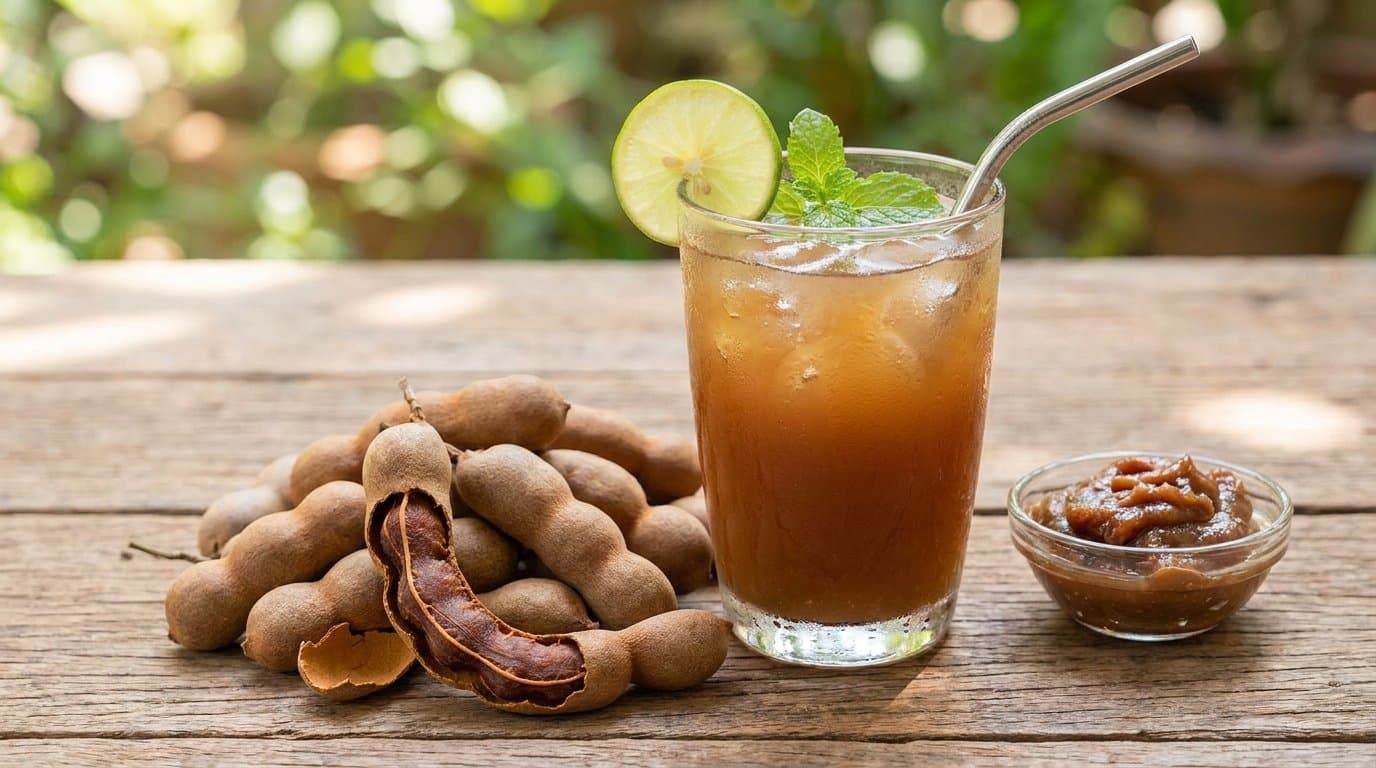
Tamarind juice is a refreshing sweet and sour drink made from the pulp of the tamarind fruit, a brown, tangy pod widely used across Africa, the Caribbean, Asia and Latin America. The sticky, sour tamarind pulp is soaked in water and strained to release its flavour, then sweetened and often spiced, giving a drink that is at once tart and sweet, with a distinctive fruity depth. Served cold over ice, it is a much loved thirst-quencher in many cultures. It is enjoyed for its bright, tangy taste and refreshing quality. In the UK tamarind, as pods, blocks or paste, is sold by African, Caribbean and Asian food shops. African Stores lists African and Caribbean food shops near you.
What to remember
- Tamarind juice is a refreshing sweet and sour drink made from tamarind fruit pulp.
- The sour pulp is soaked in water and strained, then sweetened and often spiced.
- It is tart and sweet at once, with a distinctive fruity depth.
- It is served cold over ice as a much loved thirst-quencher in many cultures.
- Tamarind, as pods, blocks or paste, is sold by African, Caribbean and Asian food shops in the UK.
Tamarind juice is a refreshing taste of home for many people from Africa, the Caribbean and beyond in Britain. It is the cold, tangy glass on a hot day, the sweet and sour drink of childhood and gatherings, the flavour that says home and sunshine and celebration, the cooler that mum or grandmother made from soaked tamarind. Making tamarind juice far from home brings back warm days and family kitchens and the bright, mouth-watering tang of a beloved drink, the warmth of home in every cold, tangy sip.
There is real shared heritage in it too, in a drink made from a fruit loved across so many cultures, each with its own tamarind cooler. It reflects a global love of turning the sour tamarind into something sweet, refreshing and welcoming, and to make and share it is to join that tradition. Serving tamarind juice to family who grew up on it, or introducing a friend to its sweet and sour tang, is an act of welcome. That bright, refreshing taste of home is the quiet gift of tamarind juice.
What tamarind juice actually is
Tamarind juice is one of the world's great sweet and sour drinks, made from the pulp of the tamarind fruit. Tamarind is a brown pod containing a sticky, tangy pulp around its seeds, and this pulp has a distinctive taste that is intensely sour and fruity, a little like a mix of sour date and citrus. To make the juice, the pulp is soaked in water and worked and strained to release its flavour into the liquid, then sweetened to balance the sourness, giving a refreshing drink that is both tart and sweet. It has a rich brown colour and a bright, mouth-watering tang.
Tamarind is used across a huge swathe of the world, in African, Caribbean, Asian, Middle Eastern and Latin American cooking, and tamarind drinks are loved in many of these cultures under various names. Its sweet and sour character makes it especially refreshing. Tamarind juice belongs to the world of drinks and ingredients we cover across the site, and it draws on the same fruit we describe in our guide to tamarind, here turned into a cooling drink alongside other refreshers like sorrel drink.
How tamarind juice is made
Making tamarind juice is simple and rewarding. The starting point is tamarind pulp, which comes as whole pods, as compressed blocks of pulp with or without seeds, or as a ready paste. The pulp is soaked in warm or hot water to soften it, then squeezed and worked by hand and strained through a sieve to separate the smooth, flavoured liquid from the seeds and fibres. This tamarind extract is the base of the drink.
The extract is then diluted with water to taste and sweetened, usually with sugar, to balance the strong sourness of the tamarind, and it is often flavoured with warm spices or aromatics, which vary by culture and can include ginger, and sometimes a pinch of salt or other spices to round it out. It is chilled and served cold over ice. The balance of sour tamarind and sweetness is the key to a good tamarind juice, and it can be adjusted to taste. This is general food information rather than dietary advice. The result is a bright, tangy, refreshing drink.
How tamarind juice is enjoyed
Tamarind juice is enjoyed as a refreshing cold drink, especially welcome in warm weather, its sweet and sour tang making it wonderfully thirst-quenching. It is served chilled over ice, on its own as a refreshment, with meals, and at gatherings and celebrations, and it is loved across many cultures for its distinctive flavour. In some places it is a popular seasonal or festive drink, and it is often reached for as a bright, cooling alternative to sweeter soft drinks.
Because tamarind is such a widely used fruit, tamarind drinks take many forms around the world, from lightly spiced versions to sweeter or more tart ones, but the essence is always that mouth-watering sweet and sour taste. It is also enjoyed as a base for other drinks and coolers. For anyone who enjoys tangy, fruity flavours, a cold glass of tamarind juice is a delicious discovery, and it is easy to make at home to your own taste. Served very cold, it is a bright, refreshing treat.
Where to buy the ingredients in the UK
Making tamarind juice at home in Britain is easy, as tamarind is widely sold. African, Caribbean and Asian food shops all stock tamarind in various forms: whole pods, compressed blocks of pulp, and ready-made tamarind paste or concentrate, any of which can be used to make the juice, with blocks and paste being especially convenient. Many supermarkets carry tamarind paste too, and some sell ready-made tamarind drinks.
If you want to make tamarind juice, an African or Caribbean food shop can point you to tamarind in the form that suits you and any spices you might add. You can find African food stores near you or look up Caribbean food stores near you, many of which stock tamarind. With tamarind pulp, water, a little sugar and perhaps some spice, you can make this bright, refreshing sweet and sour drink at home, chilled over ice, exactly to your taste.
Frequently asked questions
What is tamarind juice?
Tamarind juice is a refreshing sweet and sour drink made from the pulp of the tamarind fruit, a brown, tangy pod. The sticky, sour pulp is soaked in water and strained to release its flavour, then sweetened and often spiced, giving a drink that is at once tart and sweet with a distinctive fruity depth. It is served cold over ice as a thirst-quencher in many cultures.
How do you make tamarind juice?
To make tamarind juice, tamarind pulp, from pods, a block or paste, is soaked in warm water to soften, then squeezed, worked and strained to separate the smooth flavoured liquid from the seeds and fibres. This extract is diluted with water, sweetened with sugar to balance the sourness, and often flavoured with spices. It is chilled and served cold over ice, adjusted to taste.
What does tamarind juice taste like?
Tamarind juice has a distinctive sweet and sour taste, tart and mouth-watering from the tamarind but balanced with sweetness, with a rich, fruity depth a little like a mix of sour date and citrus. It is bright and refreshing, and the balance of sourness and sweetness can be adjusted to taste, sometimes with warm spices adding extra character.
What is tamarind?
Tamarind is a brown pod containing a sticky, tangy pulp around its seeds, from the tamarind tree. Widely used across Africa, the Caribbean, Asia, the Middle East and Latin America, its intensely sour, fruity pulp is used in drinks, sauces, chutneys, sweets and savoury cooking. For tamarind juice, the pulp is soaked and strained to make a sweet and sour drink.
Where can I buy the ingredients in the UK?
Tamarind is widely sold. African, Caribbean and Asian food shops stock it as whole pods, compressed blocks of pulp, and ready-made paste or concentrate, any of which can make the juice, with blocks and paste being convenient. Many supermarkets carry tamarind paste too. An African or Caribbean food shop can point you to tamarind and any spices to add. African Stores lists African and Caribbean food shops across the UK, so you can find one near you.