The short answer
The kola nut is the seed of the kola tree, native to West Africa, chewed for its mild stimulant effect and, above all, treasured for its deep cultural and ceremonial significance. It contains caffeine and related compounds, which give it a mild energising, alertness-boosting effect, and it has a bitter taste that mellows as you chew. Beyond any effect, the kola nut is a powerful cultural symbol across much of West Africa, especially among the Igbo, Yoruba, Hausa and other peoples, where it is central to hospitality, ceremonies, prayers and important gatherings, and presenting kola to a guest is a profound gesture of welcome and respect. It is different from bitter kola, a related but distinct seed. In the UK the kola nut is sold by African food shops. This article is general information, not medical advice.
What to remember
- The kola nut is the seed of the West African kola tree, chewed for its mild stimulant effect from caffeine.
- Above all it is treasured for its deep cultural and ceremonial significance across West Africa.
- It is central to hospitality, ceremonies, prayers and gatherings, and presenting it is a gesture of welcome and respect.
- It is a different seed from bitter kola, though the names are similar.
- In the UK it is sold by African food shops, and it is best seen as a cultural item and mild stimulant, not a medicine.
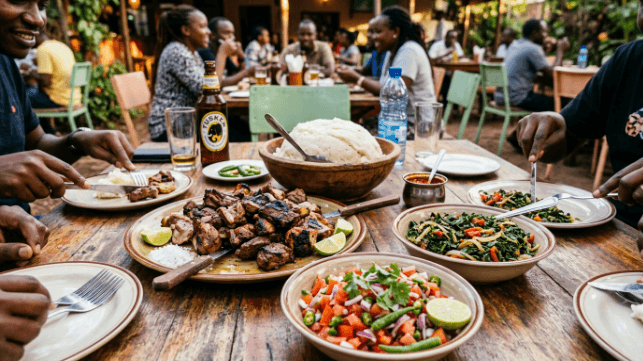
The kola nut is heritage and ceremony carried across the world for West Africans in Britain. It is the nut broken and shared to open a gathering, the gesture of welcome offered to a guest, the sacred ritual at a wedding or a meeting of elders, the symbol of respect, peace and community. That deep meaning is tied up with identity and belonging, and having kola to present at an occasion, or to offer a visitor far from home, is a way of keeping a profound custom alive and honouring where you come from.
There is deep heritage in it, and a reverence that goes well beyond any physical effect. The kola nut speaks of centuries of West African hospitality and ceremony, of the etiquette and prayers of breaking kola, of the values of respect and unity it embodies, and to share it is to take part in that living tradition. Presenting kola at a gathering, or explaining its meaning to a friend, is an act of cultural connection and pride. That sense of ceremony, hospitality and belonging, held in one esteemed seed, is the quiet gift of the kola nut.
This article is for general information and is not medical advice. The kola nut contains caffeine; consume in moderation, and if you are pregnant, breastfeeding, have a health condition or take medication, speak to a doctor or pharmacist.
What kola nut actually is
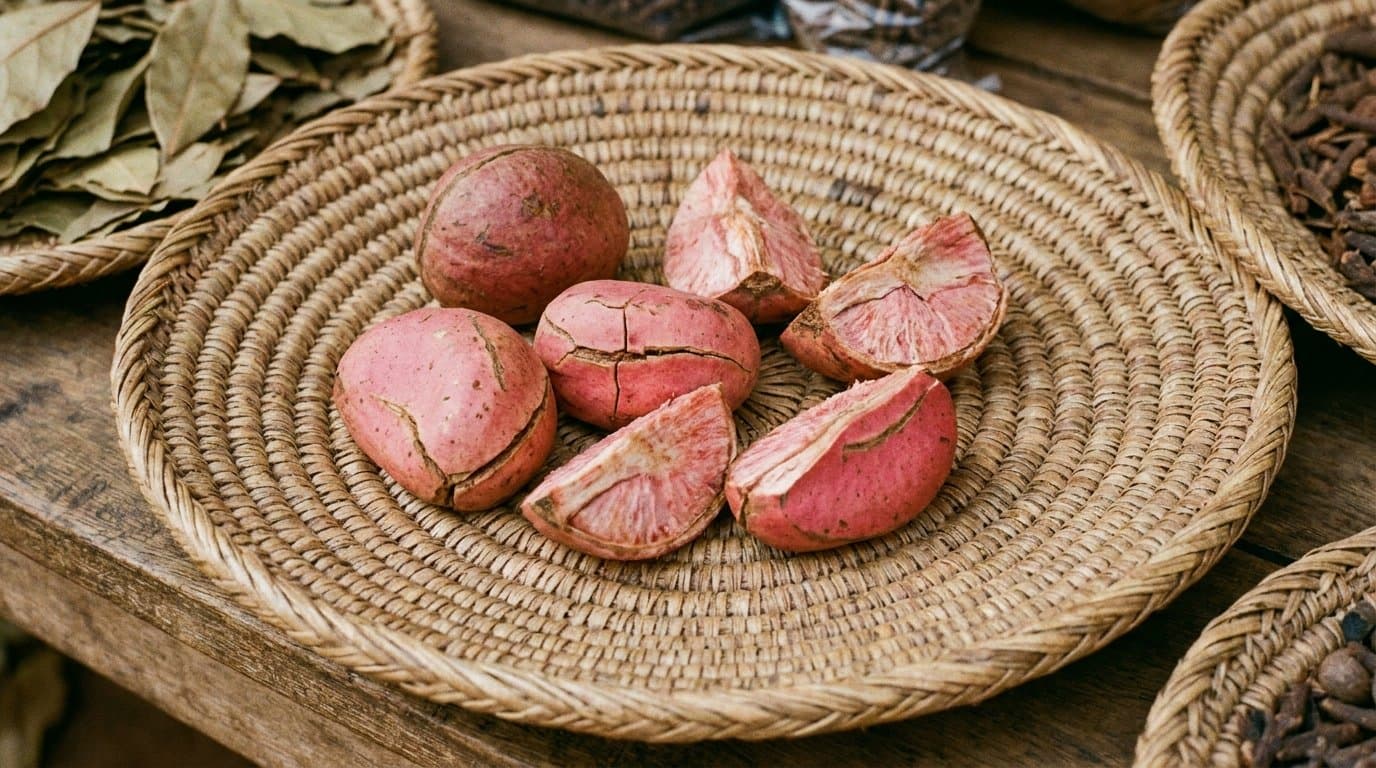
The kola nut is the seed of the kola tree, an evergreen native to the rainforests of West Africa, and it has been valued across the region for centuries. The nuts, which are actually seeds, are found inside a pod, and each nut splits into segments, or lobes; they range in colour from white to pink and deep red. Chewed fresh, the kola nut has a bitter taste that softens as you chew, and it contains caffeine and related stimulant compounds, which give it a mild energising effect, historically valued for staving off tiredness and hunger.
But to describe the kola nut only as a mild stimulant misses the point entirely, because its real significance is cultural. Across much of West Africa, the kola nut is one of the most important and symbolic of all foods, woven deep into hospitality, ceremony and social life. It was also historically the source of the flavour and caffeine in early cola drinks, which took their name from it. It sits among the traditional West African foods and items we approach with care, alongside its relative in our guide to bitter kola.
The Cultural Significance
The heart of the kola nut is its cultural and ceremonial role, which is profound and cannot be overstated. Across West Africa, and especially among the Igbo of southeastern Nigeria, the kola nut, called oji in Igbo and obi in Yoruba, is central to hospitality: presenting and sharing kola is a deeply meaningful gesture of welcome, respect and goodwill, and among the Igbo the breaking of kola, iwa oji, is a formal, almost sacred ritual with its own etiquette, prayers and blessings, performed to open important gatherings, ceremonies and meetings.
The kola nut features at weddings, funerals, naming ceremonies, festivals, the settling of disputes, and the reception of guests and elders, and it carries meanings of peace, unity, respect and blessing. To offer kola is to honour a guest; to share it is to affirm community and goodwill. This depth of meaning is why the kola nut is treasured far beyond any physical effect it has, and why it holds such an esteemed place in West African life. Understanding this cultural weight is the key to understanding what the kola nut truly is.
Kola nut versus bitter kola
A very common point of confusion is between the kola nut and bitter kola, and it is worth clearing up because they are different, though related, seeds. The kola nut comes from a Cola tree, is larger, splits into lobes, and while bitter, is less intensely so; it is the seed with the great ceremonial significance and the historical link to cola drinks. Bitter kola comes from a different tree, Garcinia kola, is smaller and more intensely bitter, and while it too features in hospitality, it is a distinct seed, which we cover in our guide to [bitter kola](/blog/bitter-kola).
Both are traditional West African seeds, both are chewed, both contain natural stimulants, and both appear in hospitality, so they are easily confused, especially as the names are so similar. But they are botanically distinct, with the kola nut being the larger, lobed, ceremonially central seed and bitter kola the smaller, sharper one. Knowing the difference helps when shopping or reading about them, and it lets you appreciate each on its own terms, since the kola nut in particular carries a ceremonial weight that is uniquely its own.
Effects of Kola Nut
Because the kola nut contains caffeine and related stimulants, a brief, balanced note on its effects is worthwhile. Its mild energising, alertness-boosting effect is real and comes from the caffeine, similar in kind to other caffeine-containing foods and drinks, and this is part of why it has traditionally been chewed. Beyond that, various traditional and health claims are made about the kola nut, but these are not firmly established by strong evidence, and it is best regarded as a cultural item and mild stimulant rather than a medicine or a treatment for anything.
As with any caffeine-containing food, sensible moderation applies. Consuming a lot of kola nut could contribute to the effects associated with stimulants, such as restlessness or affecting sleep, so it is best enjoyed in moderation, particularly by anyone sensitive to caffeine. Pregnant or breastfeeding women, and anyone with a health condition or taking medication, should be cautious and check with a healthcare professional before consuming it regularly. None of this detracts from its cultural importance; it is simply the balanced approach any stimulant food deserves, and the kola nut's true value lies in its meaning rather than any health claim.
Where to buy the kola nut in the UK
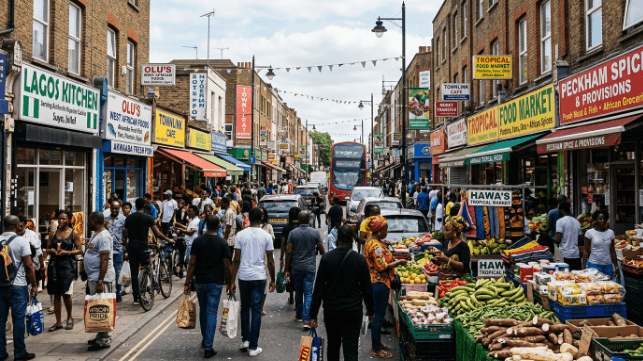
The kola nut is sold in Britain by African food shops that serve West African communities, usually as the whole fresh or dried nuts, sometimes loose and sometimes packaged. Because it is so central to ceremony and hospitality, it is often bought for weddings, naming ceremonies, funerals and gatherings, as well as for chewing, and shops that serve Igbo, Yoruba and other West African customers will typically stock it, especially around occasions.
When you shop, it is worth specifying the kola nut, or its local names such as oji or obi, rather than bitter kola, if that is what you want, since the two are different, and the shop staff will know the distinction. You can find African food stores near you or look up Caribbean food stores near you. Whether you want it for a ceremony, to offer to guests in the traditional way, or simply to experience this culturally important seed, an African food shop is the place to find it.
Frequently asked questions
What is the kola nut?
The kola nut is the seed of the West African kola tree, chewed for its mild stimulant effect from caffeine and related compounds, and above all treasured for its deep cultural and ceremonial significance. It has a bitter taste that mellows as you chew, and it was historically the source of the flavour and caffeine in early cola drinks.
What is the cultural significance of the kola nut?
It is profound. Across West Africa, especially among the Igbo, Yoruba and Hausa, the kola nut is central to hospitality, and presenting or sharing it is a meaningful gesture of welcome and respect. The Igbo ritual of breaking kola is a formal, almost sacred act that opens gatherings, and kola features at weddings, funerals, naming ceremonies and the settling of disputes.
What is the difference between the kola nut and bitter kola?
They are different, related seeds. The kola nut comes from a Cola tree, is larger, splits into lobes, and carries great ceremonial significance and the historical link to cola drinks. Bitter kola comes from a different tree, Garcinia kola, and is smaller and more intensely bitter. Both feature in hospitality, but they are botanically distinct.
Does the kola nut have caffeine?
Yes. The kola nut contains caffeine and related stimulant compounds, which give it a mild energising, alertness-boosting effect, similar in kind to other caffeine-containing foods. Because of this, sensible moderation applies, especially for anyone sensitive to caffeine, and pregnant or breastfeeding women and those on medication should check with a healthcare professional.
Where can I buy the kola nut in the UK?
African food shops that serve West African communities sell the kola nut, usually as whole fresh or dried nuts, often bought for weddings, ceremonies and gatherings as well as for chewing. Specify the kola nut, or local names such as oji or obi, rather than bitter kola, since the two are different, and the shop staff will know the distinction. African Stores lists African and Caribbean food shops across the UK, so you can find one near you.