The short answer
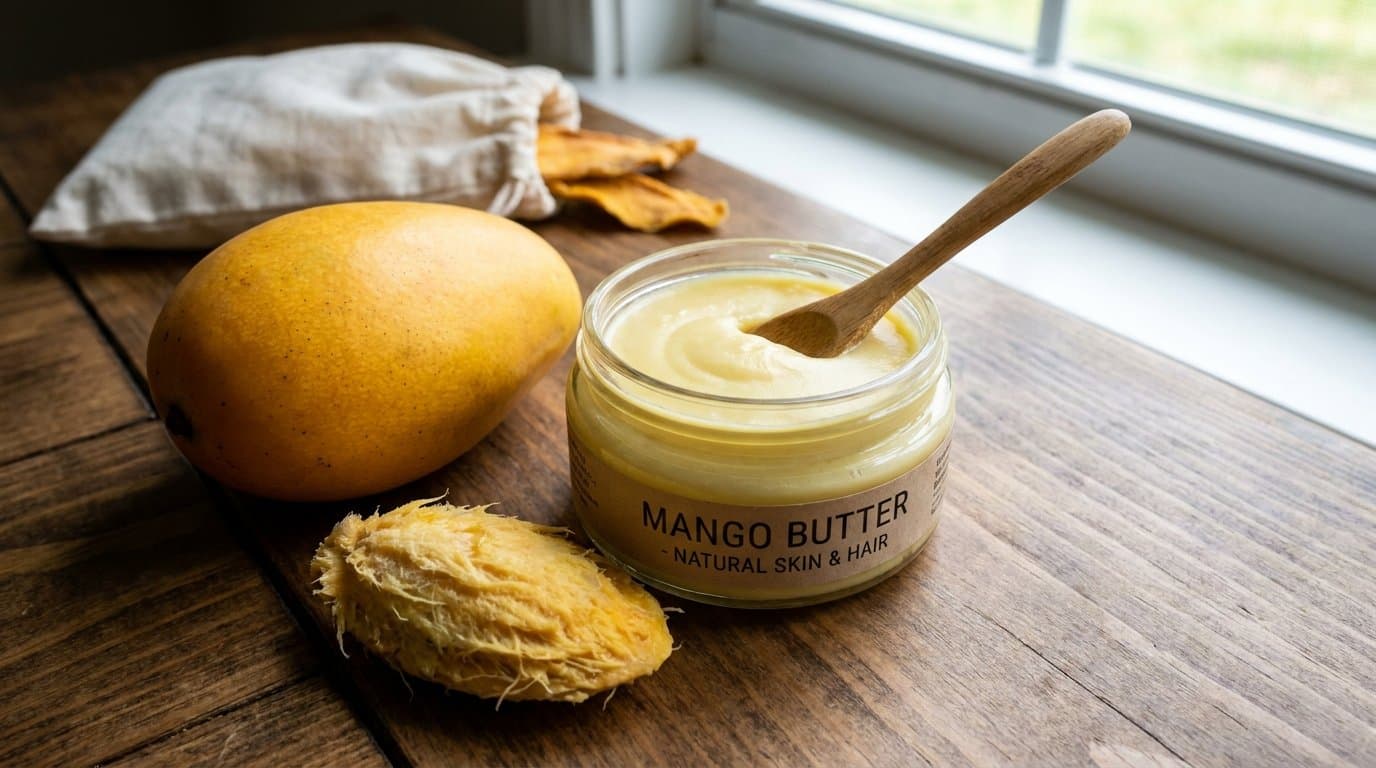
Mango butter is a smooth, natural butter pressed from the seed, or kernel, inside a mango stone. Pale and creamy, it is a rich but non-greasy moisturiser for skin and hair, softening and nourishing without a strong scent, which makes it popular for those who want a gentle, almost odourless natural butter. It is used on its own as a moisturiser, whipped into body butters and creams, and as an ingredient in soaps, balms and haircare, valued for softening dry skin and moisturising and smoothing hair. It is often compared with shea and cocoa butter, and is prized for its soft texture and mild scent. In the UK mango butter is sold by African and Caribbean beauty shops and online. African Stores lists beauty supply shops near you.
What to remember
- Mango butter is a natural butter pressed from the seed inside a mango stone.
- It is a rich but non-greasy moisturiser for skin and hair, with little scent.
- Its mild smell and soft texture make it popular for those wanting a gentle natural butter.
- It is used alone, whipped into body butters, and in soaps, balms and haircare.
- It is used alone, whipped into body butters, and in soaps, balms and haircare.
Mango butter is part of a natural, caring beauty routine for many in African and Caribbean communities in Britain. It is the soft, mild butter in the collection alongside shea and cocoa, the gentle moisturiser smoothed on after a bath, the natural product trusted to soften skin and hair without a heavy feel or a strong scent. Using mango butter can feel like a small part of the natural, homemade beauty traditions handed down and shared at home and among friends
There is heritage in it too, and a resourceful, natural spirit. Mango butter comes from the seed of a much-loved tropical fruit, turning a part usually discarded into a nourishing beauty butter, and it belongs to a long tradition of using natural butters and oils to care for the skin and hair. Keeping mango butter to hand, and sharing the knowledge of these natural butters, is part of a wider culture of gentle, natural beauty care. That soft, gentle, nourishing touch is the quiet gift of mango butter.
What mango butter actually is
Mango butter is one of the natural butters treasured in African, Caribbean and wider natural beauty care, a smooth, creamy fat pressed from the seed inside a mango stone. When a mango is eaten, the large stone in the middle contains a kernel, and it is from this kernel that mango butter is extracted, giving a pale, soft butter that melts pleasantly on the skin. It is rich and moisturising, yet it tends to feel lighter and less greasy than some heavier butters, and it has only a very mild natural scent, which many people appreciate.
What makes mango butter distinctive is that combination of richness and gentleness. It nourishes and softens the skin and hair like other natural butters, but its soft texture and near-odourless character make it especially easy and pleasant to use, and a good choice for those who find some butters too heavy or too strongly scented. It sits alongside the other natural butters used in African and Caribbean beauty care, such as shea butter and cocoa butter, each with its own qualities, all valued for feeding and softening dry skin and hair.
Where mango butter comes from
Understanding where mango butter comes from explains its qualities. Mangoes grow across the tropics, including in parts of Africa and the wider warm world, and the fruit is enjoyed everywhere, but mango butter uses the part usually thrown away: the kernel inside the stone. This kernel contains a natural fat, and when it is extracted and processed, it yields the pale, soft mango butter used in skincare. Making use of the seed in this way is a resourceful use of the whole fruit.
As with other natural butters, the form matters. Raw, unrefined mango butter is minimally processed, keeping more of its natural character and nutrients, while refined mango butter is processed further for a cleaner, whiter, even more neutral butter. Mango butter is naturally quite mild in scent to begin with, which is part of its appeal, so even raw versions do not carry a strong smell. Both raw and refined are genuine mango butter, and the choice comes down to preference and what it is being used for, with many people choosing raw for its more natural qualities.
How mango butter is used on skin and hair
Mango butter is versatile in beauty care, and its main use is as a moisturiser. On the skin, it is smoothed onto the body, dry areas, elbows, knees, hands and lips, where it softens and nourishes without feeling as heavy or greasy as some butters, which makes it pleasant for everyday use and in warmer weather. Because it is soft, it is easy to scoop and rub in, and it is often whipped with oils and other butters into light, spreadable body butters and creams, sometimes combined with shea or cocoa butter to balance their textures.
On the hair, mango butter is used to moisturise, soften and smooth, adding shine and helping to seal in moisture, which suits dry, curly and Afro-textured hair, and it is a common ingredient in curl creams, and other haircare, such as the products we cover in our guide to [curl cream](/blog/curl-cream). Its mild scent means it does not compete with other fragrances, which is another reason it is popular in homemade and natural products. Many people simply keep a tub of mango butter as a gentle, natural moisturiser for skin and hair. As with any new product, it is sensible to patch test first, and this article is general beauty information rather than medical advice.
Mango butter versus shea and cocoa butter
People often compare mango butter with shea and cocoa butter, and knowing the differences helps you choose. All three are rich, natural butters used to moisturise skin and hair, but they differ in texture and scent. Shea butter, which you can read about in our guide to shea butter, is rich and creamy with a distinctive natural, nutty scent, and is prized for deeply nourishing dry skin. Cocoa butter, covered in our guide to cocoa butter, is firm, quite heavy and carries a warm, chocolatey scent.
Mango butter sits somewhere in between and stands out for being softer and lighter in feel than cocoa butter, and much milder in scent than both shea and cocoa, being almost odourless. This makes it a favourite for those who want a rich moisturiser without a strong smell or a heavy, greasy feel, and it is often blended with the others to soften their texture in homemade body butters. None is simply better; they suit different preferences, and many people use a mix. If you want gentle richness and little scent, mango butter is an excellent choice.
Where to buy mango butter in the UK
Buying mango butter in Britain is straightforward, as it is sold by beauty shops and online. African and Caribbean beauty shops that serve the community stock mango butter, often as raw, unrefined tubs, alongside shea, cocoa and other natural butters, and the staff can help you choose and explain how it differs from the others. It is also widely available from natural beauty and online retailers, sometimes sold for making your own body butters and soaps.
If you are new to mango butter, an Afro hair and beauty shop near you is a great place to find good-quality mango butter and to compare it with shea and cocoa butter, and to ask advice on using or blending it. You can find African food stores near you or look up Caribbean food stores near you, as many stock natural butters. Once you have it, mango butter keeps well in a cool, dry place, and a tub lasts a long time, since a little softens and spreads easily.
Frequently asked questions
What is mango butter?
Mango butter is a smooth, natural butter pressed from the seed, or kernel, inside a mango stone. Pale and creamy, it is a rich but non-greasy moisturiser for skin and hair, softening and nourishing without a strong scent, which makes it popular for those who want a gentle, almost odourless natural butter. It is used alone, whipped into body butters, and in soaps, balms and haircare.
Where does mango butter come from?
Mango butter comes from the kernel inside a mango stone, the part usually thrown away when the fruit is eaten. This kernel contains a natural fat, which is extracted and processed into the pale, soft butter used in skincare. Mangoes grow across the tropics, including parts of Africa, so mango butter is a resourceful use of the whole fruit.
How do you use mango butter on skin and hair?
On skin, mango butter is smoothed onto the body, dry areas and lips as a moisturiser that softens without feeling heavy or greasy, and it is often whipped into body butters. On hair, it moisturises, softens and smooths, adding shine and helping seal in moisture, which suits dry, curly and Afro-textured hair, and it is used in curl creams and other haircare.
What is the difference between mango butter and shea butter?
Both are rich natural butters for skin and hair, but they differ in texture and scent. Shea butter is rich and creamy with a distinctive natural, nutty smell, while mango butter is softer, lighter in feel and much milder, almost odourless. Mango butter suits those who want richness without a strong scent or heavy feel, and it is often blended with shea and cocoa butter.
Where can I buy mango butter in the UK?
African and Caribbean beauty shops sell mango butter, often as raw, unrefined tubs alongside shea, cocoa and other natural butters, and it is widely available from natural beauty and online retailers too. An Afro hair and beauty shop is a good place to find good-quality mango butter, compare it with other butters and ask advice on using or blending it. African Stores lists African and Caribbean food shops across the UK, so you can find one near you.