What Is Stockfish? The Dried Fish in African Cooking Explained
Quick answer
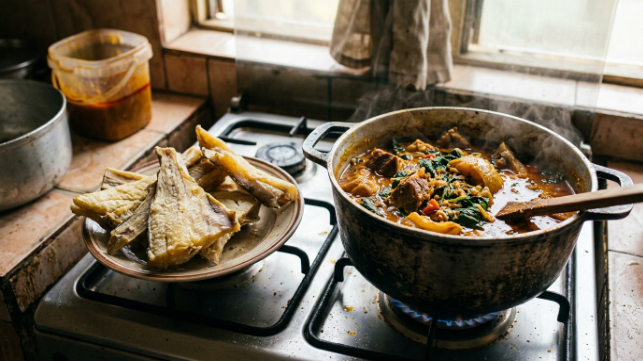
Stockfish is fish, usually cod, that has been dried in the cold open air until it is hard, stiff and lightweight, with no salt added. Long popular in West African, and especially Nigerian, cooking, where it is often called okporoko, it is prized for the deep, savoury, concentrated flavour it gives to soups and stews. Because it is rock hard when dry, it is soaked and simmered to soften before use, and it is added to dishes like egusi, oha and bitter leaf soup for richness and body. In the UK, stockfish is sold by African food shops, whole, in pieces or as ready-cut stockfish heads and fillets.
- Other names
- okporoko, dried cod
- Origin
- West Africa
- Type
- Ingredients
For Nigerians and many West Africans in Britain, stockfish is a taste of home and of a proper pot of soup. It is the okporoko that Mum insisted on for the egusi, the deep savoury note in the bitter leaf soup, the prized fish soaked overnight and simmered into tenderness, and the flavour that says a real, celebratory bowl of soup. Adding stockfish to a soup far from home brings back Sunday pots and family kitchens and the sense that this is how it is meant to taste, the warmth of home in every rich spoonful.
There is a bit of pride and heritage in it too, in knowing good stockfish, handling it well and using it to make a soup taste right. It reflects a whole tradition of flavour and care in the West African kitchen, and to cook with stockfish is to keep that tradition alive.
Making a soup with proper stockfish for family who grew up on it, or introducing a friend to the depth it gives, is an act of love and belonging. That deep, savoury taste of home is the quiet gift of stockfish.
What is Stockfish?
Stockfish is one of the most treasured ingredients in West African cooking, a fish that has been preserved by drying rather than salting. It is made by air-drying white fish, most often cod, in cold, open conditions until the moisture is gone and the fish becomes hard, stiff and very light, able to keep for a long time without refrigeration. Unlike salt fish, no salt is added, and the drying alone preserves it, concentrating the flavour into something intense and deeply savoury. In its dry state, stockfish is almost woody and needs proper preparation before it can be eaten.
In Nigeria and much of West Africa, stockfish is cherished for the flavour it brings, and it is widely known by the name okporoko, an Igbo word often said to echo the sound the hard fish makes. It is not an everyday filler but a flavour ingredient, added to soups and stews to give them a rich, savoury depth that many consider essential to a proper pot. It sits alongside other beloved dried and preserved proteins in the West African kitchen, and it is a classic addition to soups such as egusi soup, oha soup and bitter leaf soup, which you can read about in our guide to bitter leaf.
Where does Stockfish Comes From and Why it Matters
Understanding stockfish means understanding its history. The drying of cod in cold northern air is an ancient method of preserving fish, and stockfish became an important traded good, reaching West Africa through long-standing trade links and becoming woven into the region's cuisine over generations. Today it is so associated with Nigerian and West African cooking that many people think of it first as an African ingredient, even though the fish is dried far away. This is a lovely example of a traded ingredient becoming a treasured part of a food culture.
For many families, stockfish carries real meaning and even a sense of occasion, as good stockfish is prized and can be costly, so it is valued and used with care. Different parts are used, from the body to the head, and the heads in particular are loved for the flavour they give to soups. It is an ingredient that rewards knowing how to handle it, and it is central to many of the soups eaten with swallows like pounded yam and [fufu. Its enduring place in the West African pot is a mark of how much flavour it brings.
How Stockfish is Prepared and Cooked
Because stockfish is rock hard when dry, preparing it properly is essential. It is usually soaked in water, sometimes for many hours or overnight, and often boiled or simmered, to soften it and make it tender enough to eat, and the soaking also helps clean it. Some cooks soak it in hot water to speed things up. Once softened, it becomes pleasantly firm and chewy, and it is then added to the pot to cook further in the soup or stew, taking on the flavours around it while giving its own savoury richness back.
Stockfish is almost always used as part of a dish rather than eaten alone, added to soups and stews where it can shine. It is a classic in Nigerian soups, giving body and a deep umami savour, and it pairs beautifully with other proteins, vegetables and seasonings in the pot. A little goes a long way in terms of flavour. As with any dried fish, it is worth buying from a good source and preparing it well, and this article is general food information rather than dietary advice. Learning to handle stockfish is part of mastering many West African soups, which you can explore in our guide to Nigerian foo
Where can I Buy Stockfish in UK?
Buying stockfish in Britain is straightforward through African food shops, which stock it because it is such an important ingredient for the community. It is sold in various forms: whole dried fish, cut pieces, stockfish fillets, and stockfish heads, as well as sometimes pre-soaked or softer cuts for convenience, so you can choose what suits your dish and your patience for soaking. Because quality varies, it is worth choosing a reputable shop, and the staff can advise on the best cut for a particular soup.
If you are cooking a Nigerian or West African soup and want that unique deep flavour, an African food shop can point you to good stockfish and explain how to soften it. You can find [African food stores near you or look up Caribbean food stores near you, where stockfish is a regular stock item. With proper soaking and a good soup to add it to, stockfish rewards the effort with a richness that is hard to get any other way.
Key takeaways
- It is sold by African food shops in the UK, whole or in pieces.
- It is hard when dry, so it is soaked and simmered to soften before eating.
- It gives deep, savoury flavour and body to soups and stews.
- It is a prized ingredient in West African cooking, known in Nigeria as okporoko.
- Stockfish is white fish, usually cod, air-dried until hard, with no salt added.
Frequently asked questions
What is stockfish?
Stockfish is white fish, usually cod, that has been air-dried in cold, open conditions until it is hard, stiff and lightweight, with no salt added. It is a prized ingredient in West African, especially Nigerian, cooking, known there as okporoko, valued for the deep, savoury flavour it gives to soups and stews. It is soaked and simmered to soften before use.
What is okporoko?
Okporoko is the Igbo name for stockfish, the hard, air-dried fish used in Nigerian and West African soups. The name is often said to echo the sound the stiff dried fish makes. Okporoko and stockfish are the same thing, treasured for the rich, savoury depth they add to soups such as egusi, oha and bitter leaf soup.
How do you cook stockfish?
Because stockfish is very hard when dry, it is soaked in water, often for hours or overnight, and usually boiled or simmered to soften it and make it tender. The soaking also helps clean it. Once softened, it is added to a soup or stew to cook further, taking on the surrounding flavours while giving its own savoury richness back.
Is stockfish the same as salt fish?
No. Stockfish is preserved only by air-drying, with no salt added, so it is not salty, while salt fish, such as salted cod, is preserved with salt and needs soaking to remove the salt. Both are dried fish used in African and Caribbean cooking, but they are prepared and used differently, and stockfish is prized above all for the savoury depth it gives to soups.
Where can I buy stockfish in the UK?
Stockfish is sold by African food shops in forms including whole dried fish, cut pieces, fillets and stockfish heads and sometimes pre-softened for convenience. Because quality varies, it is worth choosing a reputable shop, where the staff can advise on the best cut for your soup and how to soften it before cooking. African Stores lists African and Caribbean food shops across the UK, so you can find one near you.
Join African Stores free
Save shops, follow the ones you love and get your free member card.
Your free member card: show it at participating shops for member offers.
Get the app