The short answer
Plantain is a large, starchy member of the banana family that is cooked rather than eaten raw. It looks like a big, thick-skinned banana, but it is firmer and much less sweet, and it is treated in the kitchen more like a potato than a fruit. Plantain is a staple across West and Central Africa, the Caribbean and Latin America. Its taste changes completely as it ripens, from starchy and savoury when green to soft and sweet when the skin turns black. It is fried, boiled, roasted, grilled or made into crisps, and in Nigeria fried ripe plantain is so loved it has its own affectionate name, dodo. In the UK it is sold by African and Caribbean food shops and many larger supermarkets.
What to remember
- Plantain is a starchy cooking banana, firmer and far less sweet than the dessert banana, and it is always cooked.
- Its flavour changes with ripeness: green plantain is starchy and savoury, while black-skinned ripe plantain is soft and sweet.
- It is a staple across West and Central Africa, the Caribbean and Latin America.
- Fried ripe plantain, known in Nigeria as dodo, is one of the most loved ways to eat it, but it is also boiled, roasted and made into crisps.
- In the UK plantain is sold by African and Caribbean food shops and by many larger supermarkets.
For West Africans and Caribbeans in Britain, plantain is pure comfort. Fried dodo sizzling in the pan, the sweet smell filling the kitchen, that first soft, caramelised, slightly crisp-edged slice: it is the taste of home in the most everyday way. It belongs to Sunday lunches and weekday dinners, to party trays and roadside grills, to the plate of rice and stew that is not quite complete without a few pieces of plantain on the side. Cooking it in a British kitchen brings all of that warmth along.
It is also one of the friendliest African foods to introduce to someone new, because almost everyone loves fried plantain on the first try. Setting it down for family who grew up on it, or for a friend tasting dodo for the first time, is a small, generous act of sharing. Plantain asks very little and gives a great deal, and that quiet generosity is a big part of why so many cultures hold it so dear. It travels beautifully, and it makes any table feel a little more like home.
What is plantain?
Plantain is a cooking banana. It belongs to the same broad family as the sweet yellow banana you eat raw, but it is a different type, bred and grown for cooking rather than snacking. Plantains are bigger, with thicker skin and denser, starchier flesh, and even when ripe they are firmer and less sugary than a dessert banana. The key thing to understand is that plantain is almost never eaten raw. It is cooked, and it behaves in the kitchen far more like a starchy vegetable than a fruit
That starchiness is exactly why so many cultures lean on it. Plantain is filling, cheap and endlessly adaptable, and it can play the savoury role that potatoes or rice might play elsewhere, or turn into something sweet and almost dessert-like depending on how ripe it is and how you cook it. One ingredient covers a lot of ground.
Plantain turns up all over the African and Caribbean table, and you can see it in context in our guides to Nigerian food, Ghanaian food and Caribbean food.
Is Plantain a Banana?
The comparison people reach for first is the banana, so it is worth being clear about the difference. A dessert banana is smaller, thin-skinned, soft and sweet, and you peel it and eat it as it is. A plantain is larger, thicker-skinned, starchier, and needs cooking to be good. Bite into a raw plantain and it is hard, chalky and disappointing, which surprises people expecting banana sweetness.
They are relatives, not the same thing, in much the same way that yam is not a sweet potato. If a recipe from Nigeria, Ghana or the Caribbean calls for plantain, it means the cooking banana, and swapping in a regular sweet banana will not give you the same result. Once you have cooked with real plantain, the difference in texture and flavour is obvious.
How Ripeness changes everything
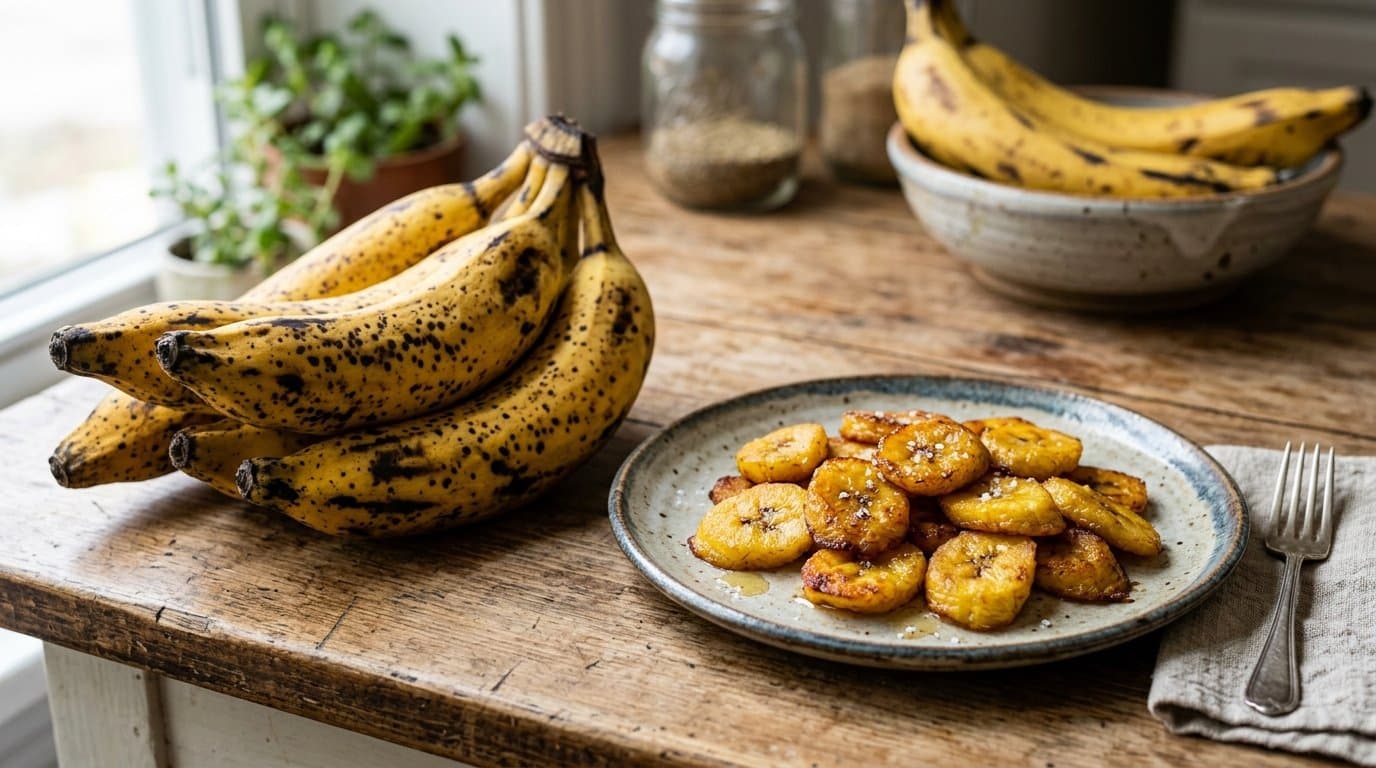
The single most useful thing to know about plantain is that it is really several ingredients in one, depending on how ripe it is, and the skin tells you where it is on that journey. When the skin is green and firm, the plantain inside is starchy, savoury and only barely sweet, closer to a potato. This is the stage for savoury dishes and for crisps. As it ripens, the skin turns yellow and then develops black spots, and the flesh softens and grows sweeter. By the time the skin is mostly or fully black, the plantain is at its sweetest and softest, perfect for frying into golden, caramelised slices.
None of these stages is wrong, they simply suit different dishes. Green plantain for savoury and firm, yellow with black spots for the classic fried plantain balance of sweet and soft, and fully black for the sweetest results. This is why a shopper who knows what they are cooking will pick plantains at a particular ripeness, and why buying a mix lets you cook different things across the week.
How to Cook Plantain
The best-loved way to cook plantain across West Africa is to fry it. Ripe plantain, sliced and fried in a little oil until the edges caramelise and turn deep golden, is soft, sweet and savoury all at once, and in Nigeria this dish is known affectionately as dodo. It appears alongside rice and beans, as a partner to stews, at parties and as a snack in its own right. It is one of those foods people genuinely light up about.
But frying is only the start. Green plantain is boiled and served with sauces and stews, or roasted whole over coals to make the Nigerian street food known as boli, often eaten with a spicy groundnut or pepper sauce. Thin slices of green plantain are fried crisp to make plantain chips, a hugely popular snack you will also find bagged in shops. In the Caribbean and Latin America, green plantain is fried, flattened and fried again to make tostones, or mashed into fufu and mangú. Whatever the cuisine, plantain rewards a cook who matches the ripeness to the dish.
Plantain Across Cultures
Part of what makes plantain special is how many cultures claim it. In West and Central Africa it is an everyday staple, in the Caribbean it is on the plate at breakfast, lunch and dinner, and across Latin America it appears in a hundred forms. Each place has its own signature dishes and its own names, from dodo and boli in Nigeria to kelewele in Ghana, tostones and maduros in the Caribbean and Latin America, and matoke made from a related cooking banana in East Africa.
That spread makes plantain a real point of connection. Someone from Lagos, someone from Kingston and someone from Bogotá might cook it quite differently, but they all grew up on it and they all understand what it means to have plantain on the plate. For communities far from home, it is a familiar comfort that crosses borders, a food shared far more widely than any single country.
Where to Buy Plantain in the UK
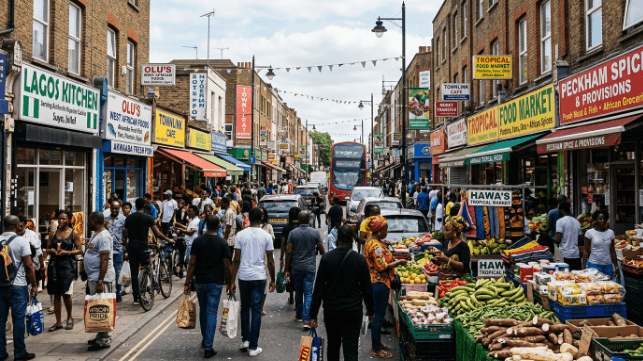
Plantain is one of the easier African and Caribbean staples to find in Britain. African and Caribbean food shops always stock it, usually in a range of ripeness so you can choose green for savoury cooking or black-skinned for sweet frying, and many larger supermarkets now carry it too. Bagged plantain chips are widely sold as a snack. If you are buying to cook a particular dish, pick your plantains by their skin colour, and remember they will keep ripening at home, so a green one bought today will be ready to fry sweet in a few days.
For the widest choice and the best prices, an African or Caribbean food shop is still the place to go, and the staff can point you to the right ripeness for what you are making. You can find African food stores near you.
Frequently asked questions
Is plantain the same as a banana?
No. Plantain is a cooking banana, larger and thicker-skinned than the sweet dessert banana, with firmer, starchier flesh. It is almost always cooked rather than eaten raw, and even ripe it is less sweet and more substantial than a regular banana. They are relatives, but not the same thing.
Can you eat plantain raw?
It is not recommended. Raw plantain is hard, starchy and chalky, and it is not pleasant to eat. Plantain is meant to be cooked, whether fried, boiled, roasted or made into crisps, and cooking is what brings out its flavour and texture.
How do you know when a plantain is ripe?
The skin tells you. Green plantain is starchy and savoury, yellow with black spots is a sweet and soft balance ideal for frying, and a fully black skin means the plantain is at its sweetest. All three stages are useful, they just suit different dishes, so choose by what you are cooking.
What is dodo?
Dodo is the Nigerian name for fried ripe plantain, sliced and fried until golden and caramelised at the edges. It is soft, sweet and savoury, and it is one of the most loved ways to eat plantain, served with rice and beans, alongside stews, or as a snack.
Where can I buy plantain in the UK?
African and Caribbean food shops always stock plantain, usually in a range of ripeness, and many larger supermarkets carry it too. For the widest choice and best prices, an African or Caribbean food shop is the place to go, and the staff can help you pick the right ripeness for your dish.