The short answer
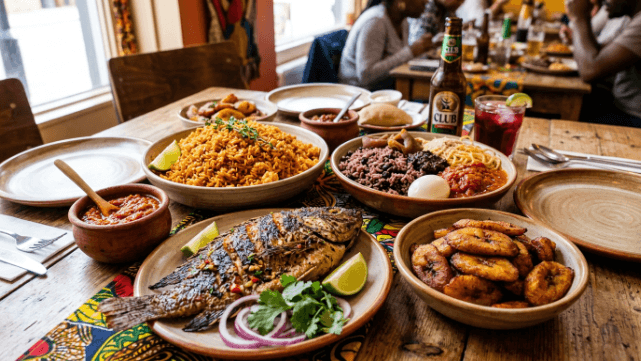
Ghanaian food is the cuisine of Ghana in West Africa, built around a starchy swallow such as fufu, banku or kenkey served with a well-seasoned soup or stew. Signature dishes include jollof rice, waakye, banku with tilapia, and groundnut soup. Flavours are earthy and savoury, based on tomatoes, onions, ginger, garlic, chillies, dried fish and palm oil. In the UK, the ingredients are stocked by African and Caribbean grocers.
What to remember
- You can cook all of it at home in the UK once you know which local shops stock the unique ingredients.
- Ghana is many food cultures in one, so the coast, the Ashanti region and the north each have their own favourites.
- A handful of staples does most of the work: palm oil, garri, dried fish, aromatic rice, plantain and the right spices.
- Jollof rice, waakye, banku with tilapia and groundnut soup are the dishes to know first.
Ghanaian food is one of West Africa's great culinary treasures, built on bold flavours, comforting textures and dishes that bring people together around one bowl. Whether you grew up eating banku and tilapia or you are simply curious after hearing friends rave about jollof rice, this guide walks you through the staples, the iconic dishes and the friendly rivalries that make Ghanaian cooking so beloved. And when you are ready to cook it yourself, we will point you to local African and Caribbean stores near you that stock everything you need.
For Ghanaians at home and across the diaspora, food is memory made edible. The rhythmic thud of fufu being pounded in a wooden mortar is the sound of a family kitchen getting ready to feed everyone who walks through the door. A Sunday of light soup, a Saturday morning bowl of waakye wrapped in leaves from the roadside seller, and the smoky char of tilapia over coals on the coast: these are the moments that carry a whole culture in them.
Eating together matters as much as the cooking. To share one bowl, to break off a piece of fufu and dip it into soup with your hand, is to belong. It is why a plate of jollof at a naming ceremony, a wedding or a Christmas gathering tastes of more than rice and pepper. When Ghanaians in the UK cook these dishes far from home, they are keeping something alive and passing it to the next generation one shared meal at a time.
What Defines Ghanaian Food
At its heart, Ghanaian food is about warmth and generosity. Meals are often centred on a starchy "swallow" (a soft, dough-like accompaniment) served alongside a rich, well-seasoned soup or stew.
The flavours lean earthy and savoury, built on tomatoes, onions, ginger, garlic, chillies and smoky dried fish. There is heat, but it is balanced, and every region and household has its own twist. Food is rarely a solitary affair in Ghana. Sharing a dish, eating with your hands and gathering around the table are all part of the experience.
Staple Ingredients and Swallows
Understanding a few key ingredients unlocks most of Ghanaian cooking. Here are the building blocks you will meet again and again.
Cassava: A hardy root vegetable, boiled, pounded or ground into flour. It is the base for many swallows and for garri, a toasted cassava granule used across West Africa.
Plantain: A cooking banana that is savoury when green and sweet when ripe. It is fried, boiled or roasted. If you are new to it, our guide on what a plantain is explains everything, and you can find fresh plantain at local stores.
Maize and corn: fermented and used to make banku and kenkey, giving them their signature gentle sourness.
Rice: The star of jollof and waakye, and a daily staple.
Groundnuts (peanuts): Ground into a thick paste for groundnut soup, one of the country's most cherished dishes.
Palm oil: A rich, red, distinctive oil that gives many stews their colour and depth. You can source palm oil at African and Caribbean grocers.
Garden eggs: Small white or green aubergines, mild and slightly bitter, used in stews and sauces.
Kontomire: Cocoyam leaves, cooked down into a nutritious green stew similar to spinach.
The swallows deserve a special mention. Fufu is pounded cassava and plantain (or yam), soft and stretchy, and eaten with soup. Our full explainer on what is fufu is a great place to start. Bank is a fermented corn and cassava dough, smooth and slightly tangy. Kenkey is a fermented corn dumpling, wrapped and steamed, with a pleasant sourness all its own.
The Iconic Dishes of Ghana
This is where Ghanaian food really comes alive. Here are the dishes to know.
Jollof rice, Ghana style: Rice cooked in a spiced tomato and pepper base until every grain is fragrant and flavourful. Ghanaian jollof is often made with aromatic rice and a slightly smoky finish. Try our [jollof rice recipe](/recipe/jollof-rice) to make it at home.
Waakye: Rice and beans cooked together with dried millet leaves, which give the dish its distinctive reddish-brown colour. It is usually served with a spread of sides such as spaghetti, boiled egg, fried plantain and shito (a dark, spicy pepper sauce).
Banku with tilapia and pepper: A classic pairing of soft, tangy banku with grilled tilapia and a fresh ground pepper sauce. Simple, smoky and deeply satisfying.
Kenkey: Often eaten with fried fish and pepper, or with a rich stew. Its sourness makes it wonderfully moreish.
Fufu with light soup or groundnut soup: The ultimate comfort food. Light soup is a clear, spiced broth with meat or fish, while groundnut soup is thick, nutty and warming. You pull off a piece of fufu, dip it and swallow.
Red red: A hearty bean stew (usually black-eyed beans) cooked in palm oil and served with fried ripe plantain. The name comes from the rich red colour of the oil and the plantain.
Kelewele: Ripe plantain cubes spiced with ginger, chilli and other seasonings, then fried until caramelised. A beloved street-food snack.
Tuo zaafi: A northern favourite, a smooth swallow made from maize or millet, served with a green, leafy soup. It is filling, humble and full of heritage.
The friendly Ghana Jollof versus Nigeria Jollof
No conversation about Ghanaian food is complete without the great jollof debate. Ghana and Nigeria both claim the crown for the best jollof rice, and the rivalry is affectionate but fierce.
Ghanaians tend to favour aromatic rice with a distinct smoky note, while Nigerians have their own proud method. There is no settling it, and that is half the fun. If you want to taste the other side of the argument, read up on Nigerian food and decide for yourself.
A note on regional variety
Ghana is not one single food culture but many. The coastal south leans on fresh fish, kenkey and banku. The Ashanti region is fufu and soup country. The north brings tuo zaafi and hearty grain-based dishes.
Travel a few hours and the staples, the spicing and even the names of dishes shift. This variety is one of the joys of exploring Ghanaian cooking, and it means there is always something new to try.
Cooking Ghanaian Food at Home in UK
The good news for UK cooks is that Ghanaian food is very achievable at home. Many dishes rely on a handful of core ingredients, so once your storecupboard is stocked with things like palm oil, garri, dried fish, aromatic rice and the right spices, a whole world of recipes opens up.
Fresh plantain, garden eggs and kontomire are increasingly easy to find, and swallows like banku and fufu can now be bought as ready-made flours that save you the pounding.
The key is knowing where to shop. Large supermarkets carry some items, but African and Caribbean grocers are where you will find the unique ingredients, the right rice, the proper dried fish and shito, and staff who can point you in the right direction. That is exactly where we can help.
Frequently asked questions
Is Ghanaian food spicy?
It can be, but the heat is usually balanced rather than overwhelming. Pepper sauces like shito add warmth, and you can adjust the chilli to your own taste when cooking at home.
What is the national dish of Ghana?
Ghana does not have a single official national dish, but fufu with soup and jollof rice are both strong contenders. Many Ghanaians would name fufu with light or groundnut soup as the dish closest to the nation's heart.
What is the most popular food in Ghana?
Jollof rice and waakye are among the most popular everyday meals, loved across the country. Banku with tilapia and fufu with soup are also firm favourites.
What is Ghanaian Jollof?
Ghanaian jollof is rice cooked in a spiced tomato and pepper base, typically made with aromatic rice and finished with a subtle smoky flavour. It is at the centre of the famous friendly rivalry with Nigerian jollof.
What is Banku?
Banku is a smooth, slightly sour swallow made from fermented corn and cassava dough. It is commonly served with grilled tilapia and pepper sauce, or with ok