Congolese Food: A Guide to the Dishes and Flavours
A friendly guide to Congolese food, its key dishes and flavours, and where to find African food and ingredients across the UK.
Quick answer
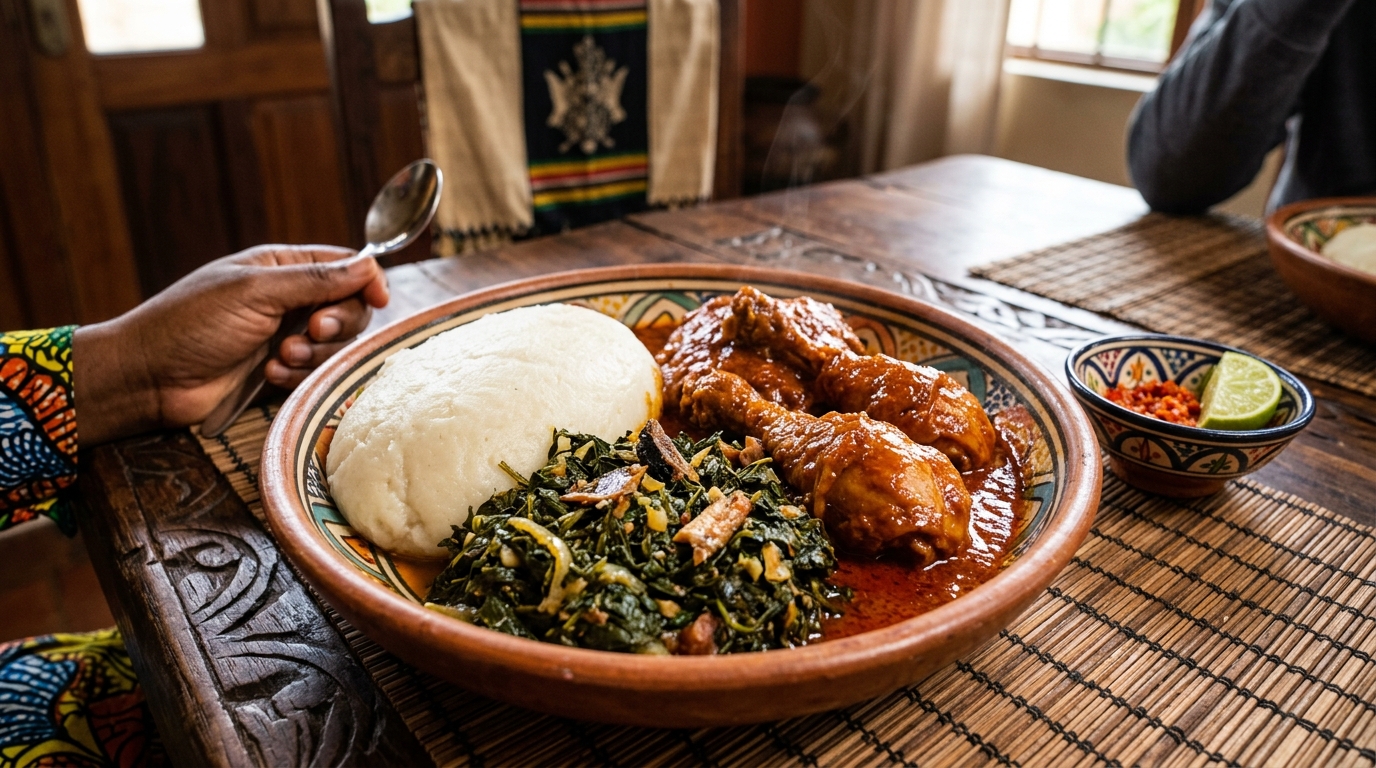
Congolese food is the hearty, earthy cuisine of the Congo, both the Democratic Republic of the Congo and the Republic of the Congo, in Central Africa. It centres on starchy staples like fufu, cassava and plantain, eaten with rich stews and sauces, and it is known for dishes such as pondu, made from cassava leaves, moambe, a palm nut or palm butter stew often called the national dish, and grilled and smoked fish and meat. It is comforting, filling, home-style food. In the UK you can find the ingredients in African food shops serving Central African communities.
Add African Stores as a preferred source on Google. You'll see more of our guides in Google's Top Stories when you search.
Add as a preferred sourceWhat to remember
- Congolese food comes from Central Africa and centres on starchy staples with rich stews.
- Fufu, cassava and plantain are the staples that anchor most meals.
- Pondu, made from cassava leaves, is an everyday favourite.
- Moambe, a palm nut or palm butter stew, is often called the national dish.
- The ingredients are found in African food shops across the UK.
For Congolese people in Britain, food is a warm link to home, to the river, and to family gatherings full of music and welcome. It is the smooth fufu with rich pondu, the celebration pot of moambe, the smoked fish flavouring the greens, the liboke unwrapped from its leaf. Each dish carries the earthy, generous character of Central African cooking, and making them abroad keeps that connection and that flavour alive.
There is real heart in Congolese food, in the pounding of cassava leaves for pondu, the making of a rich moambe, the care of a leaf-wrapped liboke. When a Congolese family in the UK cooks fufu and pondu, simmers a moambe for a celebration, or shares a big, generous spread, they are keeping home close and passing on the warmth, abundance and community at the centre of Congolese cooking. That hearty, generous spirit is the heart of Congolese food.
What is congolese food?
Congolese food comes from the Congo region of Central Africa, spanning the Democratic Republic of the Congo and the Republic of the Congo, two countries either side of the Congo River with closely related cooking. It is hearty, earthy, home-style food built on the pattern of a starchy staple eaten with a rich stew, sauce or relish. The great river and the forests and farmland around it give fish, cassava, plantain, greens and palm, and these are the building blocks of the cuisine.
Congolese cooking is generous and comforting, rooted in family and community, with palm oil, cassava, greens and smoked or grilled fish and meat at its heart. It is less widely known abroad than some African cuisines but deeply loved by those who grew up on it, and it belongs to the broader world of African cooking we cover in our guide to African food, while having its own Central African character.
Fufu and the staples
As across much of West and Central Africa, a starchy staple anchors the Congolese meal. Fufu is central, a soft, stretchy dough usually made from cassava, or cassava blended with plantain or maize, pounded or stirred until smooth and eaten by pinching off a piece to scoop up stew and sauce. You can read more in our guide to fufu. Related staples include chikwangue, or kwanga, a dense cassava dough wrapped and cooked in leaves, with a distinctive tang.
Alongside these, boiled or fried plantain, cassava itself, rice and other starches all feature. These mild, filling staples are the base of the meal, carrying the flavours of the rich stews and greens eaten with them. Getting a good, smooth fufu or a well-made kwanga is central to Congolese home cooking.
Find African and Caribbean shops near you
Free to use, no sign-up needed.
Pondu the cassava leaf favourite
One of the most loved and everyday Congolese dishes is pondu, also called saka saka, made from cassava leaves. The leaves are pounded and cooked down slowly with palm oil, onions, and often smoked or dried fish, groundnut paste, and other flavourings into a rich, deep green, savoury stew. It is nourishing, comforting and eaten across the region, a true staple relish alongside fufu, rice or plantain.
Pondu is a close cousin of other African cassava-leaf and bitter-leaf dishes, and it shows the Central African love of cooked greens made rich with palm oil and fish. Where cassava leaves are hard to find abroad, cooks sometimes use spinach or other greens, but the real thing, often sold frozen, is prized. Deep green and savoury, pondu is Congolese comfort food.
Moambe the national dish
If Congolese food has a national dish, it is moambe, also spelt mwambe or poulet à la moambe. This is a rich stew made from the pulp of palm nuts, palm butter or palm nut sauce, cooked with chicken, or fish or meat, along with onions, tomato, chilli and spices into a thick, savoury, distinctive sauce. It is closely related to the palm nut soups and banga soups made across West and Central Africa, and it is a beloved celebration and Sunday dish.
Moambe is typically served with rice, fufu, plantain or kwanga, and often with pondu on the side, making a full, satisfying, celebratory plate. Its rich, earthy palm flavour is quintessentially Congolese, and a good moambe is a source of pride. You can read about the related West African version in our guide to palm nut soup.
Fish meat and liboke
The Congo River and its tributaries make fish central to the cuisine, and it comes fresh, smoked and salted. Makayabu, salted cod or fish, is a popular ingredient and dish, and smoked fish flavours many stews and greens. A much loved cooking method is liboke, food, often fish or meat, seasoned and wrapped in leaves and steamed or grilled, so it stays moist and takes on a lovely aroma, a Congolese speciality.
Grilled and braised meats, brochettes and smoked fish are popular at gatherings and from street grills, and beans, madesu, are an everyday protein. Together with the staples and greens, these make up the hearty, balanced Congolese plate, full of the flavours of palm, smoke and the river.
Drink hospitality and where to find it
Congolese gatherings are known for their warmth, music and generosity, and food is central to them. Meals are shared, guests are welcomed with abundance, and celebrations feature big pots of moambe, pondu and rice. Drinks include fresh juices, ginger drinks and, at celebrations, palm wine and beer, and the whole spread is enjoyed in a spirit of community and hospitality.
The UK has growing Congolese and Central African communities, so ingredients and food are increasingly findable, especially in London and other large cities. African food shops stock cassava, plantain, fufu flour, cassava leaves, palm nut pulp or palm butter, smoked and salted fish and the seasonings for Congolese cooking. If you want to eat out, you can find African restaurants near you, or book a cook through caterers near you. To cook at home, browse African food stores near you.
Your questions
Frequently asked questions
Moambe, also spelt mwambe or poulet à la moambe, is often called the national dish of the Congo. It is a rich stew made from the pulp of palm nuts, or palm butter, cooked with chicken, fish or meat, onions, tomato and spices into a thick, savoury, earthy sauce, usually served with rice, fufu, plantain or kwanga, and often pondu.
Pondu, also called saka saka, is a much loved Congolese dish made from cassava leaves, pounded and cooked down slowly with palm oil, onions and often smoked fish and groundnut paste into a rich, deep green, savoury stew. It is an everyday relish eaten with fufu, rice or plantain, and a cousin of other African cassava-leaf and bitter-leaf dishes.
In Congolese cooking, fufu is usually made from cassava, often blended with plantain or maize, pounded or stirred with water until it becomes a soft, stretchy dough. It is eaten by pinching off a piece to scoop up stews, sauces and greens. A related staple is chikwangue, or kwanga, a dense cassava dough wrapped and cooked in leaves.
Congolese food is more savoury and earthy than fiery, built on palm oil, cassava, greens, fish and smoked flavours. Chilli and pepper are used, and some dishes have a good kick, but you can usually control the heat. The character of the food is about rich, deep, comforting flavour, especially from palm and smoked fish, rather than about heat.
Look in London and other large cities with Congolese and Central African communities, where African food shops stock cassava, plantain, cassava leaves, palm nut pulp, smoked and salted fish and Congolese seasonings, and some restaurants serve the food. You can find African restaurants near you and African food stores through the platform, to eat out or cook at home.
Was this guide helpful?
Free membership
Save this guide and hear when new shops open near you
Save shops, follow the ones you love and get your free member card to show at participating shops for member offers.
Keep reading
More guides
- CuisinesSierra Leonean Food: A Guide to the Dishes and FlavoursA friendly guide to Sierra Leonean food, its key dishes and flavours, and where to find West African food and ingredients across the UK.Read article
- CuisinesZambian Food: A Guide to the Dishes and FlavoursA friendly guide to Zambian food, its key dishes and flavours, and where to find African food and ingredients across the UK.Read article
- CuisinesNamibian Food: A Guide to the Dishes and FlavoursA friendly guide to Namibian food, its key dishes and flavours, and where to find African food and ingredients across the UK.Read article