The short answer
Cassava is a long, starchy root vegetable that feeds hundreds of millions of people across Africa, and it is one of the most important staple crops in the world. It has rough brown skin and firm white flesh, and it is the raw material behind a whole family of West African foods, including garri, fufu, tapioca, and cassava flour. Cassava must always be processed and cooked properly before eating, because the raw root naturally contains compounds that are harmful until they are removed by peeling, soaking, grating, fermenting, or thorough cooking. Done correctly, this processing makes cassava completely safe, which is exactly what the traditional methods are for. In the UK, cassava is sold fresh, frozen, and as garri and flour by African and Caribbean food shops.
What to remember
- In the UK it is sold fresh, frozen, and as garri or flour by African and Caribbean food shops.
- Once correctly prepared, cassava is a safe, filling and versatile staple eaten by hundreds of millions of people.
- Raw cassava is not safe to eat, and it must always be processed and cooked properly first, which the traditional methods are designed to do.
- It is the raw material behind garri, fufu, tapioca and cassava flour, all central to West African cooking.
- Cassava is a starchy root, one of the world's most important staple crops, with brown skin and firm white flesh.
For West Africans in Britain, cassava in its many forms is the taste of the everyday. It is the sourness of garri soaked on a hot afternoon, the pull of eba against a rich okra or egusi soup, and the softness of fufu at a family meal.
These are not fancy foods, they are the staples that hold ordinary life together, the things eaten day in and day out at home, and finding them on a shelf in Britain is a quiet reassurance that home is still within reach.
There is also a deep respect built into cassava, because everyone who grew up with it knows the care that goes into preparing it. Behind every bag of garri are generations of knowledge about how to turn a difficult root into safe, sustaining food.
Cooking with cassava in a British kitchen is a way of carrying that knowledge forward and of setting down for family the same staples that fed those who came before. That continuity is the quiet gift of this remarkable root.
What is Cassava?
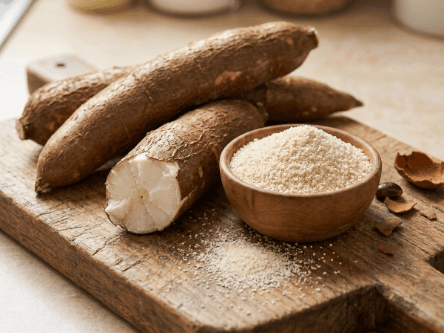
Cassava is a root, the long, tapering, starch-filled tuber of a shrubby plant grown throughout the tropics. Each root has tough brown skin, a thin pinkish layer just beneath it, and dense white or cream flesh that is very high in starch.
Cassava grows in poor soils, tolerates drought, and yields a lot of energy-rich food from difficult land, which is why it became so important across Africa and much of the tropical world.
Unlike yam or plantain, though, cassava is not simply peeled and cooked. It is more often the starting point for other foods, transformed by grating, soaking, fermenting, drying, or milling into products that look nothing like the original root. This is what makes cassava so interesting: it is less a vegetable you serve whole and more a raw material that a whole cuisine is built on.
Cassava sits at the base of the West African table, and you can see the dishes it feeds in our guides to [Nigerian food](/blog/nigerian-food) and [West African food](/blog/west-african-food).
Why must Cassava be Processed
Here is the most important thing to understand about cassava, and it deserves to be said plainly. Raw cassava is not safe to eat. The root naturally contains compounds that release cyanide, and eating it raw or poorly prepared can make you ill. This is not a reason to fear cassava, it is simply the reason it is always processed before eating, and the traditional methods that African cooks have used for generations exist precisely to remove those compounds.
Peeling, soaking, grating, fermenting, sun-drying, and thorough cooking all work to break down and wash away the harmful compounds, and when cassava is prepared the traditional way, it is completely safe and nourishing.
The sweeter varieties usually sold for cooking need less processing than the bitter varieties grown for industrial use, but the rule holds either way, cassava is cooked and processed, never eaten raw. If you buy fresh cassava, follow a trusted recipe and cook it properly, and you have nothing to worry about.
The Foods made from Cassava
The real story of cassava is in what it becomes. Garri is perhaps the best known: cassava is peeled, grated, fermented, then fried or roasted into dry, slightly sour granules that keep for a long time. Garri can be soaked in cold water with sugar and groundnuts as a quick meal or stirred into hot water to make eba, a firm swallow eaten with soup. It is one of the everyday staples of Nigerian eating.
Cassava is also boiled and pounded, or processed into a dough, to make a soft, stretchy fufu, one of the classic West African swallows served with rich soups, which you can read about in our guide to [fufu](/blog/fufu).
Beyond that, cassava is milled into cassava flour and into a fermented flour used for another swallow, and its purified starch becomes tapioca, the pearls used in puddings and bubble tea. From one root come dry granules, soft swallows, flours, and starch, a remarkable range from a single crop.
Cassava Around the World
Although this guide focuses on its West African uses, cassava is a truly global staple, and it goes by many names. In Latin America and the Caribbean it is often called yuca, not to be confused with the ornamental yucca plant, and it is boiled, fried into chips and made into breads.
In parts of Africa it is known as manioc, and its leaves, as well as its root, are cooked into stews. In South and East Asia, tapioca made from cassava turns up in countless sweets and drinks.
That global reach is a reminder of how valuable this humble root is. Wherever it grows, people have found ways to unlock its starch safely and turn it into food that sustains whole communities.
For African and Caribbean cooks in Britain, cassava connects the home kitchen to that wider tropical world and to a crop that quietly feeds a large share of the planet.
Where can I buy Cassava in UK?
Cassava is widely available in Britain through African and Caribbean food shops, and it comes in several forms to suit whatever you are making.
Fresh cassava roots are sold whole, often waxed to keep them from drying out, and you will also find peeled cassava in the freezer, which is convenient and saves preparation time.
Garri is sold in bags, usually as white or yellow garri, and cassava flour and fufu flour sit on the same shelves.
If you are cooking cassava fresh for the first time, buy from a shop that sells to people who cook it regularly, follow a trusted recipe carefully, and cook it thoroughly.
The staff in an African or Caribbean food shop can point you to the right product for eba, fufu or a boiled cassava dish. You can find [African food stores in London](/african-food-stores-in-london) or look up [African food stores in Manchester](/african-food-stores-in-manchester) to find one near you
Frequently asked questions
Is cassava safe to eat?
Yes, when it is processed and cooked properly. Raw cassava contains compounds that release cyanide and is not safe to eat as it is, which is why it is always peeled, soaked, fermented, dried, or thoroughly cooked first. The traditional preparation methods remove the harmful compounds, and correctly prepared cassava is safe and nourishing.
What foods are made from cassava?
A great many. Garri is fermented, dried cassava granules used to make eba; fufu is a soft swallow made from cassava; cassava flour and fermented flours are milled from the root; and tapioca, including the pearls in puddings and bubble tea, is made from cassava starch. From one root come granules, swallows, flours, and starch.
What is the difference between cassava and yuca?
They are the same plant. Cassava is often called yuca in Latin America and the Caribbean and "manioc" in parts of Africa. Yuca, the cassava root, should not be confused with the ornamental yucca plant, which is different.
What is garri?
Garri is one of the best-known foods made from cassava. The root is peeled, grated, fermented, and then fried or roasted into dry granules that keep well. Garri can be soaked in cold water with sugar as a quick meal or stirred into hot water to make eba, a firm swallow eaten with soup.
Where can I buy cassava in the UK?
African and Caribbean food shops sell cassava in several forms: fresh whole roots, peeled cassava in the freezer, and garri, cassava flour and fufu flour in bags. For fresh cassava, buy from a shop where people cook it regularly, follow a trusted recipe and cook it thoroughly