Caribbean Carnival Food: What to Eat at Notting Hill
A guide to the food of Caribbean carnival and Notting Hill, the classic dishes and drinks, how to eat well on the day, and where to find it all year round.
African Stores Editorial Team
The short answer
Caribbean carnival food is the street food served at events like Notting Hill Carnival, held in London over the August bank holiday and known as Europe's largest street festival with Caribbean roots. The classics are jerk chicken, curry goat with rice and peas, saltfish fritters, festival, roti, doubles and corn soup. Rum punch and sorrel are the drinks most linked with the day. You can find the same dishes year round at Caribbean takeaways, restaurants and caterers across the UK.
What to remember
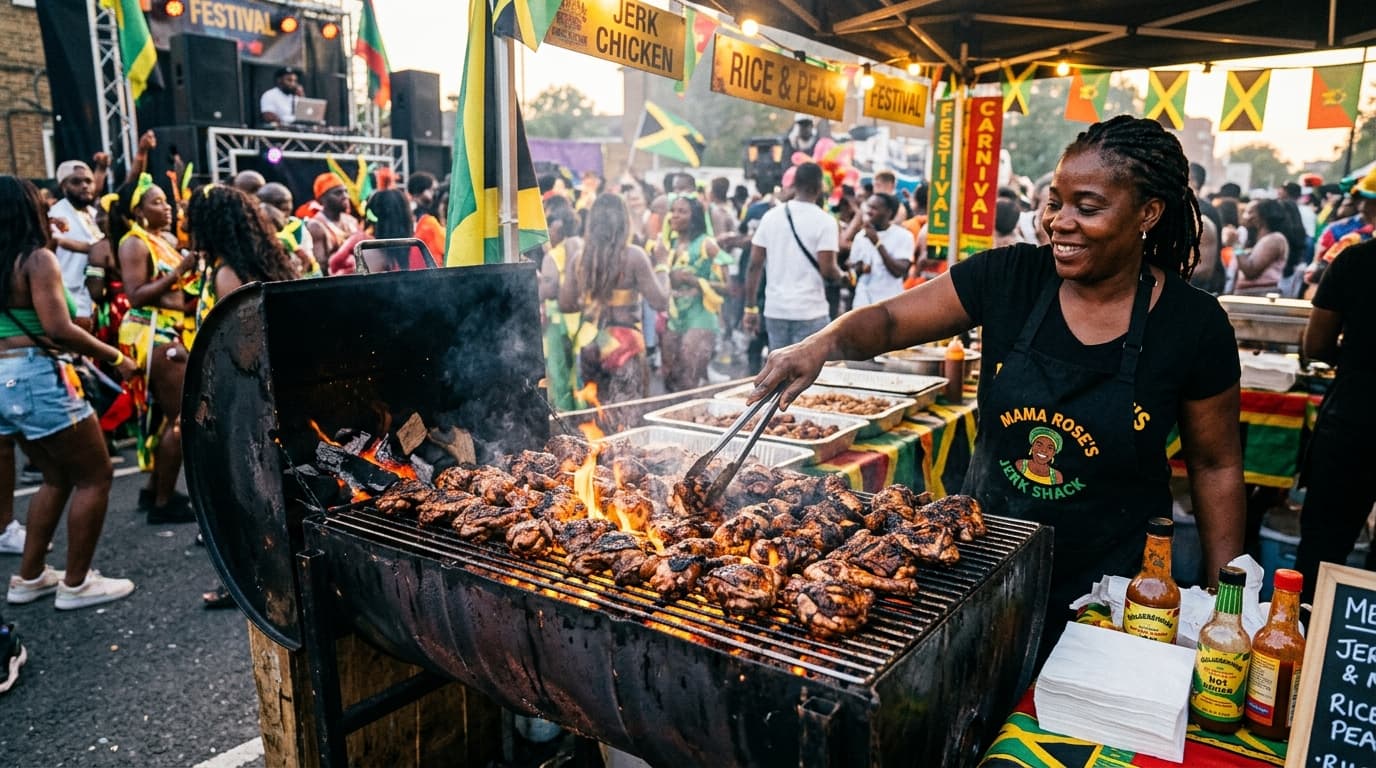
- Jerk chicken cooked over an oil-drum grill is the smell and taste most people carry home from carnival.
- Curry goat with rice and peas, saltfish fritters, festival and roti are the plates you will queue for.
- Doubles and corn soup show the Trinidadian side of carnival food, so look beyond the Jamaican staples.
- Sorrel and rum punch are the drinks of the season, sweet, spiced and made to share.
- The food does not stop when carnival ends, so use a Caribbean restaurant or caterer near you to eat this way all year.
For many Caribbean families in Britain, the food of carnival is the food of home, the same dishes that fill a Sunday kitchen or a birthday table. The oil-drum grill on a west London street is a direct line back to the yards and roadsides of Jamaica and Trinidad, where cooking in the open and feeding whoever passes is simply how celebration is done. Jerk, curry goat, festival, doubles and sorrel are not novelty foods invented for a festival. They are heritage carried across an ocean and kept alive through generations, a way of holding on to the islands while building a life somewhere colder and greyer. That is why the smell of jerk smoke on a British bank holiday means so much. It is the taste of belonging, of family, and of a culture that refused to be left behind.
Where does carnival food comes from?
Carnival began in the Caribbean as a celebration tied to emancipation and the release of the pre-Lenten season, and food was always at its heart. When Caribbean communities settled in Britain after the Second World War, they brought that spirit with them. Notting Hill Carnival grew out of west London's Caribbean community and is now held every August bank holiday, recognised as Europe's largest street festival with Caribbean roots. The music and masquerade get the headlines, but for many people the food is the reason they come. The streets fill with the smoke of grills and the smell of spice, and eating becomes part of the celebration itself.
For the wider picture of the cooking behind the day, our guide to Caribbean food walks through the islands and their signature dishes, and our piece on Jamaican food covers the Jamaican plates that dominate the British carnival scene.
The dishes you came for
Jerk chicken is the king of carnival. Chicken is marinated in a fiery blend of scotch bonnet, allspice, thyme and spring onion, then cooked slowly over coals, often in a halved oil drum on the pavement. That smoke is the signature smell of the day. If you want to understand what goes into it, our jerk chicken recipe breaks the marinade down step by step.
Curry goat is the other great carnival plate, tender meat cooked long and slow in a rich, spiced gravy and served with rice and peas. It is a dish of patience and generosity, and our curry goat recipe shows how it is built. Alongside these, you will find saltfish fritters, sometimes called stamp and go, crisp little cakes of salted cod in a seasoned batter that are made for eating on your feet.
Then there is festival, the slightly sweet fried dumpling that partners jerk chicken so well, soft in the middle and golden outside. Roti brings the Indo-Caribbean tradition to the table, a soft flatbread wrapped around curried chicken, goat or chickpea. Many stalls also serve greens such as callaloo, the leafy staple cooked down soft and savoury, which brings a little balance to a plate of fried and grilled food.
Trinidadian table
Carnival food is not only Jamaican. Trinidad and Tobago, home of one of the oldest carnivals of all, gives us doubles, two pieces of soft fried bara bread filled with curried chickpea and topped with pepper sauce and tamarind. They are cheap, quick and beloved, and a stall selling good doubles will always draw a line. Corn soup is the other Trinidadian carnival classic, a thick, comforting bowl of split peas, sweetcorn, dumplings and provisions that people eat at all hours. Seeking these out is the easiest way to eat past the obvious and taste the full range of what carnival cooking offers.
The drinks
Two drinks carry the season. Sorrel is made from dried hibiscus flowers steeped with ginger, cloves and sugar, deep red and tart and refreshing, and it is as tied to celebration in the Caribbean as any dish. Rum punch is the other, a mix of rum, citrus and syrup built to be shared, sweet and strong in equal measure. Between them they are the taste of a Caribbean celebration in a cup.
How to eat well at carnival
A few simple habits make the day better. Arrive hungry and pace yourself, because the best approach is to graze across several stalls rather than fill up at the first one. Follow the queues and the smoke, as a long line of locals is the surest sign of a stall worth waiting for. Carry cash, since many street stalls do not take cards. Ask for the heat level you actually want, because scotch bonnet is not shy. Take a moment with the drinks too, as a cup of sorrel between plates is a good way to reset. Most of all, eat with the crowd, because carnival food is social food and it tastes better shared.
Where to find Caribbean Carnival Food all year round
The good news is that carnival food is Caribbean home cooking, and it is served across Britain every week of the year. You do not need to wait for August. Use our listings of African and Caribbean restaurants near you to find a jerk grill or curry house close by, and if you are feeding a crowd, our caterers near you can bring the carnival table to your own event. Cooks who want to make these dishes at home can find the ingredients, from scotch bonnet to saltfish to sorrel, at African food stores in the UK and beyond. Carnival is one weekend, but the cooking behind it belongs to the whole calendar.
Frequently asked questions
What food is served at Notting Hill Carnival?
The stalls are full of Caribbean street food. You will find jerk chicken, curry goat with rice and peas, saltfish fritters, festival, roti, doubles and corn soup, with sorrel and rum punch to drink. Most of it is grilled or fried fresh in front of you and made for eating on the move.
What is the most popular carnival food?
Jerk chicken is the one nearly everyone eats. Chicken is marinated in spice and scotch bonnet and cooked slowly over coals, often on a grill made from a halved oil drum, and that smoky smell is what carnival tastes like for most people.
Is carnival food very spicy?
It can be, because scotch bonnet pepper runs through a lot of it. That said, most stalls will serve you a milder portion if you ask, so tell them the heat level you want before they plate up.
What do people drink at Caribbean carnival?
Sorrel and rum punch are the two drinks of the season. Sorrel is a tart, spiced hibiscus drink and rum punch is a sweet, strong mix of rum, citrus and syrup, both made to be shared.
Where can I get Caribbean carnival food outside of August?
Everywhere, all year. These are everyday Caribbean dishes served at restaurants and takeaways across Britain, so you can find African and Caribbean restaurants near you]any week, or book a caterer near you to bring the food to your own event.