The short answer
Injera is a large, soft, spongy sourdough flatbread that is central to Ethiopian and Eritrean cooking. It is made from teff flour, a tiny East African grain, mixed into a batter and left to ferment over several days, which gives it a slightly tangy taste and a surface covered in small holes. At a meal it works as both plate and utensil: stews and vegetables are spooned on top, and torn pieces are used to scoop up each mouthful. When made with pure teff and nothing else, injera is naturally gluten free.
What to remember
- Injera is the everyday bread of Ethiopia and Eritrea, soft, spongy and gently sour, not crisp like many other flatbreads.
- It is made from teff, one of the smallest grains in the world, fermented over a few days to build its tang and its holey, pancake-like surface.
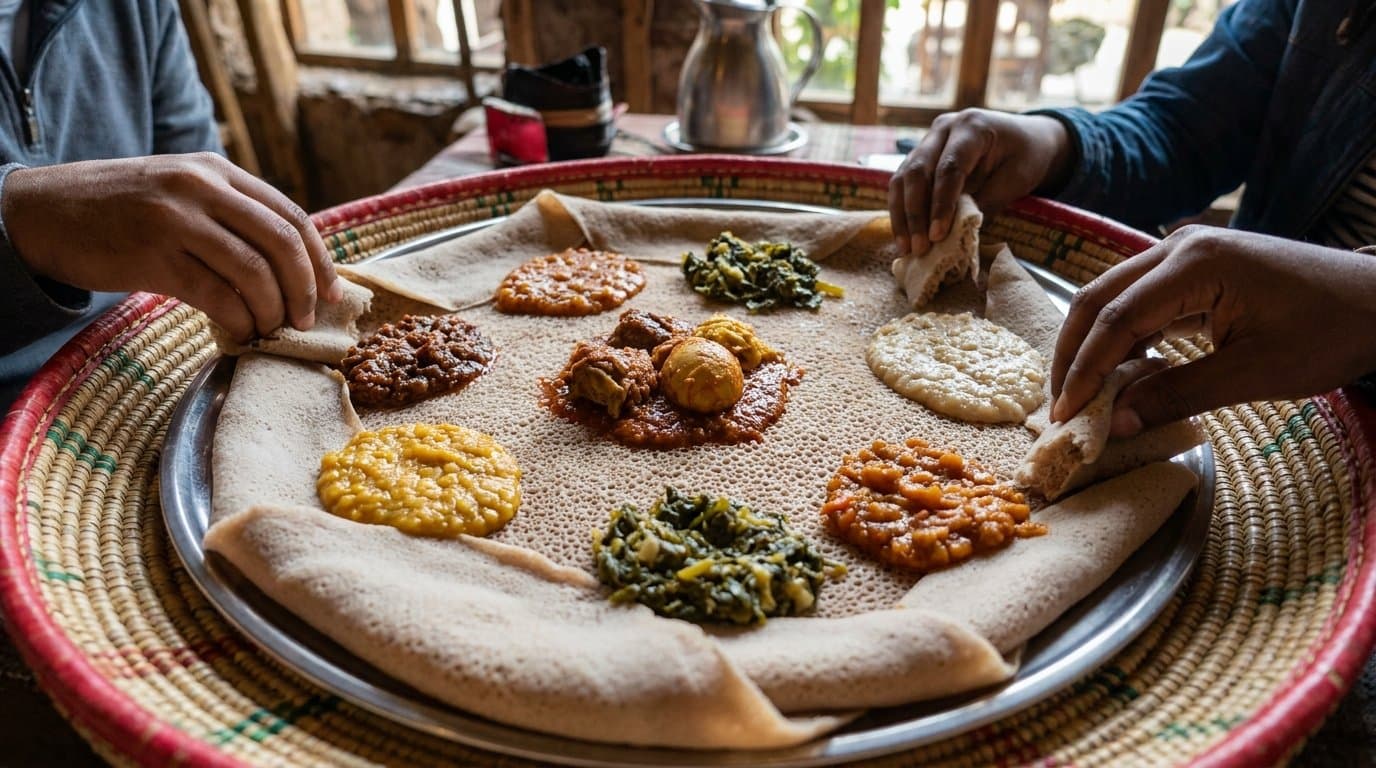
- One large injera is often plate, tablecloth and cutlery all at once: food sits on top and you tear off pieces to scoop, no fork needed.
- Made with pure teff, injera is naturally gluten free, though some shop and restaurant versions blend in wheat or barley, so ask if it matters to you.
- In the UK you can buy fresh injera and teff flour from African and Caribbean shops, and many Ethiopian and Eritrean restaurants sell it to take away.
To share injera is to share a table in the truest sense. Across Ethiopia and Eritrea, and now in kitchens and community halls across the UK, a meal is not a row of separate plates but a single great round of injera laid down like a map, its surface slowly filling with colour as the stews arrive. Everyone eats from the same bread. There is no dividing line between your food and mine, and that is deliberate.
The custom carries its own quiet language of care. Tearing a piece of injera, folding a little stew inside it and passing it into the mouth of someone beside you, a gesture called gursha, is an act of affection and respect, a way of saying you belong here and you are looked after. Meals stretch long because they are meant to. The bread beneath the food is eaten last, richest of all, having gathered every flavour of the meal into itself.
For many Ethiopian and Eritrean families far from home, the sour scent of fermenting teff and the first soft round lifted off the mitad is one of the most powerful ways of keeping heritage alive. It is breakfast and celebration, weekday supper and wedding feast. Wherever the ingredients can be found, the ritual travels with them, and a plate of injera becomes a small piece of home set down on a British table.
What injera actually is
Injera is the bread at the heart of almost every Ethiopian and Eritrean meal. Picture a large, round flatbread, often as wide as the platter it is served on, soft and pillowy rather than crisp, with a top covered in tiny holes like a giant thin crumpet. It has a cool, slightly sour, faintly tangy taste that comes from natural fermentation, and a texture somewhere between a pancake and a sponge. It is folded, rolled or laid flat, and it turns up at breakfast, lunch and dinner.
For anyone new to it, injera can feel unfamiliar at first because the sourness is more pronounced than in most Western breads. That tang is the point. It balances the rich, spiced stews it is served with and cleanses the palate between mouthfuls. Once it clicks, the pairing of soft sour bread and deeply seasoned sauce is one of the great combinations in African cooking.
The grain behind it teff
The traditional grain behind injera is teff, a cereal native to the Ethiopian highlands and grown there for thousands of years. Teff is remarkable for its size: the grains are so small that a handful contains many thousands of them, and the name is often linked to the local word for lost, because a single grain is so easy to drop and never find again. Despite being tiny, teff is nutritious, rich in fibre and minerals such as iron and calcium, which is part of why injera has sustained communities across the region for generations.
Teff comes in shades from ivory white to deep reddish brown, and the colour of the flour shapes the colour of the finished injera. Because teff carries no gluten of its own, injera made purely from teff is naturally gluten free. To learn more about the wider cuisine that teff anchors, see our guide to Ethiopian food.
How injera is made
Making injera is a slow, patient process built around fermentation. Teff flour is mixed with water into a loose batter, then left to rest and ferment, often for two to four days. During this time wild yeasts and bacteria naturally present in the flour and the air go to work, producing the acids that give injera its signature sour taste and the bubbles that create its open, holey surface. A portion of older, already fermented batter, sometimes called the starter or ersho, is often stirred in to get things going, much like a sourdough starter for a Western loaf.
When the batter is ready, it is poured in a thin spiral onto a large, round, flat griddle, traditionally a clay plate called a mitad heated over a fire, though many households now use electric versions. The cook covers it and lets it steam and cook on one side only. As it sets, the surface erupts with those small holes, known as eyes, which are the mark of a well-fermented batter. The injera is not flipped. It is lifted off soft and flexible, then cooled and stacked. No oil, no kneading, no oven: just batter, heat and time.
Some cooks, in Ethiopia, Eritrea and across the diaspora, blend teff with other flours such as wheat, barley, sorghum or rice, either for cost, texture or availability. This is common and traditional in its own right, but it does mean that not every injera is gluten free, which matters if you are coeliac or sensitive to gluten.
Plate utensil and bread all at once
What makes injera special is not only how it tastes but how it is used. At a shared meal, a large injera is laid flat to cover the whole serving platter. The various dishes of the meal, spiced meat stews like doro wat, lentil and split pea purees such as the milder alicha and spicier misir wat, and cooked greens and vegetables, are spooned in neat mounds directly on top of the bread. There are usually no separate plates and no cutlery.
To eat, you tear a piece of injera from the edge with your right hand, use it to pinch or scoop up a little of a stew, and eat the whole parcel, bread and filling together. As the meal goes on, the base injera soaks up the juices and sauces, becoming softer and more flavourful, and is eaten last. It is a way of eating that is communal by design, everyone reaching towards the same platter, and it is one of the most distinctive dining customs in the world. A close cousin of this shared, scooping style also appears in neighbouring cuisines, including Somali food, where flatbreads and communal eating play a central role.
Is injera gluten free
This is one of the most common questions about injera, and the honest answer is that it depends. Pure teff is naturally free from gluten, so injera made with one hundred per cent teff flour is suitable for a gluten free diet. However, because teff can be expensive and can be trickier to work with, some producers and restaurants mix in wheat or barley flour, both of which contain gluten. If you are coeliac or avoiding gluten for medical reasons, do not assume: ask the shop or restaurant whether their injera is made with pure teff, and check the label on any packaged version.
Where to buy injera and teff in the UK
In the UK, you have two easy routes to injera. The first is to buy it ready made. Fresh injera is sold by many African and Caribbean grocers, particularly those serving Ethiopian, Eritrean and wider East African communities, and Ethiopian and Eritrean restaurants will often sell rounds of injera to take away even if you are not eating in. It is usually sold in stacks, wrapped, and keeps for a few days.
The second route is to make it yourself, which means sourcing teff flour. Teff flour, both white and brown, is increasingly stocked in African and Caribbean food shops and health food stores, as it has become popular well beyond its home cuisines. Buying loose teff and a little patience is all you need to start your own ferment at home.
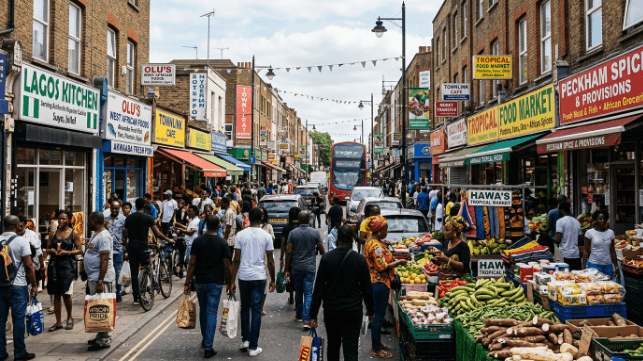
If you are not sure where to look, you can find African and Caribbean food stores near you and beyond, and ask the shopkeeper directly, they will know whether they carry fresh injera, teff flour or both, and can often point you to the freshest stock.
Frequently asked questions
What does injera taste like?
Injera is soft, spongy and gently sour, with a tang that comes from days of natural fermentation. It is not sweet or crisp. That mild sourness is meant to balance the rich, spiced stews it is served with, so it tastes best with food piled on top rather than on its own.
Is injera healthy?
Injera is made from teff, a whole grain that is high in fibre and contains minerals such as iron and calcium. It is cooked without oil and is a filling, nourishing base for a meal. As with any staple, how healthy your plate is overall depends on what you serve alongside it.
Is all injera gluten free?
No. Injera made from pure teff is naturally gluten free, but some versions blend in wheat or barley, which contain gluten. If you are coeliac or avoiding gluten, always ask the shop or restaurant, or check the packet, before assuming.
How do you eat injera?
You eat injera with your hands, usually the right hand. Tear off a piece from the edge, use it to pinch or scoop up a little stew or vegetables, and eat the two together. The large injera underneath the food acts as the plate and is eaten last once it has soaked up the sauces.
Where can I buy injera in the UK?
Fresh injera is sold by many African and Caribbean grocers and by Ethiopian and Eritrean restaurants, which often sell it to take away. If you would rather make your own, look for teff flour in African and Caribbean food shops and some health food stores. African Stores lists African and Caribbean food shops across the UK, so you can find one near you.