The short answer
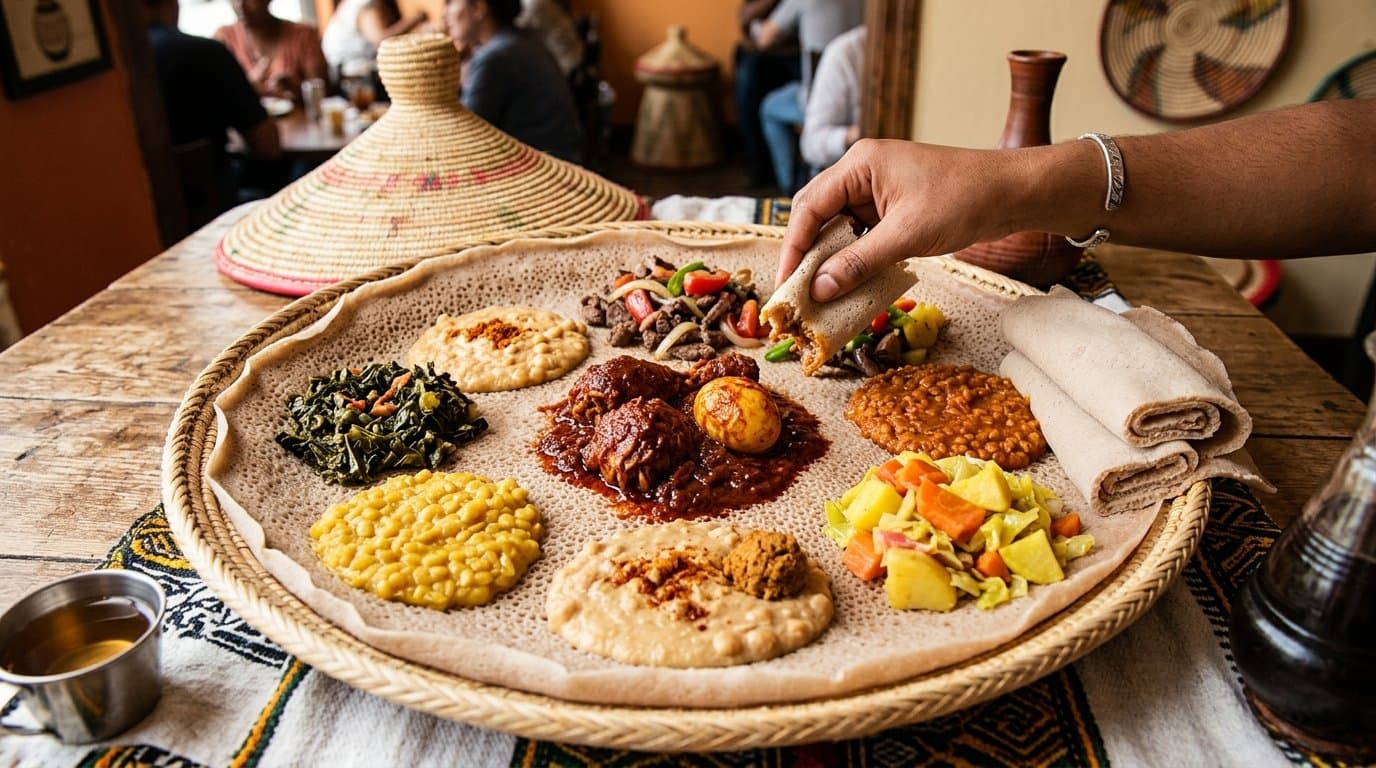
Ethiopian food is built around injera, a soft sourdough flatbread made from teff, served with a spread of spiced stews called wat. The best known dishes include doro wat (chicken in berbere sauce), tibs (sauteed meat), kitfo (minced raw beef), and vegetarian dishes such as shiro and misir wat. Meals are shared from a single platter and eaten by hand, with no cutlery. Its flavour comes largely from berbere, a chilli spice blend, and niter kibbeh, a spiced clarified butter.
What to remember
- Injera, the tangy sourdough flatbread made from teff, is both the plate and the utensil at an Ethiopian meal.
- Berbere, a deep red chilli and spice blend, and niter kibbeh, an aromatic clarified butter, give the cooking its signature flavour.
- Doro wat, tibs, kitfo, shiro and misir wat are the dishes to know when you order for the first time.
- Ethiopian food has an unusually rich vegan side, thanks to the fasting days of the Orthodox calendar.Ethiopian food has an unusually rich vegan side, thanks to the fasting days of the Orthodox calendar.
- The coffee ceremony is a slow, generous ritual worth staying for, not just a drink at the end of the meal.
There is a particular kind of welcome that Ethiopian food carries with it, and you feel it the moment the platter is set down and everyone leans in. To eat with your hands from the same plate is to lower the barriers between people. The gursha, that gesture of feeding a mouthful to the person next to you, is a small act of care that turns a meal into something closer to family. Nothing is portioned off, nothing is private, and the sharing is the meaning.
That spirit runs all the way through the culture. The coffee ceremony can take an hour or more, and that is the point of it, not a delay to be endured but time offered freely to whoever has come through the door. The fasting table, born of faith and patience, has quietly become one of the kindest ways to feed a mixed group of eaters, meat lovers and vegans side by side, no one left out. For Ethiopians and Eritreans living far from home in the UK, a shared injera and a pot of coffee brewed the old way are a way of keeping that warmth alive, and of handing it on. When you sit down to this food, you are being let into something generous, and the best thing you can do is stay for the third cup.
What is ethiopian food?
Ethiopian food is one of the most distinctive cuisines in the world, and once you have eaten it properly, nothing else quite feels the same. There is no cutlery, no individual plates, and no rushing. Instead a large round of soft, springy flatbread is laid down and topped with mounds of richly spiced stews, and everyone at the table eats from the same platter with their hands. It is food designed for company, generosity and conversation, and it rewards anyone willing to slow down and share.
The cooking is defined by two things above all: a set of spice blends that give it depth and warmth, and injera, the flatbread that carries everything else. Understanding those two elements is the key to understanding the whole meal.
Injere the bread that is also plate
Injera is a large, thin, spongy flatbread with a gentle sourness and a surface covered in tiny holes. It is made from teff, an ancient grain grown in the Ethiopian highlands and one of the smallest cereal grains in the world. The batter is fermented for a few days, which gives injera its tang, then poured onto a hot clay griddle and cooked on one side so that steam creates that characteristic bubbly texture.
At the table, injera does three jobs at once. It is the plate the food is served on, the utensil you scoop with, and the bread you eat alongside everything. You tear off a piece with your right hand, use it to pinch up some stew, and eat the two together. By the end of the meal the base layer of injera, soaked in all the sauces, is the best part.
Teff is naturally gluten free, though injera in some restaurants is blended with wheat or barley flour, so it is always worth asking if that matters to you. In the UK, teff flour and packs of ready made injera are increasingly stocked by African and Caribbean grocers, and you can browse African food stores near you or check what is on the shelves at African food stores in Manchester.
Berbere and niiter kibech the flavour base
If injera is the structure of the meal, berbere and niter kibbeh are its soul. Berbere is a deep red spice blend built on dried chillies and layered with garlic, ginger, fenugreek, cardamom, coriander, and warm notes of cinnamon and clove. Every household and cook has their own balance, and it is berbere that gives so many Ethiopian stews their colour and their slow, building heat.
Niter kibbeh is clarified butter infused with spices and aromatics, often including garlic, ginger, fenugreek and korarima, an Ethiopian cardamom. It is used the way other cuisines use plain oil or butter, but it carries fragrance into everything it touches. Together, berbere and niter kibbeh are the reason Ethiopian food tastes like nowhere else.
Doro wat and the stew to know
Wat is the word for the stews that make up most of an Ethiopian meal, and doro wat is the most celebrated of them all. It is chicken slow cooked in a thick, dark berbere sauce with a great deal of caramelised onion, enriched with niter kibbeh and traditionally served with a whole hard boiled egg. It is a dish reserved for holidays, guests and celebrations, and it is often the first thing people fall in love with.
Alongside it you will meet other wats. Misir wat is a red lentil stew cooked with berbere, deeply savoury and satisfying. Key wat and sega wat are beef versions. Alicha dishes are the milder relatives, cooked without berbere and coloured gold with turmeric instead, so a spread often balances fiery reds against gentle yellows.
Tibs kitfo and the meat dishes
Not everything is a slow simmered stew. Tibs is meat, usually beef or lamb, sauteed quickly with onions, garlic, peppers and rosemary, sometimes served sizzling. It is one of the most approachable dishes for a newcomer and a firm favourite across Ethiopian restaurants.
Kitfo is for the more adventurous. It is minced raw beef, gently warmed and dressed in niter kibbeh and mitmita, a fiery chilli blend even hotter than berbere. It can be ordered leb leb, lightly cooked, if raw is not for you, and it is often eaten with a fresh cheese called ayib and a soft greens dish. Kitfo is considered something of a delicacy and is a good measure of a kitchen that knows what it is doing.
Shiro and the vegetarian fasting table
One of the quiet glories of Ethiopian food is how well it feeds people who do not eat meat. This is no accident. Followers of the Ethiopian Orthodox Tewahedo Church observe numerous fasting days through the year, during which no animal products are eaten, and centuries of cooking for those days have produced a magnificent vegan table.
Shiro is the heart of it, a smooth, comforting stew made from ground chickpeas or broad beans simmered with berbere and garlic into something between a puree and a sauce. Misir wat, gomen (collard greens), atkilt (cabbage, carrot and potato), fosolia (green beans) and spiced split peas all belong here too. Order a beyaynetu, the vegetarian combination platter, and you get a little of each arranged around the injera like a wheel of colour. It is one of the best value and best tasting vegetarian meals you can eat anywhere.
How is a meal shared?
An Ethiopian meal arrives as a single large platter, the injera spread wide and the stews spooned on top in bright, separate mounds. Everyone eats from it together, using only the right hand and tearing pieces of injera to scoop. There is a gesture called gursha, where you feed a good mouthful to someone beside you as a sign of affection and respect, and it says a great deal about how this food is meant to be enjoyed. Eating this way, with your hands, from a shared plate, is not a novelty. It is the point.
If you want to try it properly, a good Ethiopian restaurant is the place to start. You can find African restaurants near you on our platform, and for larger gatherings, weddings or events, browse caterers near you who can bring a full spread to you.
Where to find ethiopian food in the UK?
Ethiopian and Eritrean communities have made a real home in Britain, and their food has come with them. London has the deepest concentration of Ethiopian restaurants and grocers, but you will also find kitchens and shops in cities such as Manchester, Birmingham and beyond. Ingredients that were once hard to source, teff flour, whole berbere, niter kibbeh and packaged injera, now turn up regularly in African and Caribbean grocers around the country. Whether you want to eat out or cook a doro wat at home, the platform is a good place to find the shops, restaurants and caterers near you.
The coffee ceremony
No account of Ethiopian food is complete without coffee, because Ethiopia is where coffee began. The Ethiopian coffee ceremony is a slow, deliberate ritual of welcome. Green beans are roasted over coals in front of you, the smoke wafted around the room, then ground by hand and brewed in a clay pot called a jebena. The coffee is poured in three rounds, each with its own name, and to stay for all three is a mark of respect. Frankincense often burns alongside, and there may be popcorn to go with it. It is unhurried, communal and warm, and it tells you almost everything you need to know about how Ethiopians treat a guest.
Frequently asked questions
What is injera made from?
Injera is made from teff, a tiny ancient grain from the Ethiopian highlands. The teff is milled into flour, mixed into a batter and left to ferment for a few days, which gives injera its gentle sour taste. It is then cooked on a hot griddle so steam forms the soft, bubbly holes on top. Teff is naturally gluten free, though some restaurants blend it with wheat, so ask if that matters to you.
Is Ethiopian food spicy?
Some of it is, but not all. The heat comes mainly from berbere, a chilli based spice blend, and from mitmita, which is hotter still. But every meal also includes milder alicha dishes made without chilli, plus cooling sides like fresh cheese and greens. You can eat a full, satisfying Ethiopian meal without much heat at all if you prefer.
Do you really eat Ethiopian food with your hands?
Yes, and it is the proper way to do it. You use your right hand to tear a piece of injera and pinch up the stews with it, no knife or fork needed. The bread is your plate and your utensil at once. Eating from a shared platter this way is part of what makes the meal so sociable.
Is Ethiopian food good for vegetarians and vegans?
Wonderfully so. Because of the fasting days in the Ethiopian Orthodox calendar, cooks have perfected a whole world of vegan dishes, from shiro made with ground chickpeas to lentils, greens and spiced vegetables. Ask for a beyaynetu, the vegetarian combination platter, and you will get a generous selection all at once.
Where can I find Ethiopian food and ingredients in the UK?
Ethiopian restaurants are found across the UK, with the widest choice in London and a growing number in cities like Manchester and Birmingham. For ingredients such as teff flour, berbere and niter kibbeh, African and Caribbean grocers are your best bet. You can find restaurants, caterers and food stores near you on our platform.