What Is Ras el Hanout? The North African Spice Blend Explained
Quick answer
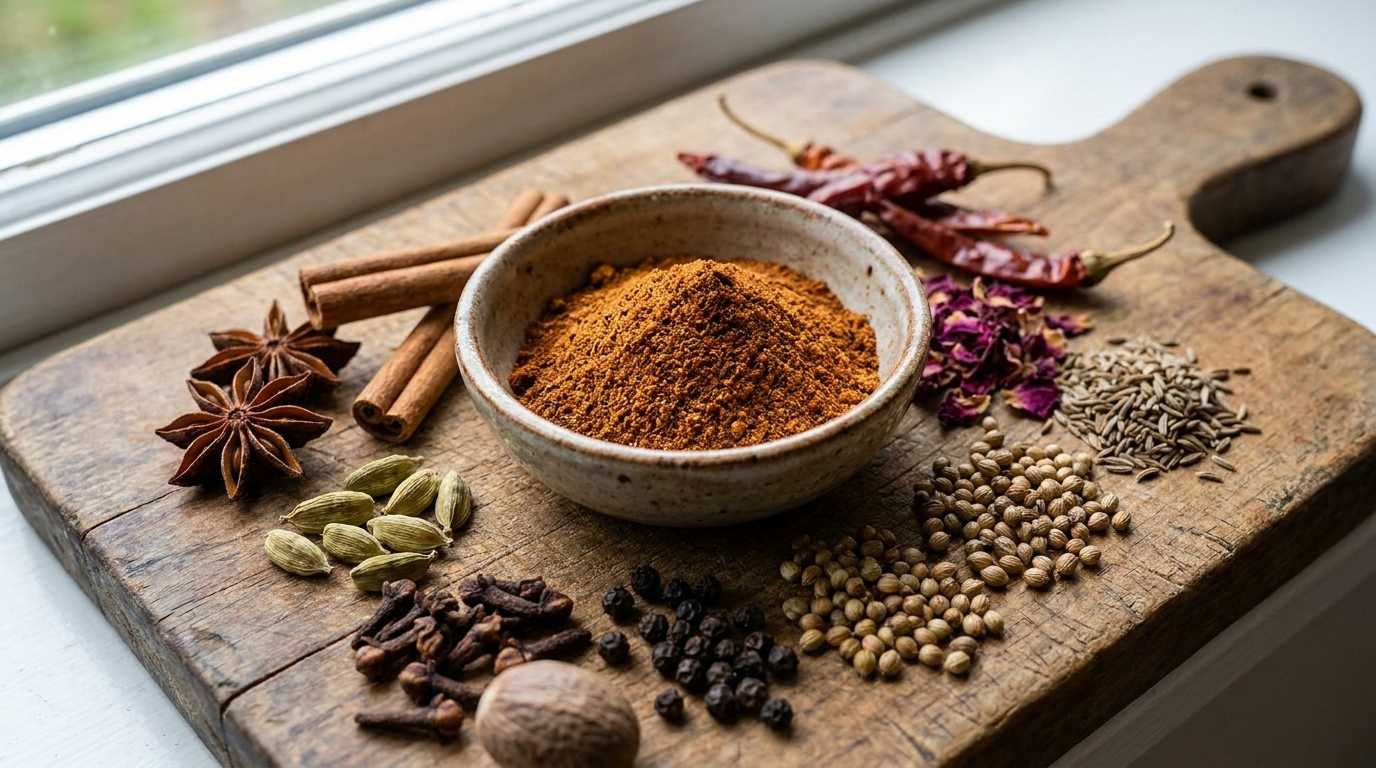
Ras el hanout is a warm, fragrant, complex spice blend from North Africa, especially Morocco, made from many ground spices combined into one mix. The name means top of the shop in Arabic, traditionally suggesting the best spices a merchant has to offer, and a blend can contain a dozen or more spices, such as cumin, coriander, cinnamon, ginger, turmeric, black pepper, cardamom, cloves, nutmeg and more, with the exact mix varying by maker. It is warm and aromatic rather than fiery, and it is used to season tagines, couscous, stews, roasted meat and vegetables. In the UK ras el hanout is sold ready mixed by African and North African food shops and most supermarkets. African Stores helps you find one near you.
- Other names
- rass el hanout, Moroccan spice blend
- Origin
- North Africa
- Type
- Ingredients
Ras el hanout is the warm, fragrant heart of home cooking for Moroccans and other North Africans in Britain. It is the smell that fills the kitchen when a tagine goes on, the layered warmth of a dozen spices in one spoonful, the blend a mother or grandmother swore by from a particular shop, the seasoning that makes food taste of home. A good ras el hanout far from home brings back family meals and the markets of Marrakesh, Fez and beyond, the warmth of home in every fragrant mouthful.
There is heritage in it too, and real craft. Ras el hanout carries the spice-trading and blending traditions of North Africa, the merchant's art of combining the finest spices into a harmonious mix, passed down and guarded as family and shop recipes, and to cook with it is to keep that heritage alive. Seasoning a family dish with ras el hanout, or introducing a friend to its layered warmth, is a way of sharing a proud and ancient food culture. That warm, complex, fragrant taste of home is the quiet gift of ras el hanout.
What Ras el hanout actually is
Ras el hanout is one of the signature flavours of North African cooking, a warm, deeply aromatic spice blend that brings a whole cupboard of spices together in one mix. It is especially associated with Morocco, though it is used across the region, and its name, which means top of the shop in Arabic, gives a clue to its character: traditionally it was the finest blend a spice merchant could offer, made from the best spices in the shop, so a good ras el hanout is a considered, complex mixture rather than a simple one. Rather than a single dominant flavour, it offers a rounded, layered warmth built from many spices at once.
What makes ras el hanout special is that complexity. Where a single spice gives one note, ras el hanout gives many, blending sweet, warm, earthy and fragrant spices into a harmonious whole that seasons a dish with depth in a single spoonful. It is a defining seasoning of Moroccan and North African food, used in the dishes we cover in guides like tagine and couscous, and it sits alongside the region's other great flavour makers such as harissa, though where harissa brings heat, ras el hanout brings aromatic warmth.
The spices in the blend
Understanding what goes into ras el hanout explains its character, though the truth is that no two blends are exactly alike. A ras el hanout can contain anywhere from a handful to more than twenty spices, and each maker, shop and family has its own recipe. Common spices in the blend include cumin, coriander, cinnamon, ginger, turmeric, black pepper, cardamom, cloves, nutmeg, allspice and paprika, and more elaborate versions may add dried rosebuds, lavender, mace, fennel and other aromatics. This is why ras el hanout tastes rounded and layered rather than of any one thing.
The balance of these spices gives ras el hanout its warm, sweet-savoury, fragrant profile: the cinnamon, nutmeg and cloves lend warmth and a touch of sweetness, the cumin and coriander give earthiness, the ginger and pepper add a gentle background warmth, and any floral additions give fragrance. Importantly, ras el hanout is generally not hot, since it is about aromatic depth rather than chilli heat, which sets it apart from harissa. Because recipes vary so much, different ras el hanout blends taste noticeably different, so it is worth trying a few to find one you love.
How to use ras el hanout
Ras el hanout is used much like any warm spice blend, to season savoury dishes with depth, and it is especially at home in North African cooking. It is classic in a tagine, stirred in to build the fragrant, spiced base that the meat, vegetables and dried fruit cook in, and it is excellent rubbed onto lamb, chicken, beef or fish before roasting or grilling. It is stirred through couscous, sprinkled over roasted vegetables, added to soups and stews, and used to season rice, chickpeas and lentils.
Beyond traditional dishes, ras el hanout is a wonderfully easy way to add complexity to everyday cooking, since one spoonful stands in for many separate spices. A little in a marinade, a dusting on roast potatoes or vegetables, or a spoonful in a stew brings warmth and fragrance with minimal effort. Because it is a blend of already ground spices, it is added during cooking rather than needing long toasting, though warming it briefly in oil helps release its aroma. As with any spice blend, a little goes a long way, so it is best added to taste, building up the warmth gradually.
What it tastes like and substitutes
People new to ras el hanout often ask what it tastes like, and the best short answer is warm, sweet-savoury and complex. It is aromatic and layered, with the cosy warmth of cinnamon and clove, the earthiness of cumin and coriander, and a fragrant lift from spices like cardamom and ginger, all balanced so no single spice dominates. It is not spicy in the chilli sense, so it suits those who want depth and warmth rather than heat. Its closest relatives in spirit are other warm blends, though its particular mix is distinctly North African.
If you find yourself without ras el hanout, you can approximate it by combining several of its common spices, for example cumin, coriander, cinnamon, ginger, turmeric and a little black pepper and nutmeg, adjusting to taste, though a real blend is more complex and worth seeking out. Conversely, ras el hanout can stand in as a shortcut when a recipe calls for several warm spices. Buying a good ready-made blend is by far the easiest route to that original, layered flavour, which is why most cooks simply keep a jar to hand.
Where to buy ras el hanout in the uk
Buying ras el hanout in Britain is easy, as it is widely sold. North African and African food shops that serve Moroccan, Algerian, Tunisian and Libyan communities sell ras el hanout ready mixed, often freshly blended and more complex than mass-market versions, and the staff can point you to a good one and describe its character, since blends vary. Most large supermarkets also stock it, usually in the world foods or spice aisle, so it is rarely hard to find.
If you are new to ras el hanout, a North African or African food shop is a great place to start, as the blends are often fresher and you can ask for advice, and the same shops stock the couscous, tagine ingredients and other spices to cook with it. You can find African food stores near you or look up Caribbean food stores near you. Once you have a jar, keep it sealed and cool, and use it within a reasonable time, as ground spice blends are at their best while fresh.
Key takeaways
- Ras el hanout is a warm, complex North African spice blend, especially of Morocco.
- The name means top of the shop, suggesting a merchant's best spices.
- It combines many spices, often a dozen or more, and the exact mix varies by maker.
- It is warm and aromatic rather than hot, used for tagines, couscous, stews and roasts.
- It is sold ready mixed by North African food shops and most supermarkets.
Frequently asked questions
What is ras el hanout?
Ras el hanout is a warm, fragrant, complex spice blend from North Africa, especially Morocco, made from many ground spices combined into one mix. The name means top of the shop, traditionally the best spices a merchant could offer. It is warm and aromatic rather than fiery, and it is used to season tagines, couscous, stews, roasted meat and vegetables.
What spices are in ras el hanout?
A ras el hanout can contain anywhere from a handful to more than twenty spices, and every maker has its own recipe. Common ones include cumin, coriander, cinnamon, ginger, turmeric, black pepper, cardamom, cloves, nutmeg, allspice and paprika, and elaborate blends may add dried rosebuds, lavender, mace and fennel, which is why it tastes so rounded and layered.
How do you use ras el hanout?
Ras el hanout is used to season savoury dishes with warm, aromatic depth. It is classic in tagines and stirred through couscous, excellent rubbed onto lamb, chicken, beef or fish before roasting or grilling, and good on roasted vegetables and in soups, stews, rice and pulses. One spoonful stands in for many separate spices, so add it to taste.
What does ras el hanout taste like?
Ras el hanout tastes warm, sweet-savoury and complex, with the cosy warmth of cinnamon and clove, the earthiness of cumin and coriander and a fragrant lift from spices like cardamom and ginger, balanced so no single spice dominates. It is aromatic and layered rather than hot, so it brings depth and warmth rather than chilli heat.
Where can I buy ras el hanout in the UK?
North African and African food shops sell ras el hanout ready mixed, often freshly blended and more complex than mass-market versions, and most large supermarkets stock it too in the world foods or spice aisle. A specialist shop is a good place to find fresher, more flavoured blends and to ask advice, along with the couscous and tagine ingredients to cook with it. African Stores lists African and Caribbean food shops across the UK, so you can find one near you.
Join African Stores free
Save shops, follow the ones you love and get your free member card.
Your free member card: show it at participating shops for member offers.
Get the app