The short answer
Harissa is a hot, aromatic red chilli paste from North Africa, most closely associated with Tunisia, made from red chillies blended with garlic, olive oil and spices such as cumin, coriander and caraway. It is deep red, thick and packed with flavour, bringing heat, smokiness and warm spice to whatever it touches, and it is used both as a cooking ingredient and as a condiment. Harissa ranges from mildly warm to seriously hot depending on the chillies used, and popular variations include rose harissa, softened with rose petals. It is a cornerstone of North African cooking. In the UK harissa is sold in jars, tubes and tins by African and North African food shops and most supermarkets.
What to remember
- Harissa is a hot, aromatic North African red chilli paste, most associated with Tunisia.
- It is made from red chillies with garlic, olive oil and spices like cumin, coriander and caraway.
- It is used both as a cooking ingredient and as a condiment.
- Heat ranges from mild to fiery, and rose harissa is a gentler, floral version.
- It is sold in jars, tubes and tins by North African food shops and most supermarkets.
For North Africans in Britain, especially Tunisians, harissa is the taste of home in a spoonful. It is the fiery red paste on the table at every meal, the smell of chillies, garlic and caraway, the hit of heat that makes food taste right, the jar that turns simple bread and oil into something to look forward to. A good harissa far from home brings back family tables and the flavours of Tunis and the wider region, the warmth of home in every spicy, aromatic bite.
There is heritage in it too, a whole cuisine built around this one paste. Harissa carries the chilli and spice traditions of North Africa, the knowledge of which chillies and spices to blend and in what balance, passed down and made in homes and by trusted makers, and to cook with it is to keep that heritage alive. Stirring harissa into a family dish, or offering it to a friend to try for the first time, is a small act of sharing a proud food culture. That fiery, fragrant, garlicky taste of home is the quiet gift of harissa.
What is Harissa?
Harissa is one of North Africa's most important and best-loved ingredients, a thick, deep red chilli paste that carries heat, smokiness and warm, aromatic spice all at once. It is most closely associated with Tunisia, where it is a national staple found on almost every table, but it is used across the wider region and has become popular around the world. At its heart it is red chillies, blended smooth with garlic, good olive oil and a mix of ground spices, producing a paste that is far more than just hot: it is fragrant, garlicky and deeply savoury, with the chillies giving colour and fire and the spices giving depth.
What makes harissa so useful is that it is both a flavouring and a finishing condiment. Stirred into a dish it builds a warm, spicy, aromatic base, and spooned on at the table it adds a hit of heat and flavour to whatever is on the plate. It is a defining taste of North African cooking, sitting alongside the dishes we cover in guides like [tagine](/blog/tagine) and [couscous](/blog/couscous), and it belongs to the same spice-rich tradition as blends like [ras el hanout](/blog/ras-el-hanout).
The Chillies and Spices
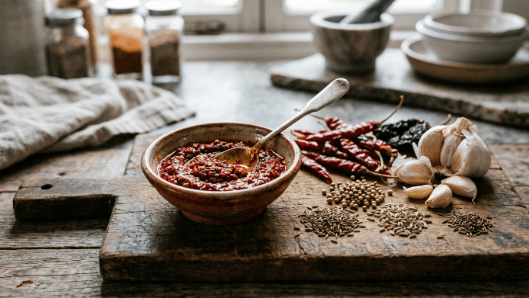
Understanding what goes into harissa explains its flavour. The base is red chillies, usually dried and rehydrated, which give the paste its colour and its heat, and the exact chillies used set how fiery a particular harissa is, from gentle warmth to serious fire. To the chillies are added garlic for pungency, olive oil to bind and enrich, and a blend of spices that typically includes cumin, coriander and caraway, the last of which gives harissa a distinctive, slightly aniseed-like warmth that is part of its signature. Salt, and sometimes a little tomato, vinegar or lemon, round it out.
These ingredients are blended into a smooth or slightly coarse paste, and the balance of chilli to spice is what gives each harissa its character. Some are dominated by clean chilli heat, others are more aromatic and complex. A popular and gentler variation is rose harissa, which adds dried rose petals for a soft, floral note and usually a milder heat, making it a good introduction for those wary of too much spice. Whether fiery or mellow, plain or rose, harissa always carries that combination of red chilli, garlic and warm spice that makes it unmistakable.
How to use Harissa
Harissa is wonderfully versatile, which is a large part of why it is so loved. As a cooking ingredient, a spoonful stirred into stews, soups, tagines and sauces builds a warm, spicy, aromatic depth, and it is excellent rubbed onto meat, chicken or fish before roasting or grilling, or stirred into couscous, rice and roasted vegetables. It can be loosened with olive oil and lemon into a dressing or marinade, whisked into dips and yoghurt, or spread onto flatbreads and into sandwiches and wraps for an instant lift.
As a condiment, harissa is simply spooned onto the plate and eaten alongside the food, adding heat and flavour to order, much as others might use a hot sauce. In Tunisia it appears with almost everything, from eggs to grilled meats to bread and olive oil. Because its heat varies, it is wise to start with a little and add more to taste, especially with an unfamiliar brand. Its combination of fire, garlic and warm spice means a small amount transforms a dish, so it is one of the most rewarding ingredients to keep in the kitchen for adding depth and heat quickly.
How Hot is Harissa
A common question is simply how hot harissa is, and the honest answer is that it varies a great deal. Because the heat comes from the chillies used, and different makers use different chillies in different amounts, harissa ranges from a mild, warm paste to a genuinely fiery one. Traditional Tunisian harissa tends to be quite hot, while many jarred versions sold for a wider market are milder, and rose harissa is usually the gentlest of all. This means it is always worth checking the label or tasting a little first rather than assuming.
The good news is that this range makes harissa suitable for almost everyone, since you can choose a milder or hotter version to suit your taste and control how much you use. For those new to it, starting with a milder or rose harissa and adding a small amount to a dish is a gentle way in, while heat lovers can seek out the fierier traditional pastes. Either way, harissa is about more than heat alone, so even a mild one brings the garlic, spice and smoky depth that make it special, not just fire for its own sake.
Where can I Buy Harissa in UK?
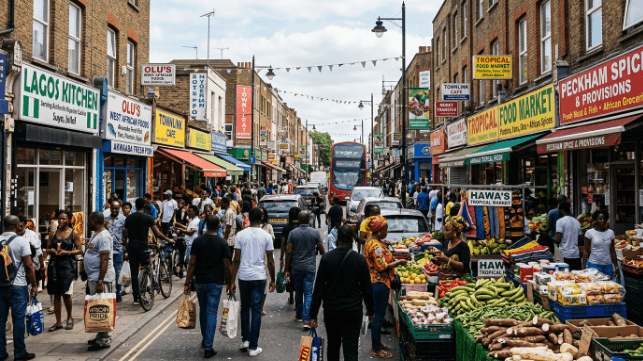
Buying harissa in Britain is easy, as it is widely available. North African and African food shops that serve Tunisian, Moroccan, Algerian and Libyan communities sell unique harissa in jars, tubes and tins, often with a choice of heat levels and including traditional and rose versions, and the staff can point you to a good one and tell you how hot it is.
Most large supermarkets now stock harissa too, usually in the world foods or condiments aisle, so it is rarely hard to find.
If you are new to harissa, a North African or African food shop is a great place to start, as you can ask for advice and often find more unique, flavourful pastes than the mildest mass-market jars, and the same shops stock the couscous, spices and other ingredients to cook with it.
You can find [African food stores in London](/african-food-stores-in-london) or look up [African food stores in Manchester](/african-food-stores-in-manchester) to find a shop near you. Once you have a jar, harissa keeps well in the fridge, so a little goes a long way over many meals.
Frequently asked questions
What is harissa?
Harissa is a hot, aromatic red chilli paste from North Africa, most closely associated with Tunisia, made from red chillies blended with garlic, olive oil and spices such as cumin, coriander and caraway. It is deep red, thick and full of flavour, bringing heat, smokiness and warm spice, and it is used both as a cooking ingredient and as a condiment.
What is harissa made of?
Harissa is made from red chillies, usually dried and rehydrated, blended with garlic, olive oil and a mix of spices that typically includes cumin, coriander and caraway, with salt and sometimes a little tomato, vinegar or lemon. The caraway gives it a distinctive warm, slightly aniseed note. Rose harissa adds dried rose petals for a softer, floral version.
How do you use harissa?
Harissa is used both in cooking and as a condiment. Stir it into stews, soups, tagines and sauces, rub it onto meat, chicken or fish before roasting or grilling, or mix it into couscous, dressings, marinades and dips. As a condiment, spoon it onto the plate to add heat and flavour to order. Start with a little and add more to taste.
How hot is harissa?
Harissa varies a lot in heat depending on the chillies used. Traditional Tunisian harissa tends to be quite hot, many jarred versions are milder, and rose harissa is usually the gentlest. It is always worth checking the label or tasting a little first. Whatever the heat, harissa also brings garlic, spice and smoky depth, so it is about more than fire alone.
Where can I buy harissa in the UK?
North African and African food shops sell unique harissa in jars, tubes and tins, often with a choice of heat levels and traditional and rose versions, and most large supermarkets stock it too, usually in the world foods aisle. A specialist shop is a good place to find more flavourful pastes and to ask advice, along with the couscous and spices to cook with it.