What Is Kunu? The Northern Nigerian Grain Drink Explained
Quick answer
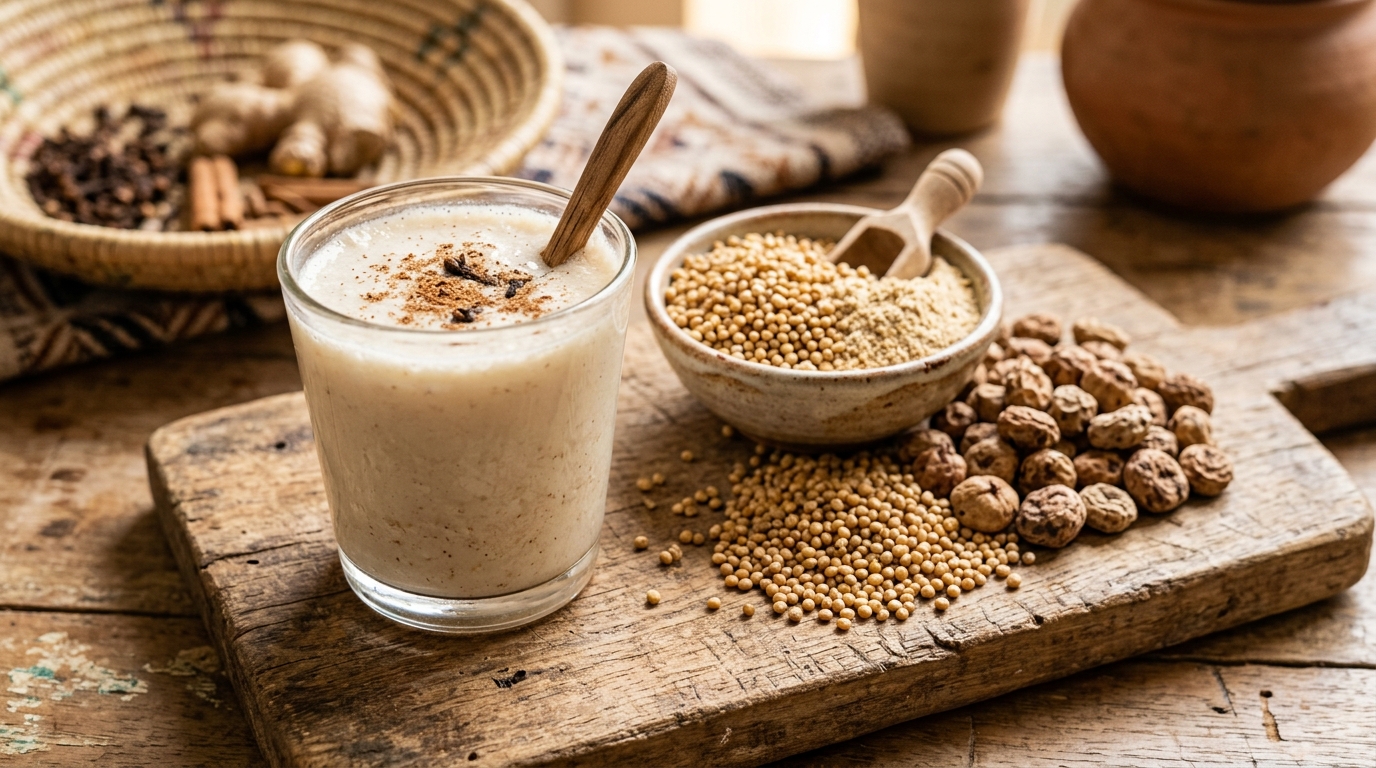
Kunu, also spelt kunun, is a traditional non-alcoholic drink from northern Nigeria, made from grains such as millet, sorghum or maize, or from tigernuts, blended with water and gentle spices like ginger and cloves into a smooth, lightly sweet, refreshing drink. There are several types, the most popular being kunun zaki, the sweet grain version, and kunu aya, made from tigernuts, and it is enjoyed as a cooling, nourishing everyday drink, especially valued during Ramadan and in the heat. Wholesome and refreshing, kunu is a beloved part of northern Nigerian food culture. In the UK the grains and tigernuts are sold by African food shops.
- Other names
- kunun, kunun zaki, kunu aya
- Origin
- Northern Nigeria
- Type
- Drinks
For northern Nigerians in Britain, kunu is a refreshing, nostalgic taste of home. It is the cool, creamy grain drink on a hot day, the glass that breaks the fast at Ramadan, the wholesome refreshment of childhood and home, the taste that says home and hospitality. Making kunu far from home brings back family kitchens and warm afternoons and the drinks of the north, the warmth of home in every smooth, gently spiced sip.
There is real heritage in it too, in a drink made from the grains and tigernuts of the region, carried through generations of northern kitchens. It reflects a whole culture of wholesome, refreshing, hospitable food and drink, and to make a jug of kunu is to keep that alive. Making it for family who grew up on it, or offering a friend their first cool glass of kunu, is a small act of welcome. That smooth, refreshing taste of home is the gift of kunu.
What is kunu?
Kunu, or kunun, is a much loved traditional drink of northern Nigeria, a smooth, refreshing, non-alcoholic beverage made from grains or tigernuts. In its most common form it is made from cereal grains such as millet, sorghum (guinea corn) or maize, which are soaked, ground, and processed with water and gentle spices into a lightly thick, creamy, mildly sweet drink. It is served chilled or cool, and it is prized as a wholesome, thirst-quenching everyday drink across the north and beyond.
There are several kinds of kunu, each with its own base and character. Kunun zaki, meaning sweet kunu, is perhaps the most popular, a lightly spiced grain drink; kunu aya is made from tigernuts, giving a rich, creamy, naturally sweet drink; and there are others made from different grains and methods. Spices like ginger, cloves and sometimes chilli or calabash nutmeg give kunu its characteristic gentle warmth. Kunu belongs to the world of Nigerian cooking and drinks we cover in our guide to Nigerian food, and it sits alongside other traditional drinks like the hibiscus drink zobo and the northern refreshment fura.
How is kunu made and enjoyed
Making kunu takes a little time but is not complicated. For a grain kunu like kunun zaki, the grains, such as millet or sorghum, are soaked, then ground with spices like ginger and cloves, and the mixture is processed with hot and cold water and strained, sometimes with a portion cooked and combined with raw to give the right smooth, lightly thick consistency, then sweetened to taste. For kunu aya, tigernuts, sometimes with dates, coconut or spices, are soaked and blended with water, then strained into a creamy drink. Each type has its own traditional method, and recipes vary from home to home.
Kunu is enjoyed cool or chilled, as a refreshing drink on its own, with meals, or as a nourishing pick-me-up, and it is especially popular during Ramadan for breaking the fast, and in hot weather. It is a wholesome, satisfying drink, and the tigernut version in particular is rich and filling. Some kinds contain groundnut or other additions, so those with allergies should check. This article is general food information rather than dietary or medical advice. Smooth, gently spiced and refreshing, kunu is a treasured northern Nigerian drink.
Kunu in northern nigerian food culture
Kunu holds a warm, everyday place in northern Nigerian food culture, a beloved traditional drink enjoyed at home, sold by vendors, and served to guests as a gesture of hospitality. Made from the grains and tigernuts of the region, it is a wholesome, refreshing part of daily life, particularly cherished in the heat and during Ramadan, when a cool glass of kunu is a welcome way to break the fast. It carries a sense of home, tradition and refreshment.
Every family and vendor has its own kunu, its favourite grain or tigernut base, its balance of spice and sweetness, its own smooth consistency, but a refreshing, lightly spiced grain or tigernut drink is always at its heart. For northern Nigerians, kunu is a nostalgic, cooling taste of home, and for anyone exploring Nigerian drinks it is a lovely, wholesome one to discover. This article is general food and cultural information. Smooth and refreshing, kunu is a treasured northern Nigerian classic.
Where to buy the ingredients in the UK
Making kunu at home in Britain is very doable, as the ingredients are sold in African food shops. For grain kunu they stock millet, sorghum (guinea corn) and maize, along with the ginger, cloves and other spices, while for kunu aya they sell tigernuts, often alongside dates and coconut. Tigernuts in particular are easy to find, as they are popular for tigernut milk too. A blender and a fine sieve or cloth for straining are really all the equipment you need at home.
If you want to make kunu, an African food shop can point you to the millet, sorghum or tigernuts and the spices you need. You can find African food stores near you or look up Caribbean food stores near you, where these ingredients are stocked. Smooth, gently spiced and refreshing, kunu brings a cooling, wholesome taste of northern Nigeria to your glass, lovely chilled on a warm day or to break a fast.
Key takeaways
- Kunu, also spelt kunun, is a northern Nigerian non-alcoholic drink made from grains or tigernuts.
- It is made from millet, sorghum or maize, or from tigernuts, with gentle spices like ginger.
- Popular types include kunun zaki, the sweet grain version, and kunu aya, made from tigernuts.
- It is a cooling, nourishing everyday drink, especially valued during Ramadan and in the heat.
- The grains and tigernuts are sold by African food shops in the UK.
Frequently asked questions
What is kunu?
Kunu, also spelt kunun, is a traditional non-alcoholic drink from northern Nigeria, made from grains such as millet, sorghum or maize, or from tigernuts, blended with water and gentle spices like ginger and cloves into a smooth, lightly sweet, refreshing drink. There are several types, and it is enjoyed cool as a wholesome, thirst-quenching everyday drink, especially in the heat and during Ramadan.
What is kunun zaki?
Kunun zaki, meaning sweet kunu, is one of the most popular types of kunu, a smooth, lightly sweet, gently spiced drink made from cereal grains such as millet or sorghum. The grains are soaked and ground with spices like ginger and cloves, processed with water, strained and sweetened. It is refreshing and wholesome, and it is a classic and much loved form of kunu.
What is kunu aya?
Kunu aya is the tigernut version of kunu, made by soaking and blending tigernuts, often with dates, coconut or spices, then straining the mixture into a rich, creamy, naturally sweet drink. It is similar in spirit to tigernut milk, and it is a filling, nourishing and popular kind of kunu. Because tigernuts are its base, kunu aya is naturally sweet and satisfying.
Is kunu good for you?
Kunu is made from wholesome ingredients, grains or tigernuts with gentle spices, and it is a traditional, refreshing drink valued as a nourishing part of the diet, though sweetened versions do contain added sugar. As with any food or drink, how well it suits a person depends on their own needs. This is general food information rather than medical advice, and anyone with specific health needs should seek professional advice.
Where can I buy the ingredients in the UK?
Millet, sorghum (guinea corn) and maize for grain kunu, and tigernuts, dates and coconut for kunu aya, along with ginger and other spices, are sold by African food shops. African Stores lists African and Caribbean food shops across the UK, so you can find one near you that stocks the grains or tigernuts and spices that kunu needs.
Join African Stores free
Save shops, follow the ones you love and get your free member card.
Your free member card: show it at participating shops for member offers.
Get the app