The short answer
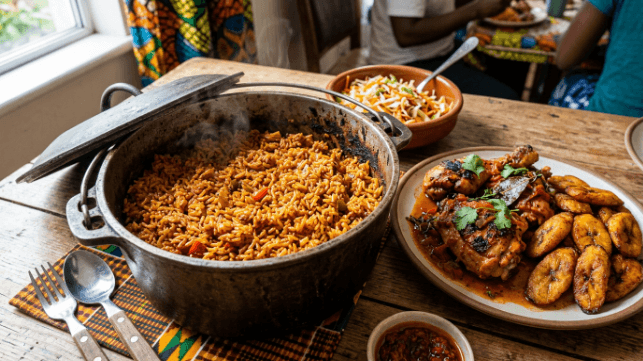
Jollof rice is a beloved West African one-pot dish of rice cooked in a rich, savoury tomato and pepper sauce with onions and spices, until every grain is stained a deep orange-red and full of flavour. The pride of celebrations and everyday meals alike across Nigeria, Ghana and the wider region, it is famous for the friendly rivalry over whose jollof is best, above all between Nigeria and Ghana. Served with chicken, beef, fish, fried plantain and salad, jollof is the star of every party. Smoky, rich and unforgettable, it is perhaps West Africa's most iconic dish. In the UK the rice and ingredients are sold by African and Caribbean food shops.
What to remember
- It is served with chicken, beef, fish, fried plantain and salad, and is the star of every party.
- The rice and ingredients are sold by African and Caribbean food shops in the UK.
- It is the pride of celebrations across Nigeria, Ghana and the wider region, famous for the jollof rivalry.
- Every grain is stained deep orange-red and full of savoury, slightly smoky flavour.
- Jollof rice is a West African one-pot dish of rice cooked in a rich tomato and pepper sauce.
For West Africans in Britain, jollof rice is the taste of home and celebration itself. It is the big pot at every party, the smoky, savoury rice piled high with chicken and plantain, the dish everyone waits for, the pride and the friendly argument over whose is best, and the flavour that says home.
Cooking a pot of jollof far from home fills the kitchen with that familiar smell and brings back weddings and Christmases and family gatherings, the warmth of home in every rich, orange-red grain.
There is real pride in it too, in a dish so loved that whole nations claim it as their own, carried and celebrated across the diaspora. It reflects a whole culture of generous, festive, communal food, and to cook a good jollof is to hold a piece of home and to join a joyful tradition.
Making it for family who grew up on it, or serving a friend their first proper plate of party jollof, is a real act of welcome. That smoky, festive taste of home is the gift of jollof rice.
What is Jollof Rice
Jollof rice is the most celebrated dish of West Africa, a rich, savoury one-pot rice that is the centrepiece of parties, celebrations and Sunday tables across the region. It is made by cooking rice in a deeply flavoured base of blended tomatoes, red peppers, onions and chilli, with seasonings and often a bay leaf and warm spices, so that the rice absorbs all the sauce and turns a beautiful deep orange-red, each grain full of flavour. At its best it has a subtle smoky note, prized as the taste of a good jollof.
Jollof is thought to have origins in the Senegambian region, where the related dish thieboudienne is found, and it has become a beloved staple right across West Africa, with every country and cook having their own version. It is above all a party and celebration food, the dish everyone looks forward to, and it is famous for the good-natured rivalry over whose jollof reigns supreme.
Jollof belongs to the world of West African cooking we cover in our guides to Nigerian food and Ghanaian food, and it is the party partner of dishes like fried rice.
How is Jollof Rice Made?
Making jollof rice centres on the sauce, the foundation of the whole dish. Tomatoes, red bell peppers, scotch bonnet and onions are blended and cooked down with tomato paste in oil until rich, thick and reduced, which is the key to deep flavour, then seasoned with stock, salt, curry, thyme, bay and other spices to taste.
The rice, usually a long grain like basmati or a good parboiled rice, is then added and cooked in this sauce with the right amount of liquid, covered, until tender and every grain is coated and coloured.
The prized smoky flavour, known in Nigeria as the party jollof taste, traditionally comes from cooking over firewood and letting the bottom catch very slightly, and cooks recreate it in different ways at home. There are many styles: Nigerian jollof, Ghanaian jollof, often made with aromatic rice, and versions across the region, each with its own character and fiercely loyal fans.
Jollof is naturally plant based as a rice dish, though it is usually cooked with meat or chicken stock and served with meat. This article is general food information rather than dietary advice. Rich, savoury and smoky, jollof rice is West African cooking at its most iconic.
The Jollof Wars
No account of jollof is complete without the jollof wars, the famous, friendly and fierce rivalry over whose jollof is best. The most celebrated contest is between Nigeria and Ghana, each utterly convinced their jollof is supreme, but Senegal, Cameroon, Liberia, Sierra Leone and others all have proud traditions too.
The debate plays out at parties, online, and even between celebrities and chefs, and it is a joyful expression of national pride and love for the dish. Nigerian jollof is typically made with long grain rice and a smoky, peppery depth, while Ghanaian jollof often uses fragrant rice like basmati or jasmine, giving a different aroma.
The rivalry is all in good fun, and the real winner is jollof itself, a dish so loved that people will defend their version with passion. For anyone new to West African food, the jollof wars are a delicious invitation to try different styles and pick a favourite, or simply enjoy them all. Whichever camp you join, a plate of well-made jollof, smoky, rich and savoury, is a joy. This is general food and cultural information, offered in the friendly spirit of the debate. However you like it, jollof is a dish worth celebrating.
How is Jollof Served and Enjoyed
Jollof rice is above all a party dish, the star of weddings, birthdays, naming ceremonies, Christmas and every celebration, where a big pot of it feeds a crowd and disappears fast. It is served with a spread of accompaniments: fried or grilled chicken, beef, goat or fish, fried plantain, coleslaw or salad, moin moin, and dodo, making a generous, festive plate. At home it is also an everyday favourite, satisfying and loved by all ages.
Part of jollof's magic is how it brings people together, the shared pot, the familiar flavour, the debate over whose is best, all part of the joy. Leftover jollof is famously delicious the next day, and it even turns up in fun forms like jollof spaghetti. For West Africans, jollof is the taste of home and celebration, and for anyone exploring the cuisine, it is the essential first dish to try. This article is general food and cultural information. Rich, smoky and festive, jollof rice is a treasured West African classic, the heart of every party.
Where can I Buy the Ingredients in UK?
Making jollof rice at home in Britain is very doable, as the ingredients are widely available. African and Caribbean food shops sell everything you need: a good long grain or parboiled rice or fragrant basmati for Ghanaian style, along with tomato paste, scotch bonnet, the peppers and onions for the base, and the stock cubes, curry, thyme and other seasonings that give jollof its character. These shops know jollof well and can point you to favourite rice brands and seasonings for the most unique result.
If you want to make jollof, an African or Caribbean food shop can point you to the right rice, tomato paste, Scotch bonnet and seasonings and the chicken, plantain and sides to serve with it. You can find African food stores near you or look up Caribbean food stores near you, where these ingredients are stocked. Rich, smoky and unforgettable, jollof rice brings the taste of a West African celebration to your table.
Frequently asked questions
What is jollof rice?
Jollof rice is a beloved West African one-pot dish of rice cooked in a rich, savoury tomato and pepper sauce with onions and spices until every grain is stained deep orange-red and full of flavour, often with a prized smoky note. It is the pride of celebrations across Nigeria, Ghana and the wider region, famous for the friendly jollof rivalry and served with chicken, fish, fried plantain and salad.
What is the difference between Nigerian and Ghanaian jollof?
Both are rich tomato and pepper rice dishes, but they differ in style. Nigerian jollof is typically made with long-grain parboiled rice and is known for a smoky, peppery depth, the prized party jollof flavour. Ghanaian jollof often uses fragrant rice such as basmati or jasmine, giving a different aroma and character. Each nation is proud of its own, which is the heart of the famous jollof rivalry.
What are the jollof wars?
The jollof wars are the famous, friendly and fierce rivalry over whose jollof rice is best, most celebrated between Nigeria and Ghana, though Senegal, Cameroon and others have proud traditions too. The debate plays out at parties and online, in a joyful spirit of national pride and love for the dish. It is all in good fun, and the real winner is jollof itself.
What is Jollof rice served with?
Jollof rice is served with a festive spread: fried or grilled chicken, beef, goat or fish, fried plantain (dodo), coleslaw or salad, and often moin moin. As a party dish it anchors a generous plate of celebration food, and it is also an everyday favourite at home. Leftover jollof is famously delicious the next day, and it even appears as jollof spaghetti.
Where can I buy the ingredients in the UK?
Good long-grain or parboiled rice, or fragrant basmati, along with tomato paste, scotch bonnet, peppers, onions and seasonings like stock cubes, curry and thyme, are sold by African and Caribbean food shops. African Stores lists African and Caribbean food shops across the UK, so you can find one near you that stocks the right rice and seasonings, and the chicken, plantain and sides jollof needs.