What Is Jamaican Black Castor Oil? Uses and Benefits
Quick answer
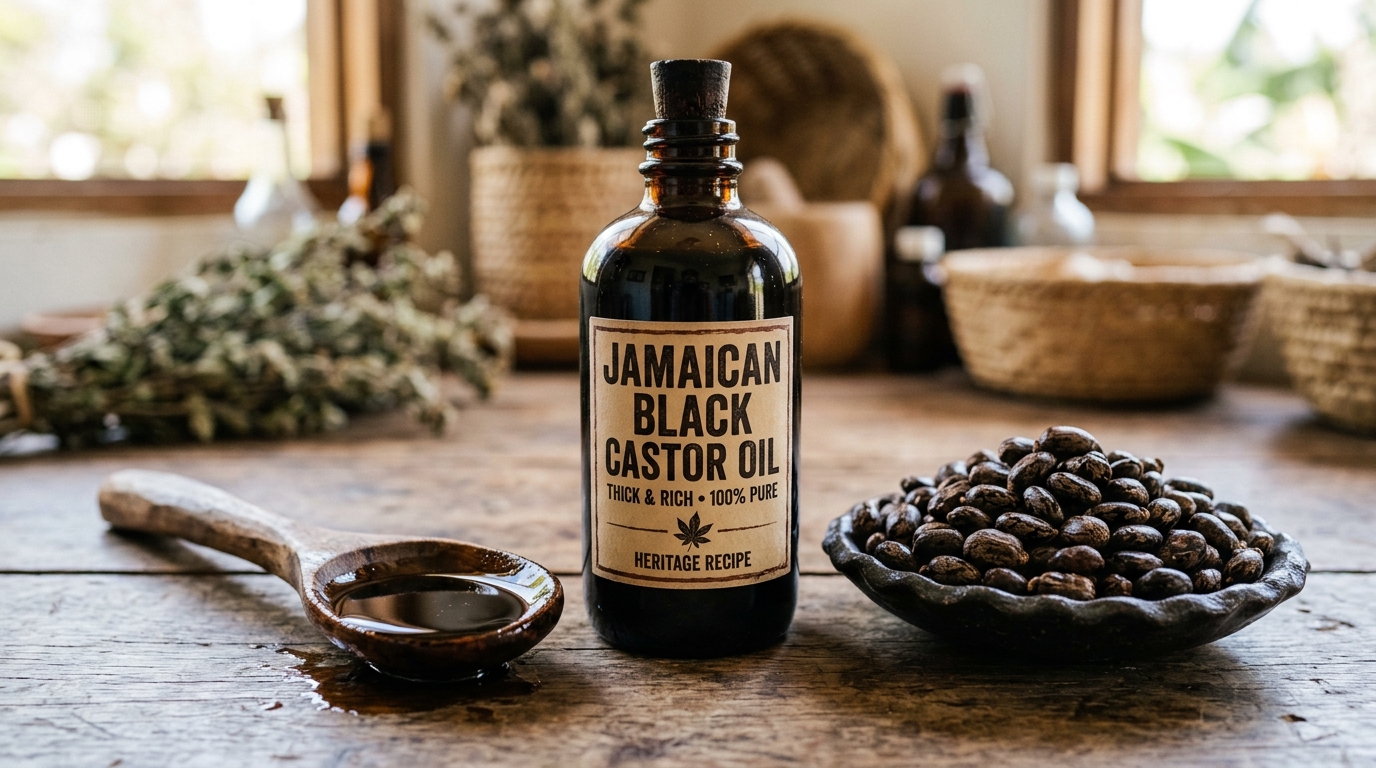
Jamaican black castor oil, often shortened to JBCO, is a thick, dark castor oil made in the traditional Jamaican way, by roasting castor beans, grinding them, and boiling the mash to extract the oil. That roasting is what gives it its dark colour, its toasted smell and the ash content that many people believe makes it especially good for hair and scalp. Like all castor oil it is rich and heavy, and it is used above all as a hair and scalp oil, popular for sealing in moisture and for massaging into the scalp and edges, as well as on skin. It is a long-standing favourite in Caribbean and African hair care. Claims that it dramatically regrows hair are not firmly proven, so it is best seen as a nourishing oil rather than a guaranteed treatment. In the UK it is sold by Afro hair and beauty shops.
- Other names
- JBCO, black castor oil
- Origin
- Caribbean
- Type
- Beauty
For many people of Caribbean and African heritage in Britain, Jamaican black castor oil is a bottle from childhood. It is the oil a mother or grandmother warmed between her palms and worked into your scalp and edges, the familiar toasted smell, the ritual of hair care passed down through the family. It carries the memory of Sunday hair sessions and of being cared for, and having a bottle on the shelf far from home is a small, comforting link to that tradition.
There is heritage in it too, and a quiet respect for old knowledge. Jamaican black castor oil is made the way it has been made for generations, and using it is a way of keeping a piece of Caribbean and African beauty tradition alive, of caring for natural hair with something time-honoured rather than new and heavily marketed. Massaging it into your own or your child's scalp, and passing the ritual on, is a gentle act of continuity. That sense of care and heritage, in one dark bottle, is the quiet gift of Jamaican black castor oil.
This article is for general information and is not medical advice. If you have concerns about hair loss, scalp conditions or skin reactions, speak to a doctor, pharmacist or trichologist.
What is jamaican black castor oil?
Jamaican black castor oil is castor oil made the traditional Jamaican way, and the method is what makes it distinctive. Ordinary castor oil is usually cold-pressed from raw castor beans and comes out pale and clear. For Jamaican black castor oil, the beans are first roasted, then ground into a paste, and the paste is boiled so the oil separates and rises to be collected. The roasting darkens the oil and gives it its characteristic deep colour, its slightly smoky, toasted aroma, and a natural ash content from the roasted beans.
The result is a thick, dark, rich oil that has been used in Caribbean and African households for generations, particularly for hair and scalp care. It is heavier and more coating than many oils, which is exactly why people reach for it to seal moisture into the hair and to work into the scalp. It sits alongside other traditional beauty staples such as shea butter and African black soap, which we cover in our guides to shea butter and African black soap.
How it differs from regular castor oil
People often ask whether Jamaican black castor oil is really different from the clear castor oil sold in pharmacies, and the honest answer is that the base oil is the same plant, but the processing differs. Regular castor oil is typically cold-pressed and comes out pale yellow, with little smell. Jamaican black castor oil is made from roasted beans and boiled, which gives it the dark colour, the toasted scent and the ash. Some people feel this makes it thicker and better suited to the scalp, and the ash is often said to be clarifying, though the two oils share the same core richness.
In practice, both are heavy, moisturising oils, and both are used in similar ways on hair and skin. The choice between them often comes down to tradition and preference: many with Caribbean and African heritage grew up with the black variety and prefer it, both for its properties and for its familiar smell and feel. It is worth knowing that neither version is a miracle product, and that the differences, while real, are more about processing and preference than a dramatic gap in results.
How people use it on hair and scalp
The most popular use of Jamaican black castor oil is in hair care, where its thick, coating nature is put to work. It is often used as a sealing oil, applied over damp, moisturised hair to help lock moisture in, which is especially useful for hair that struggles to hold on to water. Many people also massage it into the scalp and along the edges and hairline, both to condition the area and because scalp massage itself can be relaxing and part of a good hair routine. It is used on the ends of the hair too, to help protect the oldest, most fragile part from dryness and breakage.
A word of balance is important here. Jamaican black castor oil has a strong reputation for helping with hair growth and thickness, and for filling in thinning edges, and while plenty of people love it and swear by it, the dramatic growth claims are not firmly backed by strong evidence. What the oil reliably does is moisturise, seal and condition, which supports healthier-looking hair and can reduce breakage, and that in itself is valuable. It is best approached as a nourishing part of a hair-care routine rather than a guaranteed fix for hair loss, and anyone with genuine hair-loss concerns is best speaking to a doctor or trichologist.
Using it on skins and a few cautions
Beyond hair, Jamaican black castor oil is also used on the skin as a rich moisturiser, massaged into dry areas, and some people apply it to eyebrows and lashes in the hope of conditioning them. Its thick texture makes it good at sealing in moisture on the body, much as it does on hair. As with any oil, a little goes a long way, and because it is heavy it can feel greasy if overapplied.
A few sensible cautions apply. It is always wise to patch test a new oil on a small area first, since anyone can react to a new product, and to keep it away from the eyes themselves even if applying near the lashes. Castor oil is for external use, not for eating. And because it is so rich, those with fine hair or skin prone to congestion may want to use it sparingly. Treated as a nourishing external oil and used in moderation, Jamaican black castor oil is a well-loved and versatile part of many people's beauty routines.
Where to buy jamaican black castor oil in the UK
Jamaican black castor oil is easy to find in Britain, sold by Afro hair and beauty shops that cater to Caribbean and African hair and skin care. You will usually find it in dark bottles, sometimes in plain form and sometimes blended with added ingredients such as peppermint, lavender or rosemary, which some people like for the scalp. Buying from a shop that serves textured hair means you can ask about the different versions and pick one that suits your hair and scalp.
When you shop, look for genuine Jamaican black castor oil rather than ordinary castor oil relabelled, and the staff in these shops can help you tell the difference and choose a good one. You can find an Afro hair and beauty shop near you to pick up a bottle, and if you would like professional advice on your hair or scalp, you can find African hair salons near you whose stylists understand textured hair and traditional oils.
Key takeaways
- Jamaican black castor oil, or JBCO, is a thick, dark castor oil made by roasting, grinding and boiling castor beans.
- The roasting gives it its dark colour, toasted smell and ash content, which many believe benefits hair and scalp.
- It is used mainly as a rich hair and scalp oil, for sealing in moisture and massaging into the scalp and edges, and on skin.
- It is a long-standing favourite in Caribbean and African hair care.
- Claims that it dramatically regrows hair are not firmly proven, so treat it as a nourishing oil, not a guaranteed cure.
Frequently asked questions
What is Jamaican black castor oil?
Jamaican black castor oil, or JBCO, is a thick, dark castor oil made in the traditional Jamaican way, by roasting castor beans, grinding them, and boiling the mash to extract the oil. The roasting gives it its dark colour, toasted smell and natural ash content, and it is used mainly as a rich hair, scalp and skin oil.
How is it different from regular castor oil?
The base oil is from the same plant, but the processing differs. Regular castor oil is usually cold-pressed and comes out pale with little smell, while Jamaican black castor oil is made from roasted beans and boiled, giving the dark colour, toasted scent and ash. Both are rich, heavy oils used similarly, and the choice is often tradition and preference.
Does Jamaican black castor oil grow hair?
It has a strong reputation for helping with hair growth, thickness and thinning edges, and many people love it, but the dramatic growth claims are not firmly backed by strong evidence. What it reliably does is moisturise, seal and condition the hair, which supports healthier-looking hair and can reduce breakage. Treat it as nourishing care, not a guaranteed cure.
How do you use Jamaican black castor oil?
Most often as a hair and scalp oil: sealing it over damp, moisturised hair to lock in moisture, massaging it into the scalp and edges, and applying it to the ends to protect them. It is also used as a rich skin moisturiser. A little goes a long way, and it is wise to patch test first and keep it away from the eyes.
Where can I buy Jamaican black castor oil in the UK?
Afro hair and beauty shops that cater to Caribbean and African hair and skin care sell it, usually in dark bottles, sometimes plain and sometimes blended with ingredients such as peppermint or rosemary. Look for genuine Jamaican black castor oil rather than ordinary castor oil relabelled, and the shop staff can help you choose. African Stores lists African and Caribbean food shops across the UK, so you can find one near you.
Join African Stores free
Save shops, follow the ones you love and get your free member card.
Your free member card: show it at participating shops for member offers.
Get the app