What Is Dukkah? The Egyptian Spice and Nut Blend Explained
Quick answer
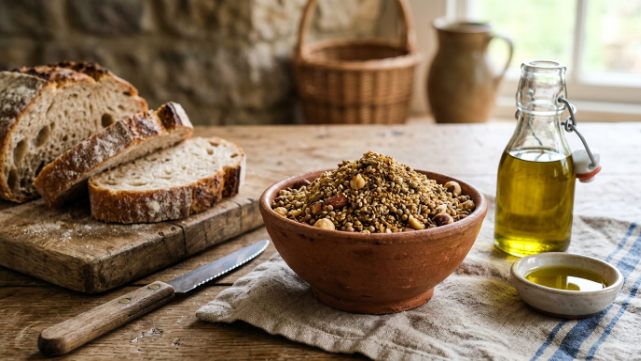
Dukkah is an Egyptian blend of toasted nuts, seeds and spices, coarsely ground into a dry, crumbly, crunchy mixture full of nutty, warm, aromatic flavour. A classic dukkah combines toasted nuts such as hazelnuts or almonds with sesame seeds, coriander and cumin, and often other spices, all toasted to bring out their aroma and then roughly crushed rather than made into a smooth powder. Its most famous use is as a dip: bread is dipped first in olive oil, then into the dukkah, so the crunchy, spiced mixture clings to it. It is also sprinkled over all sorts of dishes for flavour and crunch. In the UK dukkah is sold ready made by African, North African and Middle Eastern food shops and many supermarkets. You can find the shops near you on African Stores.
- Other names
- duqqa, dukka
- Origin
- North Africa
- Type
- Ingredients
The nutty, aromatic smell of dukkah takes Egyptians and other North Africans in Britain straight back home. It is the bowl of dukkah with bread and olive oil, the crunch of toasted hazelnuts and sesame, the warm scent of coriander and cumin, and the simple, sociable snack that says 'home' and 'gathering'.
Sharing bread dipped in oil and dukkah far from home brings back family tables and the flavours of Egypt, the warmth of home in every crunchy, nutty bite.
There is heritage in it too and an old, simple craft. Dukkah carries the Egyptian tradition of toasting and pounding nuts, seeds and spices into a flavourful, crunchy blend, a knowledge passed down and kept in family recipes, and to make or share it is to keep that heritage alive.
Offering bread and dukkah to family who grew up on it, or introducing a friend to this nutty, aromatic Egyptian blend, is a small act of welcome and belonging. That nutty, warm, crunchy taste of home is the quiet gift of dukkah.
What is Dukkah?
Dukkah is one of Egypt's best-loved flavour makers, a dry, crunchy, aromatic blend of toasted nuts, seeds and spices that is quite unlike a simple ground spice mix. What sets it apart is its texture and its nuttiness: nuts and seeds are toasted and then coarsely crushed, so dukkah is crumbly and crunchy rather than a fine powder, and it carries a rich, nutty, warmly spiced flavour that comes from the toasting. Its name is thought to come from an Arabic word meaning to pound or crush, describing exactly how it is made, and it is a staple of the Egyptian table.
What makes dukkah special is the way it combines crunch, nuttiness and spice in one mixture, adding both flavour and texture to whatever it touches. It is more than a seasoning, being almost a condiment in its own right, eaten by the spoonful with bread and used to finish dishes.
Dukkah belongs to the rich food culture of Egypt and North Africa that we cover in guides like Egyptian food, and it sits alongside the region's other great flavour makers such as ras el hanout and harissa, though dukkah is distinctive for its nuts and its crunch.
The Nuts Seeds and Spices
Understanding what goes into dukkah explains its character, though recipes vary from family to family and shop to shop. The heart of a classic dukkah is toasted nuts, most traditionally hazelnuts, though almonds, pistachios, peanuts or a mix are also used, which give the blend its richness and much of its crunch.
To these are added sesame seeds, which are central to most dukkah, and warm spices, above all coriander and cumin seeds, with variations including fennel, caraway, black pepper, dried herbs and salt. Everything is toasted to deepen the flavour before being crushed.
The crucial technique is the toasting and the coarse crushing. Toasting the nuts, seeds and whole spices brings out their aroma and nuttiness, and crushing them roughly, traditionally in a mortar and pestle, keeps the mixture dry, crumbly and crunchy rather than turning it into a paste or a fine powder.
This dryness and crunch are essential to what dukkah is, so it is ground just enough to combine while keeping texture. Because it contains nuts and sesame, dukkah is not suitable for anyone with a nut or sesame allergy, which is worth keeping in mind when serving it. The balance of nuts to seeds to spice varies, which is why different dukkahs taste noticeably different.
How to Use Dukkah
Dukkah is wonderfully versatile, and its most famous and traditional use is as a dip with bread and olive oil. A piece of bread is dipped first into good olive oil, then pressed into the dukkah so the crunchy, spiced mixture clings to the oiled bread, and eaten.
This simple combination of bread, oil and dukkah is a classic Egyptian snack and starter, and it is a lovely, sociable way to enjoy the blend. All you need is fresh bread, olive oil and a bowl of dukkah.
Beyond that, dukkah is used as a finishing seasoning across many dishes, sprinkled on for flavour and crunch. It is scattered over roasted or grilled vegetables, salads, hummus and dips, eggs and avocado, soups, rice and grains, and used as a crunchy coating or topping for meat, chicken and fish. A sprinkle of dukkah adds instant nutty, spiced texture to almost anything savoury, which is why it has become popular well beyond Egypt.
Because it is a dry blend of already toasted ingredients, it is added at the end rather than cooked, keeping its crunch. A little goes a long way, so it is sprinkled to taste.
Where can I Buy Dukkah in UK?
Buying dukkah in Britain is easy, as it is increasingly popular. African, North African and Middle Eastern food shops that serve Egyptian and regional communities sell dukkah ready made, often more unique and freshly blended than mass-market versions, and the staff can tell you what is in a particular blend, since recipes vary. Many large supermarkets now stock dukkah too, usually in the world foods or condiments aisle, so it is rarely hard to find, and it is also simple to make at home by toasting and crushing nuts, seeds and spices.
If you are new to dukkah, a North African or Middle Eastern food shop is a great place to find a good, unique blend and to ask what is in it and to pick up the bread and olive oil to serve with it.
You can find African food stores near you or look up Caribbean food stores near you. Do remember, and mention to anyone you serve it to, that dukkah contains nuts and sesame and is not suitable for anyone with those allergies.
Key takeaways
- Its most famous use is dipping bread in olive oil and then in the dukkah.
- It is sold ready made by African, North African and Middle Eastern food shops and supermarkets.
- It is dry, crumbly and crunchy, with a nutty, warm, aromatic flavour.
- A classic version uses nuts like hazelnuts, plus sesame, coriander and cumin.
- Dukkah is an Egyptian blend of toasted nuts, seeds and spices, coarsely ground.
Frequently asked questions
What is Dukkah?
Dukkah is an Egyptian blend of toasted nuts, seeds and spices, coarsely ground into a dry, crumbly, crunchy mixture full of nutty, warm, aromatic flavour. A classic version combines nuts such as hazelnuts with sesame, coriander and cumin, all toasted and then roughly crushed rather than made into a smooth powder. Its most famous use is as a dip with bread and olive oil.
What is Dukkah made of?
A classic dukkah is made from toasted nuts, most traditionally hazelnuts, though almonds, pistachios or peanuts are also used, plus sesame seeds and warm spices, above all coriander and cumin, with variations adding fennel, caraway, pepper, herbs and salt. Everything is toasted to deepen the flavour, then coarsely crushed to keep it dry and crunchy. **How do you use dukkah?** Dukkah's most famous use is as a dip: bread is dipped first in olive oil, then pressed into the dukkah so it clings. It is also sprinkled as a finishing seasoning over roasted vegetables, salads, hummus, eggs, avocado, soups, rice and grains, and used as a crunchy coating for meat, chicken and fish. It is added at the end to keep its crunch. **Does dukkah contain nuts?** Yes. A classic dukkah is made largely from toasted nuts, such as hazelnuts or almonds, and sesame seeds, so it is not suitable for anyone with a nut or sesame allergy. Anyone serving dukkah should mention this clearly, as the nuts and sesame are central to what it is. **Where can I buy dukkah in the UK?** African, North African and Middle Eastern food shops sell dukkah ready made, often more unique and freshly blended than mass-market versions, and many large supermarkets stock it too in the world foods aisle. It is also simple to make at home by toasting and crushing nuts, seeds and spices. A specialist shop can tell you what is in a blend and sell you the bread and oil to serve it with. African Stores lists African and Caribbean food shops across the UK, so you can find one near you.
How do you use Dukkah?
Dukkah's most famous use is as a dip: bread is dipped first in olive oil, then pressed into the dukkah so it clings. It is also sprinkled as a finishing seasoning over roasted vegetables, salads, hummus, eggs, avocado, soups, rice and grains, and used as a crunchy coating for meat, chicken and fish. It is added at the end to keep its crunch.
Does Dukkah contain nuts?
Yes. A classic dukkah is made largely from toasted nuts, such as hazelnuts or almonds, and sesame seeds, so it is not suitable for anyone with a nut or sesame allergy. Anyone serving dukkah should mention this clearly, as the nuts and sesame are central to what it is.
Where can I buy Dukkah in the UK?
African, North African and Middle Eastern food shops sell dukkah ready made, often more unique and freshly blended than mass-market versions, and many large supermarkets stock it too in the world foods aisle. It is also simple to make at home by toasting and crushing nuts, seeds and spices. A specialist shop can tell you what is in a blend and sell you the bread and oil to serve it with. African Stores lists African and Caribbean food shops across the UK, so you can find one near you.
Join African Stores free
Save shops, follow the ones you love and get your free member card.
Your free member card: show it at participating shops for member offers.
Get the app