The short answer
A wig is a head covering made of hair, natural human hair or synthetic fibre, worn over your own hair to change or protect your look. For Black and Afro-textured hair, wigs are hugely popular as a versatile styling option and as a protective style, letting you switch length, colour and texture without altering your own hair, and giving it a rest underneath. The main types you will hear about are lace front wigs, closure wigs and full lace wigs, which differ in how natural the hairline looks, along with u-part and headband wigs. Wigs come in human hair, which is more natural and versatile but pricier, and synthetic, which is cheaper and holds its style. In the UK wigs and wig supplies are sold by Afro hair and beauty shops.
What to remember
- A wig is a head covering of human hair or synthetic fibre, worn to change or protect your look.
- For Black hair, wigs are popular for versatility and as a protective style that rests the natural hair underneath.
- Main types include lace front, closure and full lace wigs, which differ in how natural the hairline looks.
- Human hair wigs are more natural and versatile but pricier; synthetic wigs are cheaper and hold their style.
- In the UK wigs and supplies are sold by Afro hair and beauty shops.
For many Black women in Britain, wigs are freedom, creativity and self-expression. They are the joy of switching up your look for a new season or a special event, the confidence of a flawless style, the practicality of protecting your natural hair while still looking exactly how you want. They carry the warmth of the beauty-supply shop and the salon, of advice shared between friends and family about the best hair and the best fit, and of a community that has turned wig-wearing into a real art form.
There is skill and pride in it too. Choosing, fitting and styling a wig well is a genuine craft, and the Black hair and beauty world has led the way in making wigs versatile, natural-looking and central to modern styling. Finding a shop that understands Afro-textured hair and carries the right textures, and caring for both your wig and your own hair underneath, is a way of looking after yourself and expressing yourself at once. That blend of creativity, confidence and protection is the quiet gift of a good wig.
What is a wig?
A wig is simply a covering for the head made of hair, worn over your own hair to create a different look. The hair is attached to a base, or cap, that fits over the scalp, and the wig can be styled much like real hair. Wigs have been worn for centuries and for many reasons, and today they are a mainstream, everyday styling choice, especially within Black communities, where they are prized for the freedom and versatility they offer. With a wig you can have long hair one day and a short crop the next, try a colour without dyeing your own hair, or wear a sleek straight style and return to your natural curls whenever you like.
For Afro-textured hair in particular, wigs serve two purposes at once. They are a styling tool, opening up endless looks, and they are a protective style, because while the wig is worn, the natural hair is tucked away underneath, usually braided down or covered, giving it a rest from daily manipulation and heat. This combination of creativity and protection is a big part of why wigs are so popular, and they sit alongside the other protective options we cover in our guides to cornrows and knotless braids.
Types of Wig
The world of wigs has a lot of terms, but a few main types cover most of what you will meet. A lace front wig has a sheer lace panel at the front hairline, into which hairs are tied, so that when it is fitted well it looks as though the hair is growing from your own hairline, giving a natural front and the ability to style the hair off the face. A closure wig has a smaller lace or silk closure piece, usually at the top or parting, which covers and finishes that area naturally while the rest of the cap is made of wefts of hair; these are often more affordable and beginner-friendly. A full lace wig has lace over the entire cap, allowing the most versatile parting and styling but at a higher price.
Beyond these, you will find u-part wigs, which have an opening to blend a little of your own hair at the parting, and headband wigs, which use a fabric headband instead of lace and are quick and easy to pop on. Each type balances how natural it looks, how versatile it is, and how easy and affordable it is. There is no single best type, it depends on your budget, how much styling you want, and how comfortable you are fitting a wig, and a good beauty-supply shop can help you choose.
Human Hair versus Synthetic
One of the biggest choices when buying a wig is between human hair and synthetic, and each has clear pros and cons. Human hair wigs are made from real hair, so they look and feel the most natural, can be heat-styled, coloured and treated much like your own hair, and tend to last longer with care. The trade-off is cost, as human hair wigs are considerably more expensive, and they need more maintenance, since like real hair they can lose their style when washed and need restyling.
Synthetic wigs are made from man-made fibres, and their big advantages are price and convenience: they are much cheaper, and they hold their style even after washing, springing back to their cut and curl, which makes them low effort. The trade-offs are that basic synthetic hair can look less natural and shinier, cannot usually be heat-styled unless it is a heat-friendly type, and does not last as long. There are also high-quality synthetic and blended options that narrow the gap. Which is right depends on your budget, how natural you want it to look, and how much time you want to spend styling, and many people own both for different occasions.
How to Care for your Wig?
Caring for a wig, and for the hair underneath, is what keeps both looking good. The wig itself should be handled gently: brushed or combed carefully, ideally from the ends up, washed only as needed with suitable products, and stored on a wig stand or in its packaging to keep its shape. Human hair wigs are washed, conditioned and styled much like real hair, while synthetic wigs need special care and usually cannot take heat, so it is important to follow the guidance for the type you have. Keeping the wig clean and detangled makes it last far longer.
Just as important is the natural hair underneath. Because it is tucked away, it can be neglected, so it should be kept clean, moisturised and cared for while the wig is worn, and given breaks between wigs to breathe. Protecting your own hairline matters too: wigs and their fixings should not be so tight, or worn so constantly, that they stress the edges, and gentle removal of any adhesives is important. Wearing a wig cap underneath protects your hair and helps the wig sit comfortably. Treated well, a wig protects your natural hair while giving you endless looks, in the same spirit of care as our guide to 4c hair.
Where to Buy a Wig in the UK
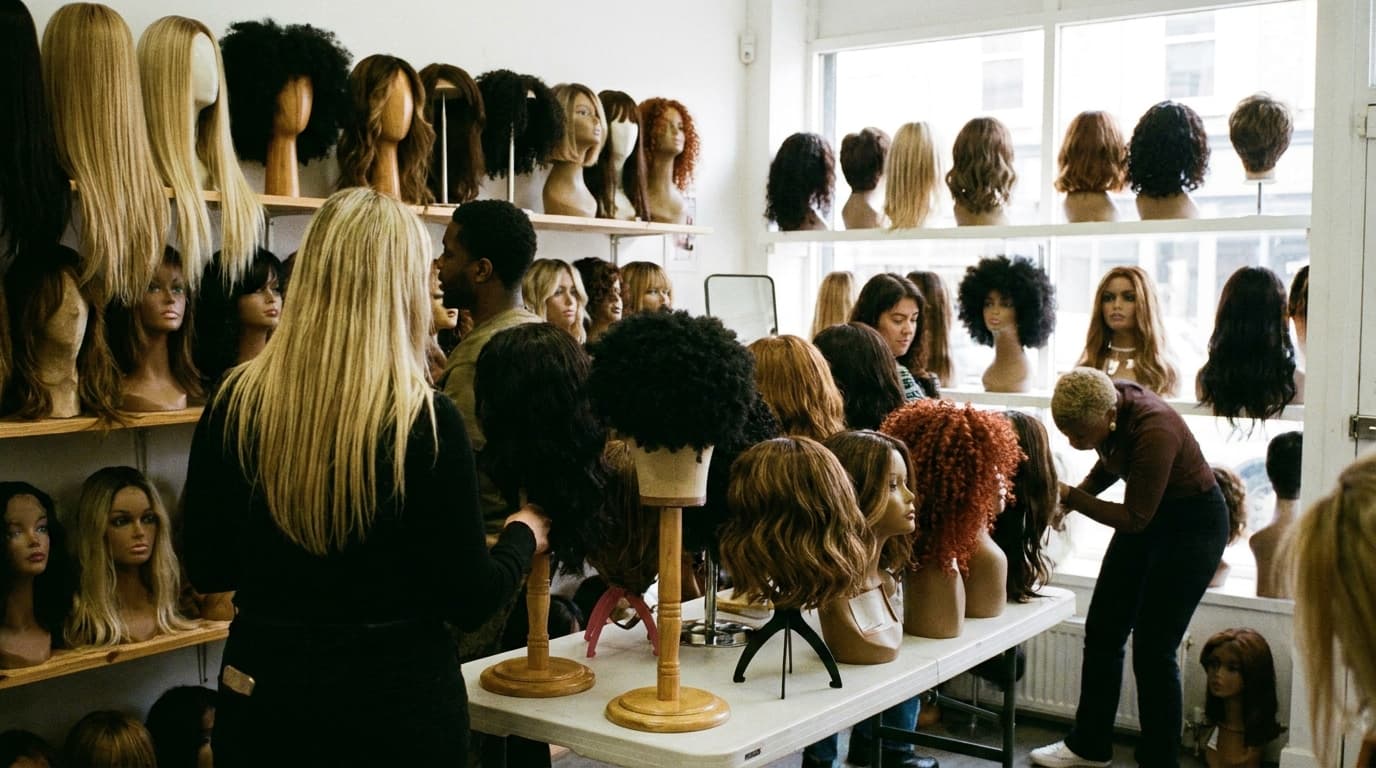
Wigs are widely available in Britain, and the best place to buy for Black and Afro-textured hair is an Afro hair and beauty shop, which will carry a range of wigs in different textures, from straight and wavy to curly and kinky styles that match natural Afro hair, along with all the supplies you need. These shops stock lace fronts, closures and other types, in human hair and synthetic, at a range of prices, plus wig caps, adhesives, edge control, wig stands and the products to care for both the wig and your own hair.
Buying in person lets you see and feel the texture and quality, and the staff, who serve people wearing wigs every day, can help you choose the right type, cap size and hair for your needs and budget. You can find an Afro hair and beauty shop near you to browse wigs and supplies, and if you would like a wig fitted, styled or a custom look created, you can find African hair salons near you, many of which offer wig services and understand textured hair.
Frequently asked questions
What is a wig?
A wig is a head covering made of hair, either natural human hair or synthetic fibre, attached to a cap and worn over your own hair to change or protect your look. For Black and Afro-textured hair, wigs are popular both as a versatile styling tool and as a protective style that rests the natural hair tucked underneath.
What are the main types of wig?
The main types are lace front wigs, with a sheer lace panel at the front for a natural hairline; closure wigs, with a smaller lace or silk piece at the parting, often more affordable; and full lace wigs, with lace over the whole cap for the most versatile styling. There are also u-part and headband wigs, which are quick and easy to wear.
What is the difference between human hair and synthetic wigs?
Human hair wigs look and feel the most natural, can be heat-styled and coloured, and last longer, but are more expensive and need more maintenance. Synthetic wigs are much cheaper and hold their style even after washing, but can look less natural, usually cannot be heat-styled, and do not last as long. Many people own both.
How do you care for a wig?
Handle it gently, brushing from the ends up, wash only as needed with suitable products, and store it on a stand to keep its shape, following the guidance for human or synthetic hair. Just as importantly, keep the natural hair underneath clean and moisturised, give it breaks, and avoid fixings so tight they stress your edges.
Where can I buy a wig in the UK?
Afro hair and beauty shops are the best place for wigs for Black and Afro-textured hair, carrying a range of textures, lace fronts, closures and other types in human hair and synthetic, plus caps, adhesives and care products. The staff can help you choose, and many African hair salons offer wig fitting and styling.