The short answer
Cornrows are a braiding style where hair is plaited flat against the scalp in continuous, raised rows. The braider gathers small sections and adds hair as she moves along the head, which creates the neat lines that follow the shape of the scalp. They can be worn on natural hair or with added extensions, and last roughly two to six weeks depending on the style and how they are cared for. Cornrows have been worn across Africa for thousands of years and carry deep cultural meaning.
What to remember
- Cornrows are one of the oldest known hairstyles in the world, with roots in Africa going back thousands of years.
- The style is a low-tension protective option when it is done well, but plaited too tightly it can damage your edges, so a skilled hand matters.
- Popular looks include straight backs, feed-in braids, Fulani and Ghana braids, and more intricate curved patterns.
- With good care, most cornrows hold neatly for two to six weeks before they need to come out.
- A skilled African or Caribbean braider gives you the healthiest, longest-lasting result, and you can find one near you on our platform.
For so many of us, cornrows are woven into the earliest memories of home. The braiding stool between someone's knees, the smell of hair oil, the tug and the chatter, an afternoon that was as much about togetherness as it was about the finished style. Across Africa and the Caribbean, braiding has always been a place where knowledge and love pass between generations, a mother to a daughter, an auntie to a niece, a neighbour who somehow always found time.
To wear cornrows is to carry a little of that history on your head, whether you are in Lagos, Kingston, Accra or a kitchen in Peckham or Birmingham. When the diaspora settled in the UK, the braiding stool came too, and the salons and front rooms where people braid keep that thread unbroken. There is something quietly powerful about sitting down for hours with someone who understands your hair, your roots and where you come from. That is what makes finding the right braider near you feel less like a chore and more like coming home.
What are cornrows?
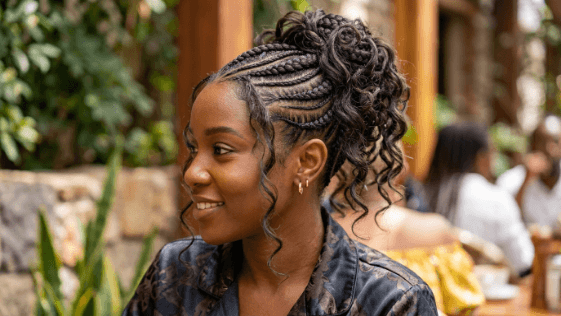
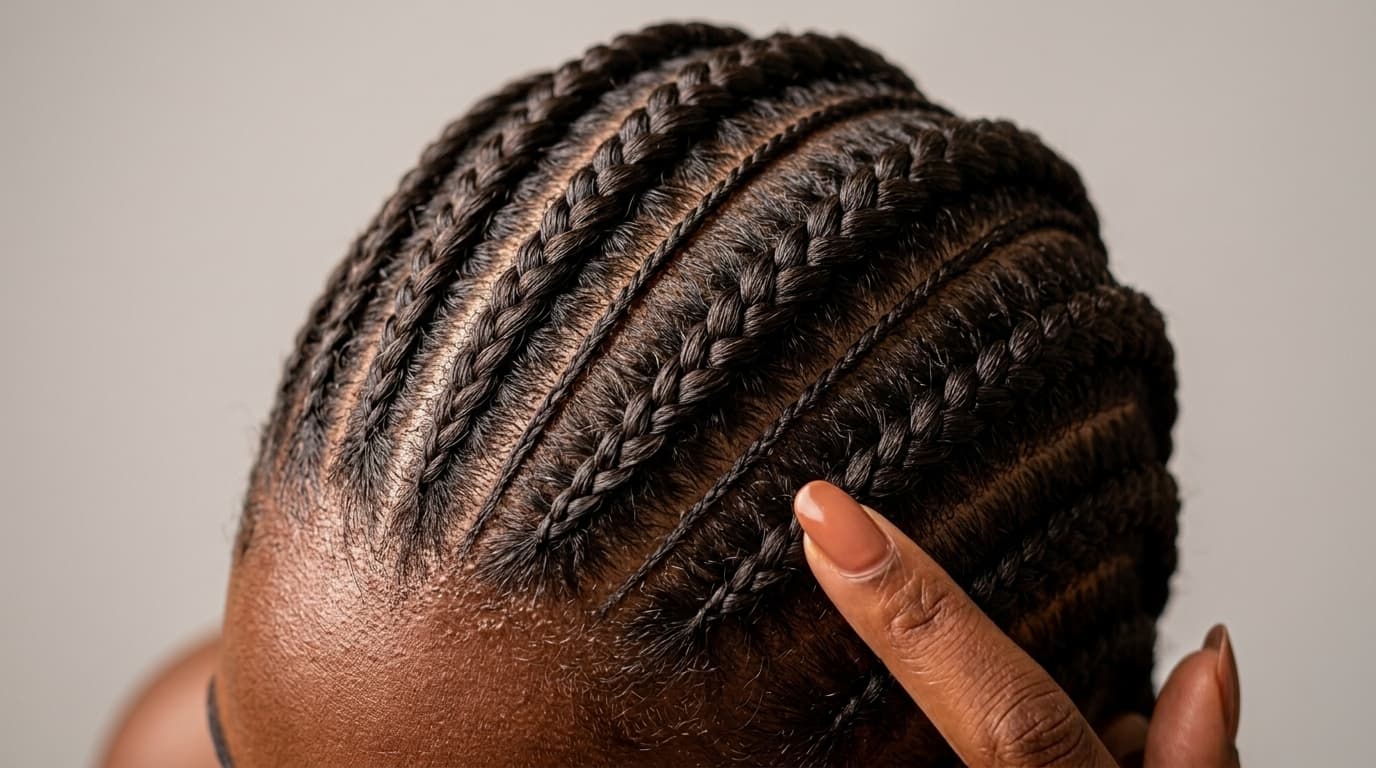
Cornrows are braids plaited flat and close to the scalp. Instead of hanging loose, each braid is worked in an underhand motion so it sits raised against the head in a continuous line, usually running from the front to the nape. The braider takes a narrow section of hair, divides it into three, and adds a little more hair with each cross, so the braid grows along the scalp rather than dangling from a single point. That technique is what gives cornrows their signature ridged rows, and it is also what makes them so versatile. They can be simple and straight, or curved and swirled into detailed patterns across the whole head.
They can be plaited on your own natural hair or with synthetic or human hair added in, which lets you build length, thickness or a specific design. Worn well, cornrows are a protective style: they tuck away the fragile ends of your hair, cut down on daily manipulation and let your scalp breathe.
Ancient african story behind cornrows
Cornrows are not a trend. They are one of the oldest hairstyles known to humankind. Depictions of braided rows appear in African art and rock carvings dating back thousands of years, and the style has been worn across the continent for generations, from West Africa to the Horn and southern Africa.
For a very long time, the way a person wore their cornrows carried meaning. Patterns could signal which ethnic group or community someone belonged to, their age, marital status, faith or social standing. Braiding was a social act too, something done between mothers, daughters, sisters and neighbours, and the knowledge passed down through families like a language of its own.
There is also a powerful history tied to survival and resistance. During the transatlantic slave trade, braided patterns are widely held to have been used to pass messages and even map routes to freedom, and enslaved women are said to have hidden grains of rice and seeds in the rows of their hair. Whether every detail can be documented or not, what endures is the truth that cornrows have always been more than decoration. They are heritage worn openly, a link to ancestry and identity that people across the African and Caribbean diaspora still carry with pride today.
Popular cornrows styles
There is a whole world of looks within cornrows, and part of the joy is choosing one with your braider. A few of the most loved:
- Straight backs. Clean, parallel rows running straight from the hairline to the back of the head. Timeless, low fuss and a brilliant protective base you can wear on its own or tuck under a wig.
- Feed-in braids. Extensions are added gradually along the braid so it starts fine at the hairline and thickens as it goes. This gives a natural, seamless finish and puts far less tension on your edges than braiding thick hair in from the very root.
- Fulani braids. Inspired by the Fulani people of West Africa, this style mixes cornrows with a centre braid and braids framing the face, often finished with beads or cuffs. It is elegant and instantly recognisable.
- Ghana braids. Also built on the feed-in method, Ghana braids are known for their smooth, sleek rows that grow thicker along their length. They sit close to the scalp and last well.
- Patterns and designs. This is where cornrows become art: zigzags, curves, swirls, hearts and geometric shapes plaited across the head. Detailed patterns take real skill and time, and a talented braider can turn your scalp into something genuinely striking.
What to do when you want to plait cornrows?
Come with your hair freshly washed, blow-dried and detangled if you can, as clean hair grips better and braids neater. Bring a photo of the style you want so you and your braider are picturing the same thing, and be honest about the length and thickness of your natural hair so she can advise what is realistic.
How long you will be in the chair depends heavily on the design. Simple straight backs can take under an hour, while intricate patterns or a full head of long feed-in braids can run several hours. A good braider will check in on the tension as she works. This matters: braids should feel secure, not painful. If your scalp is stinging, your eyes are watering or you feel little bumps forming along your hairline, speak up straight away. Tightness is not a sign of a job well done, and no style is worth your edges.
How to care for cornrows and how long they last?
With the right care, most cornrows hold neatly for around two to six weeks. Straight backs on natural hair sit on the shorter end, while feed-in styles with extensions can last longer. Taking them out much beyond that risks matting and buildup at the root, which makes takedown harder on your hair.
To keep them fresh:
- Sleep in a satin or silk bonnet or on a satin pillowcase. Cotton draws out moisture and roughs up the braids overnight.
- Moisturise your scalp. A light oil or a braid spray keeps the scalp comfortable and stops it feeling tight and flaky. Go gently so you do not cause buildup.
- Keep it clean without undoing your work. You can cleanse your scalp with diluted shampoo on a cotton pad or an applicator bottle, then let the braids dry fully to avoid a mildew smell.
- Do not keep them in too long. Refreshing edges and baby hairs can buy you a little time, but plaited hair that stays in past its welcome is where breakage and matting creep in.
For hair care between styles, beauty supply shops near you are a good place to pick up satin bonnets, braid sprays, edge control and light oils.
Looking after your edges and scalp
Your edges, the fine baby hairs around your hairline, are the most delicate hair you have, and they are the first to suffer from styles that pull too hard. The single best thing you can do to protect them is choose a braider who works with the right tension and does not plait your hairline to breaking point. Feed-in styles are kinder to edges than braiding thick hair in from the root.
Give your scalp and edges rest between styles rather than going from one tight install straight into another. If you notice thinning, tenderness or little bumps along your hairline, that is your hair telling you to loosen up and take a break. A light oil massaged into the scalp keeps things healthy, and a good barber or braider can help you keep edges tidy without stripping them.
This is really the heart of it: cornrows done by skilled hands are a protective, healthy way to wear your hair, but the same style done carelessly is one of the quickest routes to damage. It is worth finding someone who knows what they are doing. You can find African hair salons near you and skilled barbers near you on our platform, so you can book someone with real experience in African and Caribbean hair close to home.
Frequently asked questions
Do cornrows damage your hair?
Not when they are done properly. Cornrows plaited with gentle tension are a protective style that tucks your ends away and gives your hair a rest. The damage comes from braids that are too tight, or from leaving them in far too long. If it hurts going in, it is too tight, so always say something.
How long do cornrows last?
Roughly two to six weeks. Straight backs on your own hair sit at the shorter end, while feed-in styles with extensions can last longer with good care. Once you notice a lot of new growth and buildup at the root, it is time to take them out.
Can I wash my hair with cornrows in?
Yes, gently. Cleanse your scalp with diluted shampoo using a cotton pad or applicator bottle, rinse carefully and let the braids dry all the way through so they do not hold moisture and start to smell. Try not to rough up the braids while you do it.
What is the difference between cornrows and Ghana braids?
Ghana braids are a type of cornrow made with the feed-in technique, where extensions are added gradually so the braid grows thicker along its length. All Ghana braids are cornrows, but not all cornrows are Ghana braids.
Should I get cornrows done professionally?
For the neatest, healthiest and longest-lasting result, yes. A skilled braider gets the tension right, protects your edges and can create patterns that are hard to do yourself. You can find experienced braiders at African hair salons and barbers near you on our platform.