What Is Ugali? The East African Staple Explained
Quick answer
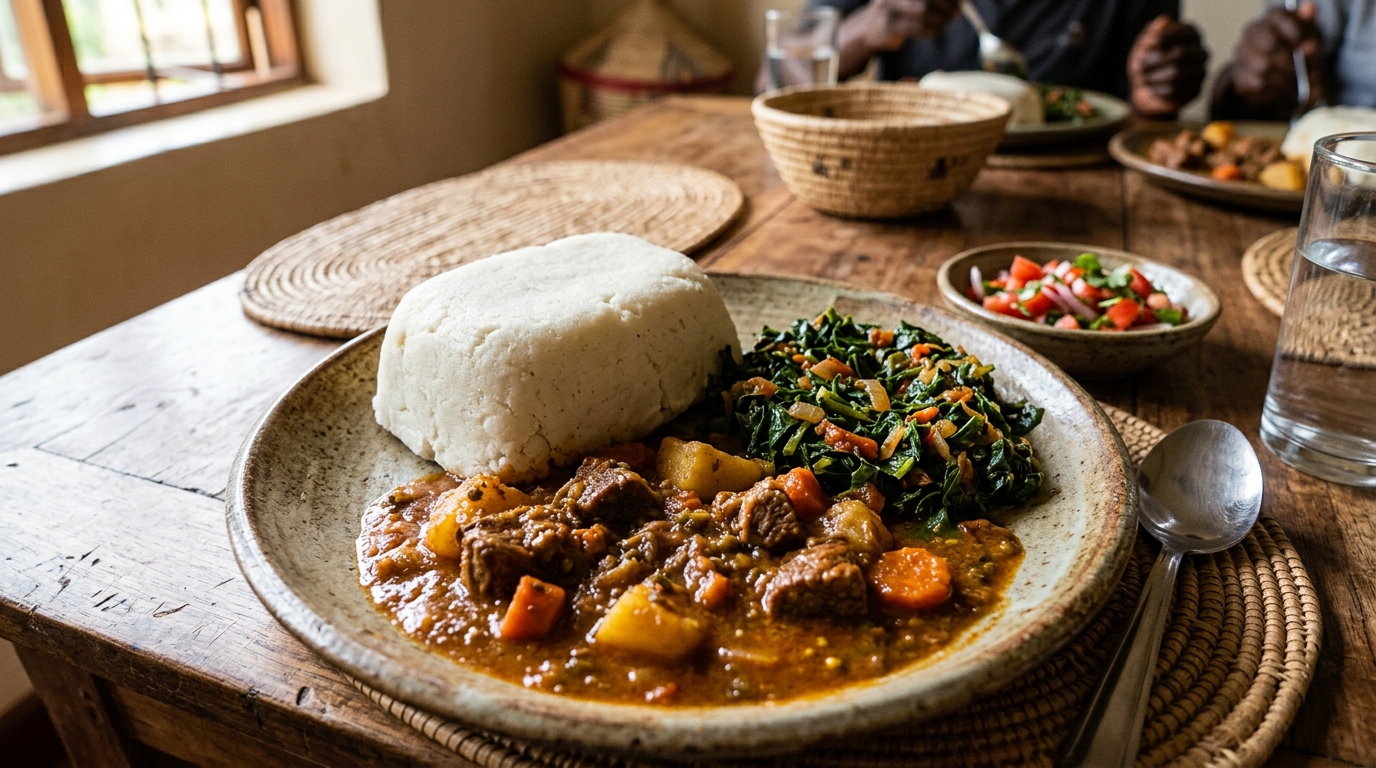
Ugali is a thick, firm staple food made from maize meal, or ground white cornmeal, and water, eaten across East Africa, especially Kenya and Tanzania, as well as neighbouring countries. It is cooked by stirring the meal into hot water and beating it over heat until it forms a smooth, firm, dense mass, then shaped into a mound or block and served. Ugali is mild and filling, and it is not eaten alone but with an accompaniment such as sukuma wiki (cooked greens), a meat or bean stew, or grilled meat, which provides the flavour. Eaten with the hands, it is at the heart of East African meals. It is closely related to Zimbabwean sadza and South African pap. In the UK the maize meal is sold by African food shops.
- Other names
- nsima, posho, sadza (related), pap (related)
- Origin
- East Africa
- Type
- Dishes
For Ugandans, food is abundance and welcome. A plate piled with matoke, sweet potato and rice, covered in rich groundnut sauce, is the taste of home and of a well-fed table. Luwombo steamed in banana leaves means a wedding, a celebration, something special. A rolex bought hot from a roadside stand is the taste of everyday life, of students and workers and late nights.
To cook these dishes here in the UK, far from home, is to keep that generosity alive, to fill a plate and share it and say you are welcome here. Ugandan food is hearty, varied and hospitable, built to feed people well, and that warm, generous spirit travels wherever Ugandans go.
Ugandan food is warm, filling and wonderfully varied, built on a remarkable range of starchy staples and rich, comforting sauces. Whether you grew up on matoke and groundnut sauce or you are new to the cuisine, this guide walks you through what makes Ugandan food so hearty and homely, from the many staples to the iconic dishes and the famous street food.
What defines ugandan food
Uganda is blessed with fertile land and a rich variety of crops, and its food reflects that abundance. The defining feature is the sheer range of starchy staples eaten, often several on one plate: matoke, the steamed green banana that is the national favourite, along with posho (maize meal, like ugali), cassava, sweet potato, yam, millet bread and rice. A Ugandan meal typically pairs one or more of these staples with a rich sauce or stew.
Those sauces and sides are the other half of the plate: groundnut sauce made from peanuts, beans, leafy greens, and meat, chicken or fish in a flavourful stew. The food is generally hearty and comforting rather than fiery, built to satisfy, and eating well and generously is central to Ugandan hospitality.
The staple foods
Ugandan food is famous for its variety of staples.
Matoke is the signature staple, green bananas that are peeled, steamed and often mashed into a soft, savoury mound, mild and comforting, and eaten with a sauce. Read our guide to matoke. Posho, a firm maize meal much like ugali, is another everyday staple. Cassava, sweet potato, yam and millet bread all feature widely, and rice and chapati are popular too, chapati brought by Indian influence and much loved.
The iconic dishes
These dishes capture the heart of Ugandan cooking.
Matoke with groundnut sauce is a beloved classic, the soft steamed banana served with a rich peanut sauce. Groundnut, or peanut, sauce is a cornerstone of Ugandan cooking, and you can read about the wider tradition in our guide to groundnut soup. Because it is made from peanuts, it is not suitable for anyone with a nut allergy.
Luwombo is a treasured dish for special occasions, a stew of chicken, beef, fish or groundnut steamed inside banana leaves, which gives it a distinctive flavour. The rolex is Uganda's famous street food, a chapati rolled up with a fried egg and vegetables, cheap, filling and hugely popular, covered in our guide to the Ugandan rolex. Katogo, a comforting one-pot of matoke or cassava cooked with beans or offal, is a favourite breakfast.
Sauces,greens and beans
Much of the flavour of Ugandan food comes from its sauces and sides. Groundnut sauce is the star, rich and nutty, served over staples and greens. Beans are an everyday staple protein, and leafy greens such as dodo (amaranth) and other vegetables are widely eaten. Meat, chicken and fish, including tilapia from Uganda's lakes, are cooked into flavourful stews. These rich, comforting sauces are what bring the many staples to life.
How to cook ugandan food at home in the UK
Ugandan cooking is very achievable at home. Start with matoke and a groundnut sauce, or a rolex with chapati and egg, then explore beans, greens and stews. The key ingredients are green bananas (matoke), maize meal for posho, cassava and sweet potato, peanut or groundnut paste for the sauce, beans, greens and wheat flour for chapati.
An African food shop is your best source, stocking matoke, cassava, groundnut paste, greens and more. Africanstores helps you find African food stores near you, so you can cook Ugandan food at home.
Key takeaways
- Ugali is a thick, firm maize meal staple eaten across East Africa, especially Kenya and Tanzania.
- It is made by stirring maize meal into hot water and beating it until firm, smooth and dense.
- It is mild and filling, eaten with an accompaniment such as sukuma wiki greens, a stew or grilled meat.
- It is eaten with the hands and is central to East African meals.
- It is closely related to Zimbabwean sadza and South African pap, and the maize meal is sold by African food shops.
Frequently asked questions
What is the national dish of Uganda?
Uganda does not have a single official national dish, but matoke, steamed and mashed green banana, is often seen as the national staple and favourite, especially served with groundnut sauce. Luwombo, a stew steamed in banana leaves, is another dish closely tied to Ugandan identity and special occasions.
What is matoke?
Matoke is Uganda's signature staple, made from green bananas that are peeled, steamed and often mashed into a soft, savoury, comforting mound. Mild in flavour, it is eaten with a rich sauce or stew, most classically groundnut sauce, and it is central to Ugandan meals and hospitality.
What is a Ugandan rolex?
The rolex is Uganda's famous street food, a chapati rolled up with a fried egg and vegetables such as tomato, onion and cabbage. The name comes from rolled eggs. Cheap, filling and delicious, it is hugely popular with students, workers and anyone wanting a tasty, affordable bite, and it has become a symbol of Ugandan street food.
Is Ugandan food spicy?
Ugandan food is generally hearty and comforting rather than fiery, seasoned with onion, tomato, groundnut and mild spices rather than a lot of heat. Chilli can be added to taste, often as a side, but the base dishes, like matoke with groundnut sauce, are rich and savoury rather than hot.
Where can I buy Ugandan ingredients in the UK?
African food shops stock matoke (green bananas), cassava, sweet potato, groundnut paste, beans, greens and flour for the staples and sauces of Ugandan cooking. You can find African food shops near you, such as African food stores in London or Manchester, through Africanstores, to source everything for a Ugandan meal at home. African Stores lists African and Caribbean food shops across the UK, so you can find one near you.
Join African Stores free
Save shops, follow the ones you love and get your free member card.
Your free member card: show it at participating shops for member offers.
Get the app