The short answer
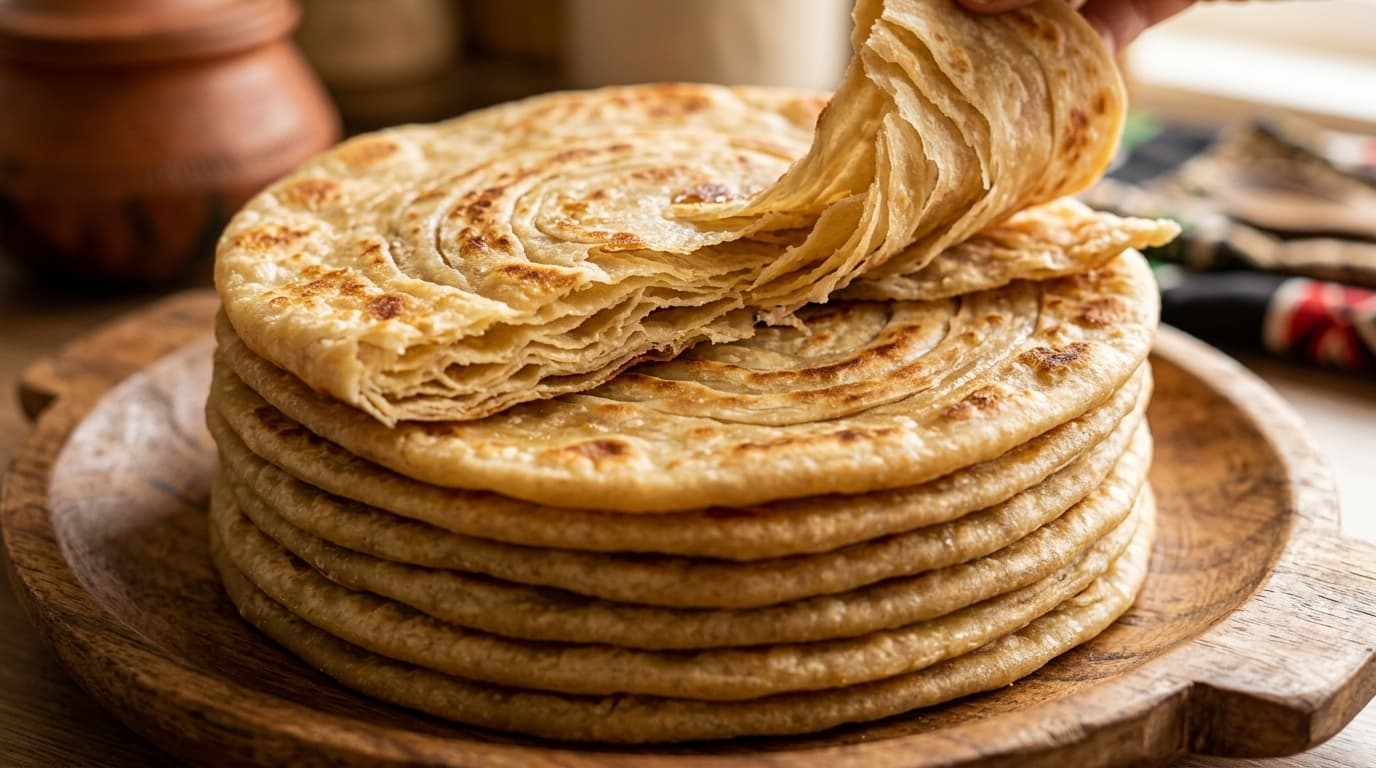
Chapati is a soft, round, pan-fried flatbread that is hugely popular across East Africa, especially Kenya, Tanzania and Uganda, as well as its original home in South Asia. The East African version is distinct: it is richer, softer and flakier than the plain Indian chapati, made with a little oil worked into the dough and then rolled, coiled and rolled again to create soft, peelable layers, before being fried on a hot pan until golden. It is a beloved treat and special-occasion food, served with stews, beans, meat and curries, or simply with tea. It came to East Africa through historic trade and migration links with India. In the UK the flour is a everyday item, and the ingredients are sold everywhere including African and South Asian food shops.
What to remember
- Chapati is a soft, round, pan-fried flatbread popular across East Africa, especially Kenya, Tanzania and Uganda.
- The East African version is richer, softer and flakier than the plain Indian chapati, with soft peelable layers.
- The layers come from working oil into the dough and rolling, coiling and rolling it again before frying.
- It is a beloved treat and special-occasion food, served with stews, beans, meat and curries, or with tea.
- It came to East Africa through historic trade and migration links with India, and the ingredients are easy to find in the UK.
For East Africans in Britain, chapati is deep comfort and a taste of home and family. It is the soft, layered bread made on a Sunday, the smell of it frying on the pan, the treat that meant guests were coming or a celebration was near, the roll of chapati with a cup of chai. It carries the memory of mothers and grandmothers perfecting the rolling and coiling, of the prized skill of making it soft and flaky, and of shared family meals, and making it far from home fills the kitchen with that warmth and brings the feeling straight back.
There is pride in it too, and a sense of heritage. Chapati reflects the long history of connection between East Africa and South Asia, and the East African genius for taking a bread and making it their own, softer, richer and layered. A beautifully made chapati is something to be proud of, and stacking a plate of them to share with family who grew up on them, or teaching a friend to peel apart the soft layers, is an act of welcome and belonging. That soft, comforting, layered taste of home is the quiet gift of chapati.
what is chapati?
Chapati is an unleavened flatbread, made from a simple dough of flour, water and salt, rolled thin, round and flat, and cooked on a hot dry or lightly oiled pan until it is golden and cooked through. It has its origins in South Asia, where chapati is an everyday staple bread, but it has been embraced and transformed across East Africa, where it holds a special and slightly different place. When people in Kenya, Tanzania or Uganda speak of chapati, they usually mean a particular soft, layered, enriched version that is a real favourite.
In East Africa, chapati is not the plainest of everyday breads but something of a treat, made for Sundays, celebrations and guests, and loved for its soft, flaky, slightly rich texture. Making a good chapati is considered a valued skill, and a well-made one, soft and layered rather than tough, is something to be proud of. It is a versatile bread that accompanies all sorts of dishes, and it is a genuine comfort food across the region. It belongs to the wider world of East African cooking, alongside dishes we cover in our guide to Somali food and the broader African food picture.
How to prepare the east african chapati?
What makes the East African chapati distinct is its softness and its layers, and these come from the way it is made. Unlike the plainest Indian chapati, the East African version has oil worked into the dough, which enriches it, and, crucially, the rolled-out dough is spread with a little more oil, then rolled up into a coil or rope, wound into a spiral, and rolled out flat again. This folding traps thin layers of oil in the dough, and when the chapati is fried, those layers separate into soft, flaky sheets that you can peel apart, a bit like a soft, round, layered pastry.
This technique is the secret to the characteristic texture that East Africans love, soft, slightly chewy, rich and layered rather than dry and plain. The chapati is fried on a hot pan, or tawa, with a little oil, and turned until golden brown spots appear on both sides and it is cooked through but still soft. Getting it soft and layered rather than hard is the mark of a good cook, and it is why chapati-making is a prized skill. The result is a bread that is a pleasure to eat on its own or with anything.
Chapati versus Roti
People often ask how chapati relates to roti, since the two words are both used for flatbreads and sometimes overlap. In the broadest sense, roti is a general term for many kinds of flatbread, and chapati is one specific type of roti. In East Africa, though, chapati specifically means the soft, layered, pan-fried bread described here. In the Caribbean, and in Trinidad in particular, roti refers to its own family of flatbreads, including the soft dhalpuri and the paratha-style buss up shut, which are related in spirit but developed separately.
So the picture depends on where you are: an East African chapati and a Caribbean roti share ancestry in South Asian breads but have evolved into different things. The East African chapati is defined by its soft, oil-layered, pan-fried character, while Caribbean rotis have their own textures and uses. Knowing this helps you understand menus and recipes, and it reflects how one idea, the South Asian flatbread, spread around the world and took on distinct local forms in each place it settled.
What is chapati eaten with?
Chapati is wonderfully versatile, which is a big part of its appeal. It is classically served with saucy dishes it can be used to scoop up or wrap around, and across East Africa it pairs with all sorts of stews and mains. A hugely popular combination is chapati with beans, or with a meat or chicken stew, and it is also served with curries, lentils and vegetable dishes. Because the soft bread soaks up sauce so well, it is the perfect partner for anything with a rich gravy, and it is often torn and used to scoop up the food by hand.
Beyond savoury meals, chapati is also enjoyed more simply, rolled up and eaten with a cup of tea, especially chai, as a comforting snack or breakfast. It appears at celebrations, family Sundays and gatherings, where a stack of freshly made chapati is a welcome sight. Its ability to go with almost anything, savoury or simple, rich stew or plain tea, is exactly why it is so widely loved and so often made, and why a good chapati maker is always appreciated.
Where to buy the ingredients in the UK
Making chapati at home in Britain could hardly be easier, because the main ingredient is ordinary wheat flour, widely available everywhere. Plain white flour, or a mix with wholemeal, along with a little oil, salt and water, is all you need for the dough. For those wanting particular flours or the atta wholemeal flour often used for softer results, African and South Asian food shops stock a good range, along with the beans, spices and other ingredients for the stews and curries to serve alongside.
If you are cooking a full East African meal, an African or South Asian food shop lets you gather the flour along with the beans, meat and spices in one trip. You can find African food stores in London or look up African food stores in Manchester to find a shop near you. If you would rather taste it first, chapati is served at East African, Kenyan and Somali restaurants and takeaways, often alongside stews and beans.
Frequently asked questions
What is chapati?
Chapati is a soft, round, pan-fried flatbread made from a simple dough of flour, water and salt. It originates in South Asia but is hugely popular across East Africa, especially Kenya, Tanzania and Uganda, where a particular soft, layered, enriched version is a beloved treat and special-occasion food.
What makes East African chapati different?
Its softness and its layers. The East African version has oil worked into the dough, and the rolled dough is oiled, coiled into a spiral and rolled out again, which traps thin layers of oil so the fried chapati separates into soft, flaky, peelable sheets. This makes it richer and softer than the plainest Indian chapati.
What is the difference between chapati and roti?
Roti is a broad term for many flatbreads, and chapati is one specific type. In East Africa, chapati means the soft, layered, pan-fried bread, while in the Caribbean, roti refers to its own family of flatbreads such as dhalpuri and buss up shut. They share South Asian ancestry but have evolved into different things.
What is chapati eaten with?
All sorts of dishes. It is classically served with stews, beans, meat and chicken dishes, curries, lentils and vegetables, used to scoop up or wrap around the food. It is also enjoyed more simply, rolled up with a cup of tea such as chai, as a comforting snack or breakfast.
Where can I buy the ingredients in the UK?
The main ingredient is ordinary wheat flour, available everywhere, along with oil, salt and water. African and South Asian food shops stock particular flours such as atta wholemeal, plus the beans, meat and spices for the stews to serve alongside. Chapati is also served at East African, Kenyan and Somali restaurants.