The short answer
Trinidadian food is the cuisine of Trinidad and Tobago, and it is one of the most exciting fusion cuisines in the world, blending African, Indian, Creole, Chinese, Amerindian and other influences into something wholly its own. It is famous for street food like doubles, for roti and curries, and for dishes such as pelau, callaloo and pholourie, all carrying bold, spicy, savoury flavour and plenty of pepper. It is food built for sharing, from Carnival to Sunday lunch. In the UK you can find Trinidadian and Caribbean food in cities with Caribbean communities and the ingredients in African and Caribbean shops.
What to remember
- Trinidadian food is a rich fusion of African, Indian, Creole, Chinese and Amerindian influences.
- Roti and curries, pelau, callaloo and pholourie are among its best loved dishes.
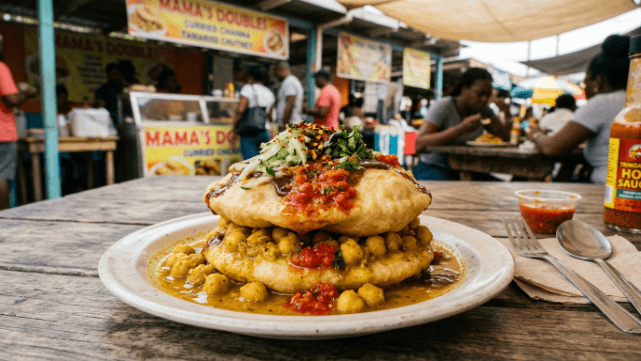
- Doubles, curried chickpeas in soft-fried bara, is the king of Trini street food.
- Trinidadian and Caribbean food and ingredients are found across the UK.
- Bold, spicy, savoury flavour and plenty of pepper sauce run through the cuisine.
For Trinidadians in Britain, food is a direct line to home, to Carnival, and to the islands' famous mix of cultures. It is the doubles bought for breakfast, the curry and dhalpuri at a lime, the pot of pelau at a family gathering, the black cake at Christmas, and the pepper sauce on everything.
Each dish carries the story of the many peoples who made Trinidad, and cooking them abroad keeps that story and that flavour alive.
There is real pride in Trini food, in a fusion cuisine that took African, Indian, Creole, Chinese and Amerindian threads and wove them into something new and beloved.
When a Trinidadian family in the UK fries bara for doubles, seasons a curry with green seasoning, or bakes a black cake for Christmas, they are keeping a piece of home alive and sharing the warmth and flavour of the islands. That generous, spicy, celebratory spirit is the heart of Trinidadian food.
What is Trinidadian Food?
Trinidadian food comes from the twin-island nation of Trinidad and Tobago, at the southern end of the Caribbean, and it reflects one of the most diverse societies in the region. Waves of people, enslaved Africans, indentured Indian and Chinese labourers, European colonists, Middle Eastern traders and the indigenous Amerindians, all left their mark on the kitchen, and Trinidadian cooking blends them into a fusion that is bold, spicy, savoury and utterly distinctive. It is food with a real sense of place and celebration, tied to Carnival, to liming with friends, and to family Sunday lunch.
Two great influences stand out. From West Africa came the love of one-pot dishes, callaloo, provisions and browning, and from India came roti, curry and the deep use of spice, brought by indentured labourers in the nineteenth century. Together they make a cuisine where a curry and a stew feel equally at home. It sits within the wider world of Caribbean food, with a flavour all its own.
Doubles the king of Street Food
If one dish represents Trinidad, it is doubles. This is the island's beloved street food, two pieces of soft, fried flatbread called 'bara' wrapped around a filling of curried chickpeas, 'channa', and topped with sweet, spicy and tangy condiments like tamarind, mango, cucumber and plenty of pepper sauce. Sold from stalls and carts across the islands, especially for breakfast, doubles is cheap, filling and completely addictive, and it is the food Trinis abroad miss most. You can read more in our guide to doubles.
Doubles is part of a wider love of Indian-influenced snacks and street food in Trinidad, alongside pholourie, the moreish fried split-pea dough balls served with chutney, and aloo pie, a fried pastry stuffed with spiced potatoes. Together they make up the irresistible world of Trini street eats.
Roti and Curry
Roti is central to Trinidadian food, brought and adapted from India and now completely Trini. The most famous is dhalpuri, a soft flatbread stuffed with seasoned ground split peas, used to wrap generous curries into a satisfying parcel, and there is also the flaky, torn buss up shut, or paratha roti. You can read about the split-pea version in our guide to dhalpuri.
The curries wrapped in or served with roti are a cuisine in themselves: curry goat, curry chicken, curry duck, and vegetable curries like curried mango, channa and aloo, and bhaji. Trinidadian curry has its own character, built on a local curry powder and often finished with plenty of pepper. Whether folded into a dhalpuri or served with rice, curry and roti are the heart of many a Trini meal.
Pelau, Callaloo and the One-Pots
Alongside the Indian influence sits a rich tradition of Creole and African-rooted one-pot cooking. Pelau is a beloved one-pot dish of rice, pigeon peas and meat cooked with caramelised browning and coconut milk, sweet, savoury and comforting, a Sunday and Carnival favourite. Callaloo, made from dasheen leaves cooked down with okra, coconut and seasonings into a rich green dish, is another cornerstone, often part of the traditional Sunday lunch with stewed meat and provisions.
Another everyday favourite is macaroni pie, the Caribbean baked macaroni cheese that is a fixture of the Sunday plate. These one-pots and sides show the African and Creole soul of Trini food, hearty, well-seasoned and made for a crowd.
Bake and Shark and the Seaside
Trinidad's coast brings its own treats, above all bake and shark, the famous beach food of Maracas Bay: fried seasoned shark, or other fish, stuffed into a fried bread called 'bake' and loaded with a huge array of toppings and sauces, from tamarind and chadon beni to garlic and pepper. It is a hands-on, flavour-packed treat that captures the fun of a Trini beach day. Seafood, fresh fish and dishes like fish broth are important across the islands.
The seasoning that runs through so much of this food is green seasoning, a fresh blend of herbs like chadon beni (culantro), thyme, garlic and more, and the ever-present Scotch bonnet pepper sauce, which together give Trini food its unmistakable fresh, herby, fiery character.
Sweets, drinks, and celebration
Trinidadian food knows how to celebrate. Sweet treats include black cake, the rich rum-soaked fruit cake of Christmas, sweetbread, kurma and sugar cake, while drinks range from sorrel and ginger beer to peanut punch, mauby and, for adults, rum punch and the famous local rums. Christmas brings pastelles, and Carnival and Divali each have their own foods, reflecting the islands' many cultures and festivals.
This love of celebration food, shared generously at gatherings, limes, Carnival and religious festivals from Divali to Christmas, is central to what Trinidadian food is about. It is a cuisine that brings people together across every community on the islands.
Where can I find Trinidadian food in UK?
The UK has long-established Caribbean communities, including many people of Trinidadian heritage, so Trini and Caribbean food is very findable here. London, with its large Caribbean population, is a particular stronghold, and cities across the country have Caribbean restaurants, takeaways, bakeries and food shops. In them you will find doubles and roti, curries and pelau, callaloo and macaroni pie, and the ingredients to cook them, from curry powder, split peas and pigeon peas to Scotch bonnet, chadon beni, saltfish and provisions.
If you want to eat out, you can find African restaurants near you, which include Caribbean kitchens, or book a cook for a gathering through caterers near you. To cook Trinidadian food at home, the ingredients are stocked by African and Caribbean shops, and you can browse African food stores near you.
Frequently asked questions
What is the national dish of Trinidad and Tobago?
Trinidad and Tobago is often associated with several iconic dishes rather than one, but crab and callaloo is frequently named the national dish, and doubles is celebrated as the king of street food. Pelau, curry and roti are also central. Together they capture the fusion of African and Indian influences at the heart of Trini cuisine.
What are doubles?
Doubles is Trinidad's most famous street food, two pieces of soft fried flatbread called 'bara' wrapped around curried chickpeas, or 'channa', and topped with tamarind, mango, cucumber and pepper sauce. It is a cheap, filling and beloved snack, especially for breakfast, sold from stalls across the islands and much missed by Trinis abroad.
Why does Trinidadian food have so much Indian influence?
Indentured labourers from India came to Trinidad in the nineteenth century after the abolition of slavery, and they brought roti, curry and a deep tradition of spice. Over generations this blended with African, Creole, Chinese and other influences so that dishes like doubles, roti and curry became central to Trinidadian food, made in a distinctly Trini way.
Is Trinidadian food spicy?
Trinidadian food is bold and well-seasoned, and pepper is important, above all the fiery Scotch bonnet, usually served as a pepper sauce you add to taste. It is also full of fresh, herby flavour from green seasoning and chadon beni. So it can be as spicy as you like, but the flavour is about depth and freshness as much as heat.
Where can I find Trinidadian food in the UK?
Look in cities with Caribbean communities, especially London, as well as Birmingham and others, where Caribbean restaurants, takeaways and shops serve and stock Trini favourites. You can find African and Caribbean restaurants near you and African food stores through the platform to eat out or to cook Trinidadian food at home.