The short answer
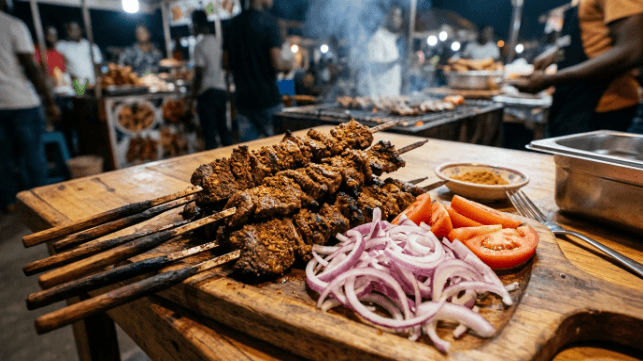
Suya is a spicy grilled meat skewer from Nigeria, made from thinly sliced beef, chicken or other meat coated in a peanut-based spice blend called yaji. It has Hausa roots in northern Nigeria and is one of West Africa's best-loved street foods, grilled over open coals and sold in the evenings. The yaji mix is built on ground roasted groundnuts, or peanuts, along with ginger, garlic, chilli and other spices. Suya is usually served with raw sliced onions, tomatoes and an extra sprinkle of yaji, and because it contains peanuts it is not safe for anyone with a peanut allergy.
What to remember
- It is evening food, served hot off the grill with raw onions, tomatoes and more yaji on the side.
- Suya contains peanuts, so it is not safe for anyone with a peanut allergy, and it is always worth asking what is in the yaji.
- It comes from the Hausa people of northern Nigeria and is now eaten right across West Africa.
- That spice mix is called yaji, and its base of ground groundnuts, or peanuts, is what gives suya its signature flavour.
- Suya is thinly sliced meat coated in a peanut spice mix, threaded on skewers and grilled over coals.
For Nigerians and West Africans in Britain, suya is one of those foods that closes the distance to home in a single bite. It is the smell of coals and roasting spice on a warm evening, the sound of a busy roadside grill, and the small ritual of unwrapping the paper and reaching in with your fingers while the meat is still too hot.
It belongs to nights out, to gatherings, to the easy sociability of standing around a grill with friends, and it carries all of that with it wherever it is cooked.
It also tells a longer story every time it is served. In one skewer you can taste the cattle country of the north, the Hausa cooks who made this their craft, and the way a regional food travelled across a whole continent without losing its name or its soul. Sharing suya with people who grew up on it, or introducing it to someone tasting yaji for the first time, is a small way of keeping that heritage alive. That is the quiet gift of this food, and it travels beautifully.
What is Suya?
Suya is grilled meat, but that plain description does not do it justice. The meat, most often beef, is sliced very thin, threaded onto long skewers, and coated in a dry, deeply savoury spice mix before it meets the fire. As it grills over hot coals, the spice crusts and chars at the edges while the meat stays tender, and the result is smoky, nutty, hot and moreish all at once.
It is street food in the truest sense. You buy it from a suya spot, often a simple grill set up by the roadside, wrapped in paper or newspaper and eat it with your hands. It is not a sit-down meal so much as something you gather around, pull apart and share while it is still hot. That informality is part of what people love about it.
Suya sits at the heart of Nigerian eating, and you can read more about the wider table it belongs to in our guide to Nigerian food. It also earns its place among the best African snacks, the handheld foods people reach for again and again.
The Hausa Roots of Suya
Suya belongs first to the Hausa people of northern Nigeria and to the wider Hausa-speaking regions that stretch across the Sahel. It grew out of a cattle-herding culture where beef was plentiful and open-fire grilling was an everyday skill, and the men who prepared and sold it, often called mai suya, carried the craft with them as they moved.
That movement is why suya is no longer only a northern food. As people travelled and settled across Nigeria and into neighbouring countries, the suya grill came too, and today you will find it in Lagos, in Accra, in Abidjan and far beyond. It has become one of those foods that crossed every internal border and turned into something the whole region claims as its own, while never losing the northern identity it started with.
Yaji the spice that makes it Suya
If one thing defines suya, it is yaji, the spice mix rubbed and dusted onto the meat. Take the yaji away, and you simply have grilled meat. It is the blend that turns it into suya.
The base of yaji is ground roasted groundnuts, which most people outside West Africa know as peanuts. The nuts are roasted and ground, sometimes with the oil pressed out first so the mix stays dry and powdery, and this gives suya its distinctive nutty depth. To that base go ginger, garlic, chilli or cayenne for heat and a range of other spices that vary from cook to cook, which can include paprika, cloves, a stock or seasoning element and warm ground spices. Every mai-suya guards their own recipe, so no two yaji blends taste exactly alike, and regulars often have a favourite grill precisely because of how its yaji tastes.
This is also the point to be clear about allergies. Because yaji is built on peanuts, suya is not safe for anyone with a peanut allergy, and the spice is used both before grilling and sprinkled on afterwards. If you are cooking or buying for someone with allergies, always check what has gone into the mix.
How Suya is Grilled and Served
Making suya is an unhurried, hands-on craft. The meat, classically beef but also chicken, ram, liver or offal, is sliced thin so it cooks quickly and takes on plenty of smoke. It is then coated in yaji, threaded onto skewers, and laid over glowing coals. A little oil helps the spice crust form, and the skewers are turned and basted until the edges char and the meat is just done.
The serving is as important as the grilling. Suya comes off the fire and is often given one more generous dusting of yaji, then piled with raw sliced onions and fresh tomatoes, and sometimes cabbage or a wedge of lime. The cool, sharp onions against the hot, spiced meat are a big part of the pleasure, and the whole lot is wrapped in paper to eat on the spot or carry home. It is almost always an evening food, appearing as the light fades and the grills are lit along the roadside.
Suya and its cousins
Once you know suya, you start to notice its relatives. In Ghana the same idea appears as chichinga or kyinkyinga, grilled spiced skewers sold from similar roadside grills. Across West Africa the pattern repeats: thin meat, a peanut and chilli spice, an open fire, an evening crowd. The details shift from place to place, and the name changes, but the family resemblance is unmistakable.
That spread is a good reminder that suya is not a single fixed recipe but a living tradition. A cook in Kano, a grill in Lagos and a stall in Accra will each make it a little differently, and all of them are making suya. It is food that carries a region's shared taste while leaving room for every mai suya to leave their own mark.
Where can I find Suya in UK?
In Britain, suya is easier to find than you might think, especially in cities with settled Nigerian and West African communities. Nigerian restaurants and West African takeaways often have it on the menu, and it turns up at street-food markets, parties and community events, where a grill and a good yaji draw a crowd quickly. If you have a suya spot near you, it is usually an evening affair, just as it is back home.
Caterers are the other route worth knowing. Suya is a favourite at Nigerian weddings, naming ceremonies and parties, and many West African caterers will grill it fresh for an event. You can find African caterers near you to bring a grill to your own gathering. And if you would rather make it at home, the ingredients are within reach: the thin beef, the skewers and above all the yaji spice, sold ready-mixed or as separate parts, are stocked by African and Caribbean food shops. Browse African food stores near you to pick up a bag of yaji and everything else you need.
Frequently asked questions
What meat is suya usually made from?
Most often beef, sliced very thin so it grills quickly and soaks up the smoke. You will also find chicken, ram, and versions made with liver or other offal. The meat matters, but it is really the yaji spice and the open-fire grilling that make it suya.
What is yaji?
Yaji is the spice mix that defines suya. Its base is ground roasted groundnuts, or peanuts, mixed with ginger, garlic, chilli and other spices. It is rubbed on before grilling and sprinkled on again afterwards, and every cook has their own blend, which is why suya can taste a little different from grill to grill.
Is suya safe if I have a peanut allergy?
No. The yaji spice is built on ground peanuts, so suya is not safe for anyone with a peanut allergy. The spice is used both on the meat before grilling and as a topping, so there is no easy way to avoid it. If you are buying for someone with allergies, always ask what is in the yaji.
How is suya usually served?
Hot off the grill, given an extra dusting of yaji, and piled with raw sliced onions and fresh tomatoes, sometimes with cabbage or a squeeze of lime. It is wrapped in paper and eaten with your hands, and it is almost always an evening food.
Where can I find suya in the UK?
Look to Nigerian restaurants and West African takeaways and to street food markets and community events where grills are set up. West African caterers will often grill it fresh for a party. If you would rather make it yourself, African and Caribbean food shops sell the yaji spice and the other ingredients you need.