What Is Shito? The Ghanaian Pepper Sauce Explained
Shito is a rich, dark Ghanaian pepper sauce of chilli, dried fish and prawns. Here is what it is and where to buy it.
Quick answer
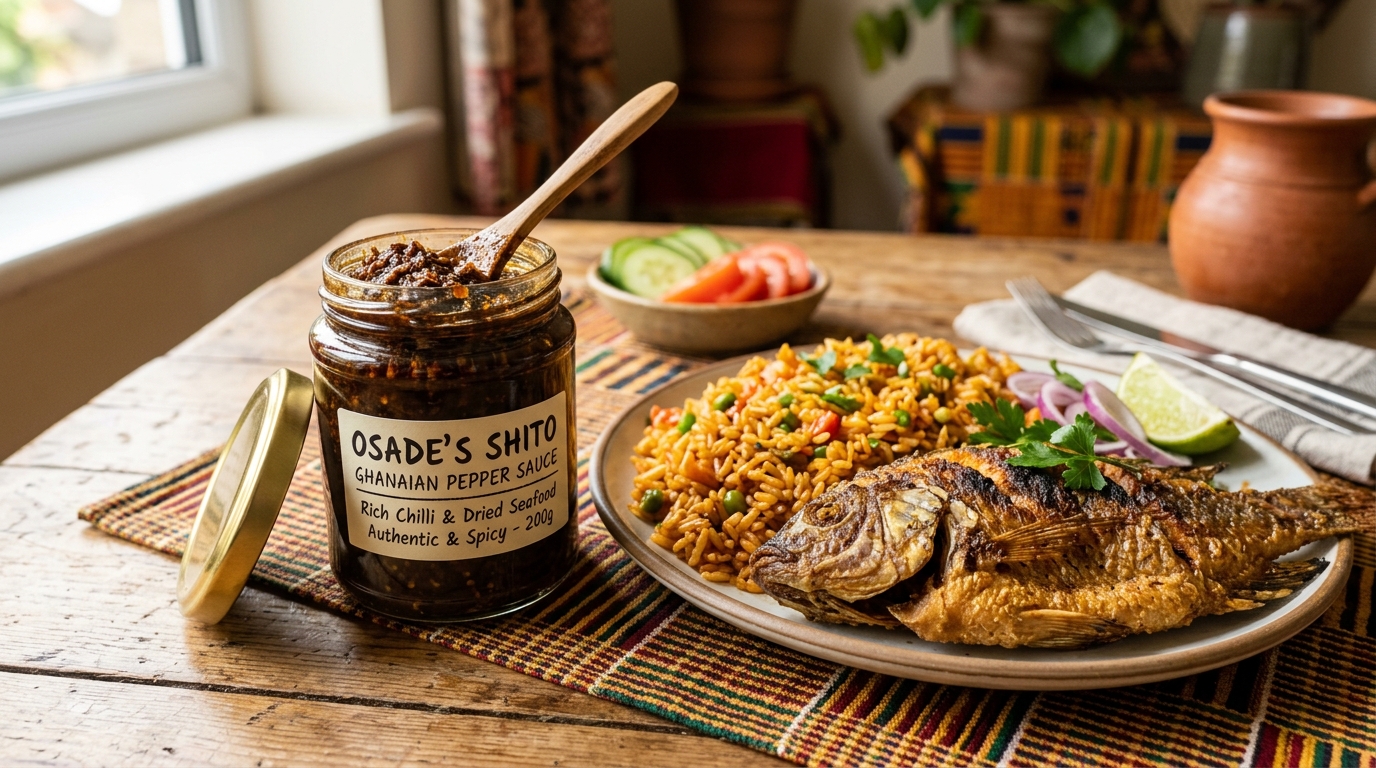
Shito is a rich, dark, spicy pepper sauce from Ghana, made by frying dried chilli pepper together with dried fish and dried prawns or shrimp, ginger, garlic, onions and spices in plenty of oil until it cooks down into a deep, almost black, intensely savoury condiment. Its name simply means pepper in the Ga language, and it is one of Ghana's most loved and versatile sauces, eaten with everything from rice and kenkey to fried fish and eggs. Because it contains dried fish and prawns, it is not suitable for anyone with a fish or shellfish allergy. In the UK shito is sold ready-made in jars by African food shops.
Add African Stores as a preferred source on Google. You'll see more of our guides in Google's Top Stories when you search.
Add as a preferred sourceWhat to remember
- Shito is a rich, dark, spicy Ghanaian pepper sauce, its name meaning pepper in Ga.
- It is made from dried chilli, dried fish and prawns, ginger, garlic and spices fried in oil.
- Deep and savoury, it is a versatile condiment eaten with many dishes.
- It contains dried fish and shellfish, so it is not suitable for those with such allergies.
- Ready-made shito in jars is sold by African food shops in the UK.
For Ghanaians in Britain, shito is a deep taste of home in a jar. It is the dark, spicy sauce on the side of every plate, the spoonful that made boarding-school rice bearable, the jar sent from home or made by mum, the savoury heat that says Accra, Kumasi and home. Adding shito to a plate of rice or kenkey far from home brings back family tables and lunchboxes and the comfort of a familiar, beloved flavour, the warmth of home in every spicy spoonful.
There is real affection and identity in it too, in always having a jar to hand and in the way shito makes almost any meal taste of Ghana. It reflects the Ghanaian love of a good pepper sauce and of carrying home flavours wherever you go, and to keep and share shito is to keep that connection alive. Giving a jar of shito to a homesick friend, or introducing someone to their first spicy spoonful, allergies permitting, is an act of welcome. That deep, savoury, spicy taste of home is the quiet gift of shito.
What is shito?
Shito is one of Ghana's most beloved and recognisable sauces, a dark, rich, spicy condiment that keeps well and turns up on tables and in lunchboxes across the country. The word shito comes from the Ga language and simply means pepper, and the sauce lives up to the name: it is built on chilli pepper, giving it real heat, but it is far more than a plain chilli sauce. Cooked down in oil until it is deep brown to almost black, it is thick, concentrated and packed with a savoury, seafood-rich depth that makes it unmistakable.
What sets shito apart is its combination of chilli with dried seafood. Along with the pepper, it is made with dried fish and dried prawns or shrimp, which are ground and fried into the sauce, giving it its characteristic deep, savoury, umami flavour beneath the heat. Ginger, garlic, onions and spices round it out. This makes shito rich and complex rather than simply hot, and it belongs to the wider world of Ghanaian cooking we cover in our guide to Ghanaian food, eaten alongside staples like kenkey and banku.
What goes into shito
Understanding shito means understanding its key ingredients. The base is dried chilli pepper, often a mix, ground and cooked into the sauce for heat and colour, and plenty of oil, in which everything is slowly fried so the sauce cooks down and keeps well. The savoury depth comes from dried fish and dried prawns or shrimp, ground finely and fried in, which give shito its signature seafood-rich, umami character. Ginger, garlic, onions and sometimes tomato paste and spices complete the blend.
Because it contains dried fish and dried prawns or shrimp, shito is not suitable for anyone with a fish or shellfish allergy, which is essential to remember when buying, serving or sharing it. The sauce is cooked slowly and thoroughly in oil, which both develops its deep flavour and helps it keep for a long time, so a jar lasts and the flavour matures. Recipes and heat levels vary from cook to cook and brand to brand, and part of the joy of shito is finding one you love. There is also a black version and lighter versions, but the classic is the deep, dark, seafood-rich sauce.
Find African and Caribbean shops near you
Free to use, no sign-up needed.
How is shito used?
Shito's great strength is its versatility, and this is much of why Ghanaians love it. It is a condiment used to add heat and savoury depth to almost anything: a spoonful is eaten with rice, especially jollof and plain rice, with waakye, with kenkey and banku, with fried or grilled fish and meat, with fried eggs, in stews, and even spread in sandwiches. It is the sort of sauce people keep a jar of always to hand and add to whatever they are eating.
Because it is intense and spicy, shito is used in small amounts, a spoonful on the side of a plate rather than a main component, and it is served at the table for people to add as they like. It travels well and keeps well, so it is a favourite to carry to work or send to family, and a jar of good shito is a treasured thing. This is general food information rather than dietary advice, and the fish and shellfish content matters for anyone with allergies. For a taste of Ghana on the plate, a little shito goes a long way.
Where to buy shito in the UK
Buying shito in Britain is very easy, as it is sold ready-made by African food shops that serve the Ghanaian and wider West African community. It comes in jars, in different brands and heat levels, and because it keeps so well, a jar is a great store-cupboard buy that lasts. Ready-made shito saves the long, careful frying the sauce needs, so most people simply buy it, though it can be made at home for those who want to.
If you want to try shito, an African food shop can point you to a good brand and suggest what to eat it with. You can find African food stores near you or look up Caribbean food stores near you, where jars of shito are a regular stock item. Do remember, and mention to anyone you share it with, that shito is made with dried fish and prawns and is not suitable for anyone with a fish or shellfish allergy. With a jar in the fridge, a spoonful of shito can lift almost any meal.
Your questions
Frequently asked questions
Shito is a rich, dark, spicy pepper sauce from Ghana, its name meaning pepper in the Ga language. It is made by frying dried chilli pepper with dried fish and dried prawns or shrimp, ginger, garlic, onions and spices in plenty of oil until it cooks down into a deep, almost black, savoury condiment eaten with many dishes.
Shito is made from dried chilli pepper and plenty of oil, with dried fish and dried prawns or shrimp ground and fried in to give its signature savoury, seafood-rich depth. Ginger, garlic, onions and sometimes tomato paste and spices complete it. Everything is fried slowly so the sauce cooks down, develops its deep flavour and keeps well.
Yes. Shito is made with dried fish and dried prawns or shrimp, which are central to its flavour, so it is not suitable for anyone with a fish or shellfish allergy. Anyone serving or sharing shito should mention this clearly, as the dried seafood is a key and defining part of the sauce.
Shito is a versatile condiment eaten in small amounts for heat and savoury depth. A spoonful is eaten with rice, jollof, waakye, kenkey and banku, with fried or grilled fish and meat, with fried eggs, in stews and even in sandwiches. Because it is intense and spicy, it is used sparingly and served at the table for people to add as they like.
Shito is sold ready-made in jars by African food shops serving the Ghanaian and West African community, in different brands and heat levels. Because it keeps so well, a jar is a great store-cupboard buy. A shop can point you to a good brand and what to eat it with. Remember that shito contains dried fish and prawns and is not suitable for those with a fish or shellfish allergy. African Stores lists African and Caribbean food shops across the UK, so you can find one near you.
Was this guide helpful?
Free membership
Save this guide and hear when new shops open near you
Save shops, follow the ones you love and get your free member card to show at participating shops for member offers.
Keep reading
More guides
- What isWhat Is Ogbono? The Nigerian Draw Soup Seed ExplainedOgbono is a ground wild mango seed used to thicken Nigerian draw soup.Read article
- What isWhat Is Wiri Wiri Pepper? The Guyanese Chilli ExplainedWiri wiri pepper is a small, round, very hot Guyanese chilli used in pepperpot and cook-up rice.Read article
- What isWhat Is Xawaash? The Somali Spice Blend ExplainedXawaash is the warm, aromatic Somali spice blend that seasons much of Somali home cooking, from stews and rice to soups and meat.Read article