The short answer
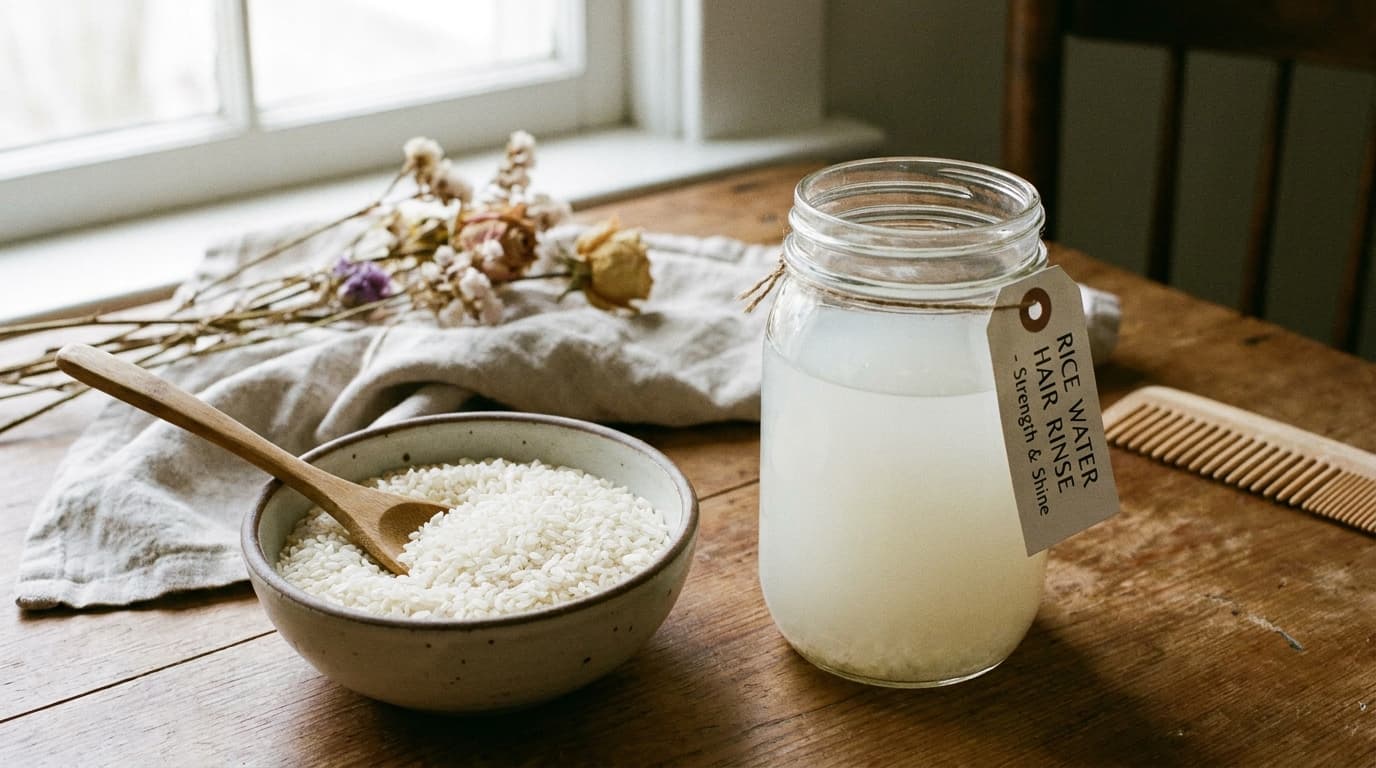
Rice water is the cloudy, starchy water left over from soaking, rinsing or cooking rice, used as a hair treatment or rinse. It contains starches, some vitamins, minerals and amino acids from the rice, and it has become a popular home remedy said to help strengthen, smooth and add shine to the hair, with a long history of use in some cultures. It is usually made by soaking or boiling rice and keeping the water, sometimes fermenting it, then applying it to the hair and scalp as a rinse and rinsing it out. It is a gentle, low-cost treatment, though it is not a miracle and can be too much protein for some hair if overused. In the UK the only ingredient you need, rice, is sold everywhere.
What to remember
- Rice water is the starchy water from soaking, rinsing or cooking rice, used as a hair rinse.
- It contains starches and some vitamins, minerals and amino acids from the rice.
- It is a popular home remedy said to help strengthen, smooth and add shine to the hair.
- It is made by soaking or boiling rice, sometimes fermenting the water, then applied and rinsed out.
- It is gentle and low-cost, but not a miracle, and too much can be protein-heavy for some hair if overused.
For many people, rice water carries a sense of old, passed-down wisdom, the kind of simple home remedy a grandmother might have sworn by, using what was already in the kitchen to care for the hair. It is the jar in the fridge, the weekly rinse, the small ritual of not wasting the water from the rice and turning it into something for the hair. It connects everyday cooking with everyday self-care in a way that feels resourceful and familiar.
There is something quietly cultural in it too, a reminder that good hair care does not have to be expensive or complicated, and that traditions of using natural, kitchen-based ingredients have real value. Rice water sits within a wider world of simple, affordable, natural hair care that many communities have practised for generations. Using it thoughtfully, as one gentle part of a caring routine, is a small way of honouring that resourceful, homemade tradition while looking after your hair.
What is Rice Water?
Rice water is exactly what it sounds like: the cloudy, slightly starchy water that is left behind when rice is soaked, rinsed or cooked. Rather than throwing it away, people use it as a hair treatment, applying it to the hair and scalp as a rinse. It carries some of the substances found in rice, including starches, small amounts of vitamins and minerals, and amino acids, the building blocks of protein, and it is this content that is thought to give it its effects on the hair. Using rice water for hair is an old practice in some cultures and has become widely popular again as a home remedy.
The appeal of rice water is its simplicity and low cost. It uses an ingredient almost everyone already has, it is easy to make at home, and it is gentle and natural, which suits people looking for simple, affordable hair care. It is used across many hair types, and it has become especially popular in natural hair communities as part of a routine for stronger, shinier hair. It sits alongside other simple, traditional care ideas we cover in guides like Jamaican black castor oil.
What Rice Water can and cannot do
It is worth being clear and balanced about what rice water does, because it is often surrounded by big claims. The amino acids and other substances in rice water are thought to coat and temporarily strengthen the hair strand, which can make hair feel smoother, look shinier and feel more resilient, and many people find it helps with slip and manageability. Some believe it supports the look and feel of longer, healthier hair over time, largely by reducing breakage so more length is retained. These cosmetic, surface effects are where rice water is most credible.
What rice water cannot do is work miracles or dramatically change the hair overnight, and claims that it makes hair grow extremely fast should be taken with caution, as the evidence for dramatic growth is limited and largely anecdotal. There is also an important note of care: rice water is a form of protein treatment, and hair that gets too much protein, or people who use very strong fermented rice water too often, can find their hair feels dry, stiff or brittle, a state sometimes called protein overload. So rice water is best used in moderation, not daily, and balanced with good moisture. Used sensibly, it is a pleasant, strengthening rinse; treated as a cure-all, it can disappoint or even backfire.
How to make and use Rice Water
Making rice water is simple, and there are a few methods. The soaking method involves rinsing rice, then soaking it in clean water for around half an hour, and straining off the water. The boiling method uses the water left from cooking rice, diluted if it is very thick. The fermented method takes soaked rice water and leaves it at room temperature for a day or so to ferment, which some believe increases its potency, though fermented rice water is stronger and should be used more sparingly and often diluted. Any rice water is usually kept in the fridge and used within a few days.
To use it, the hair is usually washed first, then the rice water is poured or sprayed over the hair and scalp, worked through, and left on for a few minutes, commonly around five to twenty, before being rinsed out thoroughly with plain water, and the routine finished with a moisturising conditioner. Because it is a protein-leaning treatment, most people use rice water once a week or less, not every wash, and pay attention to how their hair responds, cutting back if it starts to feel dry or stiff. Following with moisture, as part of a balanced routine like the one we describe in our guide to hair porosity, keeps the hair soft.
Who Rice Water suits and do not
Rice water suits many people as an occasional strengthening rinse, but it is not equally ideal for everyone, and a little self-awareness helps. Hair that is fine, damaged or already protein-sensitive can react to too much protein by feeling hard or brittle, so those with such hair should use rice water sparingly and watch closely. Hair that is very dry should always be balanced with plenty of moisture when using rice water. As with any new hair product, it is sensible to see how your own hair responds and adjust, rather than following a strict routine that may not suit you.
A few practical cautions are worth noting. Rice water should be kept clean and refrigerated and not used if it smells off, as it can spoil, and fermented versions in particular should be well diluted. If you have a scalp condition or any concerns, it is reasonable to check with a professional before starting. None of this is meant to put anyone off, as rice water is gentle and low-risk for most people, but treating it as a mild treatment to use thoughtfully, rather than a magic growth potion, is the way to get the good out of it. This article is general information, not medical or professional hair-loss advice.
Where to Buy Rice Water Ingredients in the UK
The wonderful thing about rice water is that it needs only one ingredient you almost certainly already have: rice. Any plain rice works, and African and Caribbean food shops, as well as every supermarket, sell rice in abundance, so making rice water costs almost nothing. Some people prefer to use the same rice they cook with, and there is no need for anything special. That simplicity is a large part of rice water's appeal.
If you would rather buy a ready-made product, Afro hair and beauty shops that serve Black communities increasingly stock rice water sprays, shampoos and treatments, which offer convenience and a controlled formula, and the staff can point you to the moisturising conditioners to pair with a protein rinse. You can find an Afro hair and beauty shop near you for these products, or simply save the water next time you rinse or cook rice. Whether homemade or shop-bought, using rice water in moderation and balancing it with moisture is the key to enjoying it.
Frequently asked questions
What is rice water for hair?
Rice water is the cloudy, starchy water left from soaking, rinsing or cooking rice, used as a hair treatment or rinse. It contains starches and some vitamins, minerals and amino acids from the rice, and it is a popular home remedy said to help strengthen, smooth and add shine to the hair. It is applied to the hair and scalp and rinsed out.
What are the benefits of rice water for hair?
The amino acids and other substances in rice water are thought to coat and temporarily strengthen the hair, making it feel smoother, look shinier and feel more resilient, and by reducing breakage it may help retain length over time. These are mainly cosmetic, surface effects. Claims of dramatic, fast hair growth are not well supported and should be treated with caution.
How do you make rice water?
Rinse rice and soak it in clean water for around half an hour, then strain off the water, or keep the water from cooking rice, diluting it if very thick. For fermented rice water, leave soaked rice water at room temperature for about a day, then dilute it as it is stronger. Store rice water in the fridge and use it within a few days.
Can rice water damage your hair?
Rice water is a protein-leaning treatment, and using it too often, or using strong fermented rice water, can leave some hair feeling dry, stiff or brittle, a state called protein overload, especially for fine or protein-sensitive hair. Using it in moderation, once a week or less, balancing it with moisture and watching how your hair responds avoids this.
Where can I buy the ingredients in the UK?
Rice water needs only rice, which African and Caribbean food shops and every supermarket sell, so making it costs almost nothing. If you prefer a ready-made product, Afro hair and beauty shops increasingly stock rice water sprays, shampoos and treatments, along with the moisturising conditioners to pair with a protein rinse.