The short answer
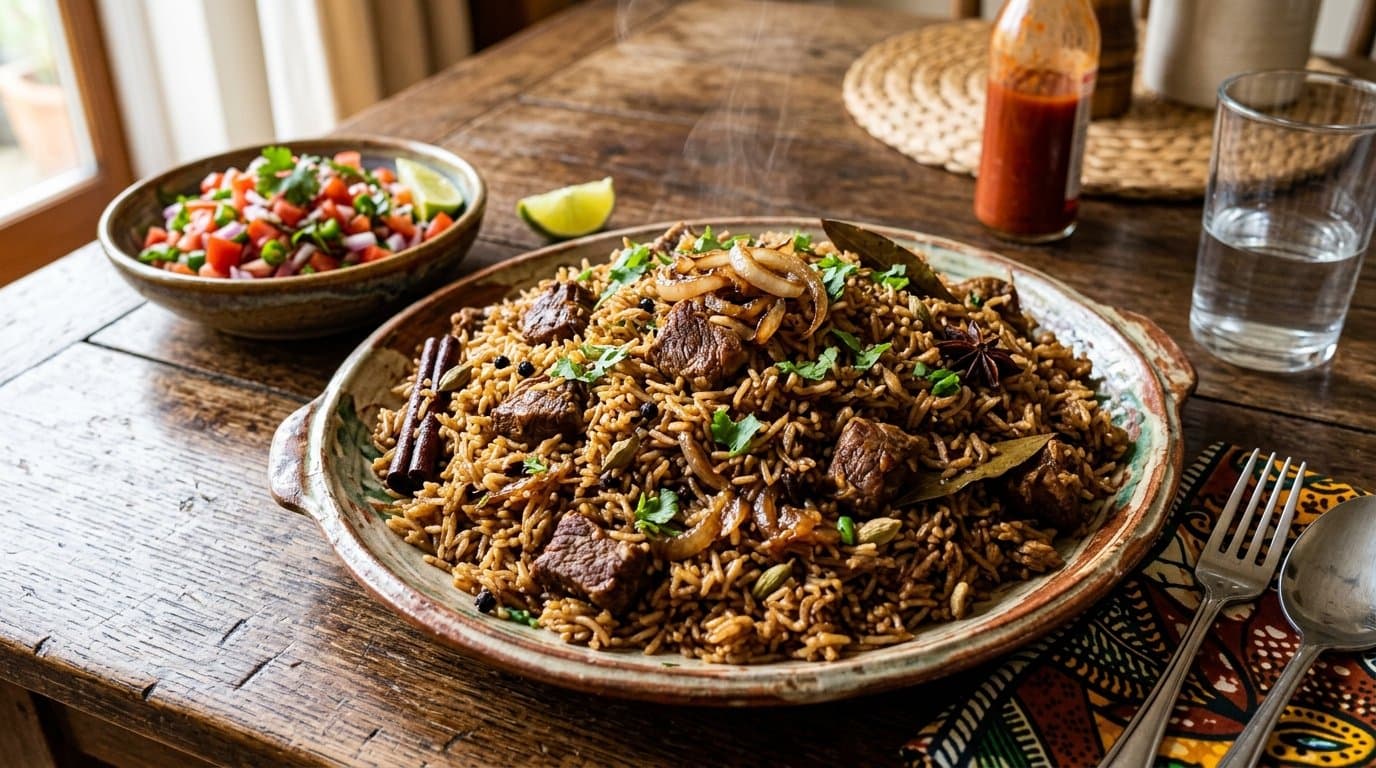
Pilau is a fragrant, one-pot spiced rice dish loved across East Africa, especially along the Swahili coast of Kenya and Tanzania. Rice is cooked together with meat, usually beef, goat or chicken, and a warm blend of spices called pilau masala, which includes cumin, cardamom, cloves, cinnamon and black pepper, along with deeply browned onions that give the rice its characteristic tan colour and rich flavour. Unlike plain white rice, the rice absorbs the spiced, meaty stock as it cooks, so every grain is fragrant and savoury. It is a celebration and everyday favourite, often served with kachumbari salad. In the UK the pilau masala and rice are sold by African and South Asian food shops.
What to remember
- Pilau is a fragrant East African one-pot spiced rice, especially of the Swahili coast.
- Rice is cooked with meat and a warm spice blend called pilau masala.
- Deeply browned onions give the rice its characteristic tan colour and rich flavour.
- It differs from biryani, which is layered and often more elaborate, while pilau is cooked all in one pot.
- It is often served with kachumbari salad, and the spices are sold by African and South Asian food shops.
For East Africans in Britain, especially from the Swahili coast, pilau is the smell of celebration and home. It is the fragrant brown rice at a wedding or an Eid feast, the browned onions and warm spices filling the kitchen, the pot everyone gathers around, the taste that says Mombasa, Dar es Salaam and home. Cooking pilau far from home fills the flat with that unmistakable aroma and brings back the celebrations and the family gatherings, the warmth of home in every fragrant spoonful.
There is heritage in it too, a whole history of trade and mingling. Pilau carries the Swahili coast's centuries of exchange across the Indian Ocean, the spices and techniques that met and became something local and beloved, and to cook it is to keep that heritage alive. Making a good pilau, the onions browned just so and the rice fragrant with masala, and sharing it with family who grew up on it, or introducing a friend to East African spiced rice, is an act of welcome and belonging. That warm, fragrant, festive taste of home is the quiet gift of pilau.
What is pilau?
Pilau is one of East Africa's most beloved rice dishes, a fragrant, warmly spiced, one-pot meal that is a staple of the Swahili coast and popular right across Kenya, Tanzania and beyond. At its simplest it is rice cooked together with meat and a blend of aromatic spices, so that the rice takes on a rich brown colour and a deep, savoury, fragrant flavour quite unlike plain boiled rice. It reflects the Swahili coast's long history of trade across the Indian Ocean, which brought spices and cooking styles from Arabia and South Asia and wove them into local food.
The beauty of pilau is that it is both everyday and special. It is cooked for family dinners and just as readily for weddings, Eid, Christmas and other celebrations, where a big pot of pilau is a centrepiece. Its warm spice, tender meat and fragrant rice make it comforting and festive at once, and its aroma while cooking is part of its appeal. Pilau belongs to the rich food culture of the East African coast, and it sits alongside other Swahili favourites such as chapati, which is often served at the same celebrations.
Pilau masala
The soul of pilau is its spice blend, known as pilau masala, and understanding it explains the dish. Pilau masala is a warm, aromatic mix of ground and whole spices, typically including cumin, cardamom, cloves, cinnamon and black pepper, and sometimes coriander, nutmeg and other warm spices. These are what give pilau its distinctive fragrance and flavour, savoury and warmly spiced rather than hot, and they are added to the pot so their aroma infuses the rice and meat as they cook. The blend is sold ready mixed as pilau masala, which makes the dish easy to reproduce at home.
Just as important as the spices are the onions. A key step in making pilau is frying a generous quantity of sliced onions slowly until they are deeply browned, almost caramelised, and it is this browned onion, together with the spices, that gives pilau its characteristic tan or light brown colour and much of its rich, savoury depth. The rice is not coloured artificially; its warm hue comes from the onions and spices. Meat, usually beef, goat or chicken, is browned with the spices too, and its juices flavour the stock in which the rice cooks, so every grain ends up fragrant and savoury.
Pilau and biryani
Pilau is often mentioned alongside biryani, and knowing the difference helps place it. Both are spiced rice dishes with meat that share a common ancestry in the rice cooking of the wider Indian Ocean world, but they are prepared differently. Pilau is a one-pot dish: the rice, meat and spices are cooked together in the same pot, so the flavours meld and the rice takes on a uniform brown colour and taste throughout. It is generally simpler and more everyday, though no less delicious.
Biryani, by contrast, is usually more elaborate and layered: the rice and a spiced meat sauce are often cooked partly separately and then layered together, sometimes with saffron or colouring giving patches of colour, and it tends to be richer and reserved for special occasions. So while both are fragrant spiced rice dishes, pilau is the warm, brown, one-pot everyday and celebration rice of the East African coast, and biryani is the layered, often more festive cousin. Many East African cooks make both, and each has its devoted fans.
How is pilau eaten?
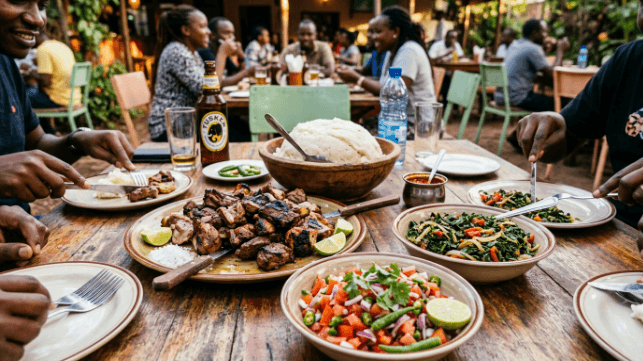
Pilau is a complete meal in itself, the rice and meat cooked together, so it needs little alongside, but a few accompaniments are traditional and much loved. The classic partner is kachumbari, a fresh salad of sliced tomatoes and onions with chilli and lime, whose crisp, tangy freshness cuts through the rich, spiced rice beautifully, which you can read about in our guide to kachumbari. Pilau is often served with kachumbari on the side and perhaps some extra meat or a dab of chilli.
It is eaten at all sorts of occasions, from a weeknight family dinner to a grand wedding feast, and it is a particular favourite during Ramadan and Eid, at Christmas, and at other celebrations along the coast and inland. Because it is a one-pot dish, it is practical to cook in quantity for a crowd, which suits its festive role. Served fragrant and steaming, with its tender meat and browned, spiced rice, pilau is warming and satisfying. For anyone new to East African food, a plate of pilau with kachumbari is a wonderful, approachable introduction.
Where to buy the spicies in the UK
Making pilau at home in Britain is very achievable, and the key is the spice blend. African and South Asian food shops that serve East African communities sell pilau masala ready mixed, which takes the guesswork out of gathering each spice, though the individual whole spices, cumin, cardamom, cloves and cinnamon, are widely sold too for those who like to blend their own. With a good pilau masala, some rice, onions and your chosen meat, you have almost everything you need. Basmati or another long-grain rice is usual.
If you are new to pilau, the shopkeeper can point you to a good pilau masala and explain how to brown the onions properly, which is the secret to the colour and flavour. You can find African food stores near you or look up Caribbean food stores near you. Many East African and Swahili restaurants serve pilau, often with kachumbari, which is a great way to taste it before making your own.
Frequently asked questions
What is pilau?
Pilau is a fragrant, one-pot spiced rice dish loved across East Africa, especially the Swahili coast of Kenya and Tanzania. Rice is cooked together with meat and a warm blend of spices called pilau masala, along with deeply browned onions that give the rice its characteristic tan colour and rich, savoury flavour. It is both an everyday and a celebration dish.
What is pilau masala?
Pilau masala is the warm, aromatic spice blend that flavours pilau, typically including cumin, cardamom, cloves, cinnamon and black pepper, and sometimes coriander and nutmeg. It is savoury and warmly spiced rather than hot, and it is added to the pot so its fragrance infuses the rice and meat. It is sold ready mixed, making pilau easy to make at home.
Why is pilau brown?
Pilau gets its characteristic tan or brown colour naturally, mainly from onions. A generous quantity of sliced onions is fried slowly until deeply browned, almost caramelised, and this, together with the warm spices and the meat juices, colours and flavours the rice as it cooks. The colour is not from artificial colouring but from the browned onions and spices.
What is the difference between pilau and biryani?
Pilau is a one-pot dish in which rice, meat and spices are cooked together, so the flavours meld and the rice is a uniform brown throughout, and it is generally simpler and more everyday. Biryani is usually more elaborate and layered, with rice and a spiced meat sauce cooked partly separately then layered, often richer and reserved for special occasions.
Where can I buy the spices in the UK?
African and South Asian food shops serving East African communities sell pilau masala ready mixed, as well as the individual whole spices such as cumin, cardamom, cloves and cinnamon. With a good pilau masala, rice, onions and meat you have almost everything you need. The shopkeeper can recommend a blend and explain how to brown the onions for colour and flavour. African Stores lists African and Caribbean food shops across the UK, so you can find one near you.