What Is Jerk Seasoning? The Jamaican Blend Explained
Quick answer
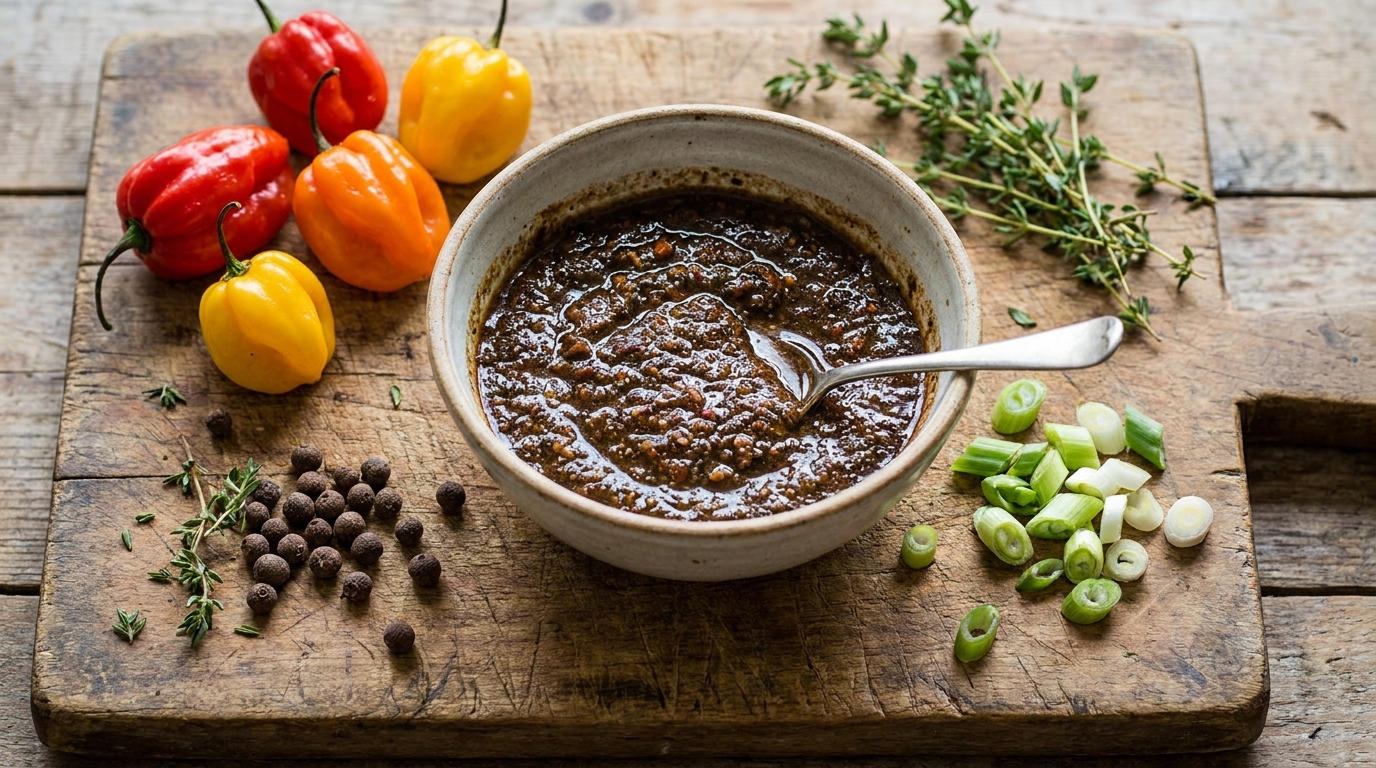
Jerk seasoning is a Jamaican spice blend used to season and marinate meat, most famously chicken and pork, before it is grilled or slow-cooked over wood or coals. Its two signature ingredients are scotch bonnet peppers and allspice, also called pimento, alongside thyme, spring onion, garlic, ginger and warm spices such as cinnamon and nutmeg. It comes as either a dry rub or a wet marinade. The word jerk refers both to the seasoning and to the cooking method it belongs to.
- Other names
- jerk rub, jerk marinade
- Origin
- Caribbean
- Type
- Spices
Jerk is one of those foods that carries a whole culture in its scent. In Jamaica it is street food and celebration food at once, cooked in halved oil drums at the roadside, sold at cookouts and family gatherings, and argued over with real affection, because everyone believes their auntie or their local jerk man makes it best. That pride is earned. Jerk is a living link to the Maroons who first seasoned and smoked meat in the island's hills, turning the spices around them into a way of eating that outlasted everything set against it.
That heritage travelled. Across the UK, Caribbean communities kept jerk alive at Notting Hill Carnival, at church halls and family kitchens, at the corner takeaway where the smell of pimento smoke pulls people in from the street. When a Jamaican family in Britain sets a jerk chicken on the table, they are not just serving dinner. They are keeping a thread of home unbroken, one that runs from the Jamaican mountains to a British back garden. That is why the seasoning matters more than any single recipe. Get the blend right, cook it with patience, and you are taking part in something much older and much bigger than one meal.
What Jerk seasoning is
Jerk seasoning is the heart of one of Jamaica's best-known food traditions. At its simplest it is a blend of chillies, herbs and warm spices used to coat meat before it is cooked slowly over fire. But jerk is more than a flavour. The word describes both the seasoning and the method, a way of cooking that fills the air with smoke and spice long before the food reaches the plate.
When people talk about jerk chicken or jerk pork, they mean meat that has been rubbed or marinated in this blend and then cooked low and slow, traditionally over pimento wood. The result is a deep, layered heat that is hot from the scotch bonnet, sweet and woody from the allspice, and green and fresh from the thyme and spring onion. It is a taste that carries the whole island in it. If you are new to the wider table it belongs to, our guide to Jamaican food sets the scene.
The Maroon origins
Jerk did not begin as a restaurant dish. Its story reaches back to the Maroons, communities of formerly enslaved Africans who escaped into Jamaica's mountainous interior and built free settlements there from the seventeenth century onward. Living in rugged, forested country, the Maroons developed ways of preserving and cooking meat that suited a life away from towns and away from those who hunted them.
They seasoned wild hog heavily with local spices, above all the pimento that grew across the island, and cooked it slowly in pits or over smouldering wood. The heavy spicing and the slow smoke helped preserve the meat and kept its scent low, which mattered for people who could not afford to be found. Over generations, this technique blended African cooking knowledge with the ingredients of Jamaica and the influence of the island's Indigenous Taino people, whose methods of smoking meat fed into the tradition too. What began as survival cooking in the hills became, over time, a national treasure. To understand jerk is to understand that heritage, not just a shopping list of spices.
The core ingredients
Every cook and every family has their own blend, but a true jerk seasoning is built around a recognisable core. The two ingredients you cannot skip are scotch bonnet and allspice.
- Scotch bonnet: the fiery, fruity chilli that gives jerk its signature heat. It is hot, but it also brings a sweetness that plain chilli powder never will. You can read more in our scotch bonnet glossary entry.
- Allspice, or pimento: the single most important warm spice in jerk. In Jamaica it is called pimento, and its berries, leaves and wood all feed into the flavour. One berry tastes like a mix of cinnamon, clove and nutmeg at once, which is where its English name comes from.
- Thyme: fresh thyme gives the blend its green, herbal backbone.
- Spring onion: often called scallion, it brings a mild, savoury sharpness.
- Garlic and ginger: these build depth and a gentle warmth underneath the heat.
- Cinnamon and nutmeg: small amounts of these round the blend out and lift its sweeter, festive notes.
Many cooks add more besides, such as brown sugar, soy sauce, lime, black pepper or a splash of white vinegar. Those extras shift the balance, but they sit on top of that same foundation of scotch bonnet, pimento and thyme.
Dry rub or wet marinade
Jerk seasoning comes in two forms, and knowing the difference helps you cook with it well.
A dry rub is the blend in powder form, with dried and ground spices massaged straight onto the meat. A rub is quick, keeps for a long time in the cupboard, and gives a firmer, more concentrated crust on the outside of the food. It is a good choice when you are short on time or cooking over high heat.
A wet marinade is the same flavours loosened into a paste or sauce, usually with fresh scotch bonnet, spring onion, garlic and ginger blended together with oil, vinegar, soy or citrus. A marinade needs time, ideally several hours or overnight, so the flavour can work its way deep into the meat. It gives a juicier, more rounded result and is the traditional route for jerk chicken and pork.
Neither is more correct than the other. Many home cooks keep a jar of dry rub for weeknights and make a fresh wet marinade for a weekend gathering. If you want to put a marinade to work, our jerk chicken recipe walks through it step by step.
What to use it on and how
Chicken and pork are the classics, and for good reason. Bone-in chicken thighs and legs, or pork shoulder, stand up to the heat of the seasoning and to long, slow cooking. The method is simple in principle: coat the meat well, let it sit, then cook it slowly over indirect heat, whether that is a barbecue, a grill or a low oven, so the outside chars while the inside stays tender.
But jerk seasoning is far more versatile than that. It is excellent on firm white fish, whole snapper, prawns and salmon, which need only a short marinade and a quick cook. It brings vegetarian and vegan food to life too, on tofu, jackfruit, aubergine, sweetcorn on the cob and roast root vegetables. A spoonful stirred into rice, a pot of beans or a soup carries the flavour through a whole dish without any grilling at all.
A few practical notes. Scotch bonnet is genuinely hot, so start with less than you think you need and build up. Wear gloves or wash your hands well after handling fresh ones. And give a marinade time whenever you can, because the difference between twenty minutes and overnight is the difference between a coating and a proper jerk.
Where to buy jerk seasoning in the uk
You have two good routes in the UK. The first is ready-made. Jamaican brands are widely stocked, and a jar of paste or a bag of dry rub is an easy way to start. The second is to build your own, which is where a well-stocked African and Caribbean shop earns its place, because that is where you will find fresh scotch bonnet, real Jamaican pimento, bunches of thyme and spring onion, and the whole spices that a supermarket often lacks.
Independent Caribbean shops and market stalls are the natural home for these ingredients, and staff there will often point you to the brand or the fresh chillies they rely on themselves. To find a shop near you, browse Caribbean food stores near you or search your own area on africanstores.co.uk. We help people find the African and Caribbean shops, restaurants and services closest to them, so you can pick up everything a real jerk blend needs without a long journey.
Key takeaways
- Jerk seasoning is the flavour base of jerk cooking, a Jamaican tradition with roots in the island's Maroon communities.
- Scotch bonnet and allspice, known in Jamaica as pimento, are the two ingredients that make it taste like jerk rather than any other spice mix.
- It comes in two forms: a dry rub for a firmer crust and a wet marinade for deeper, juicier flavour.
- It works on far more than chicken and pork, from fish and prawns to tofu, sweetcorn and roast vegetables.
- You can buy it ready-made or build your own from spices stocked at African and Caribbean shops across the UK.
Frequently asked questions
Is jerk seasoning very spicy?
It can be, because scotch bonnet is a hot chilli. But heat is only part of it, and the sweetness and warmth of the allspice and other spices balance it out. If you are worried, use a milder ready-made blend or reduce the scotch bonnet in a homemade one. You control how hot it ends up.
What is the difference between jerk seasoning and jerk marinade?
They are the same flavours in two different forms. Jerk seasoning usually means the dry spice blend or rub, while jerk marinade is that blend loosened into a wet paste or sauce with fresh ingredients. The rub gives a firmer crust and the marinade soaks deeper into the meat. Many cooks keep both.
What is pimento in jerk seasoning?
Pimento is the Jamaican name for allspice, and it is the most important warm spice in any jerk blend. One little berry tastes like cinnamon, clove and nutmeg together. Do not confuse it with pimento peppers, which are a different thing altogether.
Can I use jerk seasoning on things other than meat?
Absolutely. It is wonderful on fish, prawns, tofu, jackfruit, sweetcorn and roast vegetables, and it can be stirred into rice, beans and soups. Anything that likes a warm, spicy lift takes well to jerk.
Where can I buy jerk seasoning in the UK?
Ready-made jars and dry rubs are widely available, and independent African and Caribbean shops are the best place for both those and the fresh ingredients to make your own. Search your area on africanstores.co.uk to find a shop near you. African Stores lists African and Caribbean food shops across the UK, so you can find one near you.
Join African Stores free
Save shops, follow the ones you love and get your free member card.
Your free member card: show it at participating shops for member offers.
Get the app