Dates: Nutrition, Benefits and How to Enjoy Them
A friendly guide to dates, from Medjool to Deglet Nour, what they bring nutritionally, how to enjoy them and where to find good ones in the UK.
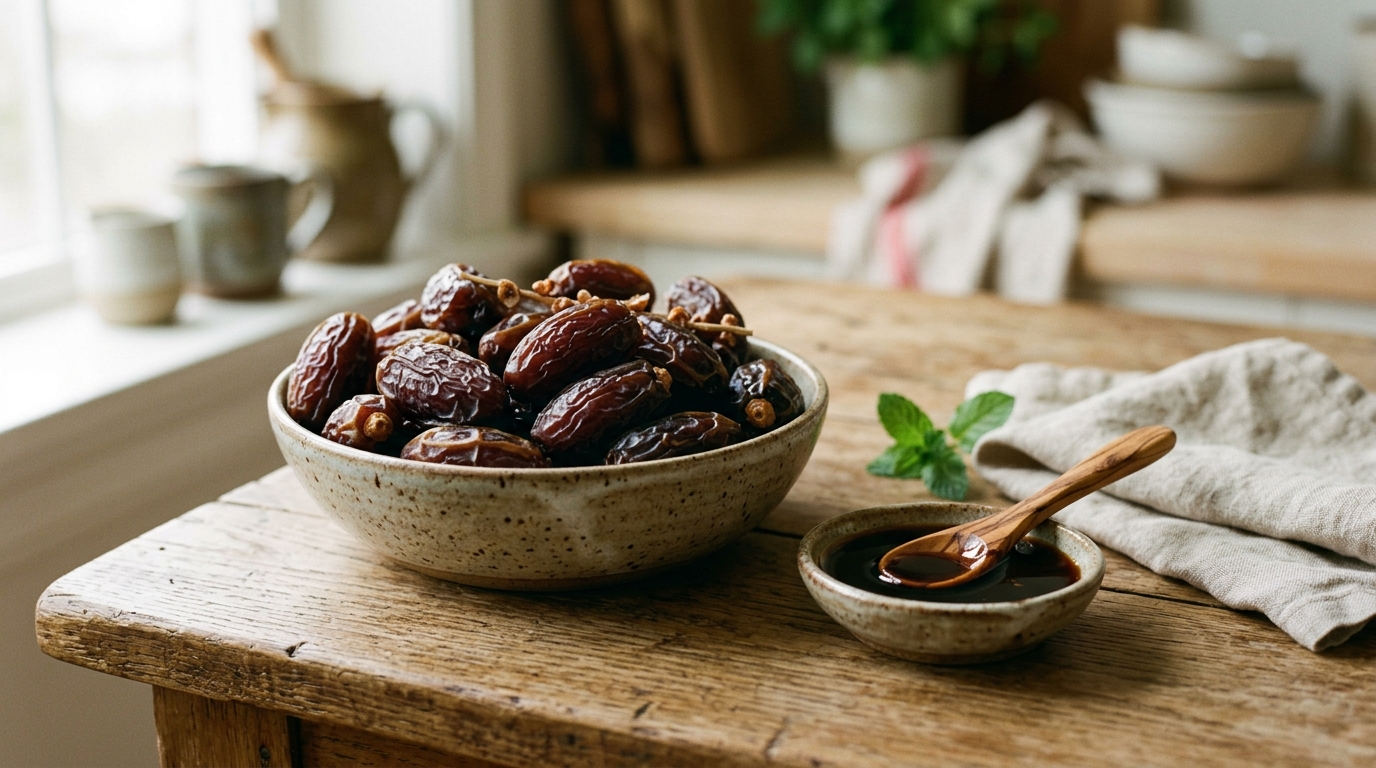
Quick answer
Dates are the sweet, chewy fruit of the date palm, eaten fresh or dried across North Africa and the Middle East. They are naturally high in sugar, which makes them a quick source of energy, and they also provide fibre, potassium and some antioxidants. Popular varieties include the large, soft Medjool and the firmer Deglet Nour. Because they are high in natural sugar, enjoy them in modest portions, especially if you are watching your blood sugar.
Add African Stores as a preferred source on Google. You'll see more of our guides in Google's Top Stories when you search.
Add as a preferred sourceWhat to remember
- Dates are the fruit of the date palm, sold fresh or dried, and prized across North Africa and the Middle East.
- Medjool are large and soft, Deglet Nour are firmer and less sweet, and there are many more besides.
- They give quick energy from natural sugars, along with fibre, potassium and some antioxidants.
- They are wonderful stuffed, added to tagines, chopped into porridge, or blended into date paste or syrup as a natural sweetener.
- They are high in sugar, so keep portions sensible, and speak to a doctor or dietitian if you are managing diabetes.
The date is not just a fruit for anyone with roots in North Africa or the Middle East, it is a thread back home. It sits in the bowl set out for a visitor, a quiet symbol of welcome and generosity that needs no words. It marks the sweet moment at the end of a fasting day in Ramadan, when the whole household pauses together at sunset over a single date and a glass of water. It is there at celebrations, weddings and Eid, offered with tea and coffee, folded into pastries, stuffed with nuts and set out on the good plates. For families who have moved to the UK, keeping a box of dates in the cupboard is a small, steady way of keeping that heritage close, a taste that carries whole generations and gatherings in it. It is the flavour of hospitality, of patience, and of home.
What are dates?
Dates are the fruit of the date palm, a tree that has been cultivated for thousands of years across the warm, dry lands of North Africa and the Middle East. They grow in heavy bunches high on the palm and are picked as they ripen and sweeten. You will find them sold fresh, semi-dried or fully dried, and it is the dried and semi-dried forms that most people in the UK meet: glossy, deep brown, chewy and honey sweet.
What makes a date so distinctive is that concentrated natural sweetness. As the fruit ripens and loses moisture, its sugars become more intense, which is why a single date can taste almost like a sweet on its own. That has made dates a staple food, a natural sweetener and a treat all at once, long before refined sugar was ever widely available.
The main varieties
There are hundreds of date varieties, but a few are worth knowing by name.
Medjool dates are the ones people tend to fall for first. They are large, plump and soft, with a rich, almost caramel or toffee flavour. Because they are big and easy to open, they are the natural choice for stuffing.
Deglet Nour, sometimes called the queen of dates, are firmer, drier and a little less sweet, with a gentle nutty note. They hold their shape well, which makes them handy for chopping into bakes and cooking.
Beyond those two you will come across many more at North African and Middle Eastern shops: Sukkari, soft and pale gold and very popular in the Gulf; Ajwa, a prized soft dark date from Medina; Barhi, sometimes sold fresh and yellow; and Zahidi, a drier golden date often used in cooking. Part of the pleasure is trying a few and finding the ones you love.
Find African and Caribbean shops near you
Free to use, no sign-up needed.
Dates in north african and middle eastern food
In North African and Middle Eastern kitchens, dates are everywhere and always have been. They sweeten and deepen savoury cooking as much as they feature in sweets. In Moroccan cooking they melt into slow tagines alongside lamb, chicken, almonds and warm spices, balancing the salt and the spice with a soft sweetness. You can read more about that tradition in our guide to Moroccan food.
They are just as at home in Egyptian kitchens, where they turn up in pastries, stuffed with nuts, or simply set out with tea for a guest. Our guide to Egyptian food sits in the same wider food world, where dates are a everyday pantry staple rather than a special occasion luxury. Across the region a bowl of dates offered to a visitor is a small act of welcome, a way of saying sit, rest, you are looked after here.
Dates and ramadan
For many families the most meaningful moment for dates comes during Ramadan. It is a long-held tradition to break the daily fast with a date and a sip of water at sunset, before the main meal of iftar. There is a gentle practicality to it: after a long day without food, the natural sugars in a date give the body a quick, easy lift, and something small and sweet is kind on an empty stomach. Beyond the practical side, the date carries deep spiritual and cultural meaning, a quiet, shared ritual repeated in millions of homes each evening through the month. For families across the UK, keeping good dates in the house for Ramadan is a way of holding on to that heritage.
The nutrition in general terms
In general terms, dates are a whole fruit that brings a few useful things to the table. Their headline feature is natural sugar, which is what gives that quick hit of energy. They also contain dietary fibre, which supports digestion and helps the body handle those sugars a little more steadily than refined sweets would. They are a reasonable source of potassium, a mineral that plays a part in normal muscle and nerve function, and they contain some antioxidant compounds, as many dried fruits do.
It is worth being clear about what this means. Dates are a genuinely nourishing whole food, and they are a better choice than many processed sweets when you fancy something sweet. But they are food, not medicine. For a fuller nutritional breakdown you can look at reliable sources such as the British Nutrition Foundation or the NHS pages on a balanced diet.
A sensible word on sugar
Here is the honest note. Dates are high in natural sugar, and drying concentrates it further, so the calories and sugars add up quickly if you eat a lot in one sitting. That does not make them bad, it just means portion sense matters. A few dates as a snack or a natural sweetener is a sensible way to enjoy them. If you are managing your blood sugar, living with diabetes, or watching your sugar intake for any reason, be mindful of how many you have and how they fit into your day.
The information here is general and for interest only. It is not medical or dietary advice, and dates are not a treatment for any condition. If you have questions about your own diet, blood sugar or health, please speak to a doctor, a pharmacist or a registered dietitian who knows your circumstances. They can give you advice that actually fits you.
How to enjoy them
The simplest way to enjoy a date is on its own with a cup of tea or coffee, and that is a fine place to start. From there the options open up.
Stuffed dates are a classic. Slit a Medjool, remove the stone and tuck in something that plays against the sweetness: a whole almond or walnut, a little soft cheese, a smear of nut butter, or a piece of orange peel. They make an easy sweet bite for guests.
In cooking, dates melt beautifully into savoury dishes. Add a handful to a lamb or chicken tagine and they soften into the sauce, rounding off the spices. Chop them into your morning porridge and they sweeten the whole bowl as they warm through. Scatter them through rice dishes, grain salads or a tray of roasted vegetables.
They also make a wonderful natural sweetener. Soak stoned dates in warm water, then blend them into a smooth date paste you can spoon into porridge, smoothies, baking and energy balls in place of sugar. Date syrup, sold ready-made in most North African and Middle Eastern shops, is a thick, dark, treacly sweetener that is lovely drizzled over yoghurt, pancakes or ice cream, or stirred into dressings and marinades. Remember it is still sugar, so use it as you would honey, with a light hand.
Where to buy good dates in the UK
The best dates in the UK are found at African, North African and Middle Eastern food shops, where they are a core part of what people come in for. These shops usually carry a proper range: soft Medjool by the box, firmer Deglet Nour, and often Sukkari, Ajwa and others you will not see in a standard supermarket, plus date syrup and date paste on the shelf. Around Ramadan especially, they stock up heavily, and it is the natural place to find fresh, good-quality boxes.
Whole boxed dates from a specialist shop tend to be plumper and fresher than the pressed blocks sold elsewhere, and the staff can usually point you to the softest, sweetest ones. You can find African and North African food stores near you wherever you are in the UK. We help people find the shops, restaurants and services that stock the ingredients of home, wherever they are in the UK.
Your questions
Frequently asked questions
Dates are a nourishing whole fruit that gives you natural energy along with fibre, potassium and some antioxidants. They are a better choice than most processed sweets when you want something sugary. Just remember they are high in natural sugar, so enjoy them in sensible portions rather than by the handful.
Medjool dates are large, soft and rich, almost like toffee, which makes them perfect for eating on their own or stuffing. Deglet Nour are firmer, drier and a little less sweet, so they hold their shape well and are great for chopping into cooking and baking. Both are lovely, they just suit different jobs.
Dates are high in natural sugar, so anyone managing diabetes or blood sugar should be mindful of portions and how dates fit into their overall day. This is general information, not medical advice, so the best thing is to speak to your doctor or a registered dietitian who can advise on your own situation.
There is no single right number, it depends on your diet and your health. A few dates as a snack or sweetener is a sensible amount for most people. If you are watching your sugar intake, keep the portion small and ask a doctor or dietitian if you are unsure.
Your best bet is an African, North African or Middle Eastern food shop, where you will find whole boxed Medjool, Deglet Nour and often Sukkari and Ajwa, plus date syrup and paste. You can find shops near you through our listings, including African and North African food stores in London. African Stores lists African and Caribbean food shops across the UK, so you can find one near you.
Was this guide helpful?
Free membership
Save this guide and hear when new shops open near you
Save shops, follow the ones you love and get your free member card to show at participating shops for member offers.
Keep reading
More guides
- What isWhat Are the Benefits of Tiger Nuts? A Plain GuideTiger nuts are small, sweet, chewy tubers, not actually nuts, long loved in West African and Spanish kitchens, and this plain guide covers their reputed benefits, how to use them and where to buy them.Read article
- What isWhat Are the Benefits of Turmeric?Turmeric is the golden spice used across African, Caribbean and Asian kitchens.Read article
- What isWhat Is Fenugreek?Fenugreek, known as methi, gives a warm, maple-like note to kitchens across North Africa, Ethiopia, India and the Caribbean.Read article