The short answer
Moroccan food is the cooking of Morocco in North Africa, built on slow-cooked stews, steamed couscous, warm bread and a deep bench of spices. Its best known dishes are the tagine, a stew named after the conical clay pot it cooks in, and couscous, traditionally eaten on Fridays. The flavours come from spice blends such as ras el hanout, the chilli paste harissa, and store cupboard staples like preserved lemons and olives. Sweet mint tea is served throughout the day and at every gathering.
What to remember
- A tagine is two things at once: the shallow conical clay pot, and the slow-cooked stew of meat, vegetables and fruit made inside it.
- Couscous is not a grain but a tiny rolled semolina, steamed until light and served on Fridays across much of Morocco.
- The Moroccan store cupboard does the heavy lifting: ras el hanout, harissa, preserved lemons, olives and good olive oil turn simple ingredients into something special.
- Sweet and savoury sit happily side by side, from lamb with prunes and honey to the sugar-dusted pigeon or chicken pie called pastilla.
- Food in Morocco is made to be shared from one central dish, and mint tea is poured to welcome anyone who arrives.
There is a rhythm to a Moroccan table that says more than any single dish. The food arrives in the middle, one steaming tagine or a mountain of couscous, and everyone leans in with bread in hand and eats from the same plate. No one is served a portion sealed off as their own. You reach for the part of the dish in front of you, and the best pieces of meat are nudged across to the guest or the elder without a word. Around it, the mint tea keeps coming, poured high and sweet, a small performance repeated all day long.
This is a cuisine that measures itself not in courses but in welcome, where the question is never whether there is enough for one more, because there always is. That spirit travels. In kitchens across the UK, the same pot, the same tea, the same open door carry a whole country's idea of home to a new table.
What are moroccan food?
Moroccan food comes from the northwest corner of Africa, where the Atlantic and Mediterranean meet the Atlas mountains and the edge of the Sahara. It carries the fingerprints of everyone who has passed through: Amazigh (Berber) communities who have farmed the land for thousands of years, Arab traders who brought spices and new techniques, Andalusian families who arrived from Spain, and the coastal trade that linked Morocco to the wider world. The result is a cuisine that balances savoury and sweet without apology, leans hard on aromatic spice rather than raw heat, and treats a shared meal as an act of welcome.
If you are cooking it in Britain, most of what you need is closer than you think. North and West African food stores stock the spices, preserved lemons, couscous and olives that make these dishes sing, and you can find African and North African food stores near you through pages like African and North African food stores in London and food stores in Manchester.
Tagine
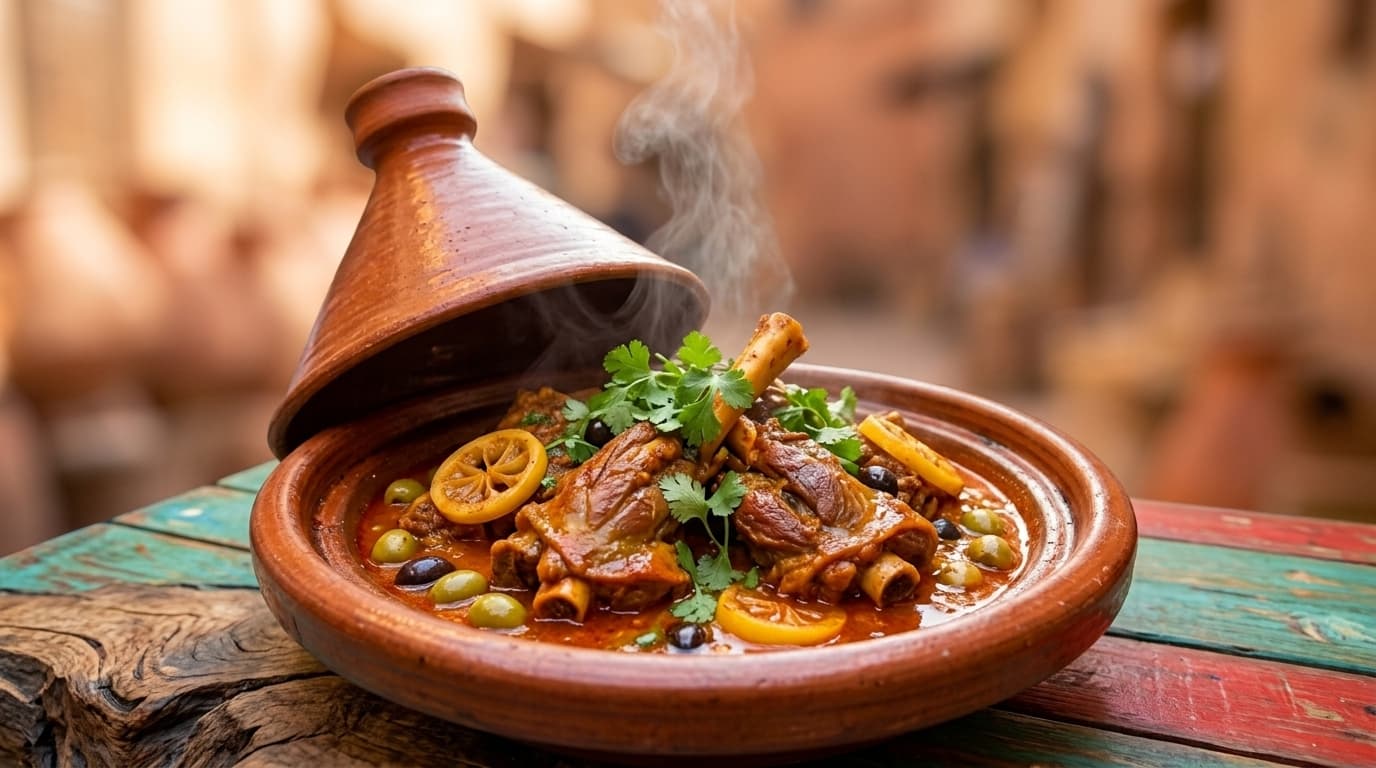
The word tagine means two things. It is the heavy clay pot with a tall conical lid, and it is the dish cooked inside it. The shape is clever: steam rises into the cone, cools, and trickles back down, so the food braises gently in its own moisture with very little added liquid. A tagine is slow food. Lamb with prunes, almonds and honey; chicken with preserved lemon and olives; kefta (spiced minced meat) simmered with eggs cracked on top; or a vegetable tagine bright with carrots, chickpeas and squash. You do not need the clay pot to make one, a heavy lidded casserole works, but the pot is worth seeking out if you want the real thing.
Couscous
Couscous is often mistaken for a grain. It is actually tiny beads of semolina, rolled and steamed rather than boiled, until each grain is separate and light. Traditionally it is cooked in the top half of a two-part pot called a couscoussier, set over a bubbling stew so the steam carries flavour up through it. In many Moroccan homes couscous is the Friday meal, served after midday prayers, piled high and topped with slow-cooked meat and seven vegetables. It is generous, communal food, made to feed a full table.
Harira and the soups
Harira is Morocco's most famous soup, a thick, comforting blend of tomato, lentils, chickpeas, herbs and often a little lamb, finished with a squeeze of lemon. It is eaten year round, but it comes into its own during Ramadan, when it is the dish that breaks the fast at sundown, usually alongside dates and sweet pastries. Every family has its own version, and the smell of it cooking is tied to evenings at home.
Pastilla mechoui kefta and the big plates
Pastilla, also spelled bastilla, is the showpiece of Moroccan celebration food: a pie of thin warqa pastry wrapped around slow-cooked pigeon or chicken and spiced almonds, then dusted with icing sugar and cinnamon. That sweet and savoury contrast catches people off guard the first time, and wins them over by the second bite. Mechoui is a whole lamb or shoulder roasted slowly until the meat pulls apart at a touch, food for weddings and feasts. Kefta is seasoned minced lamb or beef, shaped onto skewers and grilled, or dropped into a tomato tagine. These are the dishes that anchor a celebration.
Bread and the everyday
No Moroccan meal is complete without bread. Khobz, the round everyday loaf, is on every table and doubles as a utensil, torn and used to scoop up stew. Msemen is a laminated, pan-fried flatbread, folded into flaky squares and eaten at breakfast with honey or cheese, or with tea in the afternoon. Bread here is not a side thought, it is the tool that lets everyone eat together from shared dishes.
What makes the moroccan food outstanding?
The soul of Moroccan cooking lives in the spice tin. Ras el hanout is the famous one, a blend whose name means top of the shop, the best a merchant has to offer. It can hold a dozen or more spices, from cumin, coriander and ginger to cinnamon, rosebud and warming notes of clove and nutmeg, and no two blends are identical. Harissa is the fiery counterpoint, a paste of red chillies, garlic and spices that adds heat and depth. Alongside them sit the great preservers: preserved lemons, salted and softened until the peel turns silky and intense, and olives cured in their many colours. Add good olive oil and a handful of fresh coriander and mint, and you have the backbone of the whole cuisine. These are exactly the items worth buying from a specialist North African grocer rather than a supermarket, where the quality and the range are on another level.
Mint tea and the art of welcome
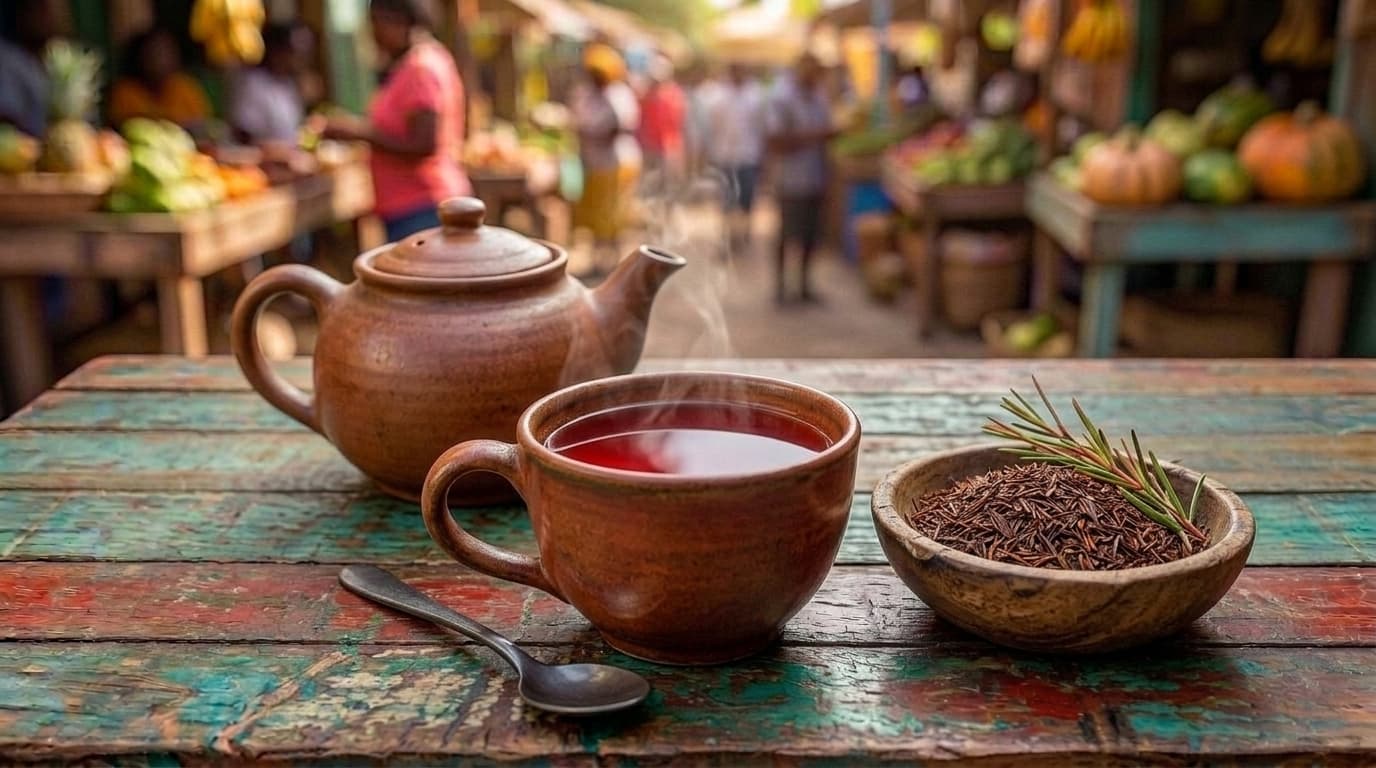
Moroccan mint tea, atay, is green tea brewed strong with a bundle of fresh spearmint and plenty of sugar, then poured from a height so it lands with a frothy head. It is far more than a drink. It is offered the moment a guest arrives, poured out again and again through a meal, and made with real ceremony. To refuse the first glass is unthinkable, and the saying goes that the three glasses of a sitting are as bitter as life, as strong as love, and as gentle as death. It is hospitality you can taste.
Finding moroccan food in the UK
Moroccan and wider North African food has quietly put down roots across Britain, and you do not need to travel to find it. North and West African food stores carry couscous, ras el hanout, harissa, preserved lemons, olives, warqa pastry and the fresh herbs a good tagine needs. If you would rather someone else did the cooking, African restaurants near you will point you to kitchens serving tagine and couscous, and for a party or a family gathering caterers near you can put a full spread on the table. To stock your own kitchen, start with the food stores listed for London and Manchester.
Frequently asked questions
What is the difference between a tagine the pot and a tagine the dish?
Both are correct. The tagine is the conical clay pot, and it is also the name of the slow-cooked stew you make in it. The pot's shape traps steam and returns it to the food, so the stew braises gently with very little liquid.
Is couscous a type of pasta or a grain?
Neither, really. Couscous is tiny beads of semolina wheat that are rolled and then steamed rather than boiled. That steaming is what keeps the grains light and separate rather than sticky.
What does ras el hanout taste like?
Warm, complex and aromatic rather than hot. It is a blend that can hold a dozen or more spices, so it carries sweet notes of cinnamon and rosebud alongside earthy cumin, coriander and ginger. Every shop and family makes it a little differently.
Where can I buy Moroccan ingredients in the UK?
North and West African food stores are your best bet for ras el hanout, harissa, preserved lemons, couscous, olives and fresh herbs. You can find stores near you through the London and Manchester food store pages.
Is Moroccan food very spicy?
Not usually. It is deeply spiced but gently heated. The warmth comes from aromatic blends like ras el hanout, and if you want real chilli heat you add harissa yourself, so you stay in control of how fiery your plate gets.