The short answer
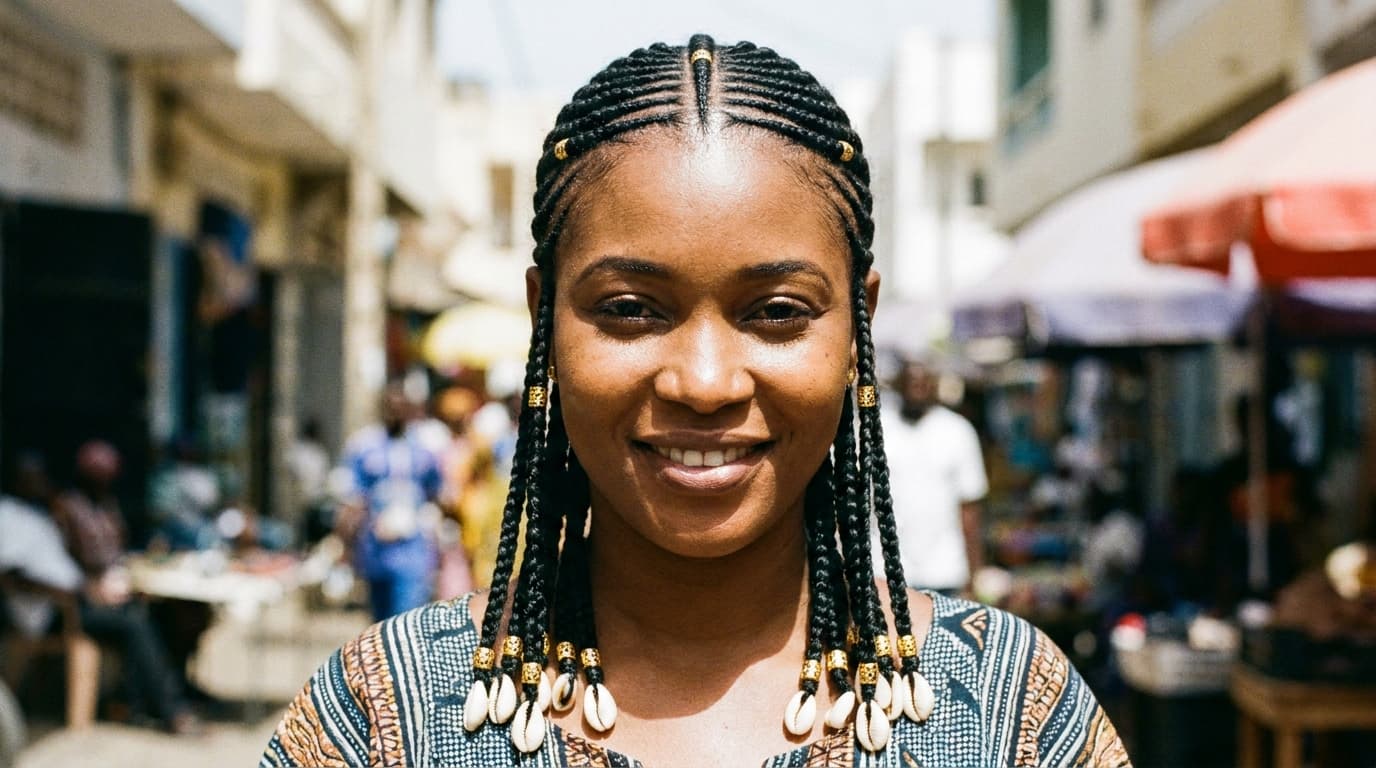
Fulani braids are a distinctive braided hairstyle rooted in the Fulani, or Fulbe, people of West Africa and the Sahel. The style is recognised by its patterns rather than a single fixed look: typically a mix of cornrows braided towards the back, one or more braids running down the centre of the head, braids framing the face at the sides, and often decorative beads or cowrie shells on the ends. Like other braided styles they are usually made with added braiding hair and are protective, keeping the natural hair tucked away. Because they carry real cultural heritage, they are worn both as an everyday style and as a nod to that West African tradition. Braiders offering Fulani braids work in salons and from home across the UK.
What to remember
- Fulani braids are a patterned braided style rooted in the Fulani people of West Africa and the Sahel.
- They are known for a signature layout: cornrows towards the back, a braid or two down the centre, side braids framing the face, and often beads.
- Like other braids they are usually made with added hair and act as a protective style for the natural hair.
- The look is flexible, with many variations, and beads or cowrie shells are a classic finishing touch.
- They are installed by a professional braider and, with good care, last several weeks.
For many people of West African heritage in Britain, Fulani braids are a way of wearing home on their head. The patterns, the beads, the cowrie shells all carry the memory of a culture and a continent, of grandmothers and aunties and the long tradition of braiding as both craft and connection. To ask for Fulani braids is often a quiet, deliberate choice to honour that heritage, and to see it reflected back in the mirror far from where it began.
There is beauty and pride in that. Braiding has always been more than styling in African cultures, it is skill passed down, time shared, and identity expressed, and Fulani braids hold all of that in a single look. Finding a braider who understands the style and its roots, and wearing it out into the world, is a small celebration of where you come from. That sense of belonging, alongside the beauty of the braids themselves, is why the style means so much to so many.
What Fulani braids actually are
Fulani braids are best understood as a recognisable pattern rather than one rigid style. The classic version combines a few elements: neat cornrows braided along the scalp, often flowing towards the back, one or more braids running down the middle of the head from front to back, and looser braids at the sides that frame the face. The ends are frequently finished with beads, and sometimes with cowrie shells, which are part of the signature look. Put together, these elements make Fulani braids instantly identifiable even though no two heads are ever quite the same.
Because it is a pattern, the style leaves plenty of room for personal touches. Braiders mix cornrows and individual braids, vary the partings, add or hold back the beads, and adjust the length and thickness to suit the wearer. That flexibility is part of why the style has stayed so popular and travelled so widely. It is a look with a clear identity that still bends to individual taste.
Fulani braids sit within the broader world of Afro-textured braiding, and you can read about related styles in our guides to cornrows, box braids, and knotless braids.
The Heritage Behind Fulani Braids
What sets Fulani braids apart from many other styles is that they carry their heritage right in the name. The Fulani, also called Fulbe or Peul, are one of the largest ethnic groups in West Africa and the Sahel, spread across many countries and historically known as pastoralists moving with their herds. Braiding and hair adornment have long been part of Fulani culture, and the patterns, the central braids and the use of beads, cowries and gold ornaments all draw on that tradition.
Because of this, Fulani braids are sometimes grouped under the broader label of tribal braids, but the specific name honours a specific people and their long-standing styling traditions. Wearing them, and knowing where they come from, is part of appreciating them properly. The style is a living link to a West African culture, carried and reinterpreted across the diaspora, and that heritage is a big part of why it resonates so strongly with people who wear it today.
How Fulani Braids differ from other Styles
It helps to see where Fulani braids sit next to the braided styles they are often confused with. Plain cornrows are braids that lie flat against the scalp in continuous rows, and while Fulani braids use cornrows, they combine them with free-hanging side braids and a central pattern rather than being cornrows alone. Box braids, by contrast, are individual braids in a full head of square sections, without the fixed patterned layout that defines the Fulani look.
The defining features of Fulani braids are really the arrangement and the details: the mix of braided-down and hanging braids, the face-framing pieces, the central braid, and the beads. That is what makes them read as Fulani rather than as generic braids. A skilled braider can create the pattern at different sizes and lengths, and can lean more traditional or more modern depending on what you ask for, which is worth discussing when you book.
How to Care for your Fulani Braids
Fulani braids are cared for much like other braided protective styles, with a little extra attention to any beads. The scalp should be kept clean and moisturised, using gentle cleansing and a light oil or moisturising spray to stop it drying out and itching, and the braids themselves benefit from being wrapped in a satin or silk scarf at night, or from a satin pillowcase, to reduce frizz and friction. Beaded ends should be handled gently, especially around the face and while sleeping, so they do not tug on the hair.
As with all braided styles, the tension matters. Braids that are put in too tightly can stress the hairline and edges, so it is worth asking your braider to keep things comfortable, particularly around the delicate side and front sections that frame the face. And like other braids, Fulani braids should not be left in for too many weeks, and are best taken down gently with plenty of moisture. Looked after this way, the style protects the hair underneath while it is in, which fits with the wider approach in our guide to caring for [4c hair](/blog/4c-hair).
Where to get your Fulani Braids done in the UK
Fulani braids are offered by professional braiders across Britain, in hair salons and from home, and they are a popular request wherever there are African and Caribbean communities. Because the style relies on a well-executed pattern, it is worth finding a braider experienced in Fulani or tribal braids specifically, and looking at photos of their previous work to check the partings, the neatness of the cornrows and the placement of the side braids are the look you want.
You can find African hair salons near you to book a braider, and for the braiding hair, beads, cowrie shells, edge control and scarves that go with the style, an Afro hair and beauty shop near you will have what you need. Bringing a reference photo to your appointment and talking through the pattern and the beads beforehand helps you and your braider agree on the finished look.
Frequently asked questions
What are Fulani braids?
Fulani braids are a patterned braided style rooted in the Fulani people of West Africa. The classic look combines cornrows braided towards the back, one or more braids down the centre of the head, side braids framing the face, and often beads or cowrie shells on the ends. It is a recognisable pattern rather than a single fixed style.
Where do Fulani braids come from?
They take their name and their patterns from the Fulani, also called Fulbe or Peul, one of the largest ethnic groups in West Africa and the Sahel. Braiding and hair adornment with beads, cowries and gold have long been part of Fulani culture, and the style draws directly on that tradition.
What is the difference between Fulani braids and box braids?
Box braids are individual braids in a full head of square sections without a fixed layout. Fulani braids are defined by their pattern, mixing cornrows braided along the scalp with free-hanging side braids, a central braid and beads. Fulani braids use cornrows as part of the look, whereas box braids do not.
How do you care for Fulani braids?
Keep the scalp clean and moisturised, wrap the braids in a satin or silk scarf at night or use a satin pillowcase, and handle any beaded ends gently. Ask your braider to keep the tension comfortable, especially around the face-framing sections, and do not leave the braids in for too many weeks.
Where can I get Fulani braids in the UK?
Professional braiders offer Fulani braids in salons and from home across the UK. Look for one experienced in Fulani or tribal braids, check photos of their previous work, and pick up braiding hair, beads and aftercare products from an Afro hair and beauty shop. Bringing a reference photo helps you agree the look.