The short answer
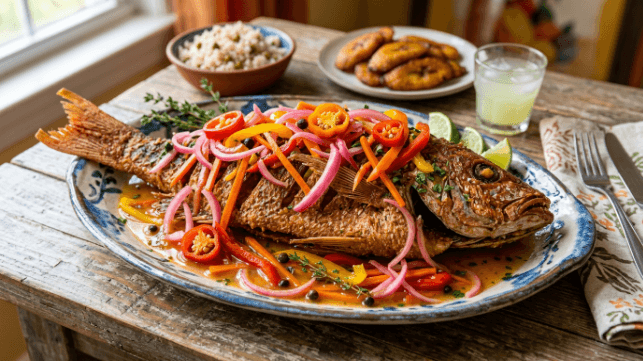
Escovitch fish is a much-loved Jamaican dish of fish, usually a whole fish, that is seasoned and fried until crisp, then topped with a tangy, spicy dressing of vegetables pickled in vinegar. That dressing is what defines the dish: onions, carrot, bell peppers and scotch bonnet are lightly cooked in seasoned vinegar with pimento, or allspice, and poured over the fried fish, where the sharp, spicy, slightly sweet flavours soak in. The method comes from an old technique of preserving fried fish in vinegar, and the name is related to escabeche, found in Spanish and Latin cooking. It is especially associated with Easter and with festive occasions and is often eaten with festival or bammy. In the UK the fish and ingredients are sold by Caribbean and African food shops.
What to remember
- In the UK the fish and ingredients are sold by Caribbean and African food shops.
- It is especially associated with Easter and festive occasions and often eaten with festival or bammy.
- It comes from an old technique of preserving fried fish in vinegar, related to escabeche.
- Escovitch fish is Jamaican fried fish topped with a tangy, spicy pickled vegetable dressing.
For Jamaican and Caribbean families in Britain, escovitch fish is the taste of celebration and, above all, of Easter. It is the whole fried fish crowned with bright, spicy pickled vegetables, the sharp vinegar and warm allspice filling the kitchen, and the dish that means a holiday is here, often eaten with bun and cheese as the season demands. It carries the memory of family gatherings and festive tables, of the particular way a mother or grandmother balanced the sharp, sweet and hot, and making it far from home brings that sense of occasion straight back.
There is heritage in it too, a layered story of a technique that travelled the world and put down roots in Jamaica, remade with scotch bonnet and pimento into something wholly Caribbean. Preparing escovitch fish, getting the fish crisp and the dressing bright and balanced, and setting it down for family or introducing a friend to that tangy, spicy first bite are acts of sharing and welcome. That brightness and celebration, in one colourful dish, are the quiet gift of escovitch fish.
What is Escovitch Fish?
Escovitch fish is a Jamaican dish built on two elements working together: crisp fried fish and a bright, tangy, spicy pickled topping. The fish, most often a whole fish such as snapper, is cleaned, seasoned, and fried until the skin is crisp and golden. Then comes the topping that gives the dish its name and character: a dressing of vegetables that have been lightly cooked in seasoned vinegar, spooned over the fish so its sharp, spicy flavours seep into the flesh. The result is fish that is crisp, savoury and lifted by a vinegary, peppery kick.
It is a dish of contrasts, the rich fried fish against the sharp, fresh, spicy dressing, and that balance is exactly what makes it so appealing. Escovitch fish can be eaten hot soon after the dressing goes on or left for the flavours to develop and eaten later, even cold, which is part of its practicality and charm. It is a staple of Jamaican cooking and a fixture at celebrations, and it belongs to the wider table we cover in our guide to Caribbean food.
The Escovitc dressing
The heart of escovitch fish is the dressing, and it is worth understanding what goes into it. The classic version is made by lightly cooking sliced onions, carrot cut into thin strips, and bell peppers in vinegar, seasoned with pimento berries, which are allspice and a signature Jamaican flavour, and always with scotch bonnet for heat. Some cooks add a little sugar to balance the sharpness, and the vegetables are cooked just enough to soften slightly while keeping some crunch. The whole tangy, spicy, colourful mixture is then poured over the fried fish.
This dressing is what makes the dish escovitch rather than simply fried fish. The vinegar gives it its characteristic sharpness, the scotch bonnet its heat, the allspice its warm, distinctly Jamaican aroma, and the crisp vegetables their texture and colour. You can read more about the pepper that brings the heat in our guide to the scotch bonnet. Every cook has their own balance of sharp, sweet and hot, so escovitch fish varies from kitchen to kitchen, but the tangy, spicy, pickled character is always at its core.
The History behind the Dish
Escovitch fish has a fascinating history that connects Jamaica to a much wider culinary tradition. The technique of frying fish and then preserving or dressing it in seasoned vinegar comes from an old method found across many cultures, known in Spanish as escabeche, which was carried around the world through trade and colonisation. The Jamaican escovitch is a local descendant of that idea, adapted with Caribbean ingredients, above all the Scotch bonnet and pimento, into something distinctly its own.
The vinegar in the dressing originally served a practical purpose as well as a delicious one: it helped preserve the fried fish for longer in a hot climate before refrigeration, which is why the dish keeps and is often eaten a day or more after it is made. That heritage links escovitch fish to similar vinegar-dressed fried fish dishes found in other cultures with a shared root, and it is a reminder of how Caribbean cooking blends influences from many places into food that is unmistakably its own. Eating it is a small taste of that layered history.
When and How Escovitch Fish is Eaten
Escovitch fish is enjoyed year round, but it has a special association with Easter in Jamaica, when it is traditionally eaten, often alongside bun and cheese, as part of the season's foods. Because it keeps well thanks to the vinegar, it is practical for holidays and gatherings, and it appears at celebrations, Sunday meals and family occasions. It can be served hot, warm or cold, which makes it flexible for feeding a crowd or preparing ahead.
On the plate, escovitch fish is classically paired with festival, the slightly sweet fried dumplings whose gentle sweetness balances the sharp, spicy fish, or with bammy, the traditional flatbread made from cassava. It also goes with rice, hard food and salads. The interplay of the crisp, tangy fish with a soft, mildly sweet side is a big part of the pleasure. However it is served, it is a dish that brings brightness and spice to the table, and it is a favourite for good reason.
Where can I Buy the ingredients in UK?
Making escovitch fish at home in Britain is very achievable, and the ingredients are found in Caribbean and African food shops and at fishmongers and supermarkets. For the fish, a whole fish such as snapper is traditional, and Caribbean and African food shops often sell exactly the right fish, fresh or frozen, and can prepare it for you. For the dressing, you will need vinegar, onions, carrots, bell peppers, scotch bonnet and pimento, or allspice, most of which these shops stock together.
The same shops are also the place to pick up the festival or bammy to serve alongside, so you can put the whole meal together in one trip. If you are new to the dish, the shopkeeper can point you to a suitable fish and the pimento and scotch bonnet you need. You can find African food stores near you or look up Caribbean food stores near you. If you would rather taste it first, escovitch fish is often on the menu at Jamaican and Caribbean restaurants and takeaways.
Frequently asked questions
What is escovitch fish?
Escovitch fish is a Jamaican dish of fish, usually a whole fish, that is seasoned and fried until crisp, then topped with a tangy, spicy dressing of onions, carrots, peppers and scotch bonnet cooked in seasoned vinegar with pimento, or allspice. The sharp, spicy topping soaking into the crisp fried fish is what defines the dish.
What is escovitch sauce made of?
It is made by lightly cooking sliced onions, thin strips of carrot and bell peppers in vinegar, seasoned with pimento berries (allspice) and Scotch bonnet for heat, sometimes with a little sugar to balance the sharpness. The tangy, spicy, colourful mixture is then poured over the fried fish.
Where does escovitch fish come from?
It descends from an old technique of frying fish and dressing or preserving it in seasoned vinegar, known in Spanish as escabeche, which spread around the world through trade and colonisation. The Jamaican version adapted this with Caribbean ingredients such as scotch bonnet and pimento. The vinegar also helped preserve the fish before refrigeration.
When is escovitch fish eaten?
It is enjoyed year round but has a special association with Easter in Jamaica, often eaten with bun and cheese. Because the vinegar helps it keep, it is practical for holidays and gatherings and can be served hot, warm or cold. It is classically paired with festival, the sweet fried dumplings, or with bammy.
Where can I buy the ingredients in the UK?
Caribbean and African food shops sell the fish, often a whole snapper, fresh or frozen, along with the vinegar, onions, carrots, peppers, scotch bonnet and pimento for the dressing and the festival or bammy to serve alongside. The shopkeeper can point you to a suitable fish, and the dish is also on many Caribbean restaurant menus. African Stores lists African and Caribbean food shops across the UK, so you can find one near you.