The short answer
Egusi is the seed of a type of melon grown across West Africa, dried, shelled and usually ground into a pale, protein-rich meal used mainly to thicken and enrich soups and stews. The seeds come from a gourd or melon grown for its seeds rather than its flesh, and once ground they cook into a rich, slightly nutty, savoury base that gives dishes body and depth. Egusi is best known as the star of egusi soup, one of the most popular Nigerian and West African soups, but it is also used in other dishes and as a thickener. It is a staple ingredient across the region. In the UK egusi is sold whole or ground by African food shops.
What to remember
- Egusi is the seed of a West African melon, dried, shelled and usually ground into a meal.
- It comes from a gourd grown for its protein-rich seeds rather than its flesh.
- Ground egusi is used mainly to thicken and enrich soups and stews with a nutty, savoury base.
- It is best known as the star of egusi soup, but is used in other dishes too.
- It is sold whole or ground by African food shops in the UK.
For West Africans in Britain, egusi is a store-cupboard staple that carries the taste of home. It is the pale ground seed that thickens the Sunday soup, the nutty richness of a pot of egusi bubbling with greens and meat, the ingredient behind one of the most loved soups of the region, the smell and flavour that say home. Cooking with egusi far from home brings back family kitchens and the hearty soups of Nigeria, Ghana and beyond, the warmth of home in every rich, thick spoonful.
There is heritage in it too, and a resourceful farming and cooking tradition. Egusi comes from a melon grown specifically for its protein-rich seeds, a clever, long-standing part of West African agriculture and cuisine, and the knowledge of how to grind and cook it into rich soups has been passed down through generations. To cook with egusi is to keep that heritage alive. Making a hearty egusi soup for the family who grew up on it, or introducing a friend to this nutty West African seed, is an act of welcome and belonging. That rich, nutty, thickening taste of home is the quiet gift of egusi.
What is Egusi?
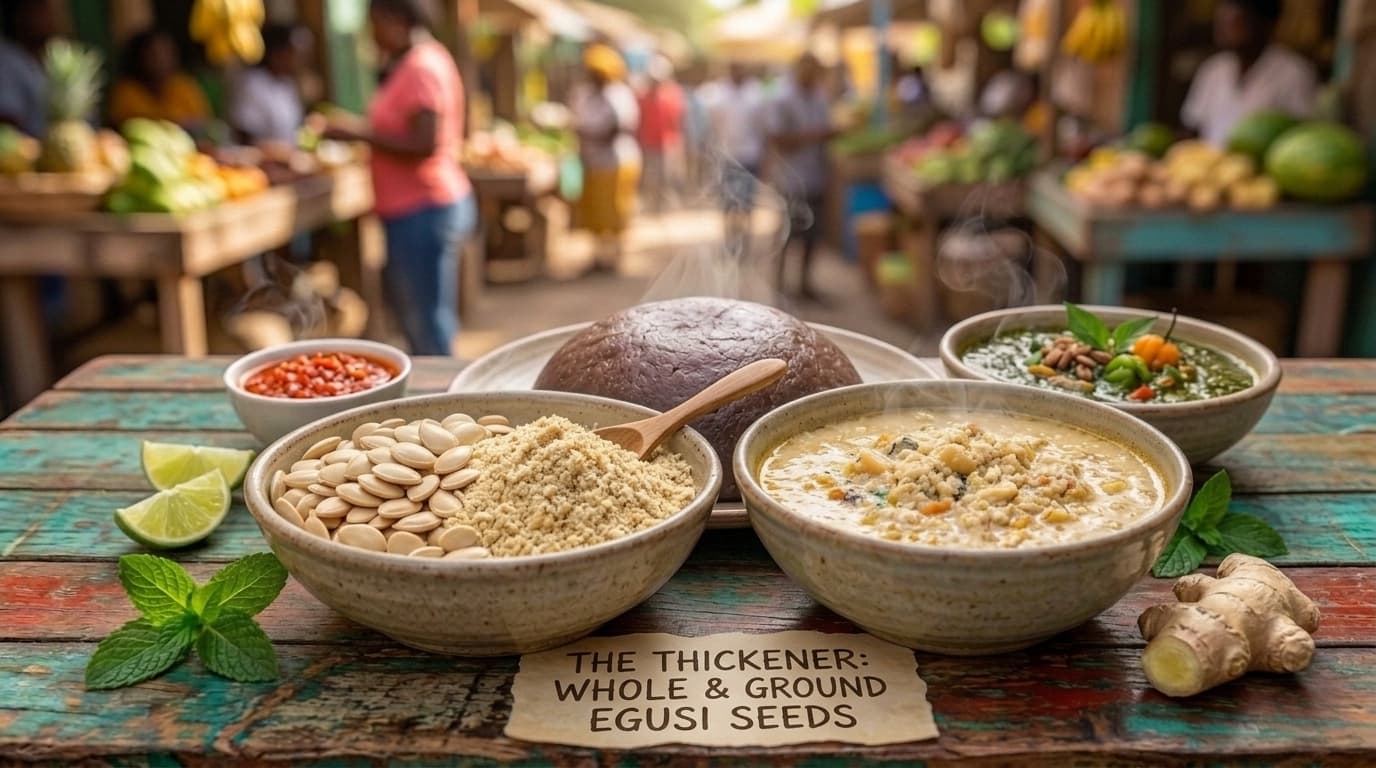
Egusi is one of West Africa's most important cooking ingredients, the seed of a particular kind of melon that is grown not for its flesh but for the rich, oily, protein-packed seeds inside it. The melon, a relative of the watermelon and other gourds, produces seeds that are dried and shelled, revealing pale, flat, cream-coloured kernels, and these are usually ground into a meal that is used in cooking. It is this ground egusi that most people mean when they talk about egusi, and it is a pantry staple across Nigeria, Ghana, Cameroon and much of the region.
What makes egusi so valued is what it does in the pot. Ground egusi is rich in protein and oil, and when cooked it thickens and enriches soups and stews, giving them body, a slightly nutty, savoury flavour, and a characteristic texture. It is a natural thickener and flavour builder, turning a simple broth into a hearty, satisfying soup. Egusi is most famous as the base of egusi soup, one of the best-loved soups in Nigerian cooking, and it belongs to the wider world of West African ingredients we cover in our guide to West African food.
Where does egusi come from and how to prepare it?
Understanding where egusi comes from explains its qualities. The seeds are harvested from melons or gourds grown specifically for them, and after the fruit is opened the seeds are removed, cleaned, dried and shelled, leaving the pale inner kernels. These whole seeds can be bought as they are, but for most cooking they are ground into a meal, either at home or bought ready ground, since it is the ground form that thickens and enriches dishes. Ground egusi has a pale cream colour and a soft, slightly powdery to coarse texture depending on how finely it is milled.
Because egusi is oily and protein-rich, it behaves in cooking rather like ground nuts or seeds, releasing richness and body as it cooks. This is why it is such an effective thickener: stirred into a soup, the ground egusi swells and thickens the liquid and forms soft, cooked clumps or a smooth base depending on how it is added, giving the dish its hearty character. As a seed product it is worth noting for anyone with seed sensitivities, though egusi is not one of the common allergens. Whole or ground, egusi keeps well when dry, which is why it is a reliable store-cupboard staple.
How to cook egusi
Egusi is used above all as a thickener and enricher for soups and stews, and its most celebrated use is egusi soup itself. In egusi soup, the ground seeds are cooked with palm oil, meat, fish, leafy greens, pepper and seasonings into a rich, thick, hearty soup that is eaten with a swallow, and you can read all about that dish in our guide to egusi soup. The egusi is what gives the soup its body, its pale flecked appearance and its distinctive nutty, savoury taste, so the ingredient and the dish are closely linked in most people's minds.
Beyond that signature soup, egusi is versatile. It is used to thicken and enrich other soups and stews across the region, added for body and protein, and it can be cooked into a paste, made into egusi balls or patties in some dishes, and combined with vegetables and other ingredients in various regional preparations. Its role is usually as a supporting, thickening, enriching ingredient rather than the main event, but it transforms the dishes it goes into. It sits alongside other West African soup thickeners such as ogbono, which you can read about in our guide to ogbono soup, each giving its own texture and flavour.
Where to buy egusi in the UK
Buying egusi in Britain is easy, as it is a staple sold in African food shops. Shops that serve Nigerian, Ghanaian, Cameroonian and other West African communities stock egusi both whole, as the shelled seeds, and ready ground as a meal, which is the most convenient form for cooking, and the staff can advise on which to buy and how much you need for a soup. Ground egusi in particular is a common and inexpensive store-cupboard item, sold in bags of various sizes.
If you are new to egusi, an African food shop can point you to good-quality ground egusi and the palm oil, greens, meat and fish that go into egusi soup, and explain how to add it so it thickens properly. You can find African food stores in London or look up African food stores in Manchester to find a shop near you. Once you have it, egusi keeps well stored dry and cool, so a bag lasts through many pots of soup, ready whenever you want to make a rich, hearty West African dish.
Frequently asked questions
What is egusi?
Egusi is the seed of a type of melon grown across West Africa, dried, shelled and usually ground into a pale, protein-rich meal used mainly to thicken and enrich soups and stews. The seeds come from a gourd grown for its seeds rather than its flesh, and ground egusi cooks into a rich, slightly nutty, savoury base. It is best known as the star of egusi soup.
What is egusi made from?
Egusi is made from the seeds of a melon or gourd grown specifically for them, a relative of the watermelon. The seeds are removed, cleaned, dried and shelled, leaving pale cream kernels, which are usually ground into a meal for cooking. It is this ground egusi, rich in protein and oil, that is used to thicken and enrich dishes.
How is egusi used in cooking?
Egusi is used mainly as a thickener and enricher for soups and stews. Its most famous use is egusi soup, where the ground seeds are cooked with palm oil, meat, fish, greens and seasonings into a rich, thick soup eaten with a swallow. It is also used to thicken other soups and can be made into pastes, balls or patties in some regional dishes.
What is the difference between egusi and egusi soup?
Egusi is the ingredient, the ground melon seed, while egusi soup is the popular dish made from it. The seed thickens and enriches the soup, giving it body, its pale flecked look and its nutty, savoury flavour. So egusi is the pale seed meal you buy and cook with, and egusi soup is one of the main dishes you make from it.
Where can I buy egusi in the UK?
African food shops serving West African communities sell egusi both whole, as shelled seeds, and ready ground as a meal, which is the most convenient for cooking. Ground egusi is a common, inexpensive store-cupboard item. A specialist shop can point you to good-quality ground egusi and the palm oil, greens, meat and fish for egusi soup, and advise on quantities.