The short answer
Sea moss is a type of edible seaweed, or sea vegetable, that grows on rocky coasts, best known in the Caribbean, where it has long been used to make drinks and to thicken foods. The most common form sold today is sea moss gel, made by soaking and blending the dried seaweed, which can be added to drinks, smoothies and food. Sea moss contains minerals and other nutrients and has become very popular as a health supplement, with many claims made about its benefits. It is important to be balanced: while sea moss is a nutritious food, the strong health claims are not firmly proven, and it is best treated as a food or supplement rather than a medicine. Some people should be cautious with it. In the UK dried sea moss and gel are sold by Caribbean and African food shops and health shops. This article is general information, not medical advice.
What to remember
- Sea moss is an edible seaweed, long used in the Caribbean for drinks and to thicken foods.
- The most common form today is sea moss gel, made by soaking and blending the dried seaweed.
- It contains minerals and nutrients and has become popular as a health supplement.
- The strong health claims are not firmly proven, so it is best treated as a food or supplement, not a medicine.
- Some people should be cautious, and in the UK it is sold by Caribbean and African food shops and health shops.
For many Caribbean people in Britain, sea moss is not a new wellness trend but a taste of home and heritage. It is the thick, sweet, spiced sea moss drink a parent or grandparent made, believed to nourish and strengthen, the familiar flavour of a traditional tonic shared in the family. Long before it became a popular supplement, sea moss was part of Caribbean life, and seeing it on shelves and in smoothies now carries a quiet pride that a food from the islands has found a wider audience.
There is heritage in it too, and a gentle reminder to keep perspective. Sea moss comes from a long tradition of coastal communities using the sea's plants for food and nourishment, knowledge carried across generations, and using it as a food or a modest supplement honours that, without needing to believe every dramatic claim. Making the traditional drink for family, or introducing a friend to that thick, comforting glass, is a way of sharing a piece of Caribbean culture. That connection to home and heritage, treated sensibly, is the quiet gift of sea moss.
This article is for general information and is not medical advice. Sea moss is not a treatment or cure for any condition. Because it can be high in iodine, use it in moderation, and if you have a thyroid or other health condition, are pregnant or breastfeeding, or take medication, speak to a doctor or pharmacist first.
What is sea moss?
Sea moss is a common name for certain types of edible seaweed that grow on rocky shorelines, harvested and dried for use in food and drinks. The name is used for a few related sea vegetables, including the one often called Irish moss, and colours range from golden and yellow to darker shades depending on the type and how it is processed. It has a long history of use in coastal communities, and in the Caribbean in particular it has been used for generations, most famously to make a sweet, thick sea moss drink believed to be nourishing and strengthening.
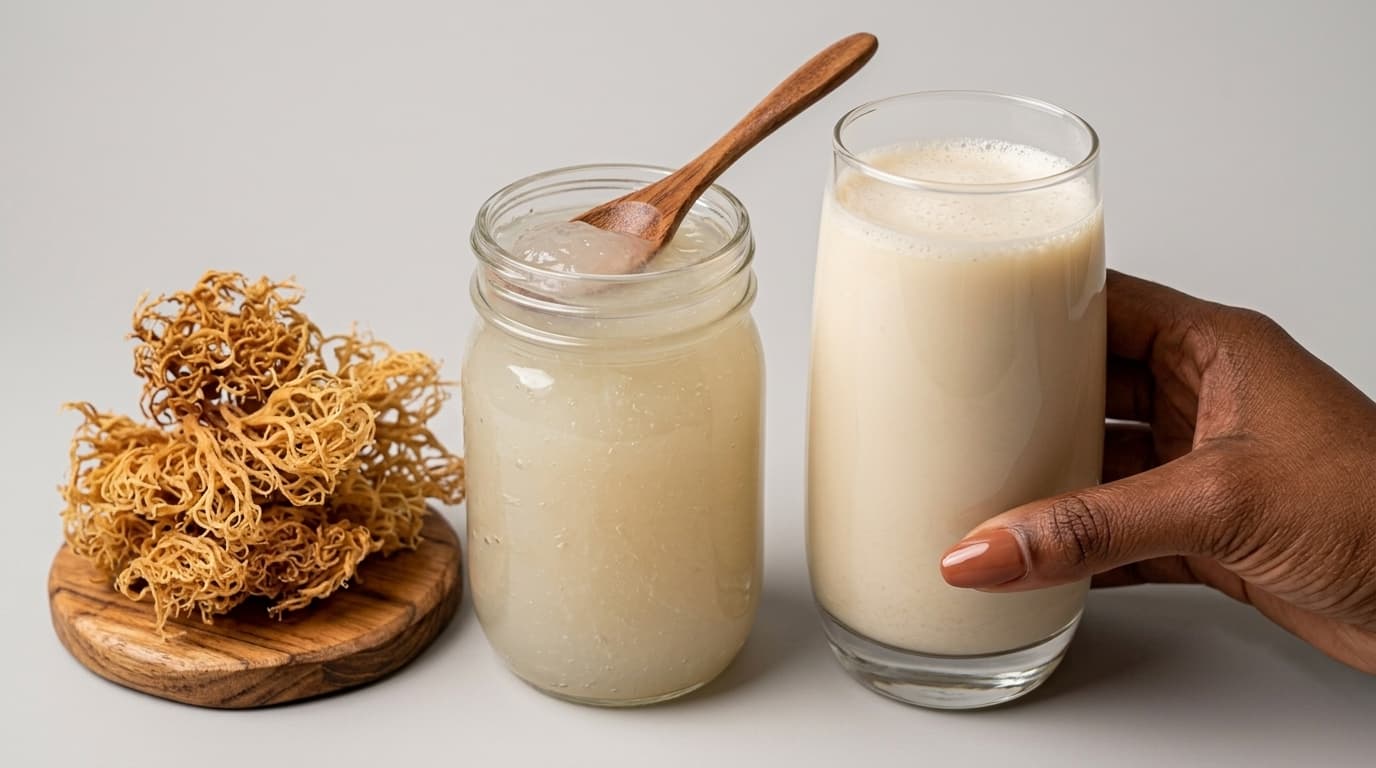
In its dried form, sea moss looks like a tangle of brittle, branching strands, and it has a mild, slightly sea-like taste. When soaked in water it swells and softens, and when blended it forms a gel, which is the form most people encounter today. Beyond the traditional drink, its natural thickening quality has long made it useful in cooking. It sits among the traditional Caribbean foods and remedies we approach with the same care as our guide to the hibiscus drink zobo and sorrel.
Sea moss gel and how it is used
The form of sea moss most people buy or make now is sea moss gel, and it is simple in principle. Dried sea moss is rinsed thoroughly to remove sand and debris, soaked in water for several hours or overnight until it swells and softens, and then blended with fresh water until it becomes a smooth, thick gel. This gel is stored in the fridge and used a spoonful at a time. Making it at home from dried sea moss is popular, and ready-made gel is also widely sold.
Sea moss gel is versatile. It is stirred into smoothies, juices and drinks, added to porridge, soups and stews as a natural thickener, and used in the traditional sweet sea moss drink, often blended with milk or plant milk, sweetener and spices. Some people take a spoonful on its own as a daily supplement. Because it is fairly neutral in taste, it blends into many things without changing the flavour much. This ease of use is a big part of why sea moss has become so popular, well beyond its Caribbean roots.
Benefits of sea moss
Sea moss has become hugely popular as a wellness supplement, with a great many claims made about its benefits, so it is worth being clear and balanced. Sea moss is a nutritious food that naturally contains minerals, including iodine, and other nutrients, and as part of a varied diet it can contribute to your intake of these. It has a long traditional reputation, especially in the Caribbean, as a nourishing, strengthening food. These are reasonable, grounded points.
However, the more dramatic claims, that sea moss cures illnesses, dramatically boosts immunity, or acts as a near-miracle cure-all, are not backed by strong human evidence, and much of the excitement runs ahead of the science. So sea moss is best approached as a nutritious food or supplement with cultural roots, not as a medicine or a cure for any condition. It should not be used to treat or replace treatment for any illness, and anyone with a health concern is best speaking to a doctor or pharmacist rather than relying on sea moss. Enjoyed as a food or a sensible supplement, it can be a pleasant and nourishing addition to the diet.
Things to know about sea moss
A balanced look at sea moss includes some sensible cautions, mainly around one nutrient: iodine. Sea moss, like other seaweeds, can contain significant and variable amounts of iodine, and while iodine is an essential nutrient, too much over time can affect the thyroid. This means sea moss is best consumed in moderation rather than in large daily amounts, and people with thyroid conditions, and those who are pregnant or breastfeeding, should be especially cautious and check with a healthcare professional before taking it regularly.
A couple of other practical points apply. It is important to buy sea moss from a reputable source and to rinse dried sea moss thoroughly before use, since it comes from the sea and can carry sand or, depending on where it is harvested, other contaminants. Homemade gel should be kept refrigerated and used within a week or two. None of this is cause for alarm, it is simply the balanced approach any food supplement deserves. Treated as a food, used in moderation, and bought from a good source, sea moss can be enjoyed sensibly, and any real health concern is a matter for a doctor.
Where to buy sea moss in the UK
Sea moss is sold in Britain by Caribbean and African food shops, which have long stocked the dried seaweed for the traditional drink, as well as by health-food shops and online. You will find it as dried sea moss, which you soak and blend yourself, and increasingly as ready-made sea moss gel in jars, sometimes plain and sometimes blended with fruit or other ingredients. Buying dried and making your own gel is economical and lets you control what goes in, while ready-made gel is convenient.
When you shop, it is worth choosing a reputable source and, if you can, knowing where the sea moss was harvested, and the staff in a Caribbean or African food shop that stocks it can tell you about the types they carry and how the traditional drink is made. You can find Caribbean food stores in London or look up African food stores in Birmingham to find a shop near you. As with any supplement, if you have a health condition, are pregnant or breastfeeding, or take medication, check with a healthcare professional first.
Frequently asked questions
What is sea moss?
Sea moss is a type of edible seaweed, or sea vegetable, that grows on rocky coasts, best known in the Caribbean, where it has long been used to make a sweet, thick drink and to thicken foods. Dried and then soaked and blended, it forms a gel, which is the form most people use today. It contains minerals and other nutrients.
What is sea moss gel and how is it used?
Sea moss gel is made by rinsing dried sea moss, soaking it until it swells, and blending it with water into a smooth, thick gel, kept in the fridge. It is stirred into smoothies, juices, porridge and soups as a natural thickener, used in the traditional sweet sea moss drink, or taken a spoonful at a time as a supplement.
Does sea moss have health benefits?
Does sea moss have health benefits? It is a nutritious food that naturally contains minerals such as iodine and has a long reputation as a nourishing food, especially in the Caribbean. But the dramatic claims that it cures illnesses or acts as a miracle cure-all are not backed by strong human evidence. It is best treated as a nutritious food or supplement, not a medicine.
Is sea moss safe?
As a food in moderation it is fine for most people, but it can contain significant and variable amounts of iodine, and too much over time can affect the thyroid, so it is best not taken in large daily amounts. People with thyroid conditions, and those pregnant or breastfeeding, should be especially cautious and check with a healthcare professional. Buy from a reputable source and rinse it well.
Where can I buy sea moss in the UK?
Caribbean and African food shops sell dried sea moss and increasingly ready-made sea moss gel, as do health-food shops. Buying dried and making your own gel is economical and lets you control what goes in, while ready-made gel is convenient. Choose a reputable source, and ideally know where the sea moss was harvested.