The short answer
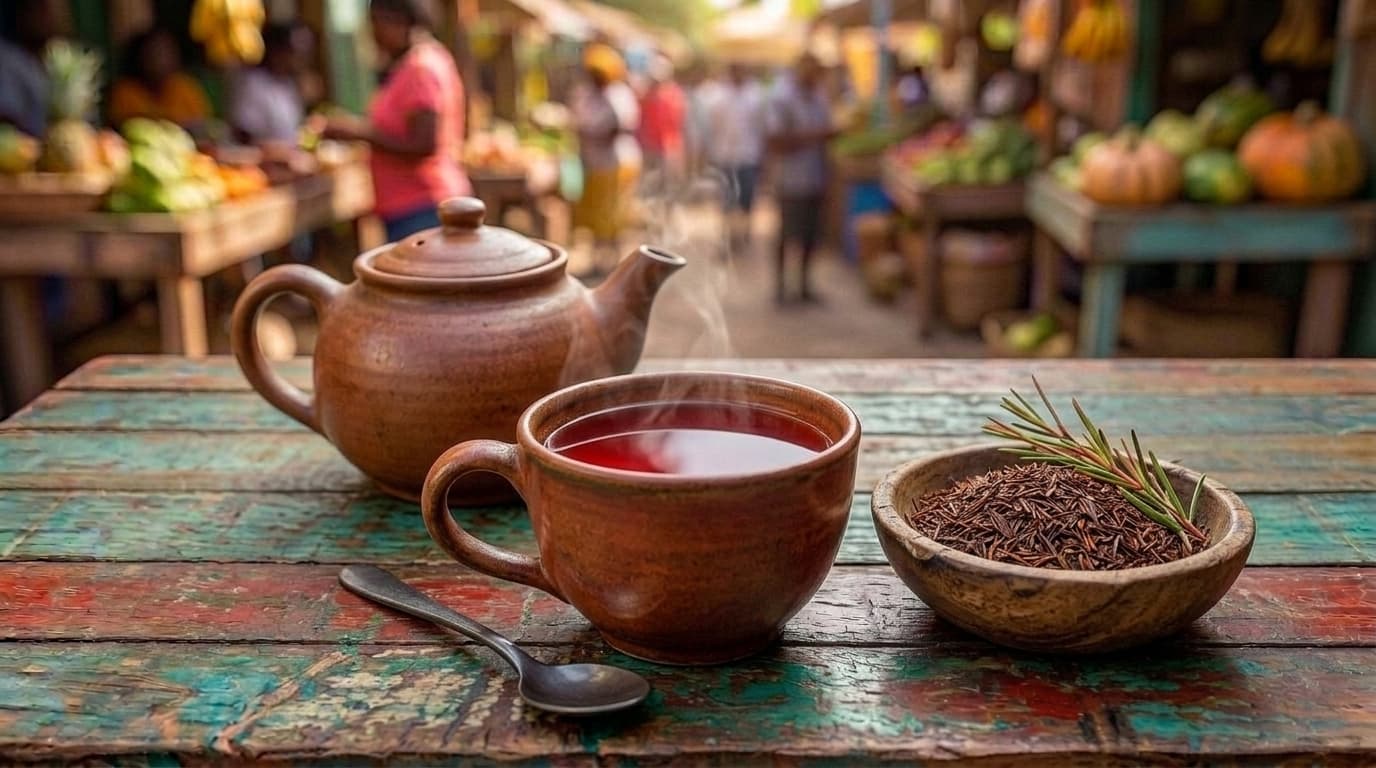
Rooibos, also called red bush tea, is a naturally caffeine-free herbal tea made from the leaves of the rooibos plant, which grows only in the Cederberg region of South Africa. When brewed it gives a warm, reddish-brown cup with a naturally sweet, earthy, slightly nutty flavour, and because it has no caffeine and is low in tannins, it is enjoyed any time of day, plain or with milk. A proud South African drink, rooibos is loved at home and increasingly around the world. This article is general information, not medical advice. In the UK rooibos are sold by supermarkets, health shops and African food shops.
What to remember
- Rooibos, or red bush tea, is a caffeine-free herbal tea from the rooibos plant.
- It grows only in the Cederberg region of South Africa.
- It brews to a warm reddish-brown cup with a naturally sweet, earthy, slightly nutty flavour.
- Being caffeine-free and low in tannins, it is enjoyed any time of day, plain or with milk.
- Rooibos is sold by supermarkets, health shops and African food shops in the UK.
For South Africans in Britain, rooibos is a warm, comforting taste of home. It is the red cup of tea on the table morning and evening, the caffeine-free brew the whole family drinks, the naturally sweet flavour that says home, the tea served with a slice of milk tart. Brewing rooibos far from home brings back kitchens and family gatherings and the everyday ritual of a cup of red bush tea, the warmth of South Africa in every soothing cup.
There is real pride in it too, in a tea grown only in South Africa and loved across the country and beyond. It reflects a whole culture of warm, welcoming hospitality, where a cup of rooibos is offered to any guest. To brew a pot of rooibos is to share a little of that, and offering a friend their first cup, plain or with milk, is a small act of welcome. That warm, naturally sweet taste of home is the quiet gift of rooibos.
What is rooibos?
Rooibos, pronounced roy-boss and meaning red bush in Afrikaans, is a herbal tea made from the leaves and fine stems of Aspalathus linearis, a small shrub that grows only in the Cederberg mountains of the Western Cape in South Africa. The leaves are harvested, and for traditional red rooibos they are bruised and left to oxidise, which turns them a rich red-brown and develops their characteristic sweet, earthy flavour, before being dried. There is also green rooibos, which is unoxidised, lighter and grassier. It is a true speciality of South Africa, grown nowhere else in the world.
Unlike black or green tea, which come from the tea plant and contain caffeine, rooibos is naturally caffeine-free and low in tannins, which makes it smooth, never bitter, and suitable to drink late in the day or by anyone avoiding caffeine. It has a naturally sweet, mild, slightly nutty and vanilla-like taste that many people love plain. Rooibos is a proud part of South African food and drink culture we cover in our guide to South African food, and it is a lovely accompaniment to South African treats like milk tart and koeksisters.
How is rooibos made?
Making rooibos is just like making any tea. A teaspoon of loose rooibos or a teabag is steeped in freshly boiled water, and because it has no tannins to turn bitter, it can be brewed for a good few minutes, or even longer for a stronger cup, without becoming harsh. It gives a beautiful warm red-brown colour and a naturally sweet flavour that needs no sugar, though it can be sweetened to taste. It is delicious plain, with a slice of lemon, or with milk, in the way many South Africans enjoy it.
Rooibos is wonderfully versatile beyond a simple cup. It is served iced with lemon and mint as a refreshing cold drink, made into a red espresso and rooibos lattes and cappuccinos, brewed for children as a caffeine-free tea, and used to flavour cooking and baking. Its natural sweetness and lack of caffeine make it a favourite for the evening and for the whole family. This article is general information rather than medical advice. Warm, naturally sweet and soothing, rooibos is a lovely tea to enjoy any time of day.
Things to know about rooibos
Rooibos is best enjoyed simply, as the pleasant, caffeine-free tea it is. It has long been valued in South Africa and is often spoken of as a wholesome drink, and you may see various health claims made for it, but these should be treated with a sensible perspective, as rooibos is a tea to enjoy rather than a medicine or a treatment for any condition. Its genuine appeals are real enough: it is naturally caffeine-free, low in tannins, naturally sweet so it needs no sugar, and simply delicious.
Rooibos holds a proud place in South African life, a homegrown drink enjoyed across the country and a source of national pride, and it has become popular worldwide as a caffeine-free alternative to ordinary tea. It is grown by farming communities in the Cederberg and is one of South Africa's best known food exports. Anyone who is pregnant, breastfeeding, on medication or managing a health condition and drinking any herbal tea in large amounts can check with a pharmacist or GP if unsure. This article is general information rather than medical advice. Enjoyed as a soothing everyday tea, rooibos is a treasured South African drink.
Where to buy rooibos in the UK
Buying rooibos in Britain is very easy, as it has become widely available. Most supermarkets stock rooibos teabags in the tea aisle, and health shops and African food shops carry loose rooibos and a range of brands, including green rooibos and flavoured blends like vanilla or citrus rooibos. African food shops in particular are a good place to find original South African brands. It keeps well, so it is worth having a box in the cupboard as a caffeine-free option.
If you want to try rooibos, a supermarket, health shop or African food shop will have it, and African food shops are a lovely place to find South African brands alongside other South African treats. You can find African food stores in London or look up African food stores in Manchester to find a shop near you. Naturally sweet, caffeine-free and soothing, rooibos brings a proud taste of South Africa to your cup, enjoyed any time of day.
Frequently asked questions
What is rooibos?
Rooibos, also called red bush tea, is a naturally caffeine-free herbal tea made from the leaves of the rooibos plant, which grows only in the Cederberg region of South Africa. When brewed it gives a warm, reddish-brown cup with a naturally sweet, earthy, slightly nutty flavour. Being caffeine-free and low in tannins, it is smooth, never bitter, and enjoyed any time of day, plain or with milk.
Do rooibos have caffeine?
No, rooibos is naturally caffeine-free, which is one of its main appeals. Unlike black and green tea, which come from the tea plant and contain caffeine, rooibos comes from a different plant entirely and has no caffeine, so it can be enjoyed late in the day, in the evening, and by anyone avoiding caffeine, including as a caffeine-free tea for children.
How do you make rooibos tea?
Steep a teaspoon of loose rooibos or a teabag in freshly boiled water. Because rooibos has no tannins to turn bitter, it can be brewed for several minutes, or longer for a stronger cup, without becoming harsh. It gives a warm red-brown colour and a naturally sweet flavour, and is enjoyed plain, with lemon, or with milk, and also iced or as a rooibos latte.
Are rooibos good for you?
Rooibos is a naturally caffeine-free, low-tannin tea that is naturally sweet and pleasant to drink, and it has long been valued in South Africa as a wholesome drink. You may see various health claims for it, but these are best kept in perspective, as rooibos is a tea to enjoy rather than a medicine. This is general information, not medical advice; anyone unsure can check with a pharmacist or GP.
Where can I buy rooibos in the UK?
Rooibos is widely available. Most supermarkets stock rooibos teabags, and health shops and African food shops carry loose rooibos, green rooibos and flavoured blends, including real South African brands. You can find African food stores near you to find South African rooibos alongside other South African treats.