The short answer
Oxtail is exactly what it sounds like, the tail of beef cattle, cut into thick round segments through the bone. Despite the name, it comes from ordinary cattle, not oxen, and it is a cut full of bone, marrow, and connective tissue. That makes it tough if cooked quickly, but slow-cooked over a few hours, it becomes meltingly tender, and the collagen breaks down into a rich, sticky, deeply savoury sauce. It is treasured across the Caribbean, and Jamaican oxtail stew, simmered with butter beans, browning, and spices and served with rice and peas, is one of the best-loved dishes of the islands. In the UK oxtail is sold by Caribbean and African butchers and food shops and by many supermarkets.
What to remember
- In the UK it is sold by Caribbean and African butchers and food shops, and by many larger supermarkets.
- It is classically served with rice and peas, which soaks up the deep, savoury gravy.
- Jamaican oxtail stew, made with butter beans, browning and spices, is one of the Caribbean's signature dishes.
- It must be cooked slowly, because the collagen needs time to melt into tender meat and a rich, sticky sauce.
- Oxtail is the tail of beef cattle, cut into thick segments through the bone, rich in marrow and connective tissue.
For Caribbean families in Britain, oxtail is Sunday in a bowl. It is the pot that goes on in the morning and fills the whole house with the smell of thyme, allspice, and slow-cooking beef by the afternoon, the dish everyone hopes is on the table when they visit, the food of grandmothers and big family dinners.
It carries the memory of the islands and of the generations who turned a humble cut into a feast through patience and seasoning, and cooking it far from home brings all of that warmth into a British kitchen.
There is pride in it too, because a good oxtail is a mark of a cook who knows what they are doing. Getting the meat falling off the bone, the sauce rich and glossy, the heat and seasoning just right, is something to be quietly proud of, and setting it down for family or introducing it to a friend is an act of real generosity.
For anyone tasting Jamaican oxtail for the first time, that first spoonful of tender meat and deep gravy is an easy way into why the Caribbean loves this dish so much. That warmth is the quiet gift of oxtail.
What is Oxtail
Oxtail is the tail of a cow, sold cut crossways into thick, round pieces, each with a section of bone in the middle surrounded by meat, fat, and connective tissue. The name is a leftover from the days when it really did come from working oxen, but today the oxtail you buy is simply beef tail from ordinary cattle.
What matters in the kitchen is its make-up: there is not a huge amount of meat on each piece, but there is a great deal of bone, marrow, and collagen-rich connective tissue, and that is the secret to why it tastes so good.
That composition also tells you how to treat it. Cooked fast, oxtail is tough and chewy and disappointing. Cooked low and slow for a few hours, the tough tissue dissolves, the meat falls off the bone, and the marrow and collagen enrich the liquid into something glossy, sticky, and full of flavour. It is a cut that rewards patience more than almost any other, which is exactly why slow-cooking cultures prize it.
Oxtail is a cornerstone of Caribbean cooking, and you can see the wider table it belongs to in our guide to [Caribbean food](/blog/caribbean-food).
Why Oxtail Needs Slow Cooking
The single most important thing to know about oxtail is that time is the main ingredient. All that connective tissue that makes the raw cut look tough is collagen, and collagen only softens when it is cooked gently for a long time. As it breaks down it turns to gelatine, which is what gives a good oxtail stew its rich body and that slightly sticky coating on the lips.
it, and you get tough meat in a thin liquid. Give it two, three or more hours of gentle simmering, or a long spell in a pressure cooker or slow cooker, and you get tender meat in a luxurious sauce.
This is why oxtail was historically an economical cut turned into something special by skill and patience. It is humble in origin but generous in reward, and it fits perfectly with a cooking tradition built around long, unhurried pots. The lesson for anyone cooking it at home is simple: do not hurry, and let the collagen do its work.
Jamaican Oxtail Stew
When people in Britain talk about oxtail, they very often mean Jamaican oxtail stew, and with good reason, because it is one of the great dishes of the Caribbean.
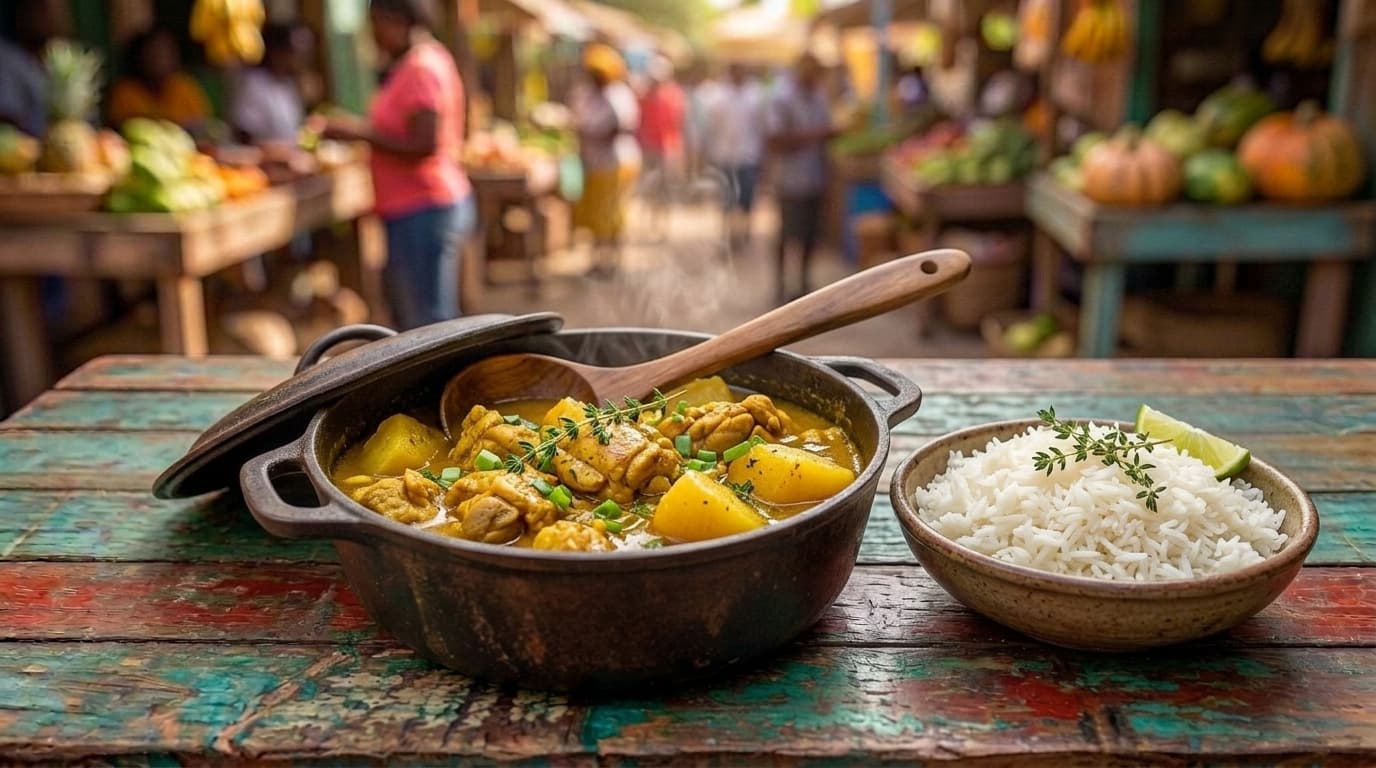
The oxtail is seasoned generously, often browned first, then slow cooked with onions, garlic, thyme, allspice, scotch bonnet for heat, and a splash of browning, a dark sauce that gives the stew its deep colour. Towards the end, butter beans, sometimes called broad beans or lima beans, are added, and they soften into the gravy and become part of the pleasure of the dish.
The result is dark, rich, spicy and savoury, with meat that slips off the bone and a sauce you want to mop up to the last drop. It is comfort food at its finest, the sort of thing cooked for Sunday dinner and family gatherings, and every cook has their own balance of seasoning.
You can bring the scotch bonnet heat that defines it up or down to taste, and you can read more about that fiery pepper in our guide to the [scotch bonnet](/blog/scotch-bonnet).
What to Serve with Oxtail
Oxtail is rich, so it is almost always served with something to carry the sauce, and in the Caribbean that something is usually rice and peas. This is rice cooked with kidney beans or pigeon peas, coconut milk and thyme, and its gentle, faintly sweet flavour is the perfect foil for the deep, spicy gravy of the oxtail. The two together are a classic pairing, and for many people the smell of oxtail and rice and peas is the smell of Sunday.
Beyond that, oxtail is served with plain white rice, with hard food such as boiled green banana, yam, and dumplings, or with festival, the slightly sweet fried dumplings that go so well with saucy dishes.
Whatever the side, the job is the same: to soak up that precious sauce. A green salad or some fried plantain rounds the plate out nicely, and you can read about plantain in our guide to [plantain](/blog/plantain).
Where can I Buy Oxtail in UK?
Oxtail is easy to find in Britain, especially anywhere with a Caribbean or African community. Caribbean and African butchers and food shops sell it fresh and frozen, often cut and ready for the pot, and the butcher can pick out meatier pieces if you ask.
Many larger supermarkets also carry oxtail, sometimes in the world foods aisle or at the meat counter, though a specialist butcher will usually give you better cuts and better value.
If you are cooking it for the first time, buy pieces with a good amount of meat around the bone, trim off excess fat, and plan for a long, slow cook. For the seasonings that make Jamaican oxtail sing, the allspice, thyme, browning, Scotch bonnet, and butter beans, an African or Caribbean food shop will have everything on one visit.
You can find [African food stores in London](/african-food-stores-in-london) or look up [Caribbean food stores in Birmingham](/african-food-stores-in-birmingham) to find a shop near you.
Frequently asked questions
What is oxtail?
Oxtail is the tail of beef cattle, cut crossways into thick round segments through the bone. Despite the name, it comes from ordinary cattle, not oxen. Each piece has some meat around a central bone, along with marrow and plenty of collagen-rich connective tissue, which is what makes it so good when slow cooked.
Why does oxtail need to be cooked slowly?
Because it is full of collagen, the connective tissue that makes the raw cut tough. Collagen only softens when cooked gently for a long time, breaking down into gelatine that gives the sauce its rich body and makes the meat tender enough to fall off the bone. Cooked quickly, oxtail stays tough, so it needs a few hours of slow simmering.
What is Jamaican oxtail stew made with?
Oxtail is seasoned and often browned, then slow cooked with onions, garlic, thyme, allspice, scotch bonnet, and a splash of browning for colour, with butter beans added towards the end. The result is a dark, rich, spicy, and savoury stew with meat that slips off the bone.
What do you serve with oxtail?
Most classically rice and peas, the Caribbean rice cooked with beans, coconut milk, and thyme, whose gentle flavour balances the rich gravy. Oxtail is also served with plain rice, hard food such as boiled yam and dumplings, or festival, and often with fried plantain on the side.
Where can I buy oxtail in the UK?
Caribbean and African butchers and food shops sell oxtail fresh and frozen, and many larger supermarkets carry it too, though a specialist butcher usually offers better cuts and value. Buy meatier pieces, trim excess fat, and pick up the seasonings and butter beans from the same African or Caribbean food shop.