The short answer
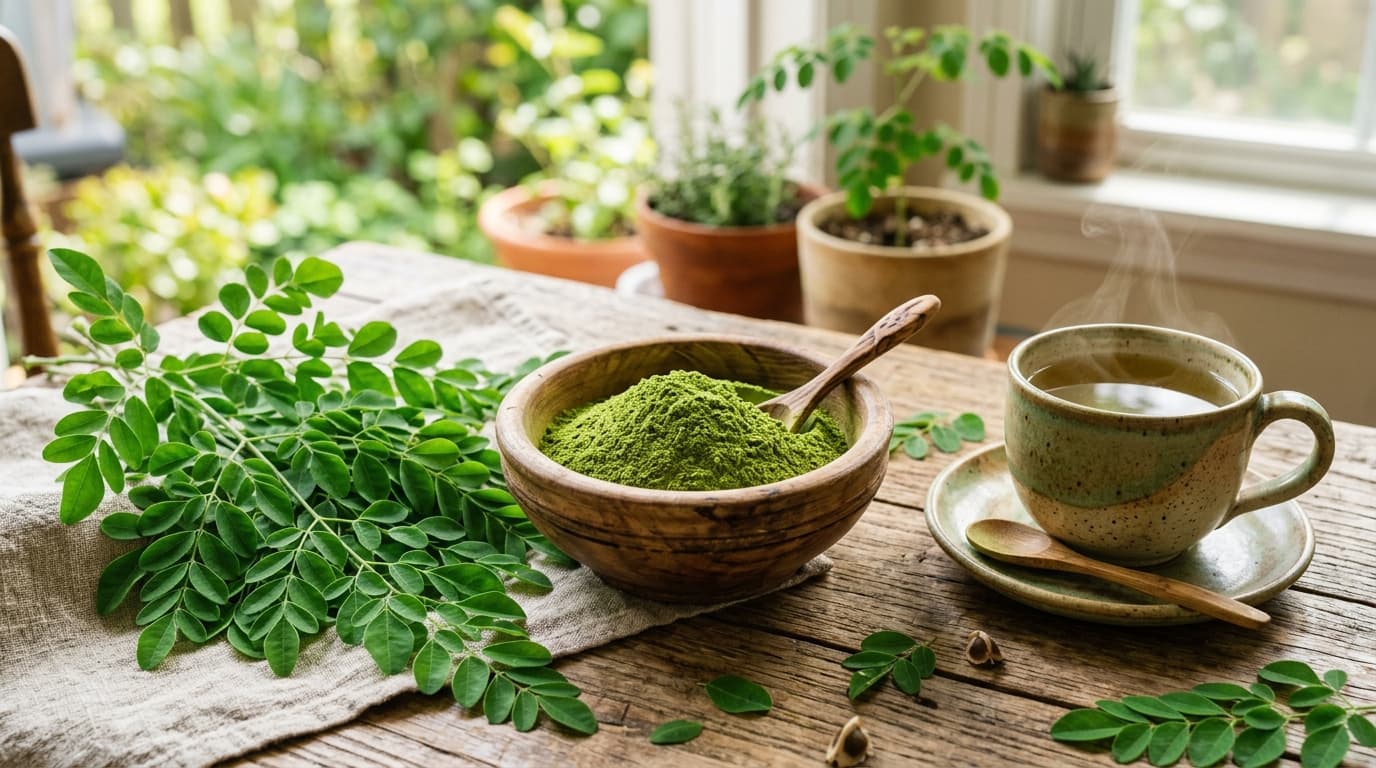
Moringa comes from the Moringa oleifera tree, and the parts most people use are the leaves, the dried leaf powder and the seeds. It is a source of vitamins, minerals, protein and antioxidants, and it has been eaten and brewed as a drink across Africa and South Asia for a very long time. People stir the powder into smoothies, soups and stews, or steep the dried leaves as a tea. It is a food and a supplement, not a medicine, so it is general nutrition rather than a treatment for any condition.
What to remember
- Moringa is the leaf, powder and seed of the Moringa oleifera tree, sometimes called the "miracle tree" or drumstick tree.
- It is genuinely nutritious: a source of vitamins, minerals, plant protein and antioxidants.
- Most people use it as a green powder in smoothies and stews, or brew the dried leaves as a mild tea.
- Treat it as a food, not a cure. Some people value it as an everyday source of nutrients, but it does not treat or prevent illness.
- If you are pregnant, breastfeeding or on medication, speak to a doctor first, and avoid moringa root and bark in pregnancy.
Long before it appeared on wellness shelves, moringa was simply a tree in the yard. Across much of Africa and South Asia it earned the name "miracle tree", not through marketing but through everyday usefulness: leaves for the pot, pods for the sauce, shade in the heat and something green through the dry season when other crops struggled. In many households the tree by the gate quietly fed the family, and a handful of its leaves went into the soup without anyone calling it a superfood.
That is the meaning worth holding on to. Moringa is not exotic where it grows, it is ordinary in the best sense, a familiar part of home cooking passed between generations. For people who grew up with it, seeing it on a shelf in Britain is a small reminder of that yard and that pot. Taken this way, moringa is less a trend and more a piece of home you can keep in the kitchen.
What is Moringa?
Moringa is a fast-growing tree, Moringa oleifera, native to parts of South Asia and now grown widely across Africa, the Caribbean and other warm regions. You may hear it called the drumstick tree, after its long seed pods, or the "miracle tree", a nickname it has carried for generations because so much of it can be eaten or used. When people talk about taking moringa, they usually mean one of three things: the fresh green leaves, the dried leaves ground into a fine green powder, or the seeds. The leaves and powder are the most common in UK kitchens, as fresh leaves are harder to find here than the dried forms.
The powder is simply the leaves dried at low temperature and milled. It has an earthy, slightly grassy taste, a little like matcha or spinach, which is why it blends easily into food and drinks rather than being taken on its own.
History of Moringa
Moringa is not a new wellness trend, even if the powder in smart packaging is recent. The tree has been part of daily cooking and traditional plant knowledge across South Asia and much of Africa for centuries. In parts of West and East Africa the fresh leaves are cooked much like any leafy green, added to soups, sauces and stews, while the pods and seeds are used in other dishes. In South Asian cooking the drumstick pods appear in curries and sambar. This deep culinary history is part of what makes moringa worth knowing about, and it sits naturally alongside the wider world of African food and West African food.
Nutritional Benefits of Moringa
In general terms, moringa leaf is a nutritious green. It is a source of several vitamins and minerals, plant protein and antioxidant compounds, which is a large part of why people add it to their food. Because the powder is concentrated dried leaf, a spoonful adds those nutrients to a meal or drink in a small amount.
It helps to keep this in proportion. A teaspoon of moringa powder is a modest serving, so it is best thought of as a helpful addition to an already balanced diet rather than a replacement for vegetables, fruit or a varied plate. As with any food, the benefit comes from how it fits into your overall eating pattern.
How People Use Moringa
Moringa is flexible, which is much of its appeal. Common ways people use it include:
Powder in smoothies: a half to one teaspoon blended with fruit, banana or yoghurt is the most popular route, as the other flavours soften the grassy taste.
Moringa tea: dried leaves or tea bags steeped in hot water for a few minutes make a light, earthy brew, sometimes with lemon, ginger or honey.
Stirred into soups and stews: the powder or fresh leaves can go into egusi, pepper soup, sauces and other dishes near the end of cooking.
Sprinkled over food: some people add a little powder to porridge, eggs or dressings.
A common starting point is a small amount, around a teaspoon a day, taken with food. Starting low and seeing how you feel is sensible with any new supplement.
Why People Value Moringa
People reach for moringa for different reasons. Some like having a convenient, plant-based source of everyday nutrients. Some enjoy the tea as a caffeine-free drink. Others simply grew up with it and keep it as a link to home cooking. Some studies suggest moringa leaf may have useful properties, though research is still developing and much of it is early. What can be said plainly is that it is a nutritious food with a long, genuine history of use, and that is reason enough for many people to keep it in the cupboard.
Health and Safety Note
This article is general information and not medical advice. Moringa is a food and a supplement, and it should not be used to treat, cure or prevent any illness. If you are considering taking it regularly, especially if you are pregnant, breastfeeding, living with a health condition or taking any medication, speak to your doctor or a registered dietitian first, as moringa may interact with some medicines.
There is one specific caution worth repeating. While the leaves and leaf powder are widely eaten as food, moringa root and bark should be avoided during pregnancy, as they contain compounds that are not considered safe at that time. If you are pregnant, it is safest to leave moringa aside altogether unless your doctor or midwife has told you otherwise.
Where to buy moringa in the UK
Moringa powder and dried moringa leaves are widely stocked at African and Caribbean food shops across the UK, often alongside other dried leaves, herbs and health foods. You will usually find the powder in resealable pouches and the leaves either loose or as tea bags. Buying from a shop that knows the product means you can ask about origin and freshness, and the staff can often point you to the brand they trust. To find a shop near you, browse African food stores near you, or search your own town to see what is stocked close by on Africanstores.co.uk
Frequently asked questions
Is moringa safe to take every day?
For most healthy adults, moringa leaf and leaf powder are eaten as a food and are generally taken in small daily amounts, such as a teaspoon of powder. As with any supplement, start low and see how you feel. If you take medication or have a health condition, check with your doctor or a registered dietitian first.
Can I take moringa while pregnant?
Be cautious. Moringa root and bark should be avoided in pregnancy, and because guidance varies, it is safest to speak to your doctor or midwife before taking any moringa while pregnant or breastfeeding.
What does moringa taste like?
The powder tastes earthy and slightly grassy, a little like matcha or spinach. That is why most people blend it into smoothies, stews or a cup of tea rather than taking it plain.
Does moringa cure any illnesses?
No. Moringa is a nutritious food and a supplement, not a medicine. It is a source of vitamins, minerals, protein and antioxidants, but it does not treat, cure or prevent disease, and it should not replace any treatment your doctor has given you.
Where can I buy moringa in the UK?
African and Caribbean food shops across the UK stock moringa powder and dried leaves. You can find a shop near you through pages like African food stores in London or African food stores in Manchester, or by searching your own area.