The short answer
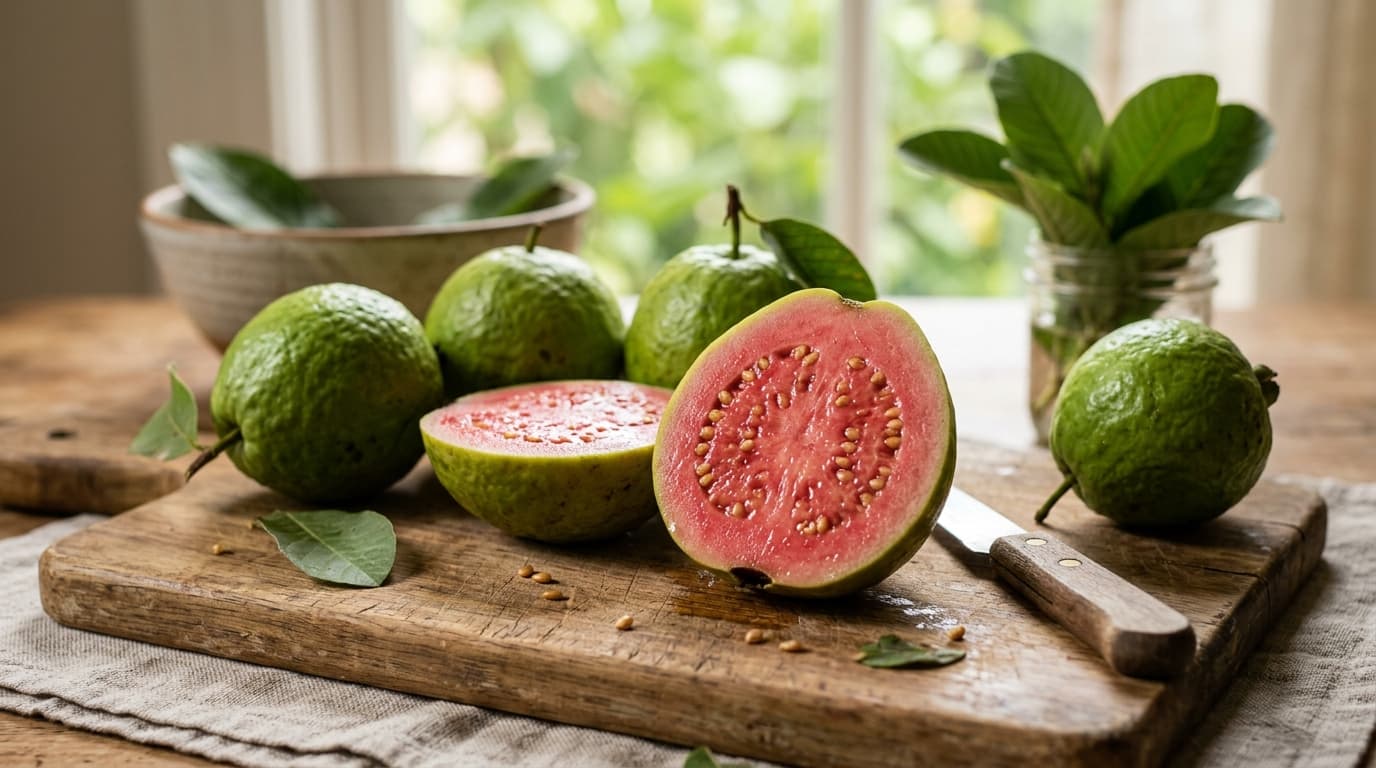
Guava is a round tropical fruit with green or yellow skin and soft pink or white flesh dotted with small edible seeds. It has a sweet, floral flavour and a strong, pleasant fragrance when ripe. Guava is eaten fresh, blended into juice, cooked into jam, and set firm as guava cheese or paste. It grows across the Caribbean, Africa, Latin America and other tropical regions.
What to remember
- Guava is a fragrant, round tropical fruit with green or yellow skin and pink or white flesh, and the skin and small seeds are edible.
- It tastes sweet and floral, somewhere between a pear and a strawberry, and smells wonderful once ripe.
- You can eat it fresh, drink it as juice or nectar, spread it as jam, or slice the firm guava cheese and paste that are loved across the Caribbean and Latin America.
- Guava is grown across the Caribbean, Africa, Latin America and much of the tropical world, so it carries a taste of home for many families.
- In the UK you will find guava fresh in season, frozen in bags, and year round as juice, nectar and paste in African and Caribbean food shops.
For many families, guava is far more than a fruit on a shelf. Across the Caribbean, a ripe guava eaten straight from the tree is one of the first tastes of childhood, and slices of guava cheese wrapped in paper are a treat handed out at family gatherings and passed around at Christmas. In parts of Africa, children grow up climbing guava trees in the yard and eating the fruit warm from the sun, seeds and all.
The love of guava travels through the kitchen too. Guava paste baked into pastries, guava jam spread thick on bread in the morning, and cold guava juice poured on a hot day are the kind osmall everyday pleasures that carry a whole culture in them. When someone who grew up with these flavours finds a familiar block of guava paste or a carton of guava nectar in a shop far from home, it is a genuine moment of comfort. That is the quiet power of guava. It tastes of somewhere, and for a great many people that somewhere is home.
What is Guava?
Guava is a round or slightly pear-shaped tropical fruit, usually about the size of a small apple. The skin is thin and edible, ranging from green when younger to soft yellow as it ripens. Inside, the flesh can be a deep rosy pink or a pale creamy white, depending on the variety, and it holds a cluster of small, hard seeds in the centre. Those seeds are edible too, so most people simply bite straight into the fruit like an apple.
The plant itself is a hardy shrub or small tree that thrives in warm climates. One of the first things people notice about a ripe guava is the smell. A single ripe fruit can perfume a whole kitchen with a warm, sweet, floral scent that tells you at once it is ready to eat.
How does Guava taste?
The flavour of guava is sweet and floral, with a gentle tang behind it. Many people describe it as sitting somewhere between a pear, a strawberry and a passion fruit, though it really has a character all of its own. The pink-fleshed varieties tend to be sweeter and more fragrant, while the white-fleshed ones can be a little sharper and crisper.
Texture changes as the fruit ripens. A firm, barely ripe guava is crunchy and refreshing, a bit like a firm pear. A fully ripe one turns soft and almost custard-like, the sweetness deepening as it goes. Both stages are lovely, so it comes down to how you like to eat it.
How guava is eaten?
The simplest way to enjoy guava is fresh, washed and eaten whole or sliced into wedges, skin, seeds and all. In many warm countries a little salt, chilli or lime is added, which lifts the sweetness beautifully.
Beyond eating it fresh, guava turns into some of the most loved treats in tropical cooking:
- Juice and nectar. Guava blends into a thick, fragrant juice that is one of the most popular tropical drinks in the world. It is often mixed with a little water or other fruit and served cold.
- Jam and jelly. The high natural pectin in guava means it sets easily, making a rich, rosy jam that is wonderful on bread.
- Guava cheese and paste. This is the firm, sliceable sweet made by cooking down guava with sugar until it sets into a dense block. It is not cheese at all, just named for its shape and firmness. In the Caribbean it is often eaten in slices, sometimes with a piece of real cheese, and across Latin America the paste, known as guava paste, is baked into pastries and served with crackers.
Guava also finds its way into cakes, ice cream, sauces and sweets, and it sits naturally alongside so many other dishes you will find in Caribbean food and across the wider world of African food.
Where does Guava grow?
Guava is native to the warm regions of Central America and the Caribbean, but it travelled far and wide long ago and now grows across much of the tropical world. You will find it flourishing throughout the Caribbean islands, across many parts of Africa, in Latin America, South and Southeast Asia, and other warm climates.
Because the tree is so hardy and generous with fruit, guava is a familiar sight in gardens and markets in all of these places. That is why so many families who have moved to the UK from the Caribbean and Africa grew up with a guava tree nearby, and why the taste is tied so closely to memories of home for many communities.
Guava nutritional value
In plain terms, guava is a good source of vitamin C and dietary fibre, and it contains other vitamins and minerals as a whole fruit. Pink-fleshed varieties also carry the natural plant pigments that give them their colour. It is a naturally sweet fruit, so it makes a satisfying snack on its own or a fresh addition to breakfasts and puddings.
This is general information about a food, not medical advice. If you have specific dietary questions, it is always best to speak with a qualified professional.
How to buy guava in the UK
Guava is easier to find in the UK than many people expect, especially in African and Caribbean food shops.
- Fresh. When it is in season you can find whole fresh guavas, often imported. Choose fruit that gives slightly to a gentle squeeze and smells fragrant. If it is still firm and green, leave it at room temperature for a few days to ripen.
- Frozen. Bags of frozen guava, sometimes as chunks or pulp, are widely stocked and are perfect for blending into juices and smoothies all year round.
- Juice and nectar. Cartons and bottles of guava juice and nectar are among the most common ways to enjoy the flavour, and they keep well in the cupboard.
- Paste and jam. Blocks of guava paste and jars of guava jam are pantry staples in many Caribbean and Latin American homes, ready for slicing or spreading whenever you fancy them.
If you want to see, smell and choose your guava in person, the surest bet is to visit a specialist grocer. You can find African and Caribbean food shops near you through pages like African and Caribbean food stores in London, where fresh, frozen and store-cupboard guava often sit side by side.
Frequently asked questions
Can you eat guava skin and seeds?
Yes. The whole guava is edible, skin and seeds included. Most people simply wash it and bite straight in, just as you would with an apple. The seeds are hard but safe to eat, and the thin skin adds to the flavour
How do you know when a guava is ripe?
A ripe guava gives slightly when you press it gently and gives off a strong, sweet, floral smell. The skin often turns from green to a softer yellow. If yours is still firm and unscented, leave it at room temperature for a few days and it will ripen on its own.
What does guava taste like?
Guava is sweet and floral with a little tang, often compared to a mix of pear, strawberry and passion fruit, though it has its own distinct character. Pink-fleshed guavas are usually sweeter, while white-fleshed ones can be a touch sharper.
Is guava good for you?
Guava is a whole fruit and a good source of vitamin C and fibre, which makes it a satisfying natural snack. This is general information rather than medical advice, so do speak to a qualified professional if you have particular dietary needs.
Where can I buy guava in the UK?
You will find guava fresh in season, frozen in bags, and year round as juice, nectar, jam and paste in African and Caribbean food shops. Visiting a specialist grocer near you is the best way to see fresh fruit and store-cupboard versions together.