The short answer
Fonio is a tiny, ancient grain grown across West Africa, one of the oldest cultivated cereals in Africa, with tiny seeds that cook quickly into light, fluffy grains a little like a very fine couscous. It has a mild, slightly nutty, earthy flavour, is naturally gluten free, and is quick and easy to prepare, which has made it popular both as a traditional staple and, more recently, as a fashionable ancient grain and so-called superfood. It is used much like couscous, quinoa or rice, as a base for stews and sauces, in salads and porridges, and it is drought-hardy and important to food security in the Sahel. In the UK fonio is sold by African food shops and health and online retailers.
What to remember
- Fonio is a tiny, ancient grain grown across West Africa, one of Africa's oldest cereals.
- Its tiny seeds cook quickly into light, fluffy grains, a little like fine couscous.
- It has a mild, nutty, earthy flavour and is naturally gluten free.
- It is used like couscous, quinoa or rice, in stews, salads and porridges.
- It is sold by African food shops and health and online retailers in the UK.
For West Africans in Britain, especially from the Sahel, fonio is an ancient, cherished taste of home. It is the tiny, fluffy grain served with a rich stew, the wholesome staple that has fed the region for generations, the food tied to the land and its farmers, the taste that says home and heritage. Cooking fonio far from home brings back family tables and a grain with deep roots, the warmth of home in every light, nutty mouthful.
There is profound heritage in it too, reaching back thousands of years. Fonio is one of Africa's most ancient cultivated grains, a resilient crop that has sustained West African communities through hard climates and long history, and to cook and share it is to honour that heritage, now increasingly celebrated around the world. Serving fonio with a stew for family who grew up on it, or introducing a friend to this ancient West African grain, is an act of welcome and pride. That light, nutty, ancient taste of home is the quiet gift of fonio.
What is fonio?
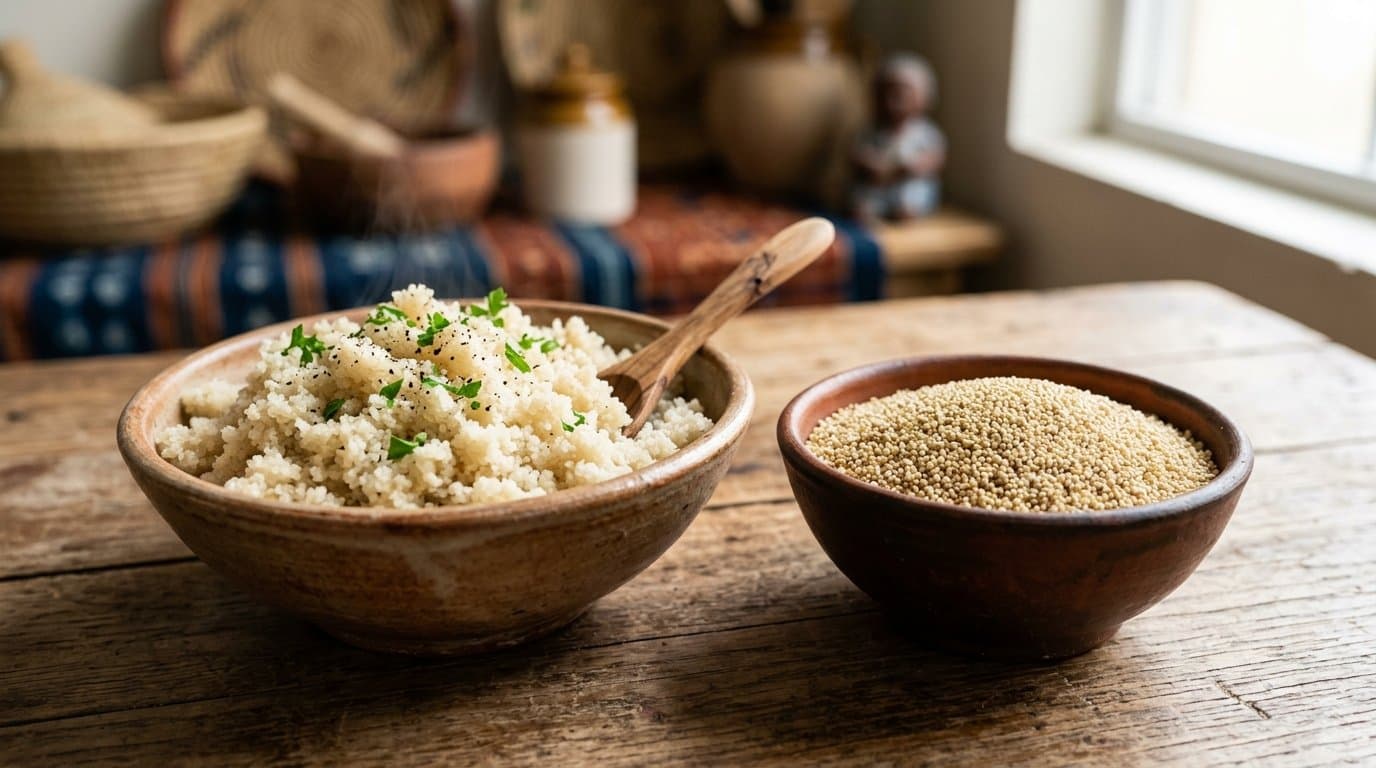
Fonio is one of West Africa's oldest and most remarkable grains, a tiny cereal that has been grown and eaten in the region for thousands of years. The grains are extremely small, among the smallest of all cultivated cereals, pale and delicate, and when cooked they turn light and fluffy, a little like a very fine couscous or a small-grained rice. Fonio has a mild, gently nutty, earthy flavour that makes it a versatile base for all sorts of dishes, and it is quick and easy to cook, which is a large part of its appeal. It is a traditional staple across the Sahel and West Africa, especially in countries such as Senegal, Mali, Guinea and Nigeria.
What has brought fonio wider attention recently is its combination of ancient heritage and modern appeal. It is naturally gluten free, quick-cooking, and nutritious, and it is often described as a superfood and an ancient grain, which has made it fashionable in health-conscious and gluten-free cooking beyond Africa. But long before that, fonio was, and remains, a cherished staple food and an important, drought-hardy crop for the region. It belongs to the world of West African ingredients we cover in our guide to West African food, and it sits alongside other African ancient grains such as teff.
Where is fonio gotten from and why it matters
Understanding where fonio comes from explains why it matters so much. Fonio is grown across the drier lands of West Africa and the Sahel, where it has been cultivated for a very long time, making it one of Africa's most ancient crops. Crucially, it is hardy and drought-resistant, growing quickly even in poor, dry soils where other grains struggle, which makes it a vital crop for food security in a challenging climate. This resilience, along with its nutrition, is part of why fonio is increasingly valued and promoted, both within Africa and abroad.
Fonio does have one traditional challenge: the grains are so tiny that removing the husks, or processing the grain after harvest, has historically been slow, labour-intensive work. Modern processing has made fonio easier to prepare and sell, which has helped it reach wider markets. Nutritionally, fonio is valued as a whole grain that is gluten free and provides carbohydrates along with some protein, fibre and minerals, making it a wholesome staple, though as with any single food it is best enjoyed as part of a varied diet rather than treated as a cure-all. Its blend of heritage, hardiness and nutrition is what makes fonio special.
How is fonio cook and eaten?
Fonio is prized for being quick and easy to cook, which sets it apart from many grains. Because the seeds are so tiny, fonio cooks in just a few minutes, usually simmered or steamed in water until the grains are tender and fluffy, much like preparing couscous, and it is often fluffed with a fork afterwards. Some people rinse it first. This speed makes it a very convenient grain, ready in far less time than rice. Once cooked, its light, fluffy texture and mild, nutty flavour make it wonderfully versatile.
In West African cooking, fonio is used much as other staple grains are, served as a base for rich stews, sauces and soups, which it soaks up beautifully, or steamed and served with vegetables, meat or fish. Beyond the traditional table, its versatility and gluten-free nature have made it popular in salads, grain bowls, breakfast porridges, and as a substitute for couscous, quinoa or rice in all sorts of dishes, in the way we might use couscous. It can also be ground into flour for baking. Because it is mild, it takes on the flavours it is cooked or served with, making it an easy, adaptable grain for both traditional and modern cooking.
Where to buy fonio in the UK
Buying fonio in Britain has become easier as it has grown in popularity. African food shops that serve West African communities stock fonio, often as the plain grain ready to cook, and health food shops and online retailers increasingly sell it too, sometimes marketed as an ancient grain or superfood alongside quinoa and other grains. It is usually sold dried in bags, keeps well, and is simple to prepare, so it is an easy store-cupboard grain to keep to hand.
If you are new to fonio, an African food shop can point you to good-quality fonio and suggest how to cook and serve it in the traditional way with a stew or sauce, and health and online retailers offer it for those exploring it as a gluten-free grain. You can find African food stores near you or look up Caribbean food stores near you. Once you have it, fonio is one of the quickest and most versatile grains to cook, ready in minutes for a traditional West African meal or a modern grain bowl or salad.
Frequently asked questions
What is fonio?
Fonio is a tiny, ancient grain grown across West Africa, one of the oldest cultivated cereals in Africa. Its very small seeds cook quickly into light, fluffy grains a little like fine couscous, with a mild, slightly nutty, earthy flavour. It is naturally gluten free and quick to prepare, and it is both a traditional West African staple and a fashionable ancient grain.
Is fonio gluten free and healthy?
Yes, fonio is naturally gluten free, which is part of why it has become popular in gluten-free and health-conscious cooking. It is a whole grain that provides carbohydrates along with some protein, fibre and minerals, making it a wholesome staple. As with any single food, it is best enjoyed as part of a varied diet rather than treated as a cure-all.
How do you cook fonio?
Because the seeds are so tiny, fonio cooks in just a few minutes. It is usually simmered or steamed in water until the grains are tender and fluffy, much like couscous, then fluffed with a fork, and some people rinse it first. This speed makes it very convenient, ready in far less time than rice, and its mild flavour takes on whatever it is cooked or served with.
How is fonio used?
In West African cooking, fonio is served as a base for rich stews, sauces and soups, or steamed with vegetables, meat or fish. Its versatility and gluten-free nature also make it popular in salads, grain bowls and breakfast porridges, and as a substitute for couscous, quinoa or rice. It can also be ground into flour for baking.
Where can I buy fonio in the UK?
African food shops serving West African communities stock fonio, often as the plain grain ready to cook, and health food shops and online retailers increasingly sell it too, sometimes as an ancient grain or superfood. It is usually sold dried in bags and keeps well. A specialist shop can point you to good fonio and suggest how to cook and serve it traditionally. African Stores lists African and Caribbean food shops across the UK, so you can find one near you.