The short answer
A durag is a fitting cloth worn over the hair, tied at the back with long ties, and usually with a flap that hangs down behind. It is worn to hold the hair flat and in place, most famously to train and maintain waves in short hair, and to protect styles and moisture, especially overnight. Durags are made in different fabrics, with silky and velvet ones prized for the sleek finish and compression that help waves form, and they are a long-standing part of Black hair culture as both a practical tool and a fashion statement. In the UK durags are sold by Afro hair and beauty shops and many general retailers.
What to remember
- A durag is a close-fitting head cloth tied at the back, worn to hold the hair down and in place.
- It is most famous for training and maintaining waves in short hair.
- It also protects styles and locks in moisture, especially when worn overnight.
- Silky and velvet durags are prized for the compression and sleek finish that help waves form.
- It is both a practical hair tool and a cultural and fashion statement, sold by Afro hair and beauty shops.
For many in Britain's Black communities, the durag is woven through everyday life and memory. It is the brush and the durag by the mirror, the nightly ritual before bed, the older brother or father showing you how to tie it and how to get your waves to spin, and the quiet pride of a fresh, laid-down finish. It carries a whole culture of grooming and self-presentation, passed between generations and friends, and putting one on can feel like a small, familiar act of belonging.
There is heritage and identity in it too. The durag has travelled a long road, from a practical working head-tie to a symbol worn with pride and style in Black culture, sometimes misjudged by outsiders and always reclaimed by the community as its own.
Wearing one, and wearing it well, is part of a shared story of Black hair, care, and self-expression. That mix of daily practicality and cultural pride is what makes the durag much more than a piece of cloth.
What is a durag?
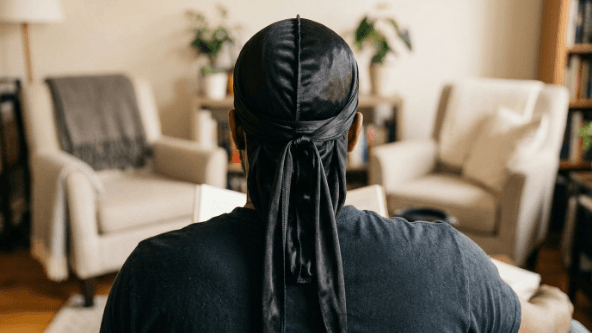
A durag, also spelled do-rag or doo-rag, is a simple but much loved hair accessory: a close-fitting cloth that covers the top and back of the head, secured with long ties wrapped around and knotted at the back, usually with a rectangular flap that hangs down behind.
Its job is to hold the hair firmly and smoothly against the head, and from that one simple function comes a whole range of uses, from training waves to protecting braids to keeping a style fresh overnight. It is worn by many people with Afro-textured hair, and it carries a rich cultural history alongside its everyday practicality.
The durag is one of those items that is both entirely practical and deeply cultural. On the one hand it is a tool that lays the hair down, applies gentle compression, and shields the hair from friction. On the other hand, it is a recognisable symbol in Black culture, worn with pride and style, and it has moved between being a private grooming aid and a public fashion statement over the decades. It sits within the wider world of Afro hair care alongside styles and tools we cover in guides like [4c hair](/blog/4c-hair) and the [satin bonnet](/blog/satin-bonnet).
Durags and Waves
The use the durag is most famous for is making and keeping waves, the rippling pattern brushed into short Afro-textured hair, and understanding this explains a lot about durags.
To get waves, short hair is brushed regularly in the direction you want the pattern to lie, and a durag is worn over the top to press the brushed hair flat against the head.
Silky and velvet durags are favourites because their smooth inner surface lays the hair down without roughing it up, and they hold compression well, which helps the waves form and deepen over time.
A durag worn to bed after brushing keeps the pattern in place through the night and preserves the sleek, laid-down finish. For anyone working on their waves, the durag is not optional but central, the tool that turns daily brushing into a lasting pattern.
The Different Types
Not all durags are the same, and knowing the main types helps you choose. Silky, or satin, durags are the most popular for waves and for a sleek look, as their smooth surface glides over the hair, gives a shiny finish, and applies good compression.
Velvet durags are soft and comfortable and are often worn more as a fashion piece, though they give less compression than silky ones. Cotton or mesh durags are more breathable and are often used simply to hold a style or for comfort, but they draw out moisture and are less suited to wave making.
Beyond fabric, durags differ in the length and width of their ties and tails, with long tie durags popular for tying multiple times around the head and for the dramatic look of the tails hanging down. There are also poly-blend versions that aim to combine shine and compression affordably.
The right durag depends on what you want it for: silky or velvet for waves and moisture retention and breathable fabrics for simple holding. Many people own a few for different purposes, and the choice is part of the personal ritual of hair care.
How to Wear and Care for Durag
Wearing a durag well is a small skill worth learning. The seam at the front is usually placed along the hairline, the body of the durag is smoothed back over the head, and the ties are crossed at the back, brought round to the front, crossed again, and tied, then the flap is left to hang or tucked in so that the whole thing sits flat and snug without being painfully tight.
Comfort matters, because a durag that is too tight can stress the hairline, so it should be firm and smooth rather than crushing.
Durags are simple to care for: silky and satin ones can be hand washed and left to dry flat so they keep their smooth surface, and it is worth having more than one so a clean, dry durag is always to hand. Worn overnight, a durag protects waves, braids, and other styles from the friction of the pillow and helps keep the hair moisturised, much as a [satin bonnet](/blog/satin-bonnet) does for looser natural styles. Used sensibly, snug but not tight, and kept clean, a durag is a gentle, helpful part of a hair routine.
Where can I buy a Durag in the UK?
Buying a durag in Britain is easy, as they are widely sold. Afro hair and beauty shops that serve Black communities carry a good range, from silky and velvet durags for waves to breathable ones for holding styles, in many colours, and the staff can point you to the right fabric for what you want to do. Because silky and velvet durags give the compression and smooth finish that waves need, those are the ones to look for if wave training is your goal.
If you are new to durags, an [Afro hair and beauty shop near you](/beauty-supply-near-me) will have a selection and can advise on fabric and fit, and the same shops stock the brushes, moisturisers and wave products that go with them.
Durags are also sold by many general and online retailers. Whether you want to build waves, protect a style overnight, or simply wear one as part of your look, there is a durag to suit you, and choosing the right fabric makes all the difference.
Frequently asked questions
What is a durag?
A durag is a close-fitting cloth worn over the hair, tied at the back with long ties and usually with a flap that hangs down behind. It holds the hair flat and in place, most famously to train and maintain waves in short hair, and to protect styles and lock in moisture, especially overnight. It is both a practical hair tool and a cultural statement.
What is a durag used for?
A durag is used mainly to make and keep waves by pressing brushed hair flat so it trains into the wave pattern and to protect hair and styles, especially at night, from friction and moisture loss. It also simply holds a style in place. Silky and velvet durags are favoured for waves because of their smooth finish and compression.
Which durag is best for waves?
Silky, or satin, and velvet durags are best for waves. Their smooth inner surface lays the hair down without roughing it up and holds good compression, which helps train and deepen the wave pattern. Silky durags in particular give a sleek, shiny finish. Cotton or mesh durags are more breathable but draw out moisture and are less suited to wave-making.
How do you tie a durag?
Place the front seam along the hairline, smooth the body back over the head, cross the ties at the back, bring them round to the front, cross again, and tie, then leave the flap to hang or tuck it in so the durag sits flat and snug. It should be firm and smooth but not painfully tight, as too much tension can stress the hairline.
Where can I buy a durag in the UK?
Afro hair and beauty shops that serve Black communities sell a good range of durags, from silky and velvet ones for waves to breathable ones for holding styles, in many colours, and can advise on fabric and fit. Durags are also sold by many general and online retailers. For waves, look for silky or velvet fabric.