The short answer
Chin chin is a sweet, crunchy fried snack popular across Nigeria and much of West Africa. It is made from a simple dough of flour, sugar, butter and nutmeg, cut into small pieces and deep-fried until golden. People eat it at parties, over Christmas and as an everyday snack, and it keeps well in an airtight container for a couple of weeks. In the UK you can buy it packaged or freshly made from African and Caribbean food shops and caterers.
What to remember
- Chin chin is a fried dough snack, lightly sweet and very moreish, eaten across Nigeria and West Africa.
- The core is flour, sugar, butter and nutmeg, sometimes with a splash of milk, cut small and deep-fried.
- It comes in two main styles: hard and crunchy, or softer and shortbread-like, depending on how it is mixed and fried.
- It is a fixture at parties, weddings and Christmas, and just as happily eaten from a jar on an ordinary afternoon.
- Stored properly in a sealed container, it stays fresh and crisp for a week or two, which is part of why it travels so well.
There is a particular sound that means a celebration is coming: the rattle of chin chin being poured into a big tub, ready for the guests. For Nigerians and many across West Africa, this snack is woven into the rhythm of gathering. It belongs to the same table as jollof rice and puff puff, the small chops that signal a wedding, a naming ceremony or simply people you love coming together.
Its meaning runs deeper than the party, though. Chin chin is often a first cooking lesson, the thing a child is trusted to help cut and stir while the grown-ups fry. It is a way older relatives show care, frying batch after batch at Christmas so that no visitor leaves empty-handed. It is comfort food in the truest sense, made to be shared and given away, and it carries the flavour of home in every crunchy handful. For families settled far from where they grew up, a tub of chin chin on the counter is a small, steady reminder of where they come from.
What is chin chin?
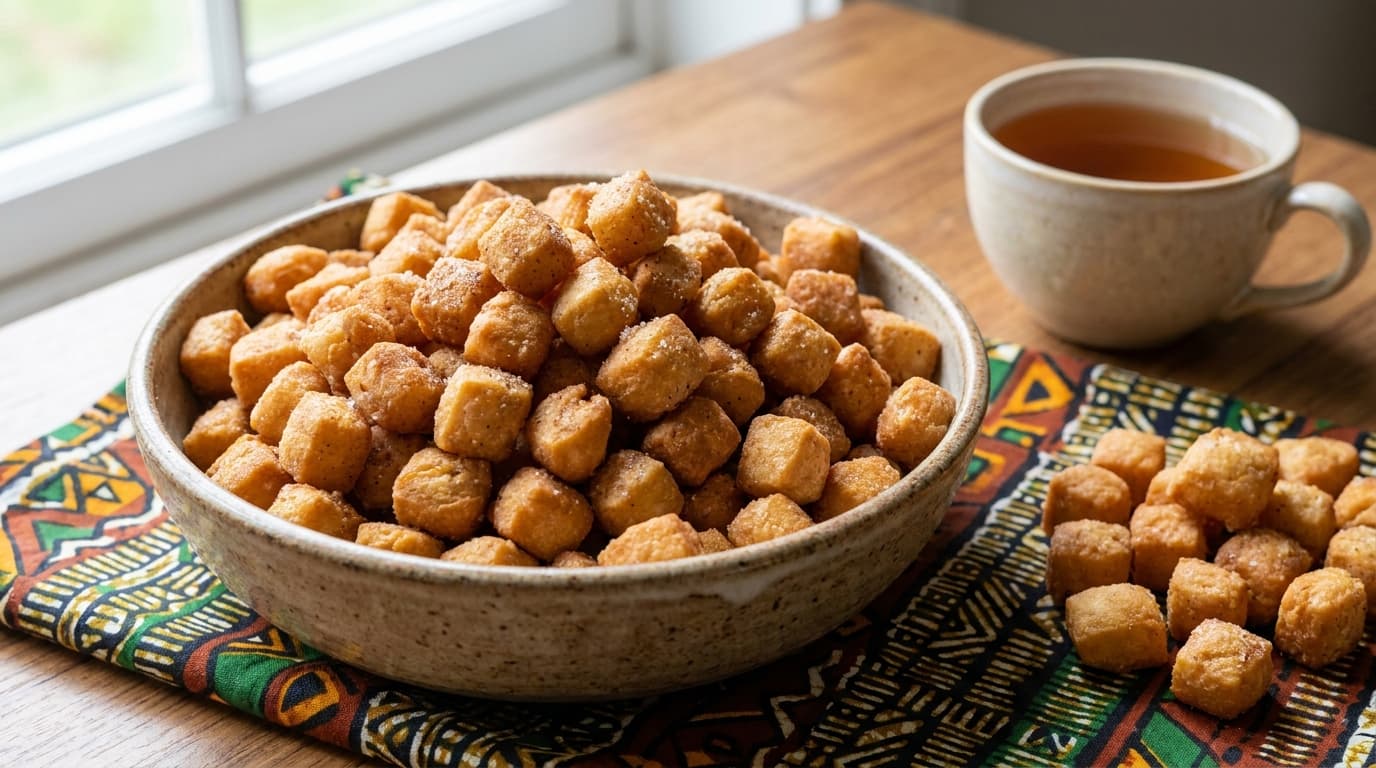
Chin chin is one of those snacks that almost every Nigerian household knows by heart. At its simplest, it is a fried dough: flour, sugar and fat brought together, rolled out, cut into small pieces and dropped into hot oil until golden and crunchy. The pieces are usually small, roughly the size of a fingernail or a little larger, cut into squares, cubes or short batons so they are easy to scoop by the handful.
The flavour is gently sweet rather than sugary, warmed by nutmeg and sometimes a hint of vanilla. That balance is the whole appeal. It is sweet enough to feel like a treat but plain enough that you can keep reaching for more without tiring of it. It sits somewhere between a biscuit, a doughnut and a cracker, which is why people who try it for the first time struggle to compare it to anything else.
Though it is most strongly associated with Nigeria, versions of chin chin appear across West Africa and among African communities well beyond the continent. Ghana, Cameroon and other neighbours have their own takes, and the snack has travelled with families to the UK, wider Europe and North America. It is a staple of Nigerian food and one of the first things many people abroad learn to make when they want a taste of home.
How is chin chin made?
The ingredient list is short, which is part of the charm. You need plain flour, sugar, butter or margarine, and nutmeg. Many cooks add a little milk, either liquid or powdered, for richness, along with eggs to bind and baking powder for a touch of lift. Some families add vanilla or a pinch of salt to round out the flavour.
The method is straightforward. The dry ingredients are combined, the fat is rubbed in, and the mixture is brought together into a firm dough with milk, egg or water. The dough is kneaded until smooth, then rolled out flat on a floured surface. From there it is cut into small pieces, most often little squares or rectangles, though some people use a rolling cutter to make neat diamonds and others pinch off small nuggets by hand.
The pieces are then deep-fried in hot oil, stirred so they colour evenly, and lifted out once they turn a rich gold. They are drained and left to cool completely before being stored, which is when they firm up and reach their proper crunch. It is simple work, but there is a knack to it. Get the oil too hot and the outside browns before the inside cooks. Too cool and the pieces drink up oil and turn greasy. Experienced cooks judge it by eye and ear, and the smell of frying chin chin is enough to bring a whole household into the kitchen.
Hard Chin Chin versus Soft chin chin
Ask two people how chin chin should be and you may get two different answers, because there are two main camps. Hard chin chin is dense and properly crunchy, the kind that gives your jaw a workout and rattles satisfyingly in the tub. It is made with less fat and often no or little raising agent, rolled thin and fried until firm. This is the style many people picture first, and it is prized for keeping its snap for a long time.
Soft chin chin is more tender and shortbread-like, almost crumbly. It uses more butter, sometimes more egg, and a little baking powder so the pieces puff slightly and stay light. It is usually cut a touch thicker and fried a shade less. Neither is more tasty than the other. It comes down to family habit and personal taste, and plenty of homes make both. If you are buying chin chin for the first time, it is worth knowing which style you are getting, because the difference in texture is real.
When do People eat Chin Chin?
Chin chin earns its keep at celebrations. It is a fixture of the small chops spread at Nigerian parties, weddings, naming ceremonies and christenings, served alongside puff puff, samosas, spring rolls and skewers of meat. Guests graze on it throughout the day, and it often goes home with them too, tucked into party bags.
Christmas is its other great season. In many households the run-up to the holidays means big batches fried in advance, filling old biscuit tins and jars to be shared with visitors, neighbours and relatives who drop by. A tin of homemade chin chin is a genuine gift, a sign that someone spent time in the kitchen thinking of you.
For all its party credentials, chin chin is also thoroughly everyday. It lives in handbags, school bags and desk drawers as a snack to nibble between meals. It goes well with a cold drink, a cup of tea or a bowl of custard, and it is a reliable answer to a mid-afternoon craving. If you want to see where it sits among the wider spread, our roundup of the best African snacks puts it in good company.
How to Store Chin Chin
One of chin chin's quiet strengths is how well it keeps. The key is to let it cool completely before it goes anywhere near a container, because any trapped warmth turns to moisture and softens the crunch. Once cool, it should go into a clean, dry, airtight tub or jar.
Stored this way at room temperature, hard chin chin stays crisp for around two weeks, sometimes longer, while softer styles are best enjoyed within a week or so while they are at their freshest. Keep it away from heat and damp, and reseal it well each time. This keeping quality is exactly why chin chin travels so well in care packages and suitcases, arriving across the world still crunchy.
Where to buy Chin Chin in the UK
In the UK you do not have to fry your own to enjoy chin chin, though many people still do. Packaged chin chin is widely stocked in African and Caribbean grocery shops, sold in bags and tubs in both hard and soft styles and sometimes in flavoured versions. Local caterers and home cooks also make it fresh to order, especially around the festive season and for parties, and freshly made batches are often the closest thing to a homemade tin.
Because stock and styles vary from shop to shop, the easiest route is to find a specialist grocer near you and ask what they carry. If you are in the capital, you can browse African food stores in London to find shops that stock snacks like chin chin, plantain chips and puff puff mix. Elsewhere in the country, your nearest African or Caribbean food shop is the place to start, and many are happy to point you towards a good brand or a local cook.
Frequently asked questions
Is chin chin sweet or savoury?
It is gently sweet rather than sugary, with a warm hint of nutmeg. It is more moreish than rich, which is why you can keep eating it, and it goes just as well with a cup of tea as it does on a party table.
What is the difference between hard and soft chin chin?
Hard chin chin is dense and very crunchy, made with less fat and rolled thin. Soft chin chin is more tender and shortbread-like, made with more butter and a little raising agent. Both are traditional, and it really comes down to family taste.
How long does chin chin last?
Kept in an airtight container once it is fully cool, hard chin chin stays crisp for around two weeks, sometimes longer. Softer styles are best within a week or so. Keep it sealed and away from heat and damp.
Can I buy chin chin in the UK?
Yes. African and Caribbean food shops stock packaged chin chin in both styles, and local caterers and home cooks make it fresh, especially around Christmas and for parties. Ask your nearest specialist grocer what they carry.
What do you eat chin chin with?
Most people simply snack on it by the handful, but it pairs nicely with a cold drink, a cup of tea or a bowl of custard. At parties it sits alongside puff puff, samosas, spring rolls and small chops.