What Is Chakalaka? The South African Relish Explained
Chakalaka is a spicy South African vegetable relish of onions, peppers, carrot and beans. Here is what it is and where to buy the ingredients.
Quick answer
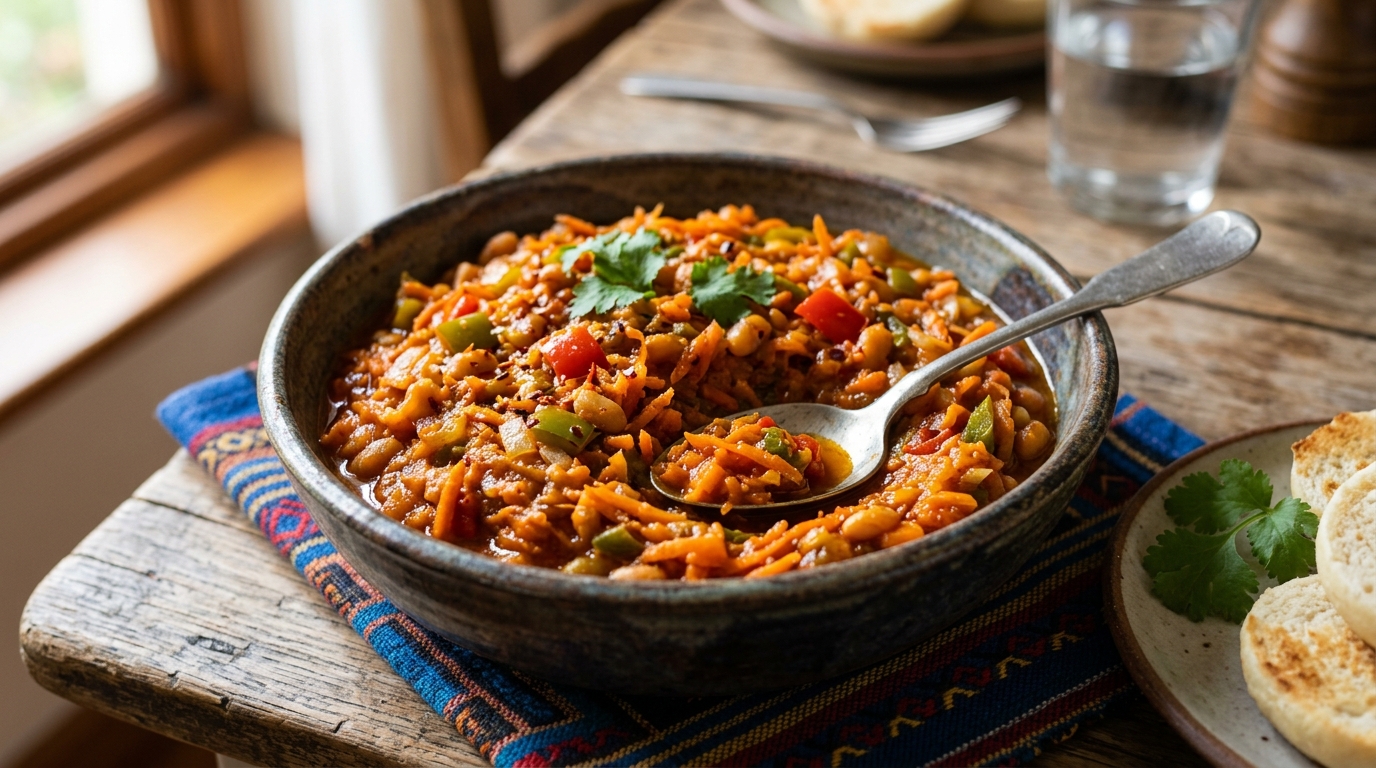
Chakalaka is a spicy vegetable relish from South Africa, made from onions, peppers, grated carrot, tomatoes and usually baked beans, cooked with curry powder, chilli and other spices into a warm, chunky, colourful side. It is savoury, mildly spicy and a little sweet, and it is enormously popular across South Africa as an accompaniment, served alongside grilled meat, pap, bread and stews. It came out of the townships and has become a national favourite, appearing at braais, or barbecues, and family meals alike. It is quick to make, and it can be eaten warm or cold. It is naturally vegan, depending on the beans used. In the UK the vegetables, beans and spices are everyday items, sold everywhere including African food shops.
Add African Stores as a preferred source on Google. You'll see more of our guides in Google's Top Stories when you search.
Add as a preferred sourceWhat to remember
- Chakalaka is a spicy South African vegetable relish of onions, peppers, grated carrot, tomatoes and usually baked beans.
- It is cooked with curry powder, chilli and spices into a warm, chunky, colourful side, savoury and mildly spicy.
- It is a national favourite, served with grilled meat, pap, bread and stews, especially at braais.
- It can be eaten warm or cold and is quick to make, and it is naturally vegan depending on the beans.
- In the UK the vegetables, beans and spices are everyday items, also sold by African food shops.
For South Africans in Britain, chakalaka is a bright, spicy taste of home. It is the colourful relish next to pap at a family dinner, the bowl on the table at every braai, the spicy lift that makes grilled meat and mild pap sing. It carries the memory of gatherings and barbecues, of the particular way a family makes their chakalaka, hotter or milder, with beans or without, and making a pot far from home fills the kitchen with that familiar, warming aroma and brings the feeling straight back.
There is heritage in it too, and a sense of shared national identity. Chakalaka came out of South Africa's townships and became a food loved right across the country and its many cultures, seasoned with the curry spices that reflect the nation's Indian heritage, and to make it is to share in that story. Setting a bowl of it down at a braai, or introducing a friend to that spicy, colourful relish, is an act of welcome and belonging. That bright, spicy, unifying taste of home is the quiet gift of chakalaka.
What is chakalaka?
Chakalaka is South Africa's beloved spicy vegetable relish, a warm, chunky mixture of everyday vegetables cooked up with curry spices and chilli. At its core it is onions, peppers, grated carrot and tomatoes, softened in oil and seasoned with curry powder, chilli, garlic and often other spices, and it very commonly includes baked beans, which add heartiness and a touch of sweetness. The result is colourful, savoury, mildly spicy and a little sweet, somewhere between a relish, a salsa and a side dish, and it is bursting with flavour despite its simple ingredients.
Chakalaka is not usually eaten on its own but as an accompaniment, a spoonful of which lifts and brightens whatever it is served with. It is quick and cheap to make, endlessly adaptable, and eaten across South Africa by people of all backgrounds, which is a big part of its charm. It belongs to the wider world of South African cooking we cover in our guide to South African food, and it sits alongside dishes like the famous bunny chow.
The vegetables and the spice
The heart of chakalaka is its mix of vegetables and its warm, curried spicing. The base is almost always onions and peppers, softened first, along with plenty of grated carrot, which gives the relish its characteristic texture and colour, and tomatoes, which cook down into a light sauce. The signature flavour comes from curry powder, a legacy of South Africa's Indian community and cuisine, along with chilli for heat, garlic and ginger, and sometimes a little of a spice blend. It is this curried, spicy seasoning that makes chakalaka more than just cooked vegetables.
Baked beans are a very common addition, stirred in towards the end, and they turn the relish into something more substantial, adding protein, body and a gentle sweetness that balances the chilli. Recipes vary a great deal, some hotter, some milder, some with beans, some without, some with added cabbage or other vegetables, and every cook has their own version. That flexibility is part of the appeal: chakalaka is a template as much as a fixed recipe, and it can be adjusted to taste and to whatever is in the kitchen.
Find African and Caribbean shops near you
Free to use, no sign-up needed.
What is chakalaka eaten with?
Chakalaka really comes into its own as an accompaniment, and it goes with a wide range of South African foods. Its most iconic partner is pap, the stiff maize porridge that is a staple across the country, where a spoonful of spicy chakalaka lifts the mild, starchy pap beautifully. It is also a fixture at the braai, the South African barbecue, served alongside grilled meats and boerewors, the traditional sausage, where its bright, spicy freshness cuts through the rich, smoky meat.
Beyond that, chakalaka is served with bread, especially as a filling or topping, with stews and curries, and with rice, and it appears at everything from everyday dinners to big gatherings. Because it keeps well and can be eaten warm or cold, it is a practical make-ahead dish for feeding a crowd, and a bowl of it is a welcome sight at any South African spread. Its job is always the same, to add colour, spice and brightness to the plate, and it does that job brilliantly with almost anything.
Where to buy the ingredients in the UK
Making chakalaka at home in Britain could hardly be easier, because almost all the ingredients are everyday items available in any supermarket: onions, peppers, carrots, tomatoes, curry powder, chilli and tinned baked beans. For a more original South African flavour, or for particular spice blends, African food shops that serve Southern African communities may stock the specific curry blends and other bits, along with the pap maize meal and boerewors to serve alongside.
If you are putting together a full South African meal, an African food shop lets you gather the maize meal for pap and the boerewors along with your chakalaka ingredients. You can find African food stores near you or look up Caribbean food stores near you. If you would rather taste it first, chakalaka is served at South African restaurants and is a regular at braais and community events, where it accompanies grilled meat and pap.
Your questions
Frequently asked questions
Chakalaka is a spicy vegetable relish from South Africa, made from onions, peppers, grated carrot, tomatoes and usually baked beans, cooked with curry powder, chilli and spices into a warm, chunky, colourful side. It is savoury, mildly spicy and a little sweet, and it is served as an accompaniment rather than eaten on its own.
The base is onions, peppers, grated carrot and tomatoes, seasoned with curry powder, chilli, garlic and ginger, and it very commonly includes baked beans stirred in for heartiness and a gentle sweetness. Recipes vary widely, some hotter or milder, some with added cabbage or other vegetables, and every cook has their own version.
Its most iconic partner is pap, the stiff maize porridge, where its spice lifts the mild, starchy pap. It is also a fixture at the braai, served with grilled meats and boerewors, and it goes with bread, stews, curries and rice. It can be eaten warm or cold, which makes it a practical make-ahead dish.
It is usually mildly to moderately spicy, with warmth from curry powder and chilli, but the heat varies a lot from cook to cook, since you can make it as hot or mild as you like. The baked beans and carrot add a gentle sweetness that balances the chilli, so it is flavourful and warming rather than necessarily fiery.
Almost all the ingredients, onions, peppers, carrots, tomatoes, curry powder, chilli and tinned baked beans, are everyday supermarket items. African food shops that serve Southern African communities may stock particular curry blends, plus the maize meal for pap and boerewors to serve alongside, letting you gather a full South African meal in one trip. African Stores lists African and Caribbean food shops across the UK, so you can find one near you.
Was this guide helpful?
Free membership
Save this guide and hear when new shops open near you
Save shops, follow the ones you love and get your free member card to show at participating shops for member offers.
Keep reading
More guides
- What isWhat Is Ofada Rice? The Local Nigerian Rice ExplainedOfada rice is an aromatic local Nigerian rice, served with a spicy palm oil sauce.Read article
- What isWhat Is White Soup? Nigerian Ofe Nsala ExplainedWhite soup, or ofe nsala, is a light Igbo soup made without palm oil, thickened with yam.Read article
- What isWhat Is Xalwo? The Sweet Somali Halwa ExplainedA plain language guide to xalwo, the sweet, jelly like Somali halwa flavoured with cardamom and enriched with ghee, including what it is made of, how it is served at celebrations and where to find it in the UK.Read article